Category: Formula One
-
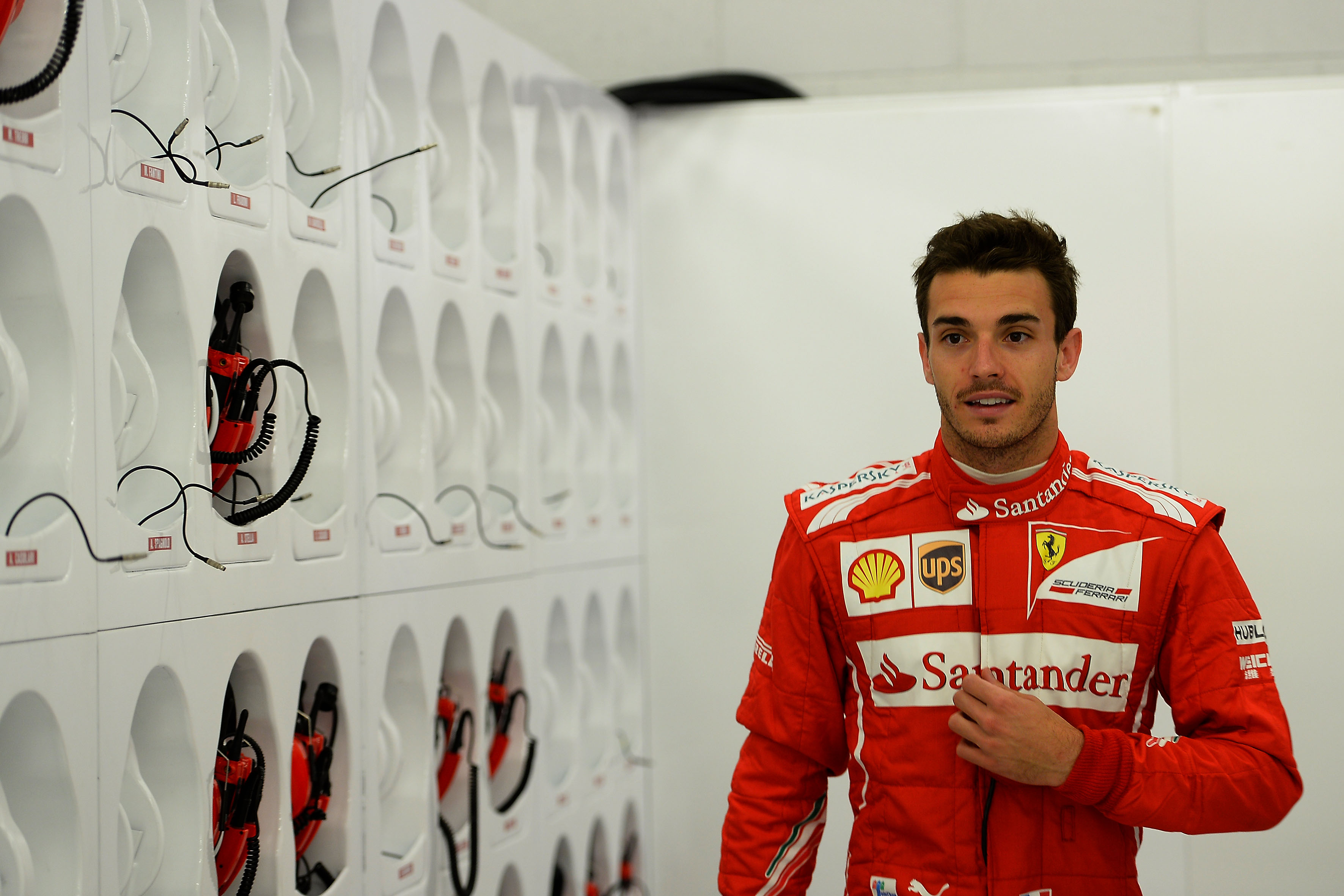
Jules Bianchi – A Lost Star
While it’s natural to remember Jules Bianchi around the Japanese Grand Prix, as Ferrari Week here at The Pit Crew Online falls near the second anniversary of his death it’s fitting to look back at the life and career of one of Maranello’s former rising stars.
Born in Nice in 1989, Bianchi arrived into a family that was already well-acquainted with motorsport. His grandfather Mauro raced GT cars in the 1960s and participated in three Grands Prix in 1961. His great-uncle Lucien drove in 19 Grands Prix between 1959 and 1968, scoring a handful of points, and achieved victory at Le Mans in 1968 alongside Pedro Rodriguez. Given his great-nephew’s affiliation with Ferrari, there’s a certain irony that Lucian’s Le Mans victory came behind the wheel of a Ford GT40, which broke Ferrari’s early 1960s string of Le Mans victories. Jules was not the first Bianchi to die in motorsport; Lucian was killed during testing at Le Mans in 1969. Jules’ father Philippe owned a karting circuit, providing a young Jules an early platform to begin honing his skills. At 15, Jules made the decision to pursue racing as a profession and at 17 signed a management contract with Nicolas Todt.
Looking back over Bianchi’s career, he seemed destined for Formula One. Having proved his skills in karting, placing first in multiple series in 2005 and 2006, Bianchi moved into the junior formulae. He made his single-seater debut in 2007, the final season of the French Formula Renault 2.0 series, driving for SG Formula. He secured a comfortable first place with 5 wins and 11 podiums, finishing 49 points ahead of the second place finisher Mathieu Arzeno.
2008 saw Bianchi move up to the Formula 3 Euro Series, driving for ART Grand Prix, where one of his teammates was Nico Hülkenberg. During his deubt season, he placed third overall with two wins and seven podiums for 47 points as well as placing first in the Masters of Formula 3. He continued competing with ART in 2009, his teammates including Valterri Bottas and Esteban Gutiérrez. That season Bianchi claimed the title, earning nine wins and twelve podiums and ending the season with 114 points.
2009 also saw the BBC and James Allen, among others, link Bianchi with a race seat at Ferrari due to Luca Badoer’s disappointing performance. Though this never materialized, December 2009 saw Bianchi become the first recruit to the Ferrari Driver Academy after the young drivers’ test at Jerez. Maranello clearly found Bianchi a worthy investment, and he was to remain a member until his death. The Ferrari Driver Academy still officially acknowledges that Jules was the most promising young driver that has participated in the program thus far.
Interviews during this period paint a picture of an affable young man, aggressive and ambitious on the track but aware that he’s still learning and maturing. He is quick to give credit to his influences, crediting his grandfather and manager for their help in his formation as a racing driver, as well as his fellow drivers for the self-management techniques he learned from them.
He progressed up the ladder to GP2 in 2010, again racing for ART Grand Prix. In his debut season Bianchi placed third in the championship with 52 points. Though he claimed three poles and was on the podium four times, he won no races this season.
FDA – Bianchi quarto in Gara 1 For 2011, despite remaining third overall he improved his record by claiming one win and six podiums. He totaled 53 points in the 2011 season. Significantly, 2011 also saw Bianchi debut as a Formula One test driver for Ferrari, coming closer to a coveted race seat.
In 2012 Bianchi competed in the Formula Renault 3.5 Series, driving for Tech 1 Racing. He placed second in the championship, with three wins and eight podiums, and a total of 185 points. He continued his Formula One testing career, this time on loan to Sahara Force India from Ferrari. During his tenure as Force India’s test and reserve driver, he participated in 9 Friday free practice sessions, gaining valuable track time.
Bianchi’s big break arrived in 2013. Though Force India selected Adrian Sutil to replace Nico Hülkenberg upon his departure to Sauber, another seat opened when Marussia driver Luiz Razia’s sponsors failed to meet their financial commitments to the team. Jules had finally achieved his race seat, opposite Max Chilton. Though Marussia ran solidly at the back of the field and Bianchi retired in Monaco, Germany, and Japan, he nonetheless finished ahead of his teammate in every remaining race other than India and finished the drivers’ championship in 19th place, 4 places above Chilton. Marussia finished 10th in the 2013 Constructors Championship, securing much-needed prize money.
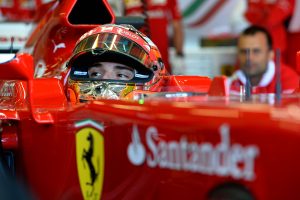
SILVERSTONE (GRAN BRETAGNA) 09/07/2014
© FOTO STUDIO COLOMBO X FERRARI2014 saw Bianchi continue opposite Chilton with Marussia. Despite an inauspicious beginning to the season, failing to complete 90% of the race distance in Australia and retiring in Malaysia due to brake failure on lap 8, Bianchi continued to outperform his teammate. In a major step forward for the team he brought in both his own and Marussia’s first points at Monaco. While good fortune in the form of a number of retirements doubtless contributed to his 9th place finish, and his own illegal serving of a 5-second penalty under the Safety Car cost him 8th place, Bianchi and Marussia were justifiably pleased with the results. Though forced to retire when Chilton collided with him in Canada, he finished ahead of his teammate for most of the season other than a retirement late in the Belgian Grand Prix due to a gearbox failure.
And then came Suzuka.
The category four Typhoon Phanfone brought significant rain to the Suzuka Circuit on Sunday October 5th, but due to the Russian Grand Prix being scheduled for the following week freight concerns prevented organizers from delaying the Grand Prix until the next day. Charlie Whiting suggested that the race start time be changed, but both the circuit owners and FIA opposed changing the both to allow spectators to arrive at the circuit and due to television coverage concerns. The race began under the Safety Car and was suspended after two laps, then restarted under the Safety Car 20 minutes later. Conditions slowly improved, but there was still significant standing water on the track and heavy rain again began to fall in lap 36.
Adrian Sutil lost control of his Sauber and crashed at Dunlop Curve on lap 40. One lap later, Bianchi lost control at the same place and slid partway under the crane that was recovering Sutil’s Sauber. Striking the crane at 123 km/h, the impact was forceful enough to jolt the crane off the ground and cause the Sauber to drop back to the ground. In the crash, Bianchi’s Marussia sustained massive damage on its left side and its roll bar was destroyed. Later analysis determined that the impact generated a peak of 254 g. Bianchi was unresponsive, and was determined to have suffered significant head injuries.
As the medical helicopter was unable to land at the designated hospital, Mie Prefectural General Medical Center in nearby Yokkaichi, Jules was transported instead by ambulance, arriving 32 minutes later. He was rushed into surgery to reduce the severe bruising to his head. His first visitors included Graeme Lowdon, Marussia’s CEO, team principal John Booth, Ferrari team principal Marco Mattiacci, and Bianchi’s fellow driver Felipe Massa. Bianchi’s parents, siblings, and a close friend arrived over subsequent days.
Bianchi’s management team also visited Bianchi in hospital. FIA Medical Commission president Gerard Salliant was also present, and Ferrari continued to show its support for Jules by requesting that Sapienza University of Rome neurosurgeon professor Allesandro Frati travel to Japan. Ferrari’s outgoing president Luca di Montezemolo further told the media that Bianchi was to be the third Ferrari driver should the then-possible shift to three-car teams become a reality.
The Bianchi family publicly expressed appreciation for the support Jules had received thus far, as well as confirming that Bianchi had suffered a diffuse axonal injury in the crash. At this time, Bianchi was in critical but stable condition.
Though Marussia originally entered their reserve driver Alexander Rossi, the team elected to only run Chilton in the Russian Grand Prix. As a show of support, the team prepared and had Bianchi’s car scrutineered at Sochi, but did not race it. Perhaps Marussia’s fate would have been different had they raced Rossi. Perhaps Marussia’s financial backer Andrei Cheglakov would have continued to fund the team had Rossi turned in a respectable performance, but the tribute was fitting, expressing the hope that Bianchi would recover and rejoin the team.
The Formula One community, indeed the entire motorsport community, rallied in support of Bianchi. The day after the crash, Fellow Frenchman Jean-Éric Vergne arranged for all the drivers to wear stickers proclaiming “Tous avec Jules #17”, and the Marussia team added #JB17 to their livery. The successor Manor team continued this through the 2015 season. The hashtag #ForzaJules proliferated across social media, and along with #JB17 was even made into stickers in the physical world. Fans across the world used these stickers to visibly express their support for Jules. Moments of silence, race win dedications, and other tributes flowed from the community.
The FIA conducted an investigation into the incident, determining that while there were many contributing factors there was no single root cause of the crash. While Bianchi clearly hadn’t slowed enough under the double waved yellow, ‘enough’ wasn’t clearly defined. Bianchi lost control less than two minutes after Sutil, and the recovery crane had almost cleared the barriers, so the double waved yellow was considered enough under accepted practices. The crane’s presence itself wasn’t considered unusual, even though Martin Brundle nearly collided with a similar crane 20 years previously. The brake-by-wire system’s failure to cut off the throttle wasn’t definitively determined to have played a significant role, as Bianchi’s pressing the brake and throttle together may have been within acceptable parameters. Given the forces involved in the crash, no reasonable changes to the chassis could have helped.
Sadly, all the hope and support proved to be in vain. Though Bianchi was removed from an induced coma in November 2014 and able to breathe on his own, and was subsequently moved to Centre Hospitalier Universitaire de Nice, he did not regain consciousness. His supporters, his family chief among them, initially took hope from Michael Schumacher’s improvement after his skiing head injury, however slow, but over time this hope waned.
Just over two years ago, on 17 July 2015, Jules Bianchi died. He never regained consciousness. A moment of silence, with the Bianchi family present, was observed at the Hungarian Grand Prix on 26 July.
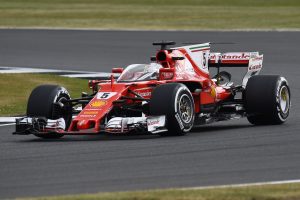
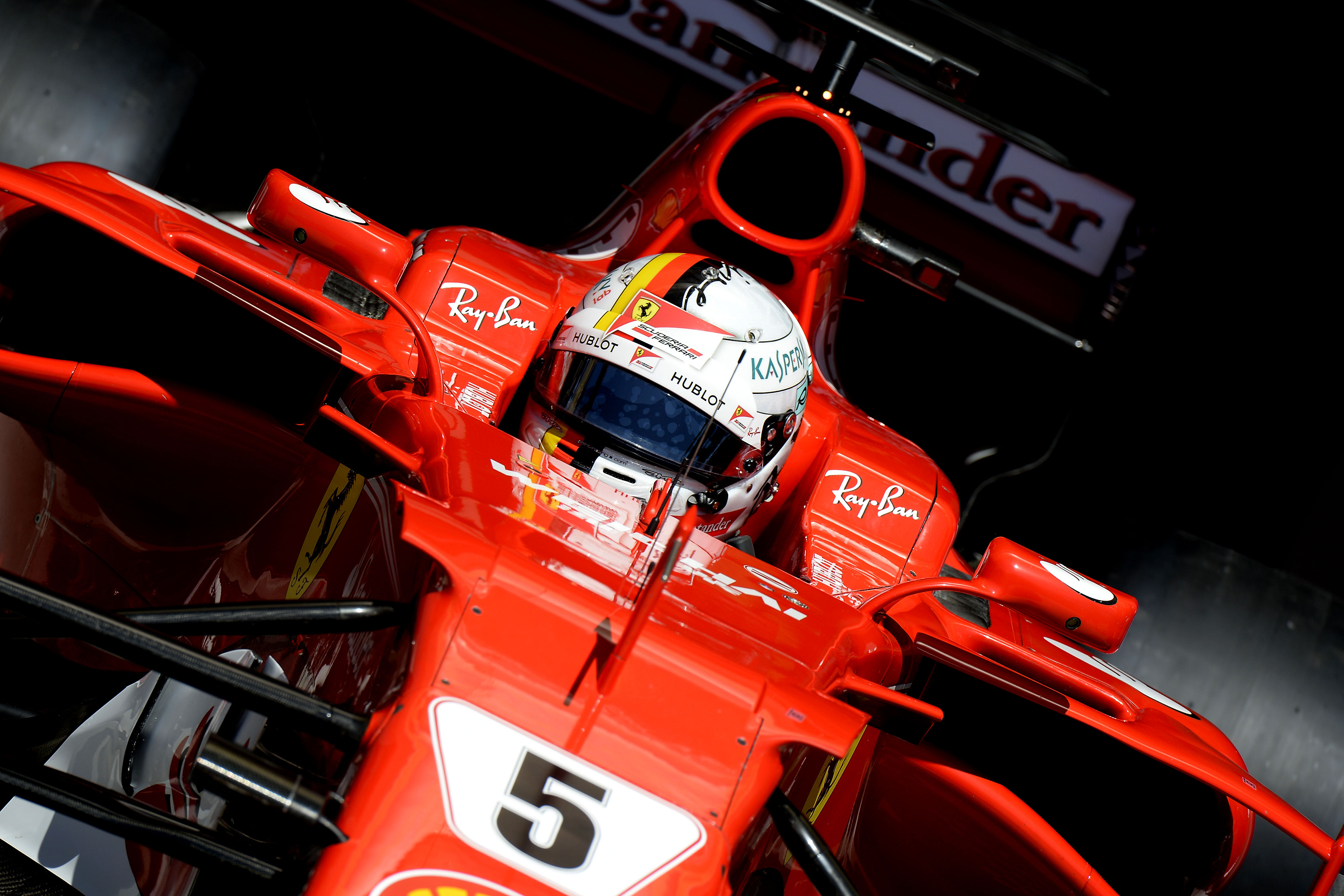
GP GRAN BRETAGNA F1/2017 (SILVERSTONE) –
© FOTO STUDIO COLOMBO PER FERRARI MEDIA (© COPYRIGHT FREE)Bianchi’s legacy includes positive safety developments ranging from improved rules and procedures such as the Virtual Safety Car and changes to recovery procedures, to additional head protection, including informing the process that led to 2018’s Halo. With the support of Prince Albert of Monaco Jules’ father Philippe created the Jules Bianchi Foundation to provide funding for promising young drivers. The Jules Bianchi #17 Association was also created to support the Unité de Soins des Cérébro-Lésés(Unit for brain damage) at Hôpital l’Archet in Nice.
The Bianchi family additionally filed a lawsuit against the FIA, Marussia, and the Formula One Group in May 2016.
This July, we are left with the memory of a promising career cut short, and a young life extinguished before its time.
#CiaoJules
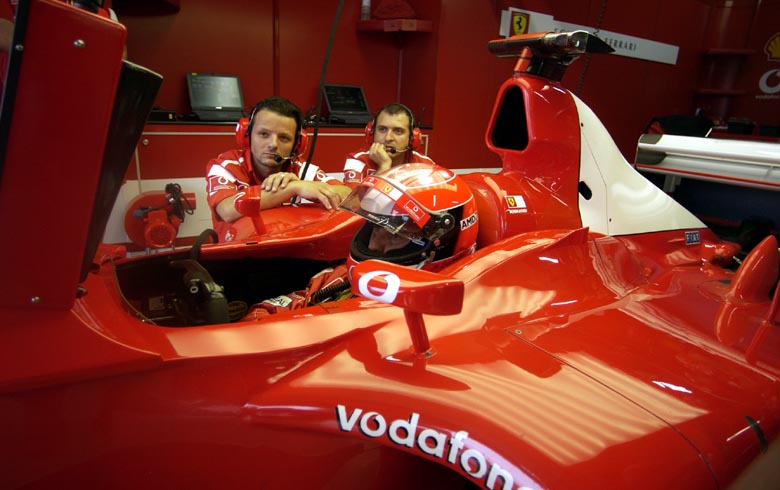
Ferrari and Schumacher – The Perfect Match?
There are some partnerships in Formula One which are considered timeless. Senna and McLaren, Mansell and Williams, Clark and Lotus, but there’s arguably none more iconic than Ferrari and Michael Schumacher.
The legendary German spent ten years at Ferrari, and went on to win 72 races for the Prancing Horse, along with five consecutive world drivers championships.
He joined the team from Benetton in 1996 after winning the title in the two previous years. He was one of the hottest properties on the grid, and Ferrari tied him down to a long term contract. He showed early signs of the domination to come as he won the 1996 Spanish Grand Prix in the pouring rain, lapping everyone up to third place.
He also endeared himself to the ever-loyal Tifosi as he won at Monza, and ending the season in third place.
Williams were dominant in 1997, with Villeneuve leading at the midpoint of the season. Schumacher fought back and won five races, with it all going down to the finale at Jerez. With the Ferrari developing a coolant leak failure, it looked like the enigmatic German wouldn’t finish the race. As Villeneuve came up to pass him, Schumacher looked to cause a collision.
However it didn’t come off and Schumacher retired from the race with accident damage while Villeneuve won the title. Schumacher was punished by being excluded from the championship.
1998 saw Schumacher fight with new rival Mika Hakkinen in the McLaren. The mercurial Finn took the title after a strong fight with Schumacher. Controversially 1999 almost saw Schumacher join Hakkinen at McLaren, with Ron Dennis admitting he approached the German. However issues with sponsors and image rights meant Schumacher would remain at Ferrari.
It was at Silverstone where Schumacher’s title challenge ended. He crashed at Stowe, breaking his leg, putting him out for most of the season. Hakkinen won the title again.
2000 was the year it came together, with Schumacher and Hakkinen fighting again, with Rubens Barrichello joining him at the Scuderia. At the Italian Grand Prix, Schumacher won his 41st race, equalling the record of Ayrton Senna, which saw Schumacher famously break down in tears in the press conference post race.
It all came down to Japan, and after a stunning pit-stop strategy, Schumacher got past Hakkinen and sealed Schumacher’s third title and Ferrari’s first since Jody Scheckter in 1979.
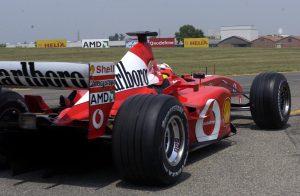
2001 was dominant for Schumacher as no one came close to him and the Prancing Horse. He sealed the title with four races to go, and at the Belgian Grand Prix he broke the record for most wins, surpassing Alain Prost’s 51 wins.
2002 was an incredible year for Schumacher and Ferrari. 11 wins in 17 races, with Ferrari winning 15. However it wasn’t without controversy. At the Austrian Grand Prix, Barrichello was leading and looked set for the win, before being asked to move aside for Schumacher to win in his bid for the title. He moved aside, but not until the finish line, with the incredibly unpopular decision falling into farce as Schumacher made Barrichello stand on the top of the podium.
He equalled Juan Manuel Fangio’s five title wins as the records continued to tumble. However his sixth would be one of his hardest to win. McLaren’s new Finn Kimi Raikkonen emerged as a title contender.
It all came down to the decider in Japan, with Raikkonen or Schumacher able to win the title. All Schumacher had to do was finish eighth and the title was his. He stumbled to eighth place, and took his sixth title, by a single point from Raikkonen.
2004 was again, dominant. Breaking his own records and winning 13 races that season, winning his seventh and final title of his career.
2005 saw Fernando Alonso and Renault surge to the title, and Schumacher’s only win came at the farcical US Grand Prix in which only six cars started due to a tyre dispute. He would fight Alonso in 2006, winning seven races, with his 91st and final win coming in China.
He was mooted to come back to Formula One in 2009 after a couple of years out for the injured Felipe Massa, but a motorbike accident earlier in the year put pay to the romantic rumours.
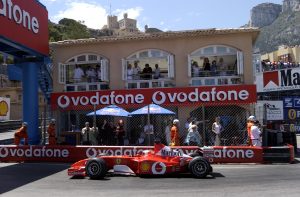
While Schumacher’s career with the Scuderia was incredible, it had its moments of controversy. His most controversial moment came in 2006 round the streets of Monaco. During qualifying he tried to stop Alonso from securing pole by ‘parking his car’ at the Rascasse corner. He was demoted to the back of the grid as punishment of the incident.
However his controversial moments were easily outweighed by his magical moments. His fights with Mika Hakkinen were stuff of legend, as he was involved in fights race after race. Hakkinen is known as one of the only drivers Schumacher truly respected and feared, which was quite the accolade.
Though while his achievements are plentiful, Ferrari’s own version of the fab four is what Schumacher should also be remembered by. As Schumacher, Ross Brawn, Jean Todt and Rory Byrne helped resurrect the Prancing Horse and return them to their rightful place at the top step of the podium.
The quartet put Ferrari back at the top, and sealed their place in history as one of the most successful partnerships in the history of Formula One. While we have dominance nowadays with Lewis Hamilton in the Mercedes, I feel it’ll be a long time before we see a driver of the quality of Schumacher again.
#KeepFightingMichael
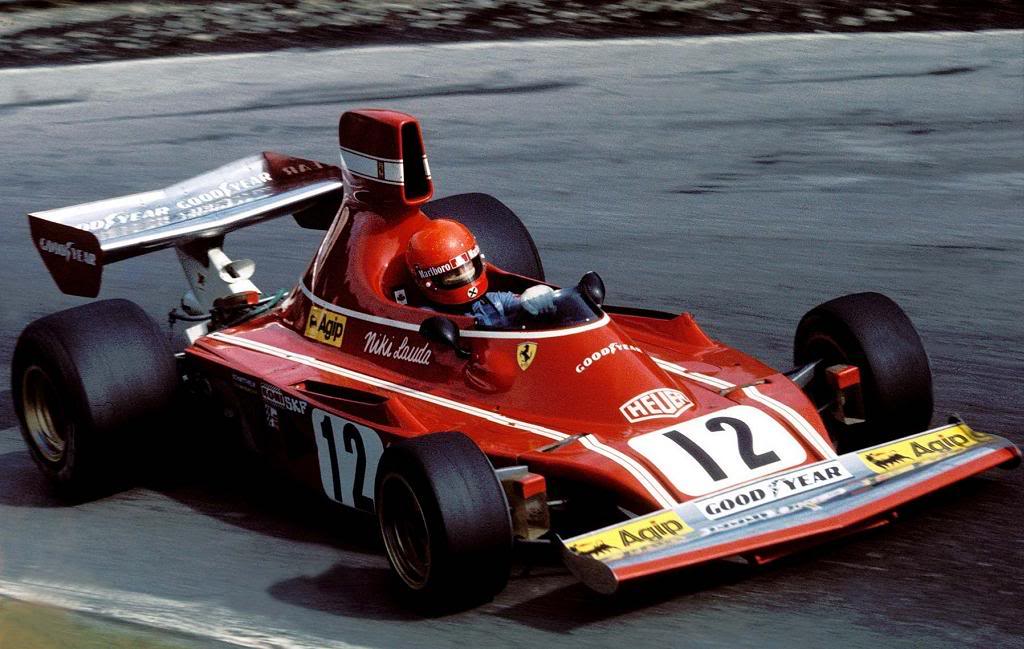
The Lauda Years
There are few stories quite like Niki Lauda’s time at Ferrari during the mid-1970s.
From title wins to fireballs to disagreements over driver selection, the four-season relationship had an array of highs and lows. Lauda had paid for his previous drives at March and then BRM before joining Ferrari on the recommendation of new Ferrari recruit Clay Regazzoni in 1974, the duo working together at BRM.
The Austrian showed his potential early on with a second place at Round One in Argentina before taking Ferrari’s first victory in two years at the Spanish Grand Prix three races later. He would remain a challenger through the year on his way to fourth place in standings and picking up another win in Holland before the season was out. Lauda also gained a reputation during his first year at Ferrari for being studious of engineering and car setup and would work tirelessly to improve the car during his time in Maranello.
1975 would start slowly as the first four races would yield finishes no higher than fifth, but Ferrari’s updates put him back on track. He would win four of the next five races to put himself clear at the top of the title standings. Further points finishes in Germany and Austria would give him a chance to clinch a World Drivers’ Championship for Ferrari on their home soil. Third place gave him his first career World Championship and Ferrari’s first Constructors’ win since 1964 as teammate Regazzoni won the race at Monza.
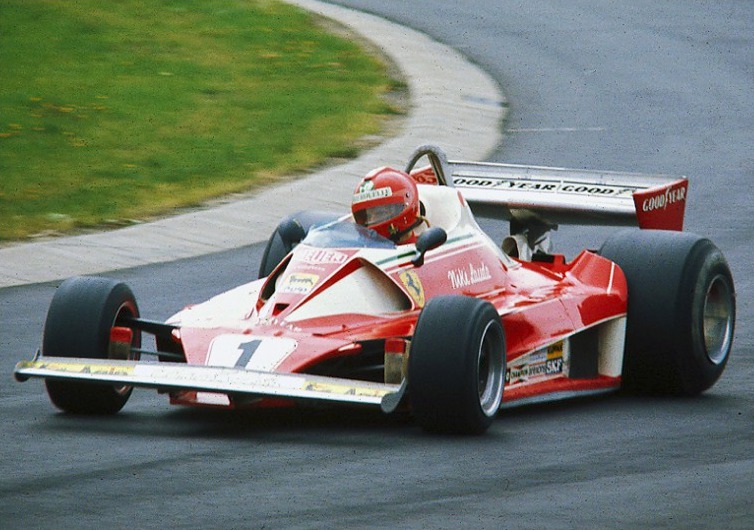
Lauda started 1976 in dominant fashion and swept all before him in the first six races – his worst finish being second twice during that period. Title rival James Hunt had shown flashes of brilliance in the early part of the year, but his McLaren was often unpredictable and also struggled with reliability during the early part of the season.
Round ten was the now infamous German Grand Prix. Lauda lobbied with other drivers to boycott the rain-soaked Grand Prix but was outnumbered. In a tragic irony he then crashed, and his Ferrari ignited. He was pulled eventually from the burning wreckage but extensive damage was done. He had suffered burns to his face and arms including losing most of his right ear, lost his eyelids and damaged his tear ducts which would affect him in further races and lost his scalp. That was supposed to be that. For his championship, for his career and possibly for his life.
Lauda didn’t follow the script and unexpected to almost everyone in the paddock, he returned – bandages and all – at the Italian Grand Prix just four races later. He took fourth, unable to blink with his skin-grafted eyelids and in obvious pain while Hunt had reduced his arrears during Lauda’s lay-off.
The Canadian Grand Prix went Hunt’s way as the maverick Briton won while Lauda finished out of the points in eighth, while in the USA Hunt won again but was joined his friend and rival. The 1976 Japanese Grand Prix was a race as wet as the fateful German Grand Prix and Lauda, still affected by his injuries, withdrew on safety grounds. That left Hunt needing third place to snatch the title away from Lauda, and after pitting from the lead he eventually worked his way back up to take the World Drivers’ Championship by a point. His decision to retire from that race didn’t sit well with Ferrari and his relationship with the team became more strained going into what would turn out to be his last year with the team. 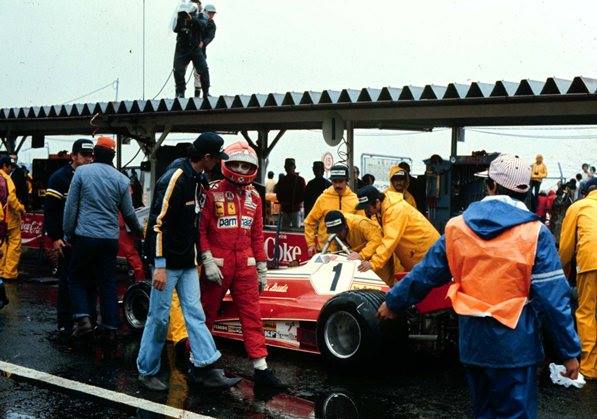
Despite taking just three wins in 1977 Lauda’s consistency against his rivals made his third title straightforward, but he announced his decision to join Brabham anyway. The Austrian was irked by his team’s decision to replace Regazzoni with Carlos Reutemann, with whom he did not enjoy a friendship as with Regazzoni. But he didn’t even make the end of the season. Upset with the team fielding a third car with then-unknown Gilles Villeneuve, Lauda walked out at the Canadian Grand Prix two races from the end of the season.
Lauda won 15 races and two World Drivers’ Championships at Ferrari, but his time there will be remembered for so much more than just his accolades. It will also be remembered for his sheer bravery and battle to return against the odds.
The Ferrari Driver Academy
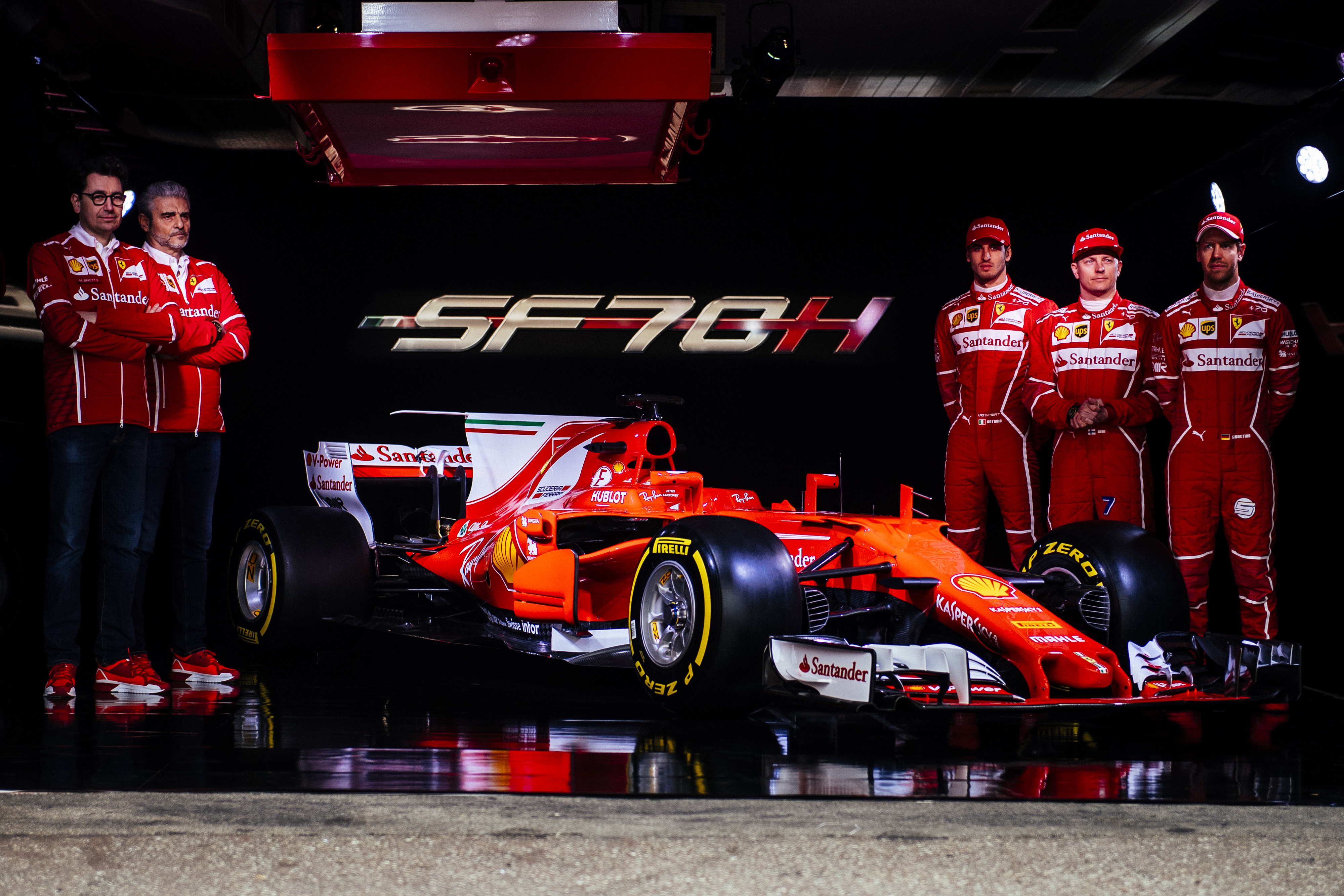
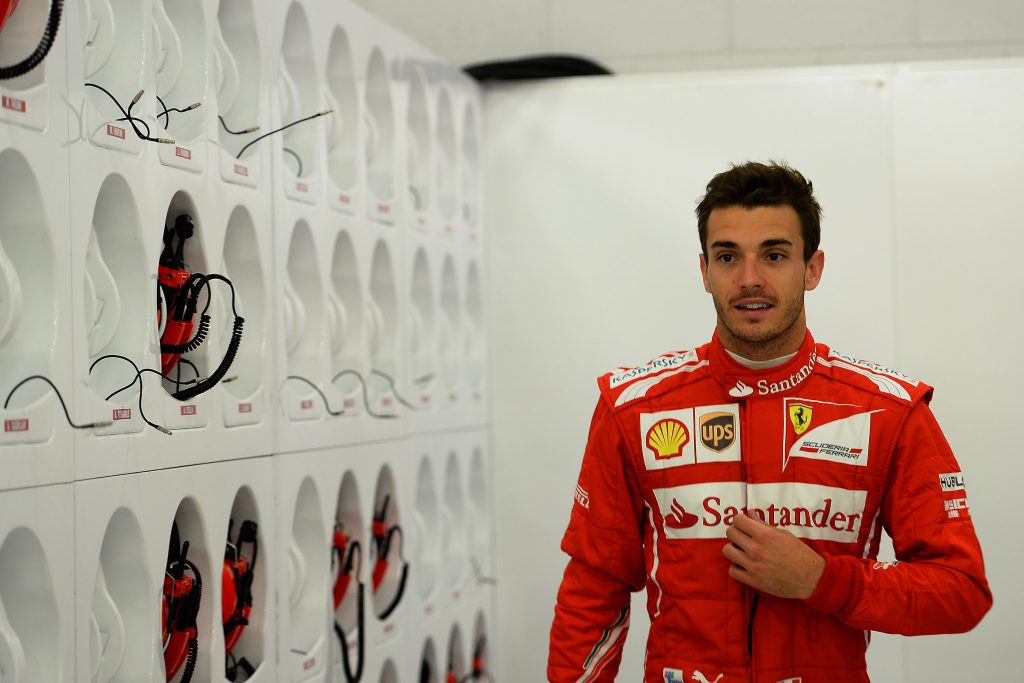
The Ferrari Driver Academy, while not boasting a history quite as illustrious as the junior programme of, say, Red Bull, can trace its history back to 2002. It unofficially began with Ferrari’s grooming of Felipe Massa as they readied him for a shot in a race seat, which he would eventually take in 2006. However, it wasn’t until 2010 that the academy was formally created, with the late Jules Bianchi becoming the FDA’s inaugural member. He is, to date, the only driver to make it to Formula 1 as part of the programme.
© FOTO STUDIO COLOMBO X FERRARI
Currently, the Ferrari Driver Academy boasts six racers. Brazilian Enzo Fittipaldi (grandson of the two-time Formula 1 world champion) and New Zealand born Marcus Armstrong are both competing in Formula 4, and are new additions to the programme for 2017. Formula 2 driver Antonio Fuoco has been a member since 2013, and Chinese driver Guanyu Zhou (racing in the European Formula 3 championship) since 2014. Last year the FDA recruited Guiliano Alesi (son of former Formula 1 driver Jean Alesi), currently racing in GP3, and man of the moment Charles Leclerc, who is partnering Fuoco in Formula 2. It is interesting to note that all of these drivers are currently competing in their respective series with the junior outfit Prema Powerteam, with the exception of Alesi, but this may have more to do with the fact that Prema do not currently run a team in GP3.
With the vast resources of a legendary team such as Ferrari, and the apparent arrangement with a junior team as successful as Prema, the few drivers who are lucky enough to be a part of the Ferrari Driver Academy seem to be well placed to make a swift ascent to Formula 1, and eventually to a hallowed seat at Ferrari itself. But is this really the case?
The FDA’s track record would certainly suggest otherwise. Since the official creation of the Ferrari Driver Academy, only one driver has ever made it to Formula 1 as part of the system, and while it is almost certain that Bianchi would have earned himself a Ferrari seat, had it not been for his tragic and fatal accident, his is a lone and outlying example. The mission statement for the junior program quotes Enzo Ferrari – “I love to think that Ferrari can create drivers as much as cars” – but it is debatable whether the team itself has bought into this philosophy.
While it is undeniable that the FDA can equip a driver well for his journey up the single seater ladder, in terms of training both in and out of the car, even the drivers themselves seem to question whether the junior program can take them all the way. Current Formula 1 driver Lance Stroll was a member for five years, leaving the Ferrari Driver Academy in 2015 so he could join Williams’ junior team. To many it might have seemed like a step down, to move from a front runner such as Ferrari to a midfield team like Williams. But clearly the Canadian saw that better opportunities for progression lay elsewhere, and his promotion to Formula 1 proves that was exactly the case.
Unlike Red Bull, whose junior program is perhaps the most well established and successful, they do not have a de facto ‘B Team’ like the Austrian team do with Toro Rosso. However, Mercedes do not either, but they successfully managed to get two of their junior drivers; Pascal Wehrlein and Esteban Ocon, onto the 2017 grid. Maybe Ferrari feel secure in the knowledge that they will rarely have a problem filling their seats – a drive with the coveted Italian team is probably the most sought after in motorsport. But they would do well to prove that they have belief in their young protégées, and deploy the appropriate resources. Having successful drivers from their stable should be as treasured of an achievement as race wins.
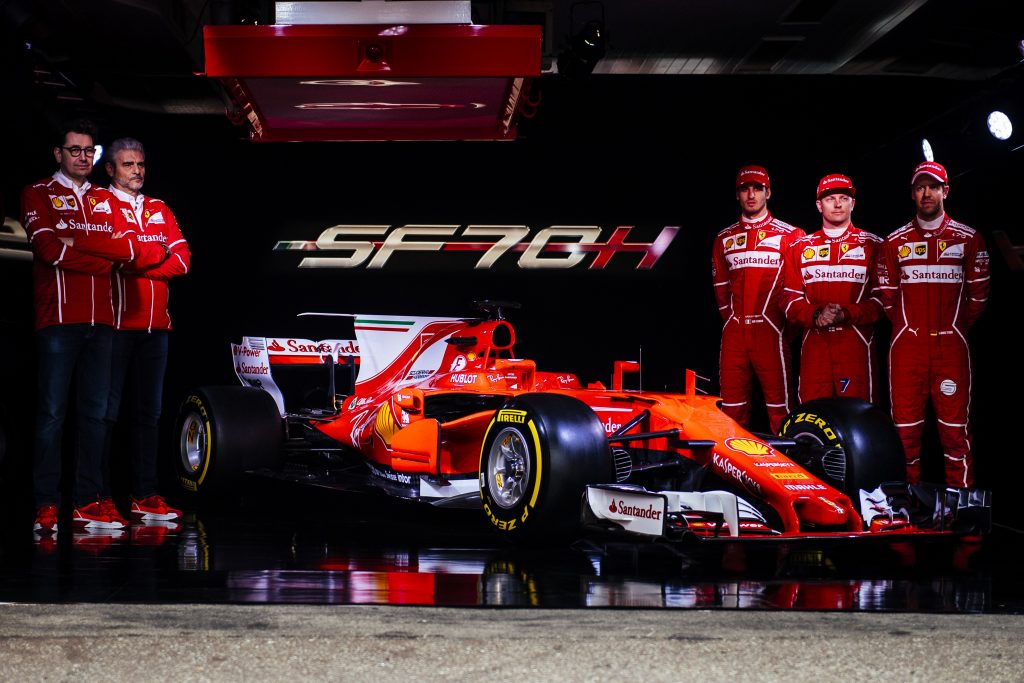
So what can Ferrari do to make the most out of their driver academy? The most obvious is to take a chance on their young drivers. Ferrari is traditionally conservative in their driver choices, preferring to invest in known quantities than rookies. But this comes at the detriment of its own young drivers. While no one is suggesting they promote one of their drivers to a Ferrari seat immediately, to be seen actively pursuing a race seat for some of them would go a long way.
Although it is not something that is always within their control, if Ferrari could use one of the teams they supply engines to as a stepping stone to develop their young drivers, in a similar way to how Red Bull use Toro Rosso, then that would be ideal. Sauber, with the announcement that they will, after all, be using Ferrari engines in 2018, are well placed to do just this. Of course, it may not be the direction Sauber want their team to go in, but from Ferrari’s point of view, it is the perfect continuation of the FDA.
So have Ferrari taken steps to instil more confidence in their junior drivers? Evidence wouldn’t suggest so. And perhaps they haven’t needed to. Until 2017, none of their junior drivers were realistically in line for a F1 seat, let alone a seat at Ferrari. But signing up GP2 graduate Antonio Giovinazzi as their third driver for this year gave them someone who was in a position to step up. And now the unexpected dominance of 2016 GP3 champion Charles Leclerc has brought another figure into the frame
Suddenly Ferrari are faced with a dilemma they have never encountered before. They have two drivers whom, ideally, they should be finding race seats for. Both Leclerc and Giovinazzi have expressed their total faith in Ferrari to do what’s best for them. Yet there seems to be an unwillingness from Ferrari’s part to exert some influence in using the FDA to take their drivers all the way.
The future of Ferrari lies in such drivers, but it is the team itself that seems to fail to see that.
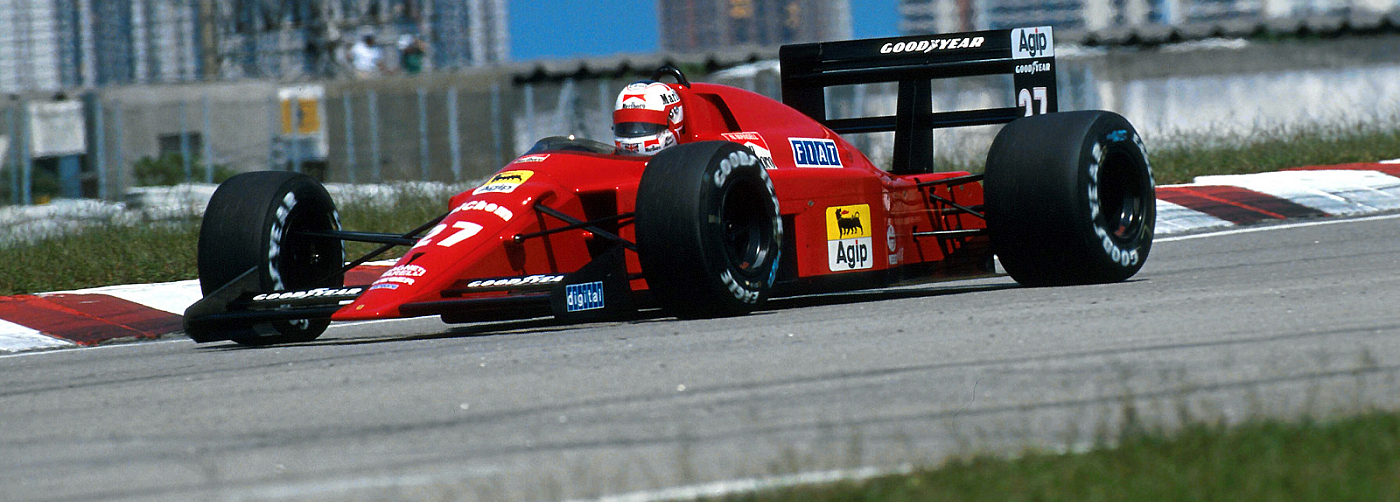
John Barnard and the Ferrari gearbox that revolutionised Formula One
Formula One steering wheels are now awash with buttons including engine map settings, brake bias settings and paddles to shift gears. These are all now things we take for granted as Formula One cars become more like computers and get more and more complicated. As with everything in Formula One, it took one piece of genius to set the ball rolling with this technological innovation that we now see as the norm.
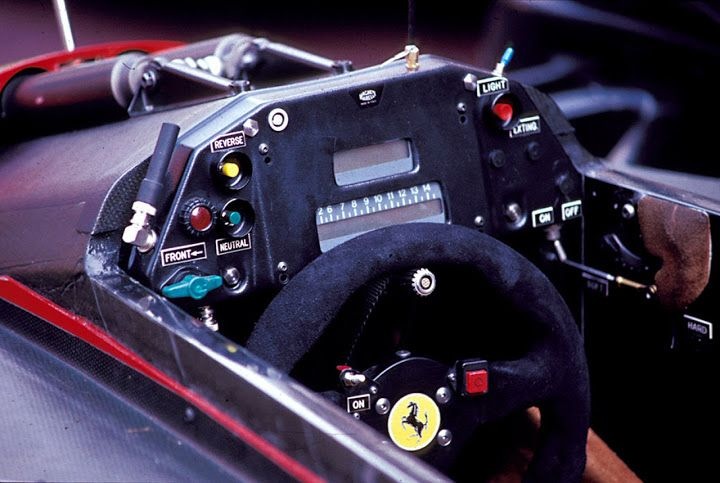
Ferrari have been pioneers for a lot of things in Formula One but one of the most ground-breaking was the semi-automatic, electronic gear shift system that we now know as the flappy-paddle gearbox. After fabled designer John Barnard joined Ferrari from McLaren in 1987, the Englishman quickly set to work on what became Ferrari’s 1989 challenger after arriving too late to influence the 1987 car and reliability issues with new transmission hampering 1988. With 1988 being the last of the turbo years, Barnard wanted to focus in detail on 1989 and beyond.
Formula One cars used to have a clutch pedal and stick shift as are in most road cars and Ferrari’s technical chief felt that the wider cockpits that came with this system unnecessarily increased drag. The system was fist tested during 1988 and hit reliability problems as Ferrari’s pioneering technology encountered the expected hiccups. Despite that, Barnard elected to run the F1-89, or 640, with the revolutionary transmission from the start of 1989, although not expecting it to make the finish of the season-opening Brazilian Grand Prix. Even with the low expectations, the F1-89 was the most eagerly anticipated car of 1989 as teams and drivers watched and wondered about the new technology. Both Williams’ of Thierry Boutsen and Ricciardo Patrese fell by the wayside while Ayrton Senna also hit mechanical strife to leave Nigel Mansell out front.
Mansell wasn’t expected to stay there as in testing the gearbox had only lasted around half a race distance, but to the surprise of many including a large number of Ferrari personnel the Brit held off Alain Prost’s McLaren and the semi-automatic transmission won on debut. That would be the only points for the Scuderia until Round Seven at the French Grand Prix as they sought to solve the gearbox teething problems. The problem was found to be a lack of power from the battery to the electrical gearbox, and results including a further two victories came with reliability as the car proved to be fast.
For 1990 Ferrari challenged for the title with Alain Prost and had a clear head start in electronic transmission, but the years 1991-94 proved to be fruitless and other teams caught up in the new electronic era of Formula One. Every team had electronic gearshift technology by 1995, and the concept is now a staple of the modern motorsport world. The equipment has even made it onto many road cars we use today.
And it all came from a drawing in a workshop in Guildford.