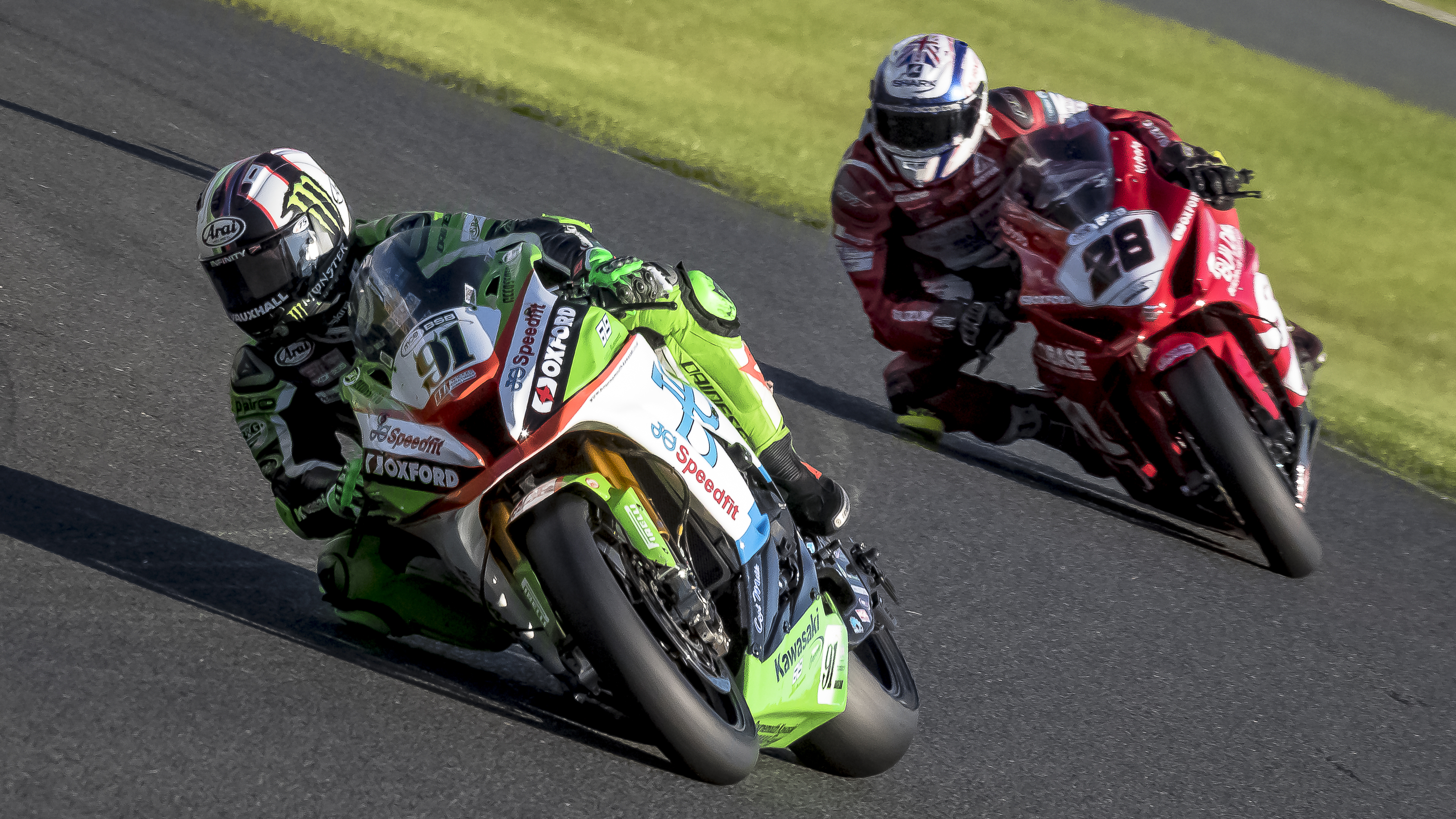
Leon Haslam was the major beneficiary in the opening British Superbike Showdown round at Oulton Park in Cheshire. Last year’s runner-up took his first win since Cadwell Park in the opening race before finishing a close 2nd in race two, just 0.060 behind the race winner, Dan Linfoot. This moves him and his JG Speedfit Bournemouth Kawasaki Team back to the top of the standings.
In contrast to the earlier meeting at Oulton Park in May, Haslam scored the most points out of the Showdown contenders, with 45 points marked up over the weekend. This was 18 more than Josh Brookes, 29 more than Shane Byrne, 22 more than Jake Dixon, 24 more than Peter Hickman and 31 more than Jason O’Halloran.
“I had to keep telling myself to keep pushing, especially when Brad Ray was nipping at my heels for the last few laps!”, said Leon Haslam, the new series leader.
“Even though the conditions weren’t great in race one or race two because of the wet patches, I felt like I rode really well”.
Haslam turned his attentions to Assen, a circuit which he achieved a double victory at last season. “I’m looking forward to Assen; it can be very weather dependent and it’s cold this time of year but we managed a double win there last year so we know that the potential of the bike is good”.
“However, there are so many people in the Showdown challenging for a place on the podium that anything can happen, but that’s what makes it so exciting this year!”
An announcement on the rider line-up at the team is expected in under ten days, as Pete Extance revealed in an interview on Saturday evening. You can read the full interview tomorrow (Wednesday 20th September).
2017 Singapore Grand Prix, Sunday – Wolfgang Wilhelm
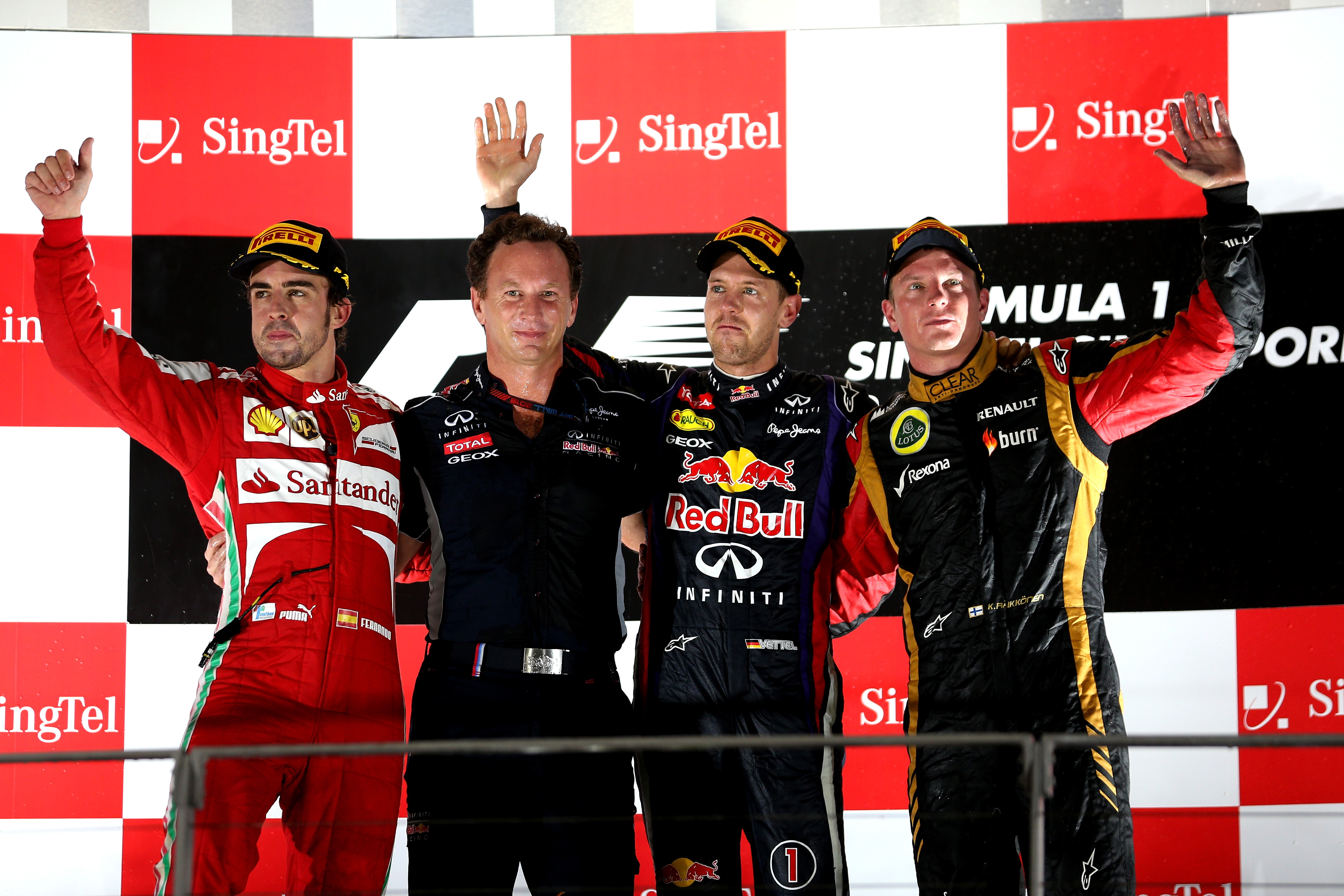
Ferrari has ruined their best chance at winning a driver’s title since 2013 and their first constructor’s title since 2008, it was always going to be a bit of a stretch due to Raikkonen being fourth best out of the two teams, he even finds himself behind Ricciardo in the championship.
Since the hybrid era began, Singapore has been a track on which Mercedes had never been able to adapt, other teams were able to be much closer to them than they are at other circuits. Nico Rosberg did break the trend last year, but if the race was slightly longer then Ricciardo may have got him on fresh rubber. It seemed a case of deja vu for the silver arrows team once more with them locking out the third row and Vettel producing probably the best lap of his life to beat the two Red Bulls who had looked mighty around the floodlit streets. Raikkonen was once again in fourth, looking like a rear gunner.
The weather had been temperamental all weekend, with heavy showers duringthe day and even an almighty monsoon during Saturday afternoon. This was officially the first ever wet night race, as the rain came and went in the build-up to the race It was pretty much decided that with 10-15 minutes to go that the track was wet enough for intermediates, some decided to go on full wets, even in the dry this is a track that keeps you on your toes, especially as it continues to have a very high chance of a safety car.
The calm before the storm came as they lined up in their grid positions, the lights went out and away they went. Raikkonen and Hamilton made the best start of the top teams, Vettel and Ricciardo were rather tardy. Raikkonen went down the inside of Verstappen generally the safer route, whilst Hamilton went on the outside. Vettel much like his hero Schumacher decided to close the gap, very risky on a wet track, closing the door to where Verstappen could go. Vettel didn’t see what an amazing start Raikonnen made, so he was actually squeezing two cars which never would have worked. Verstappen was not in a bad position with only some front wing damage, but Raikkonen got damaged and was a passenger as he careered into Verstappen also collecting Alonso, and in the end, retiring the three. Vettel has also managed to continue, but not for long, his car was severely damaged, spewing out its fluids, spinning and hitting the wall. Hamilton must have thought all his Christmas’ had come at once at once, to find himself leading the race and realistically the only challenger forvictory would be Ricciardo. Hamilton was, as always, good in the changing conditions and was easily gaining time on the Aussie, radio messages weren’t broadcast but it seems early on he had a gearbox problem, more woe for Red Bull. He managed to get the car home but all Hamilton had to do was to keep it out of the wall.
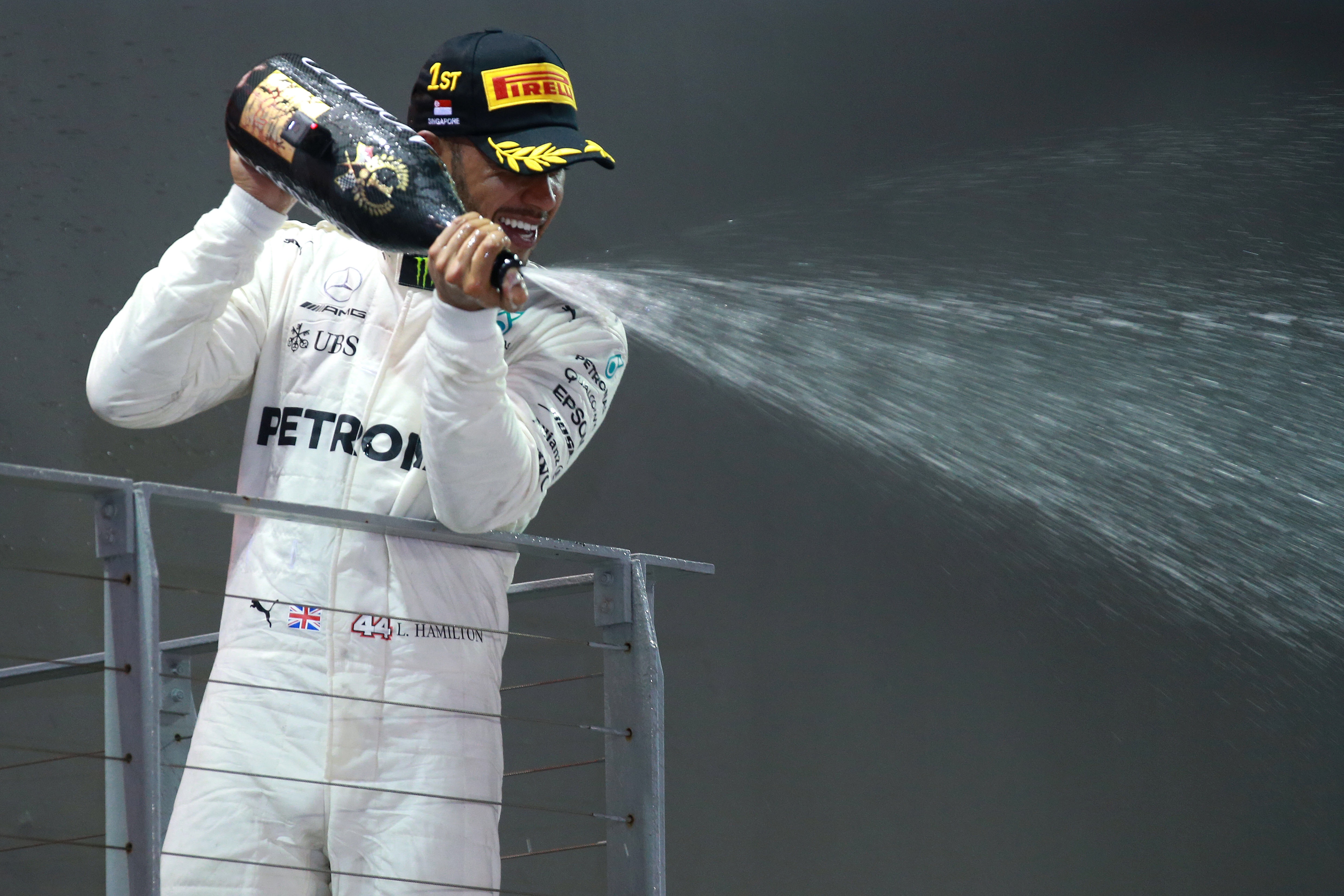
Due to three safety car periods, the race lasted two hours rather than the full distance being completed, but full points were awarded. Hamilton won his 60th Grand Prix, and now has his eyes firmly set on a fourth world title, while Vettel still has it all to do. Vettel, Raikkonen and Verstappen were called individually to the stewards to investigate the first corner drama, The stewards could not point the finger at anyone but from the public response, Vettel was the catalyst in the situation. It was placed as a racing incident, many expecting a penalty for Vettel, but losing further points to Hamilton is punishment enough for the German.
Has the Championship already been decided? As the legendary Murray Walker would say ‘Anything can happen in Formula 1 and it usually does!’ Just look at Malaysia last year, Hamilton’s ‘No, No, No’ moment, when he was clear of the field. Singapore was a major turning point but is there one last twist in the 2017 season?
The polite way to sum up Ferrari’s Singapore Grand Prix is “total disaster.”
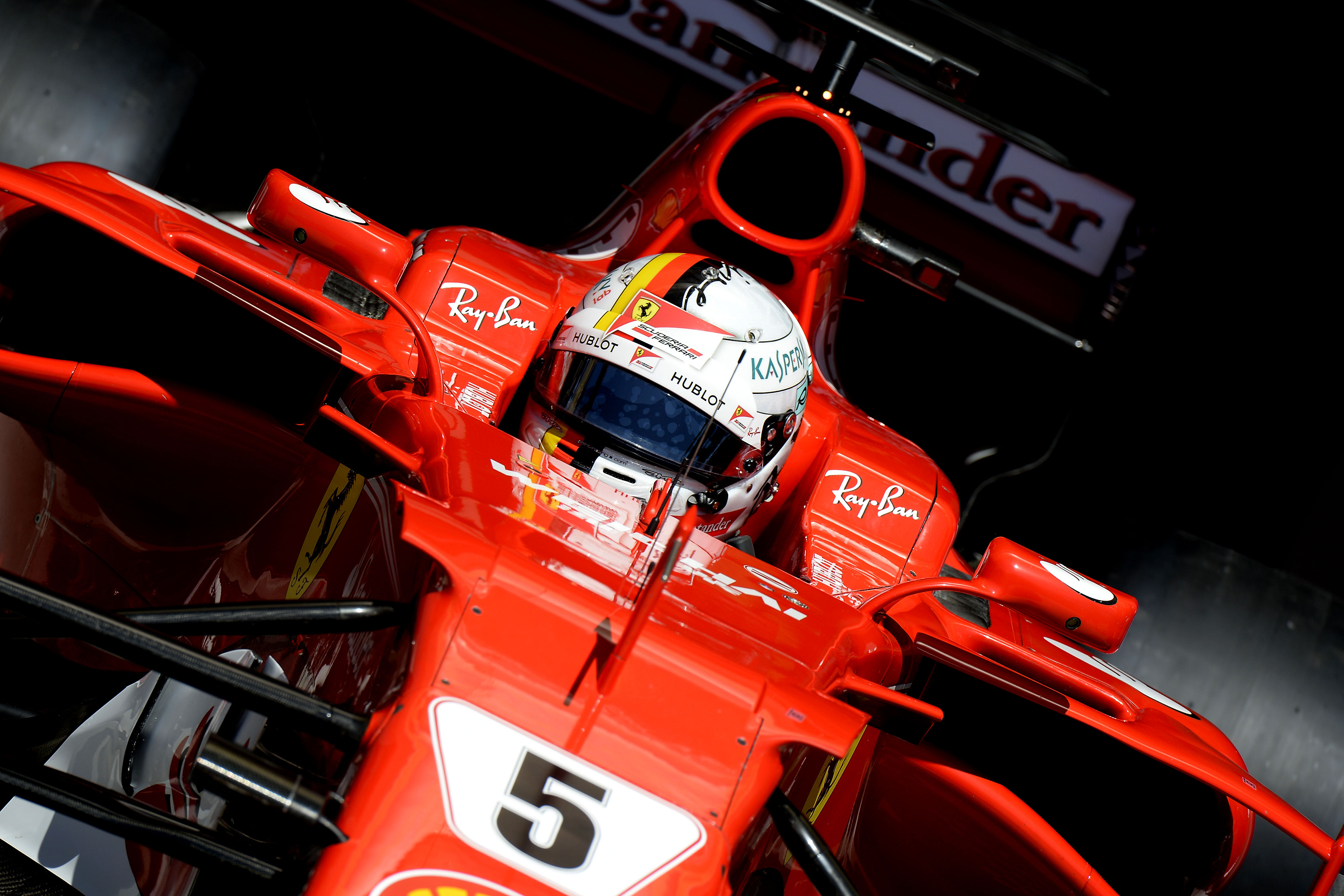
Sebastian Vettel moved across to block Max Verstappen at the start and the two combined to spear Kimi Raikkonen across the track and into teammate Vettel’s sidepod.
Meanwhile, Raikkonen and Verstappen continued, without much control, on to the first corner where McLaren’s Fernando Alonso played the role of innocent victim as he was catapulted into the air and out of the race.
It had all started so well, too.
Vettel took a mesmerising pole position on Saturday and managed to put Verstappen, Daniel Ricciardo and Raikkonen between himself and title rival Lewis Hamilton.
This was therefore supposed to be the weekend that he marched back to the top of the World Championship standings at a circuit that clearly favoured Ferrari.
Instead, the four-time World Champion now has it all to do and is 28 points behind Hamilton in the standings. Crucially, that is more than a race victory.
This is because while other lost their heads in a race that saw only 12 cars see the chequered flag, Hamilton cruised to victory with a poised, elegant if slightly fortunate drive.
The Brit has come alive since the summer break and has reeled off three successive wins.
That has left Vettel needing snookers in order to regain a Championship lead that before the Italian Grand Prix he had held all season.
Ferrari will now have to hope that there remains further twists in this so-far delightful tale.
The last time they won a World Drivers’ Championship in 2007, Kimi Raikkonen trailed Hamilton by 17 points.
Hamilton retired at the penultimate race in China before mechanical gremlins limited him to seventh at the final round in Brazil ten years ago.
The Scuderia could soon have to hope for a turnaround of that ilk if they are to return to the top.
Red Bull Racing could be looking at the final years of its Formula One tenure, following reports that Renault has signalled its intent to cease its supply of engines to the Austrian team after the 2018 season.
Getty Images / Red Bull Content Pool
Renault’s relationship with the Red Bull company has been fraught for some time now. The two parties came close to ending their association in 2015, before an absence of alternative suppliers forced Red Bull to recommit to its Renault contract for the time being.
And although an engine rebadging by TAG-Heuer seemed to improve relations last year, this season has seen a return of Red Bull’s public criticism of Renault, as a combined lack of horsepower and reliability has seen the former champions slump to a distant third-fastest team.
Now, if the current reports are true, it appears that the Red Bull-Renault alliance has at last reached its conclusive breaking point.
That the news comes at the same time as Renault has finally confirmed its new supply agreement with McLaren is no surprise—with Red Bull believed to be using Toro Rosso’s Honda deal to evaluate a future switch to Japanese power, it seems Renault is electing to jump before it is pushed. Having both a factory team on the rise and a grateful customer in McLaren, there is no longer any incentive for Renault to extend its fractious Red Bull relationship beyond its final term next year.
Such a break-up would leave Red Bull with little choice but to become Honda’s de facto works team in 2019. And with the way the next few seasons of F1 are already shaping up, that deal could well prove the first step in Red Bull Racing’s exit from the sport.
Getty Images / Red Bull Content Pool
For starters, a premature Honda alliance would go down like a lead balloon in Red Bull’s driver stable.
Daniel Ricciardo has already stated that Red Bull will need to be capable of a genuine title challenge within the next few years if they are to convince him into extending his stay at the team beyond 2018. But unless Honda can make a phenomenal leap forward over the next twelve months, it’s almost certain that Ricciardo will take his hunt for a maiden title to either Mercedes or Ferrari.
Nor can Max Verstappen be expected to hold faith in the Japanese marque, even if he has to wait a year longer than Ricciardo before leaving. And then there’s Carlos Sainz—set to be loaned out to the factory Renault team next year, he will surely do all he can to avoid being called back to Red Bull-Honda for 2019.
It’s entirely possible, then, that by 2020, Red Bull’s senior lineup could comprise Pierre Gasly and the returning Daniil Kvyat, whilst Toro Rosso’s seats are filled by Honda juniors like Nobuharu Matsushita and Nirei Fukuzumi—a far cry from the current pedigree enjoyed by the Red Bull fold.
Getty Images / Red Bull Content Pool
The other danger, of course, is that it’s not just Red Bull’s drivers who choose to jump ship. Adrian Newey is perhaps the team’s biggest asset outside of the cockpit, but for a man used to designing race- and championship-winning cars, there will be little for him to relish in overcompensating Honda’s horsepower deficit, especially as he has already expressed a desire to step back from leading Red Bull’s technical team in the near future.
It’s also well worth questioning just how willing Christian Horner will be to guide Red Bull through yet another uncompetitive era, or how enthusiastic Helmut Marko would be about managing a driver lineup that lacks the kind of flair and potential seen in recent years.
But as painful as any of those losses would be, the most damning exit would easily come from the man at the very head of Red Bull’s operations—Dietrich Mateschitz.
Although Mateschitz’ many quit threats have been decidedly impotent in the past, it will be much harder to dismiss them should he make similar statements in the next three years. Red Bull’s commitment to F1 is up for renegotiation in 2020—coinciding with both the reported duration of Toro Rosso’s new Honda deal, and the end of F1’s current engine formula—which will give Mateschitz plenty of time to fully evaluate Red Bull’s prospects from 2021 onwards, and whether they merit the sums required to run two F1 teams.
Getty Images / Red Bull Content Pool
Quite what would happen to the spoils of Mateschitz’ racing empire is hard to predict this far ahead of time. If Honda remains committed to F1 into the proposed new twin-turbo era, it may assume the Milton Keynes outfit into a full factory team, as it did with BAR in 2006. There have also been numerous suggestions that Porsche is in the frame for a 2021 buyout, or that Red Bull might remain as a title sponsor for a works Aston Martin-Cosworth alliance.
As for Toro Rosso, the Italian-based team and its chief designer James Key would surely make an alluring target for Ferrari’s Sergio Marchionne, assuming he can’t convince Sauber to become an Alfa Romeo-badged junior team.
But even if none of these exit strategies come to fruition by 2020, there is still nothing stopping Mateschitz—valued to be worth an estimated $15.4 billion—from simply closing the doors on Red Bull’s two teams and selling off the assets elsewhere.
And whilst before that may have sounded like an insincere threat from the Austrian, a painful enforced alliance with Honda and the end of the current Concorde Agreement will be more than enough to turn Red Bull’s exit into a serious consideration.
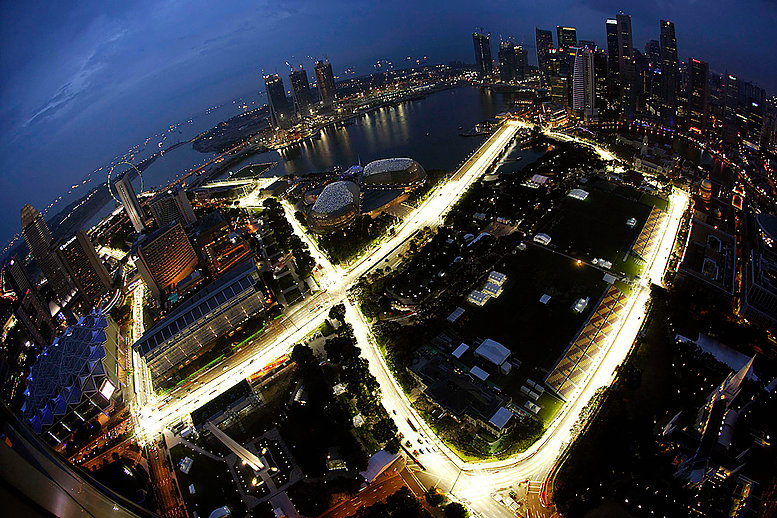
With the Singapore Grand Prix next on the calendar, most fans and pundits are focused on the close Drivers Championship battle between Lewis Hamilton and Sebastian Vettel. Discussions abound over which chassis is better suited to the Marina Bay circuit, which drivers will cope better with the heat, possibly tyre strategies, and the like. Underneath all the excitement lies the fact that this may be the last time that the Lion City hosts a Grand Prix. Though the 2018 calendar lists Singapore provisionally on 16 September, the current contract expires this year and hasn’t yet been renewed.
It would be foolish for Liberty Media and Singapore GP Pte Ltd to miss the opportunity to renew. The benefits are too great to both sides, and losing the Singapore Grand Prix would be a blow not only to Formula One, but to Singapore as well.
While there are other city circuits on the calendar, the nighttime schedule brings a wealth of character and spectacle to the race. The Marina Bay circuit is challenging, and popular with television viewers, drivers, the media, advertisers – it seems that everyone loves Singapore.
Singapore benefits greatly from this love. Formula One has a significant halo effect, raising the profile and prestige of Singapore by showcasing the city to a global audience. Tourism obviously benefits, but beyond tourism there are a host of ancillary business and networking opportunities found at a Grand Prix. It’s a glamorous event, and the highly competitive nature of the sport attracts highly competitive individuals from many other sectors. While the global television feed tends to focus on recognizable faces in entertainment and sport, many other powerful and influential figures are to be found in attendance. Significant deals are often begun during the race weekend.
The net economic benefit? A cool $1 billion over 10 years from the race itself, and another $1 billion in increased tourism and investment, even taking into account the lost retail sales, traffic congestion, and other tourism losses during the event.
Singaporeans in turn are glad for the Grand Prix. According to a YouGov poll, close to 70% of Singaporeans think that the Grand Prix has been positive for Singapore, and 57% want to see the race continue. Indeed, many Singaporeans who aren’t Formula One fans recognize these benefits and believe that the race is worth keeping. Even with the disruptions, the Singaporeans who are directly affected feel that as long as the Grand Prix helps raise Singapore’s profile in the region and the world, and as long as it continues to drive tourism and foreign spending, they’ll manage. It doesn’t hurt that around 80% of the spending on the event goes directly into the local economy. Local firms are involved in every aspect of the event, from circuit setup, to security, to transport.
It’s clear that reasons abound for Singapore to press for renewal, but there are compelling reasons for Formula One as well. With Malaysia out of the picture, Singapore is the sole location in Southeast Asia to host a Grand Prix. This is a key growth market for Liberty Media for a number of reasons, not the least of which is the youth factor. This is a young region with a growing middle class, and they’re eager for travel, sport, and entertainment. In the above-mentioned YouGov poll, Hong Kong, Bangkok and Sydney are the three cities Southeast Asian residents would like to see host new races, but as prior expansion efforts have shown it takes some time to develop a new Grand Prix. While Liberty Media works to expand Formula One through Southeast Asia, Singapore represents an invaluable anchor for Formula One in the region. Its loss would do great damage to the sport’s growth.
These same demographics in the region make the Singapore Grand Prix highly valuable to brands and advertisers as well. It will come as little surprise that the YouGov poll reflects that Ferrari takes the top spot in brand recognition, but they’re not the only ones. Red Bull, Shell, and Mercedes also gain valuable brand recognition in the region via the Grand Prix. Marketing returns are key to brand participation in Formula One, and losing regional exposure will hurt these companies. Liberty Media will only benefit by keeping this constituency’s interests in mind.
It’s clear that everyone will benefit from a renewed Singapore Grand Prix. It’s now up to Liberty Media and Singapore GP Pte Ltd to make it possible.
After a dominant Mercedes win on Ferrari’s home turf at Monza that saw Lewis Hamilton gain the Drivers Championship lead by 3 points, the Formula One world packs its bags for the flyaway races that finish out the season. Next up on the calendar is the dramatic night race in Singapore, taking over the center of the Lion City for possibly the final time. Will we see any major upsets? Who or what will intrude on the track this year?
Unsurprisingly, the ultrasoft compound constitutes the majority of the tyres selected for the weekend. Most drivers will have 10 sets of ultrasofts, though there’s a good mix of supersofts as well. Haas is the outlier here, with both Grosjean and Magnussen opting for 4 sets of supersofts, 1 set of softs, and only 8 sets of ultrasofts.
We may as well begin with McLaren, as they’re already on everyone’s minds. Though official confirmation is to come later in the week, it’s an open secret that McLaren and Honda are splitting up, with Toro Rosso picking up the Honda engine supply and McLaren picking up Renault power, and Renault picking up Carlos Sainz in the midst of this engine-based musical chairs. Alonso will stay at McLaren, and everyone’s happy except probably Jolyon Palmer, who will lose his seat barring a miracle.
In actual McLaren RACE news, Alonso expects some points in Singapore. As it’s a lower-speed circuit McLaren may well be able to hold a good position provided they don’t have to tax the Honda power units too much.
Mercedes will be keen to work hard to consolidate Lewis’ hairs-breadth 3-point lead in the Drivers Championship as well as shore up their 62-point lead in the Constructors Championship. Bottas, his race seat secure with Mercedes for 2018, has indicated that if he’s in P2 behind Hamilton he’ll gladly help the team out rather ‘than try something silly’. On the media front, this being Mercedes, Toto Wolff is busily talking up Ferrari and Red Bull’s chances. Niki Lauda’s also sanguine on Ferrari. How much of this is genuine concern and how much is the typical Mercedes under-promising remains to be seen, though Ferrari have mounted a substantial challenge to Mercedes this season, and Red Bull providing some surprises of their own.
Ferrari will certainly be keen to work their magic to take the Drivers Championship lead back and take a nice chunk out of the Sliver Arrows’ Constructors Championship lead. As they’ve done well at low-speed circuits this year and Vettel has won at Singapore twice as many times as Hamilton, Ferrari pose a real threat to Mercedes, though it remains to be seen if Kimi Raikkonen is as keen to be a team player as his fellow Finn Bottas. Though they may stop short of actual team orders, Ferrari would be foolish to not heavily favor Vettel in Singapore.
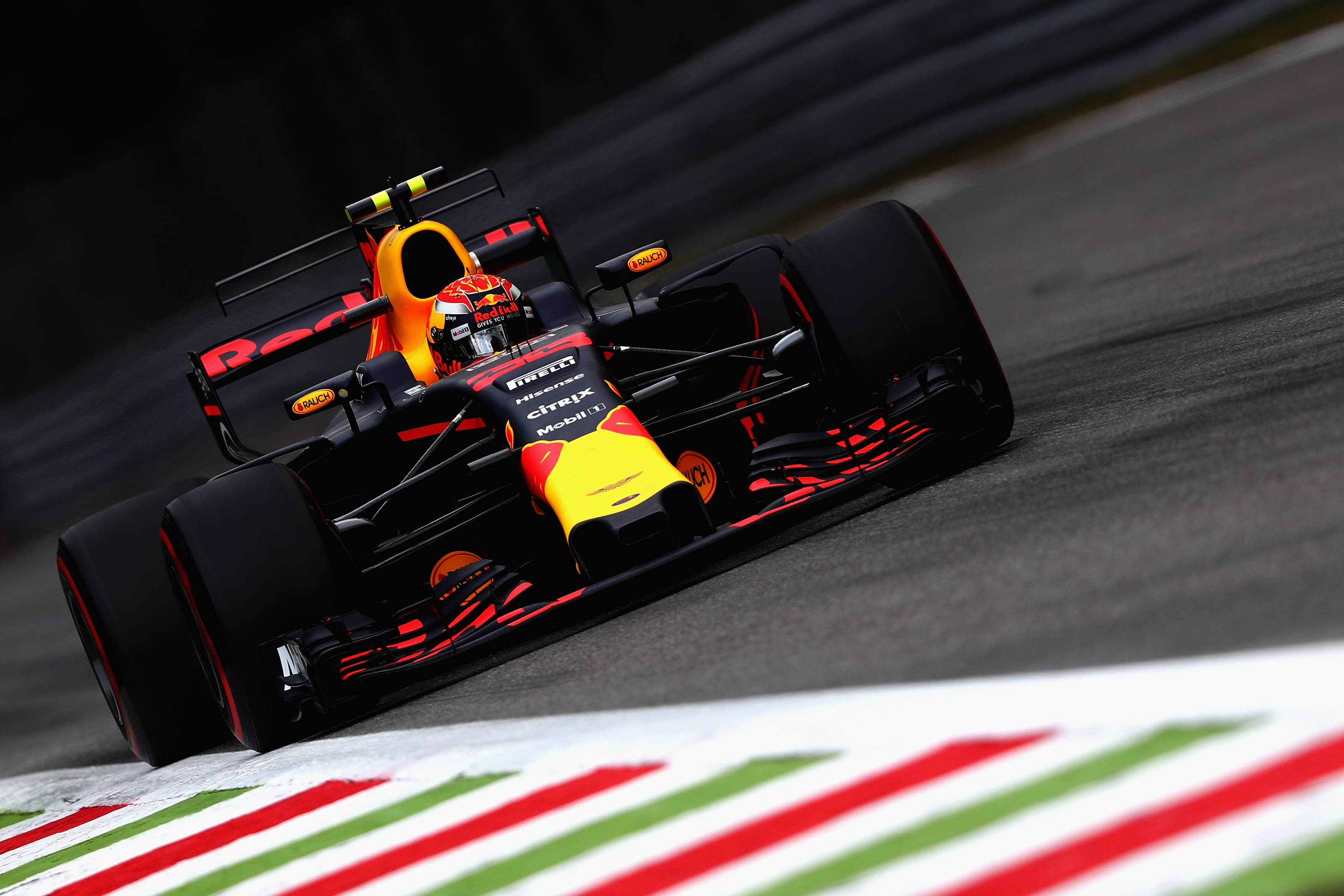
After strategic grid penalties overshadowing the Bulls’ stellar qualifying performance in the wet at Monza, and an unfortunate early incident putting Max Verstappen on the back foot, the Bulls are optimistic that Singapore presents the best chance of a win at this stage of the season. As they’ve historically done well on lower-speed, higher-downforce circuits, this isn’t a vain hope provided they can avoid further grid penalties. Good results at Singapore won’t hurt their driver morale either, as both Ricciardo and Verstappen desire a winning car.
Coming fresh off a double-points finish that happily featured no on-track fisticuffs between their drivers, Force India brings upgrades to Singapore. They’ll doubtless be keen to keep Perez and Ocon well in hand, and look to extend their 58-point lead over Williams in the Constructors Champtionship, further consolidating their fourth place standing.
Williams, meanwhile, is focusing on a strong finish to the season. Their gap to Force India isn’t insurmountable, but with only 7 races left including Singapore they need to raise their performance game with immediate effect. As they’ve struggled to make the most of the FW40 all season, it’s likely they’ll remain solidly in the middle of the field.
Toro Rosso, only 15 points behind Williams, should turn in a respectable performance at Singapore barring on-track incidents or unforeseen grid penalties.
Haas, meanwhile, are confident that their good aerodynamic efficiency with high-downforce configurations will pay off, so long as they can stay in the tyre window.
Regarding Renault, they’re expecting a better performance in Singapore due to the higher downforce levels at Singapore. Meanwhile, if Nico Hülkenberg doesn’t claim a podium finish he’ll set the unenviable record for most Grand Prix stars without podium finishes. He’s currently tied with Adrian Sutil at 128, and Singapore will make 129. Palmer, meanwhile, desperately needs to find performance, with his F1 future now almost certainly at stake.
Sauber faces what may be their final chance of this season to get ahead of McLaren. They’ve done heroic work with year-old power units and the upsets in management, but it’s a long shot.
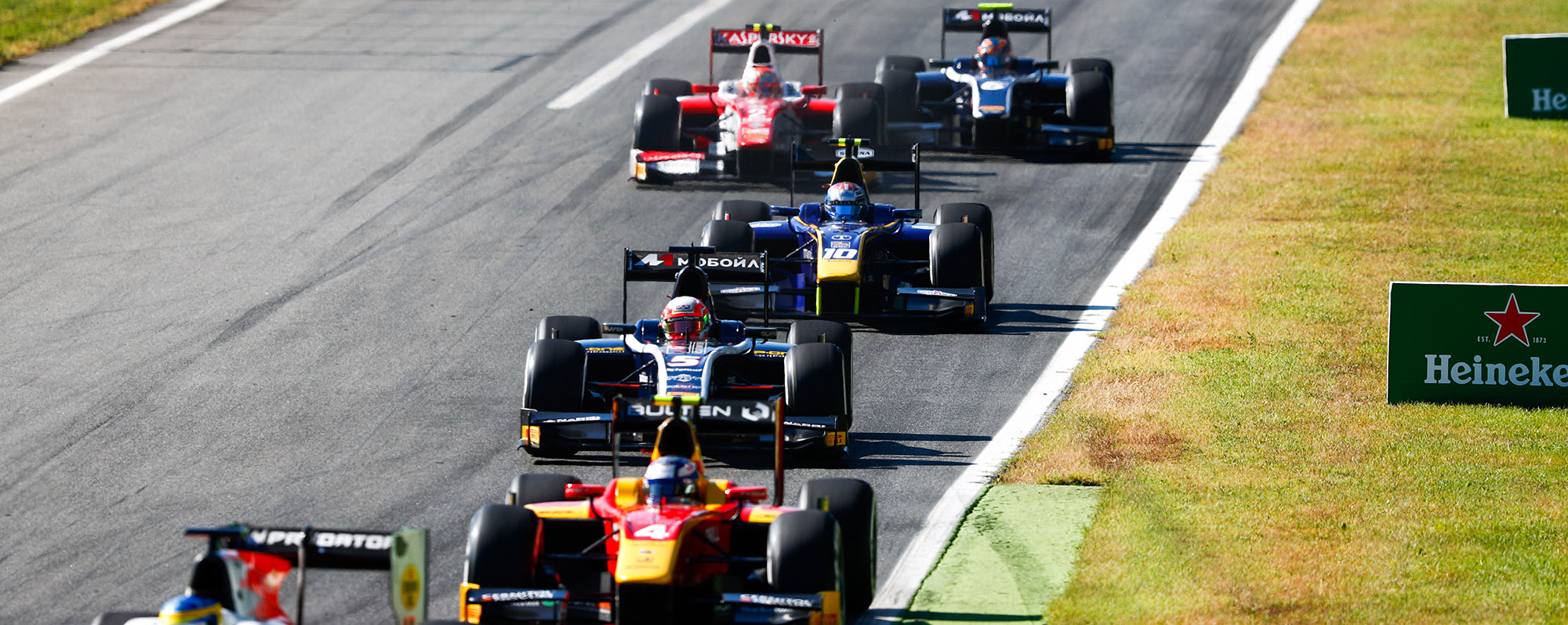
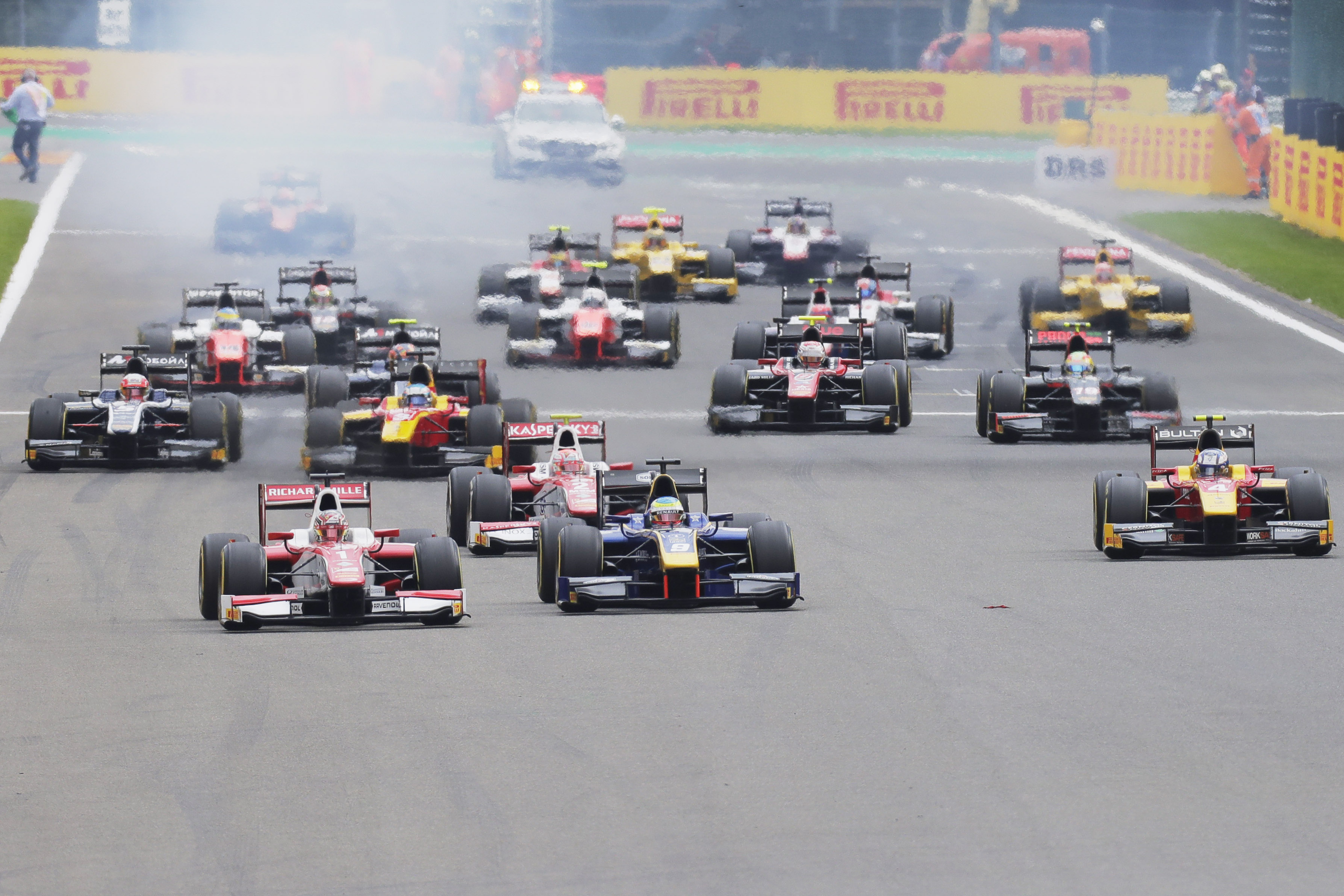
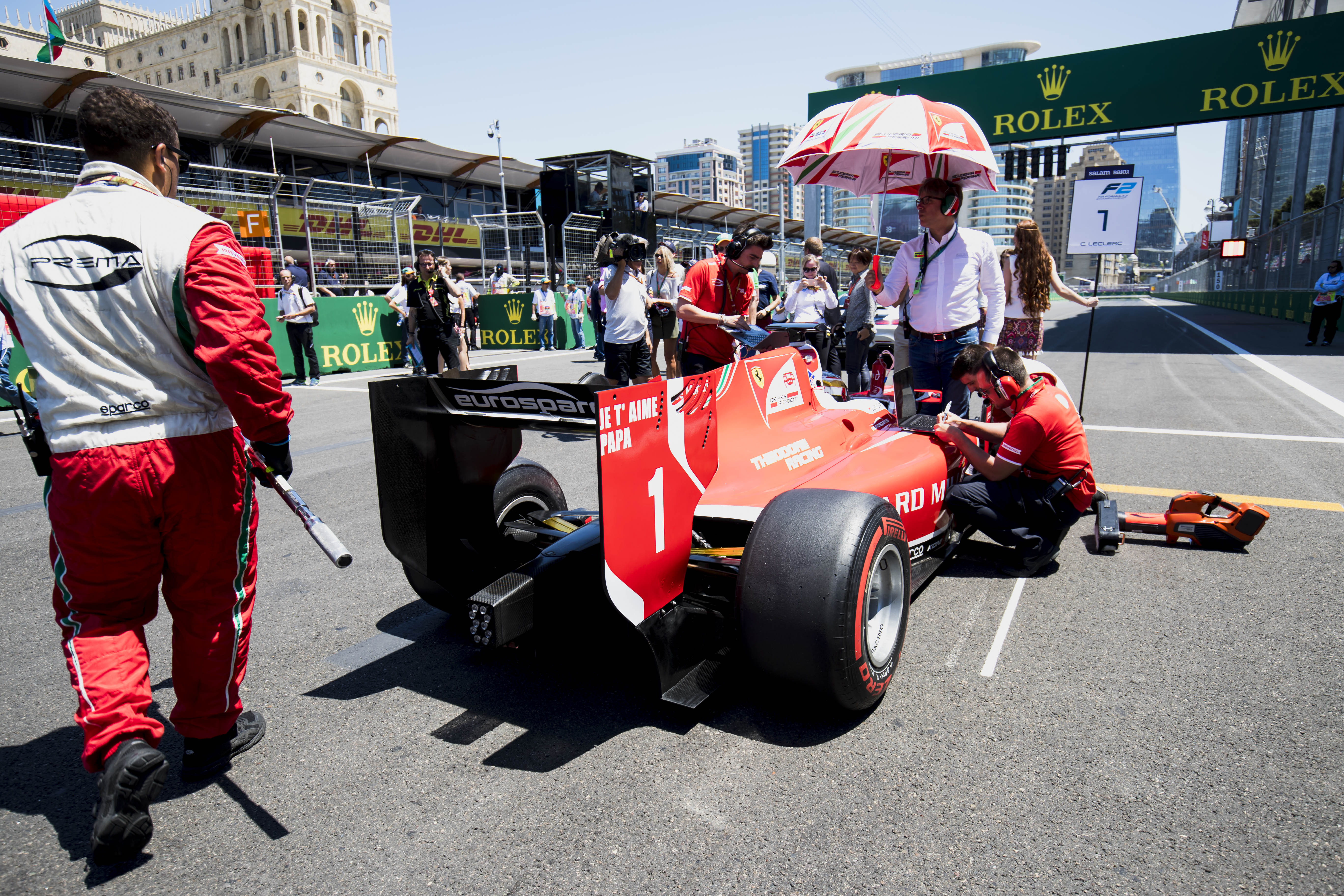
Ever since the GP2 series became the FIA Formula 2 Championship earlier in the year, much work has been done to try mould the series to fit the vision of the FIA. And the latest announcement is that the FIA are looking to make Formula 2 “almost compulsory” for young drivers looking to make it to Formula 1, through the reallocation of the points required to obtain an FIA super licence.
Currently, a driver needs forty points (accumulated within the past three seasons) to obtain a super licence. Through the regulations in place, the top three placed drivers in F2 are awarded the whole forty points, along with the winners of European Formula 3, Formula E, the LMP1 class in the World Endurance Championship, and the IndyCar Series. Technically, this means drivers can skip Formula 2 all together, and young drivers can enter Formula 1 from lower junior categories such as Formula 3 – which we saw in the cases of Max Verstappen and Lance Stroll.
This kind of rapid career progression, often labelled as ‘skipping’ series, has been widely criticised by some who see it as a way for well funded youngsters to find a place in Formula 1 before they are quite ready for the jump. Though this was an issue that was supposed to be avoided by the introduction of the new super licence system in 2016, brought in as a direct response to the seventeen-year-old Verstappen’s arrival on the 2015 F1 grid, the FIA has decided that a reshuffle of the points system is needed to help improve the junior single seater ladder.
Photo: Mauger/FIA Formula 2
Formula 2’s technical director Didier Perrin told Motorsport.com that while F2 wouldn’t “be mandatory in theory…it will be the preferred path to F1”. And though no specific plans or numbers have been revealed, his words clearly indicate that F2 will be given more weigh in the super license system, particularly above Formula 3. The desired effect is clearly a boost to the profile of the Formula 2 Championship, but there has also been a suggestion that Formula 1 wants to create a structure similar to the one in place in MotoGP, where the series is supported by the Moto2 and Moto3 classes. The success created in MotoGP makes the prospect attractive to the Formula 1 bosses, and it is easy to see the benefits.
With Formula 2’s place in the single seater ladder intended to be above Formula 3, it seems only logical that its winners should be awarded more super licence points, and perhaps an oversight that it was ever given the same amount in the first place. With Formula 1 teams able to overlook the category, much has been made of the fact that many recent stand out performers and even winners of GP2 have failed to get a look in at the top tier. While drivers from Formula 3, Formula V8 3.5 (formerly known as Formula Renault 3.5) and DTM were being called up by the big names in Formula 1, those competing in what was supposed to be top junior single seater series were left languishing. Recent graduates have been forced to look elsewhere.
Another benefit, and what is clearly the main intention behind the move, is to prevent the kind of criticism being directed towards F1 that the promotion of Max Verstappen and Lance Stroll inspired. While both drivers acclimated to Formula 1, and have since proven their worth, the moves were met by concerns about their age and experience. Stroll’s early performance in particular, seemed to prove these doubts, and though he has since overcome these troubles, many would still argue that he would have benefitted from a few more seasons in junior formula. By making a season in Formula 2 the preferred route, then future Verstappens and Strolls will have to wait a little longer before making their top tier debut, and inexperienced drivers will be discouraged from moving too fast.
Credit: Getty Images / Red Bull Content Pool
However, for all these good intentions. There is the argument that this reallocation of the super license points doesn’t address the real problems with the single seater ladder.
Whilst Formula 2 would not be harmed by additional exposure or sponsorship, and an influx of more top young talent. The reason for the lack of graduates from the series to Formula 1 lies not in the series itself, but rather in the absence of available seats in F1. It is all very well encouraging drivers to take their career through F2, but when the rare opportunities for a Formula 1 drive do present themselves, then drivers and teams will not want to wait around until they have satisfied the FIA by climbing the career ladder just the way they laid out.
But perhaps the most glaring issue with Formula 2 and single seater series like it is cost. With a season in Formula 2 can cost anywhere between 1.5 to 2 million euros, for those young drivers who lack substantial backing, it becomes an increasingly unviable option. If the emphasis is placed on Formula 2, then these drivers who cannot afford to race a full season in a front running F2 team run the risk of being overlooked – just as the stars of the series were in the past. It is no good trying to elevate a series without first making it more accessible for hopeful young drivers.
Photo: Zak Mauger/FIA Formula 2
Those drivers who find it necessary to take less traditional routes in their motorsport careers could find themselves ignored if the super licence points do not aid racers who choose to take this path.
While the FIA may want to replicate the Moto2/3 system in single seater racing, this is not a realistic goal with the current costs involved. The price of one seat in Formula 2 would probably be enough to fund an entire team in Moto2 for a whole season. While the FIA have outlined curbing expenses as one of their aims for the future development of F1, it seems pointless trying to bring in small fixes and solutions when the real problem is so much bigger.
The problem the FIA is trying to address, and the improvement of junior series are valid and worthy goals. But what they are suggesting is ultimately a temporary solution to a much wider problem. F1’s new owners have highlighted the growing cost of the sport as an issue, and it is one that needs tackling across single seater racing, or they run the risk of finding that the pool of young talent has run dry when those elusive Formula 1 seats finally do open up.
Two of the best drivers on the grid battled several times, each other for the title of the world champion. Fernando Alonso is a two time world champion currently racing for McLaren-Honda, before that he was a test driver for Benetton, joined Minardi in 2001, Renault was his next station from 2003 to 2006, then signed a contract with McLaren where he raced for only one season and returned back to Return in 2008. Fernando’s next step was Ferrari, from 2010 to 2014. In 2015, he returned to McLaren and he is racing there since now.
The Spaniard, while he was racing for Renault, finished first on the drivers’ championship for two consecutive years. Nando, won his first title in 2005 and the following season celebrated his second and final title.
Sebastian Vettel
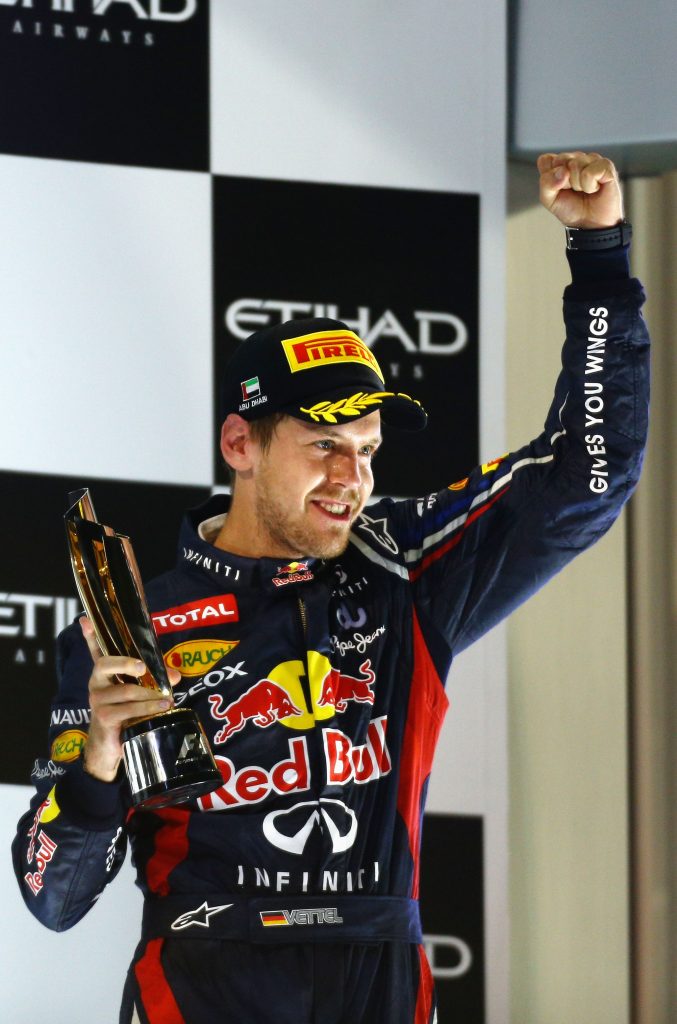
Vettel born in Heppenheim on July 3rd, 1987, at his early steps as a Formula One driver, Sebastian joined BMW Sauber as a test driver and made his official debut at the United States Grand Prix in 2007, then he signed a contract with Toro Rosso and remained there until 2008. The next stop in his career was Red Bull Racing, during his period with the Bulls he celebrated four championships (2010, 2011, 2012, 2013). In 2015, the German fulfilled his childhood dream, signed a contract with Scuderia Ferrari and he is still racing for Ferrari alongside Kimi Raikkonen.
David vs Goliath
Credit: Getty Images / Red Bull Content Pool
Fernando Alonso and Sebastian Vettel fought each other for the championship while they were racing for Ferrari and Red Bull respectively. Two times Fernando was very close to beat Vettel and win the championship with Ferrari, the first was in 2010 and the second was two years later in 2012. The Spaniard wished to become David and finish ahead of his opponent, but unfortunately Goliath was stronger, and Red Bull was unbeatable those years.
In 2010, Sebastian Vettel finished first in the drivers’ championship, the difference to his rival Alonso, was just four points. The German scored 256 points, whilst the Spaniard collected 252 points. In 19 races Vettel and Alonso were fighting wheel to wheel for the world title, during those races Sebastian retired three times and finished out of the points only in Belgian Grand Prix. Furthermore, Vettel won five races same number of victories with his opponent Fernando Alonso.
From the other hand, Fernando Alonso retired in Belgium, didn’t finish the Malaysian Grand Prix and finished out of the top ten at Silverstone. In the last six races of the 2010 season, Nando won three Grands Prix and finished twice third. Fernando played his final card for the championship in the last race of the season in Abu Dhabi.
Vitaly Petrov the Russian title decider
A thrilling race took place in Yas Marina, before the race, Fernando Alonso was leading the drivers’ championship with 246 points, followed by Mark Webber and Sebastian Vettel which collected 236 and 231 points respectively. Lewis Hamilton had also mathematical chances to win the title as he had 222 points and he was 24 points behind Fernando Alonso. The Spaniard, had to secure the first two places in order to win the title without having to consider the other results.
On Saturday’s qualifying, Sebastian Vettel secured the pole-position, Lewis Hamilton was the second quickest driver on the grid and Fernando Alonso took the third position followed by Jenson Button and Mark Webber. At the first lap of the race, Sebastian Vettel was leading the race, followed by Hamilton and Jenson Button. Alonso had a slow start which cost him the third place and dropped him down to fourth. After the first pit-stops, Alonso re-joined behind Petrov. Fernando was on hard tyres and Petrov had already done his pit-stop, Alonso couldn’t overtake Vitaly. Even when the Spaniard tried to attack the Russian, Petrov was always in position to defend his position.
Sebastian Vettel led the race all the way, Lewis Hamilton finished second, Jenson Button third, and Fernando Alonso, after 40 laps of battling with Petrov, finished seventh. That result was enough for Sebastian Vettel to secure his first world title in his Formula One career.
Two years later…
Credit: Pirelli
In 2012, the two drivers crossed their swords once again. Sebastian Vettel and Fernando Alonso fought closely, but at the end the Germans always win. Vettel scored 281 points in 20 races, whilst Alonso scored 278 points. The German, finished five times on the top step of the podium, retired in the European Grand Prix and finished out of the points in two races, the first was in Malaysia and the second in Italy.
Fernando Alonso, won three races during the season and finished ten times on the podium. The Spaniard, retired in Belgium and in Japan, but despite those two retirements he finished in the top-10 in the rest races.
In Italy, Sebastian Vettel retired on lap 47 due to failed alternator, after that race the German won four consecutive races, finished third in Abu Dhabi, second in the USA and sixth in the final race of the season in Brazil. In Brazil, Sebastian Vettel needed to defend his 13 point lead in order to secure his third championship. The fourth position, would be enough for Sebastian to give him the title, even if Alonso won the race.
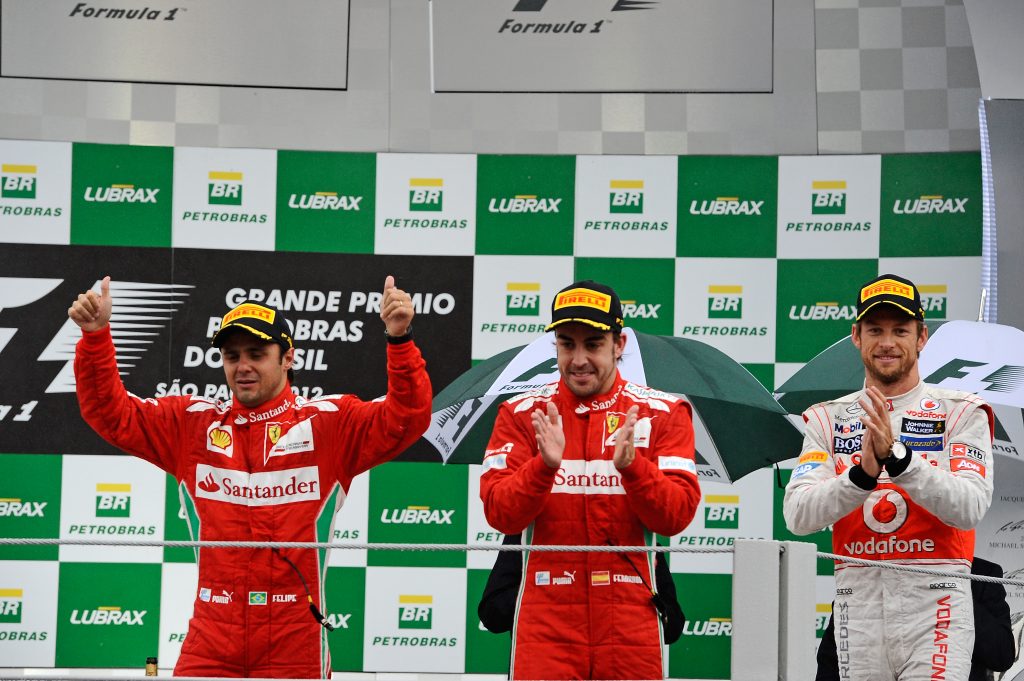
Fernando Alonso, qualified eighth whilst Sebastian Vettel set the fourth quickest lap on the grid and placed behind Hamilton, Button and Webber. The rain altered everything during the race, the teams were confused about which strategy would be correct for their drivers. On lap 23, the safety car deployed, Sebastian Vettel and Fernando Alonso were fifth and fourth respectively. The damage on Vettel’s car didn’t allow him to set a quick dry laps, few laps later the rain forced all the drivers to pit for intermediates.
At the end of the race, Fernando Alonso finished second and Sebastian Vettel sixth, still Vettel collected enough points in order to celebrate his third world title.
Hopefully, one day we will see these top two drivers to fight, once again, each other for the title.
As the Moto3 youngsters descend on the Misano World Circuit Marco Simoncelli, two Spaniards head the top of the championship looking to carry on their fine 2017 form.
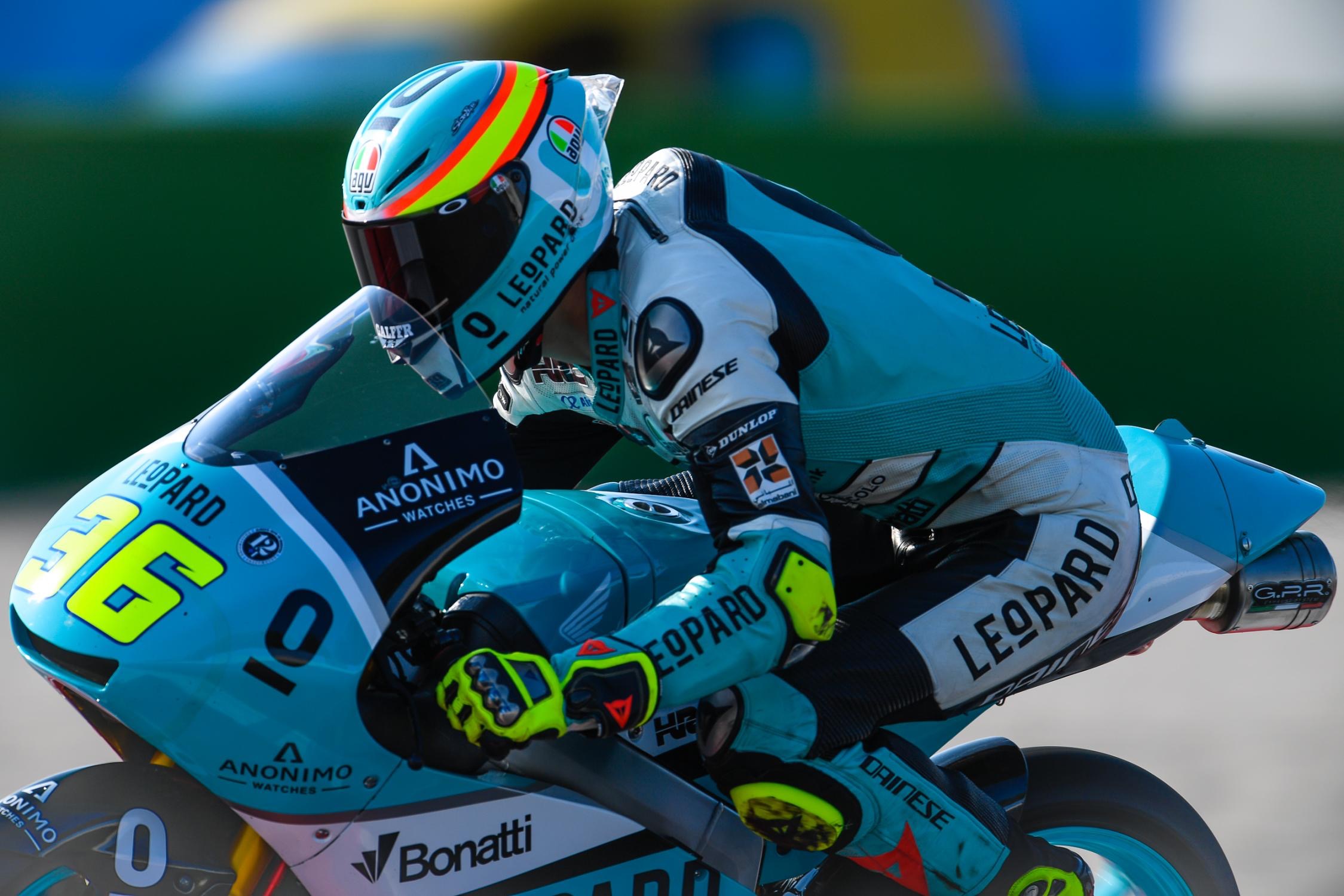
Leopard Racing’s Joan Mir is top of the tree and enjoys a very healthy 64 point advantage, consolidating his position as the title front runner with an important fifth at the British Grand Prix last time out. Despite the huge gap to the chasing pack, the margin is less than what Brad Binder had at this point last year (86 points) and what Danny Kent had in 2015 (70). No room for error then for the 20 year old, who is the only rider to have finished in the points at every round this season across all categories. Consistency is key for the champion elect.
Second place man in the championship and fellow Spaniard, Aron Canet, took his third victory of the season under the sunny skies of Silverstone. Henceforth, leapfrogging home favourite for this weekend, Romano Fenati, in the overall standings. The race win for Canet, who turns 18 later this month, was also just his sixth podium in the Moto3 class and there is no reason why he can’t make that seven this weekend.
As for Fenati, he’s enjoyed a positive season so far after being shown the door out of the Sky racing team VR46 mid way through last season. The Moto3 veteran will look to take back second position in the championship with a strong display in front of the ever passionate crowd in Misano.
Del Conca Gresini Moto3 Italian rider Fabio Di Giannantonio will be hoping he can woo his home supporters, as he sits fifth in the world standings and will want to try and close to gap to team mate Jorge Martin, as well as the other three ahead of him.
We finally saw the Enea Bastianini of old at Silverstone, crossing the line in second position to grab his first podium since his race win at Motegi last year. He picked up a win here in 2015, so he’ll be looking to continue his momentum and finish the year strongly.
Other people to watch out for? I could name about 15 – that’s how close the racing has been this year! John McPhee and the British Talent Cup team will be fighting at the front, whilst Mugello winner Andrea Migno and his Italian comrade Nicolo Bulega will want to do Valentino Rossi proud in his absence aboard their VR46 machines.
The Moto3 boys never fail to put on a spectacle, so what better way to start your Sunday off by watching over 30 lightweight machines go fairing to fairing.