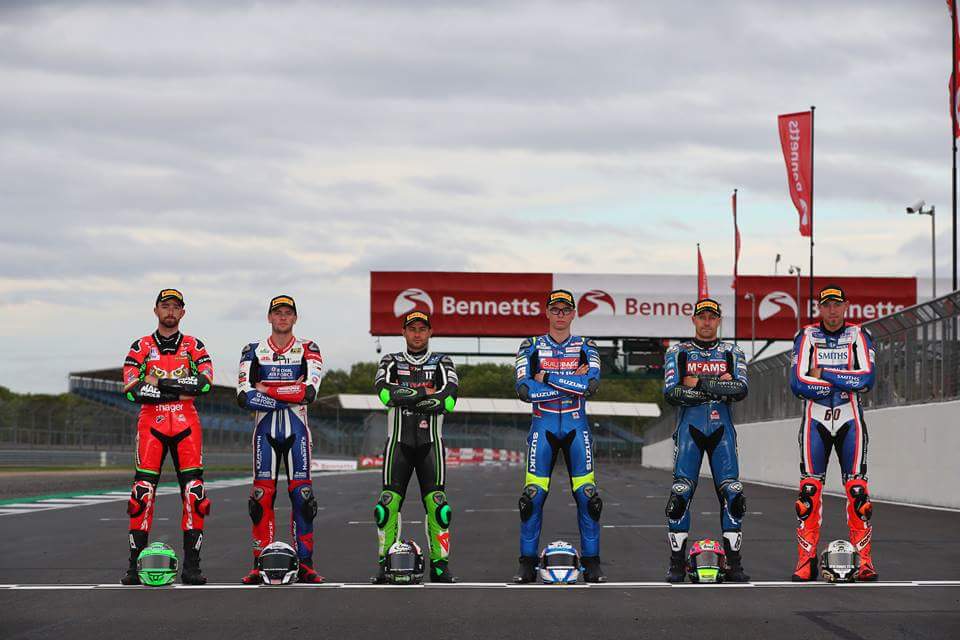
The regular season is complete. We are now left with the six riders who will compete in the ‘Showdown’ to contend for the 2018 British Superbike Championship crown.
Since 2010, the ‘Showdown’ concept has been used by BSB to add extra hype to the season finale – one can only imagine how much is spent by the series organisers promoting the final three rounds of the year in this way. In terms of the championship, the concept has ensured that no rider (no matter how dominant) can secure the title until the final round of the season.
The ‘Showdown’ Explained
To ensure that only the top six riders in the standings can compete for the title, the points table is revised. The ‘showdown’ contenders’ points totals are deleted and reset at 500. To distinguish championship order (and to acknowledge each rider’s success throughout the year), podium credits are added to the totals. They are awarded as follows:
Race Win – 5 points
2nd Place – 3 points
3rd Place – 1 point
With the six championship contenders’ totals now reset and elevated well above the rest of the field, the ‘Showdown’ races use the same points scoring system used during the regular season – 25pts for a win, 20pts for 2nd, 16pts for 3rd and so on. Even if the rider in seventh place in the standings, currently Danny Buchan (FS-3 Kawasaki), wins all seven remaining races, he would still finish well short of any of the title contenders.
The Contenders
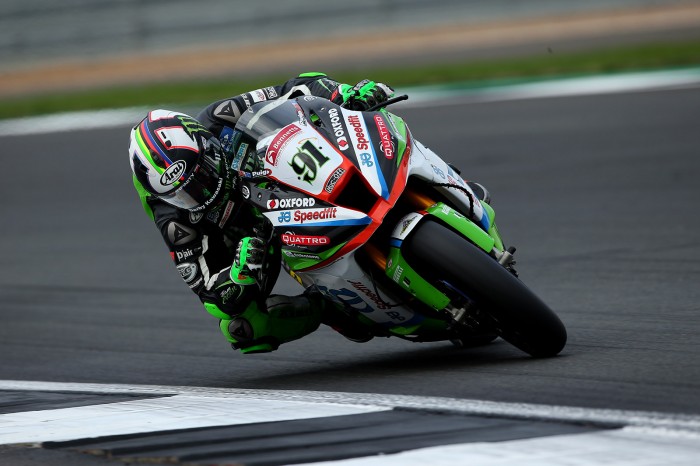
Leon Haslam (JG-Speedfit Kawasaki)
Championship Position: 1st – 568 points
Race Wins: 12
Podiums: 4 (2x 2nd place, 2x 3rd place)
The clear championship favourite. The ‘pocket rocket’ has been in scintillating form all season-long, and his 45-point advantage to his closest title rival reflects this. Haslam starts the ‘showdown’ on the back of a 5-race winning streak, after securing the double last month at Cadwell Park and a stunning hat-trick last week at Silverstone. It would take something truly remarkable to prevent the Derbyshireman from lifting his first British title.
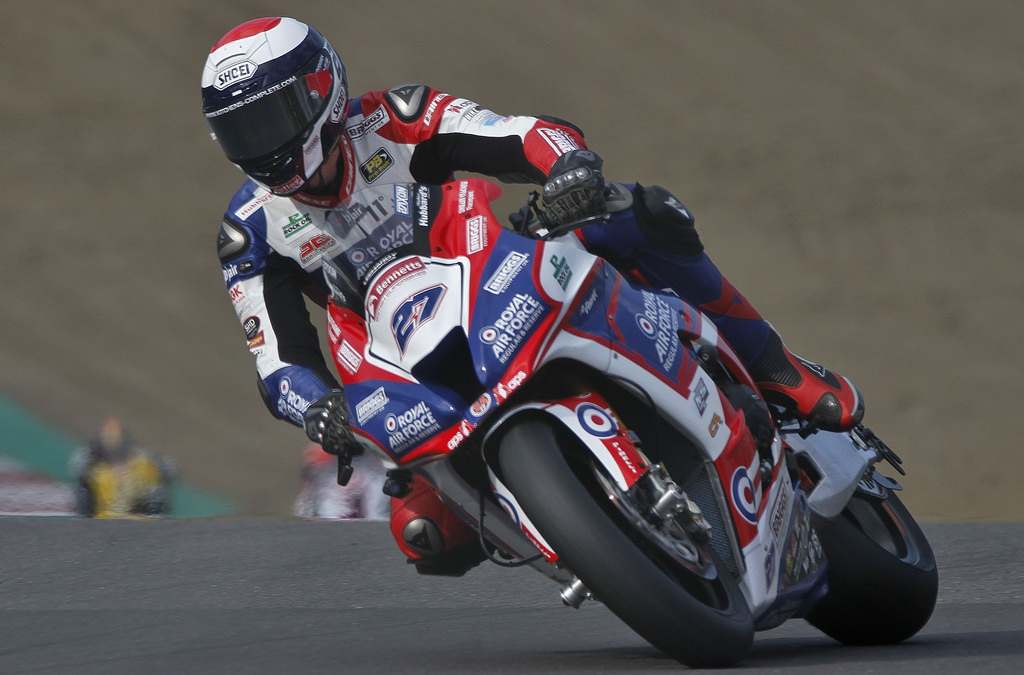
Jake Dixon (RAF Regular and Reserve Kawasaki)
Championship Position: 2nd – 523 points
Race Wins: 1
Podiums: 10 (4x 2nd place, 6x 3rd place)
Consistency has defined Dixon’s campaign so far. The best podium record of anyone in the field, the 22-year old. Even when a podium finish has proved impossible, he has secured solid points. With only two DNFs to his name this year (one of those was down to a technical failure), Dixon has ensured he starts the ‘showdown’ as the man most likely to spoil the Haslam party.
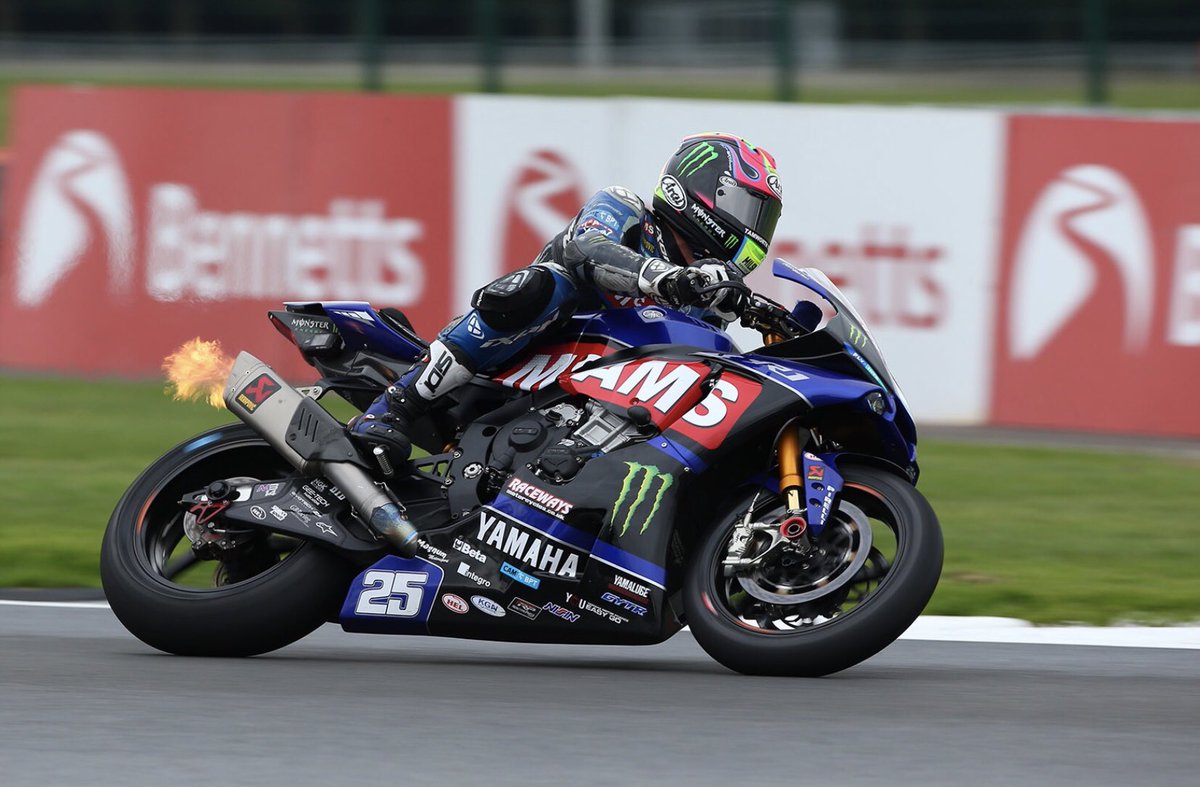
Josh Brookes (McAms-Yamaha)
Championship Position: 3rd – 519 points
Race Wins: 3
Podiums: 2 (1x 2nd place, 1x 3rd place)
Brookes is no stranger to challenges – he races every year at the Isle of Man TT after all – and he’s got one here. 49 points adrift of Haslam, but crucially the showdown circuits (Oulton Park, Assen and Brands Hatch GP) have all yielded strong results to the Yamaha man down the years. Brookes is the only rider in the showdown who knows what it takes to be BSB champion, having stormed to the title in 2015 – with a devastating run of 13 wins in the final 16 races. Whilst its a tall order, it takes a very brave punter to write off the wily Australian.
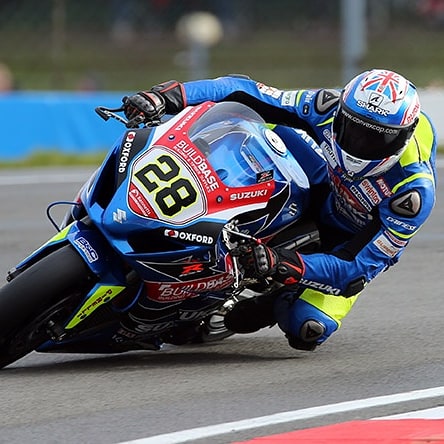
Bradley Ray (Buildbase Suzuki)
Championship Position: 4th – 519 points
Race Wins: 2
Podiums: 3 (3x 2nd place)
What more can be said about the achievements of the 21-year old which haven’t already? Critics will argue that he has failed to replicate the form he showed on the opening weekend of the season (a race win double at a frozen Donington Park). But that would ignore his three subsequent visits to the podium, not to mention the Suzuki GSX-R1000R machine has not exactly been problem free this season. Ray himself is still only in his second season as a BSB rider – so the fact he has made it into the showdown should tell you everything about his character and potential. An outsider for the title this year, but he is only going to get better with every round that goes by.
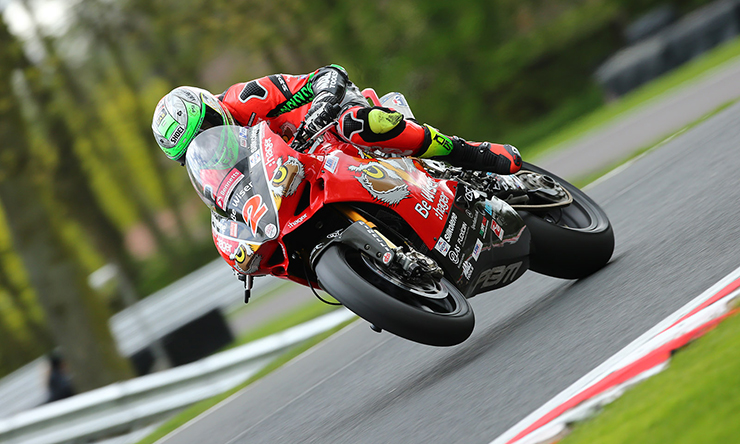
Glenn Irwin (BeWiser Ducati)
Championship Position: 5th – 516 points
Race Wins: 0
Podiums: 6 (5x 2nd place, 1x 3rd place)
Despite a successful season for the Ulsterman – qualification for the showdown and two wins at this year’s North West 200 – Irwin is riding to stay in a job for next season. Although he has scored a hatful of podium finishes, it is the lack of race wins in the British championship which has put his place in Paul Bird’s Ducati team under pressure. At more than 50 points behind Haslam, the championship title is almost beyond reach. But a race win this weekend at Oulton Park would go a long way to suring up his place in the team.
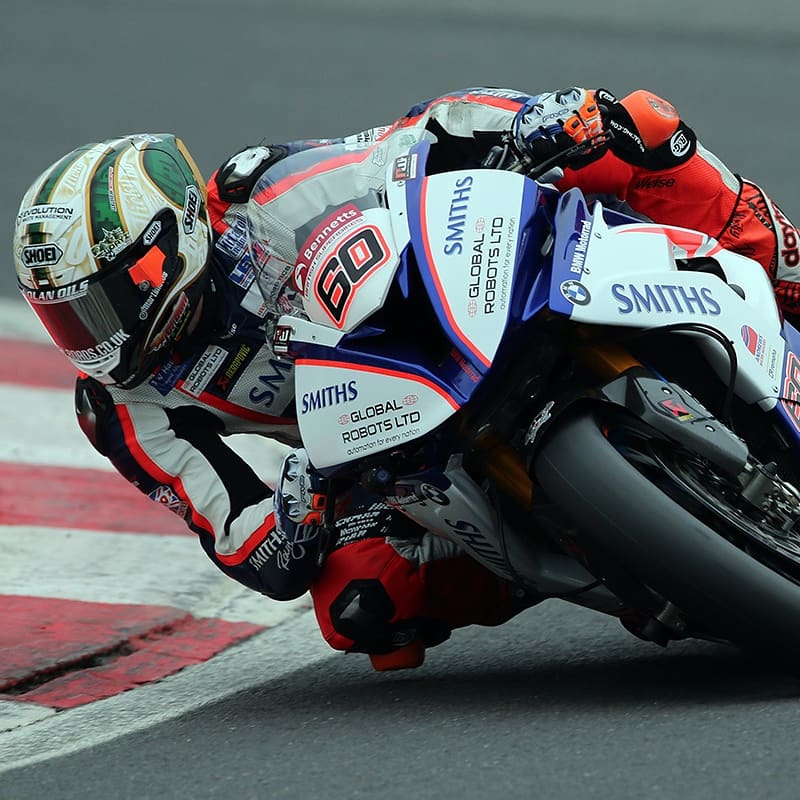
Peter Hickman (Smiths-Racing BMW)
Championship Position: 6th – 504 points
Race Wins: 0
Podiums: 2 (1x 2nd place, 1x 3rd place)
At a slightly staggering 64 points behind Haslam, the general consensus is that it would require a divine intervention for Hickman to claim the BSB crown this year. However, you can never write off someone with such a proven track record of upsetting the clear favourites – take his Superstock and Senior TT victories this year as evidence. The Lincolnshireman is certainly not in the showdown to simply make up the numbers. With nothing to lose (he can’t finish lower than where he is now in P6), expect to see Hickman going all out for race wins. Who know what could happen should he win the double this weekend, and his rivals falter…
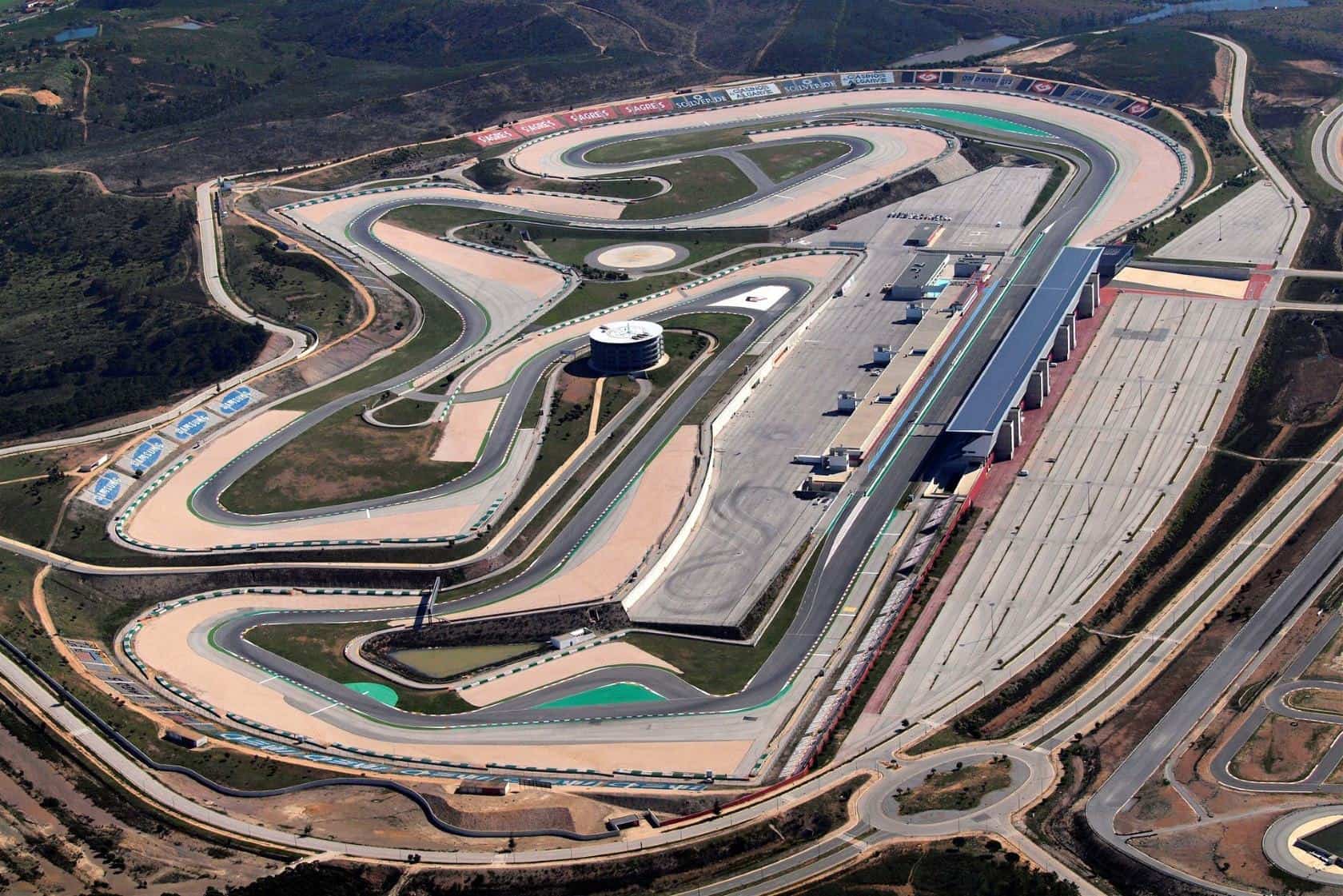
After a ten-week summer hiatus, the 2018 FIM Superbike World Championship finally resumes this weekend in Portugal, at the spectacular Autodromo Internacional do Algarve.
It will be the twelfth time that the series has visited Portugal. the first two editions were run at the Estoril circuit in 1988 and 1993 respectively. Following a 15 year hiatus, the world championship returned to Portugal in 2008, but the event has been exclusively held at the modern 2.9 mile (4.7km) Algarve circuit.
The circuit was designed and commissioned with the intention of bringing Formula One and MotoGP to the region. F1 teams tested here in the winters prior to the 2009 and 2010 seasons – and plans were in place for an F1 race in 2012 – but financial difficulties scuppered this. Similarly, the circuit was set to take over the running of the MotoGP Portuguese Grand Prix from 2013, but plans were abandoned for the same reasons.
To date, World Superbikes has been the only FIM Grade 1 listed event to be held at the circuit.
This weekend sees a slight revision to Sunday’s race schedule, with the second Superbike race moved from its usual 12pm slot to 3.15pm. This makes the headline event the last race of the weekend and it is hoped – by series organiser Dorna – to increase the race day attendance.
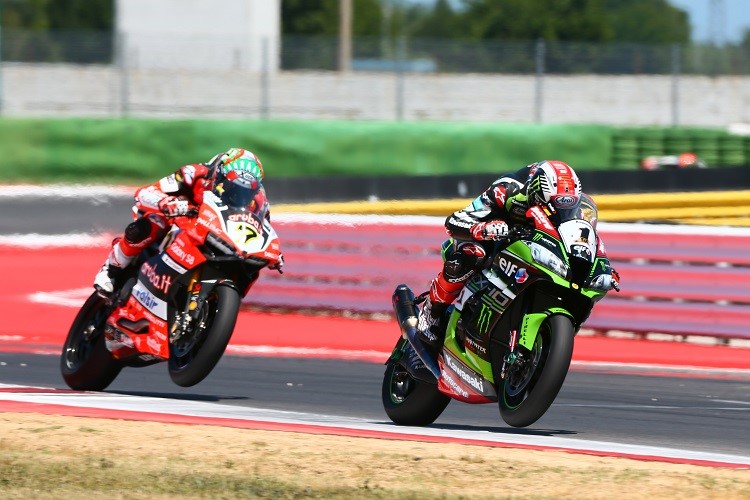
Jonathan Rea (Kawasaki Racing Team) arrives at the Portimao circuit with a commanding lead in the standings, he sits 92 points clear of his nearest challenger, Chaz Davies (Aruba.it Ducati). It can be argued that the reigning world champion regards this place as a ‘home-from-home’, having secured victory in all of the last four races that have been staged here. Rea comes into this weekend seeking to equal his 5-race winning streak (achieved last season winning the double in Australia and Thailand, and winning the opening race at Aragon). With such a large lead in the championship, and with such a strong record in Portimao, it is hard to imagine Rea not at least equaling this feat.
Davies will be out to do all he can to prevent his rival’s championship charge. The Welshman is realistically the only other rider who harbours any title-winning hopes for this season. Both he and the Aruba.it Ducati team will be under no illusions about the scale of the task at hand – made even harder with Davies’ collarbone injury sustained in a training accident last month. The Italian outfit has known success around the Portimao circuit, having taken victory four times between 2008 and 2011. Caution must be thrown to the wind as, realistically, Davies needs to win every race between now and the season’s end.
As has been the case for the past three seasons – Chaz Davies (left) is the only rider who can challenge Jonathan Rea (right) for the title.
As this season has proved though, the battle for the front is no longer an exclusive Kawasaki-Ducati affair. The Pata Yamaha team have well and truly closed the gap, and have been an almost guaranteed presence on the rostrums throughout the season. With the circuit abundant in high and medium speed corners – which greatly favours the Yamaha R1 – both Alex Lowes and Michael van der Mark will be expecting a strong weekend. Following the official summer test here, Lowes spoke confidently about the team’s progress, stating that “the target is for us (Yamaha) to win another race this season”. Van der Mark concurred with this, announcing to the media that he “will go all out to beat him (Chaz Davies) to second place in the championship”.
The Algarve-Portimao circuit has also been a happy hunting ground over the years for the factory supported Milwaukee-Aprilia team, in particular for their rider Eugene Laverty. As with Ducati, the Noale-based factory outfit have taken four wins at the Portuguese round, with the Irishman claiming their most recent victory back in 2013. In total, the team have an additional ten podium trophies (though none since 2015). With both riders, Laverty and Lorenzo Savadori fighting fit, expectations are high within the team for a good weekend.
Finally, the Red Bull Honda team will be hoping for continued improvements this weekend. The first half of the 2018 season was one trial after another, an inexperienced rookie (Jake Gagne) can only be expected to do so much, whilst main man Leon Camier has had his campaign dogged by injury. The most significant of these troubles included a fracture of his C5 vertebrae whilst testing for the Suzuka 8 hours. However, with Camier now declared fully fit, this weekend will hopefully see the team resume their development program, in preparation for a championship challenge in 2019.
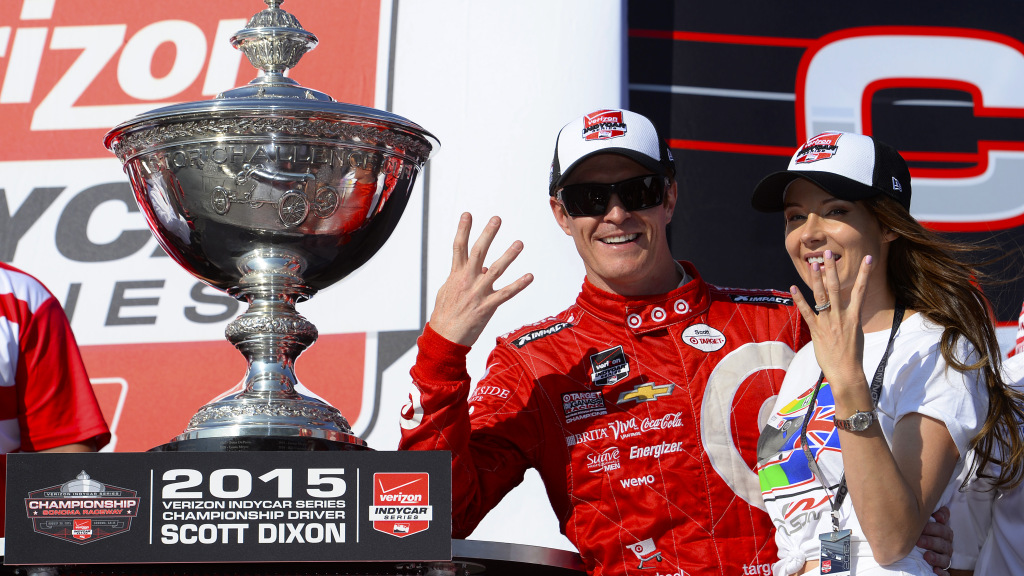
There is just one race to go for the 2018 IndyCar season which means it’s crunch time for the championship. Mathematically, there are four contenders – Scott Dixon, Alexander Rossi, Will Power and Josef Newgarden – however, realistically there are only two as both Power and Newgarden would need nothing short of a miracle to win, as we’ll get to later.
Sonoma is double points, adding another element to an already tense decider and meaning that there’s even less margin for error, as if that margin wasn’t small enough already! Going into Sonoma, Dixon leads Rossi by 29 points with Power and Newgarden tied, 58 points back from Rossi and 87 from Dixon.
The title permutations are vast in numbers and, with bonus points also on offer, almost entirely unpredictable. For a quick reminder, the bonus points are awarded as follows: one point for pole, one point for leading any number of laps and two extra points for leading the most laps, meaning that the most any one driver can pick up is four.
Scott Dixon (above) is in prime position to claim his fifth IndyCar series title. (Photo by Robert Laberge/Getty Images)
Here we’re going to run through the most likely outcomes, excluding the unpredictable factor of the bonus points.
To put it simply, if Dixon finishes ahead of Rossi, that’s game over as the margin would go up rather than down. If Dixon is first or second, he wins the championship no matter what Rossi does. Also, if Rossi finishes lower than tenth, Dixon is crowned champion. For Rossi to win the championship, he really needs to win the race and bank on Dixon being third but preferably lower, given the bonuses.
If Rossi finishes second, he’ll need Dixon to be fourth or lower and if Rossi’s third, Dixon would have to finish tenth or lower. Rossi can technically win the championship from as low as tenth however, that would involve Dixon being classified 25th or lower which would essentially mean him getting completely wiped on the first lap.
The best course of action for Rossi would be, quite obviously, to win the race and then just hope either some misfortune befalls Dixon, or that he’s got enough of his Andretti teammates near him to back him up. Equally for Dixon, he’ll be targeting a top two finish to prevent Rossi even getting a look in.
However, all this is very easy to say, doing it is another matter entirely. IndyCar has proven time and time again just how unpredictable the racing can be – even last race when Rossi looked nailed on for the win and then had it snatched away through mistimed cautions. The crumb of comfort for Rossi is that Dixon hasn’t finished in the top two since his win at Toronto five races ago and the #27 Andretti driver has finished ahead of his rival for three of the last four races. Then again, Dixon beats Rossi 9-7 over all the races so far this season.
One other thing to note is that if Dixon and Rossi end up equal on points, the countback isn’t so simple. Pre-Sonoma, the pair are equal on wins, seconds and thirds, only being split on fourths where Dixon has one more. The rule book states: “In the case of a tie in the championship, IndyCar will determine the champion based on the most first place finishes. If there is still a tie, IndyCar will determine the champion by the most second place finishes through last place finishes, until a champion is determined.” This means that, as is stands, Dixon would win on countback should the pair be equal however, if Rossi finishes within the top three to equal Dixon, Rossi would be the champion.
And there’s more…
As I mentioned earlier, the Penske duo of Power and Newgarden are in with a shout of the title but their chances don’t exactly look great. For either of them to walk away from Sonoma champion they would have to win the race with Dixon 24th or lower and Rossi 10th or lower. Basically, for those two it’s a case of try to win the race and then just hope.
In all this, Dixon is the only one who is in some control of his own fate because he has a way to win the championship where it doesn’t matter what anyone else does. For the other three, they can win the race but are then entirely dependant on where the others finish… it could end up being very close!
The title could be decided by just a handful of points or much more – only the 85 laps of Sonoma will tell. One thing is for sure though, leaving Sonoma, we’ll either have a five-time champion in Dixon or a new champion in Rossi with a very slim chance a two-time champion in either Power or Newgarden… someone’s got to win it, it’s just a question of who.
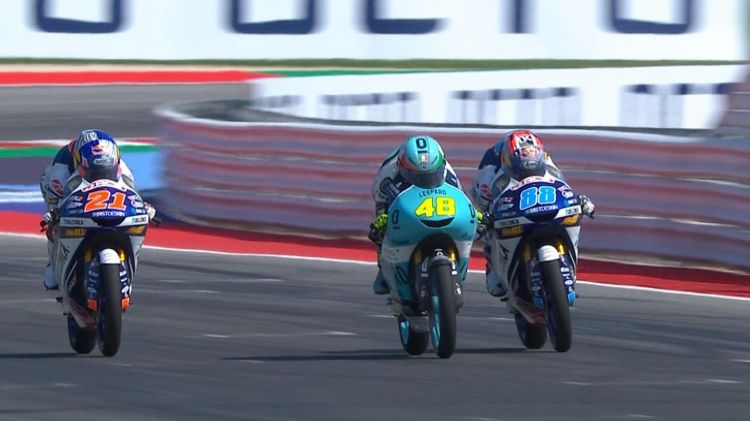
Dalla Porta (centre) out-drags Jorge Martin (right) to the finish line.
Pole position on Saturday put Jorge Martin in prime position to take a sixth win of the season, and with his main title rival Marco Bezzecchi only qualifying sixth, the Spaniard had a good opportunity to reduce the points deficit he faced going into the 2018 Moto3 San Marino Rimini Riviera Grand Prix.
From the start, though, the race did not go entirely that way. It was a tough opening lap for Martin, who dropped to fourth by the end of it, and then to fifth by the end of lap two. He had dropped as far as sixth in the second lap, but passed Jaume Masia in the final corner to reclaim a top five spot.
Martin’s move caused a chain reaction. Masia reacted to Martin’s attack by opening the throttle harder and earlier to try and not lose another position down the straight or in turn one, but he lost the rear and high-sided. Aron Canet and Ayumu Sasaki got caught up with Masia, also falling, and then, with nowhere to go, both Enea Bastianini and Nicolo Bulega collected Canet and Sasaki and fell themselves. Thankfully, everyone involved was largely okay. Bulega and Bastianini both returned to their garages, whilst Canet and Sasaki went to the medical centre. Canet got away with no major injuries, whilst Sasaki came off the worst of everyone from the crash, suffering a broken arm.
This created a big gap between Martin in fifth and Adam Norrodin behind. The group of five which now convincingly led the race consisted of: Bezzecchi, Lorenzo Dalla Porta, Fabio Di Giannantonio, Gabriel Rodrigo and Jorge Martin. The quintet traded places amongst themselves for the remainder of the race, staying as a ten-wheeler almost the whole distance.
For the championship, the word “almost” is quite important. Marco Bezzecchi tipped into turn fifteen on the penultimate lap of the race leading from Jorge Martin, and looked good to win the race, after a strong home GP to that point. However, when he hit the bump in the middle of the corner, he lost the rear, and he fell off the low-side. His race was run, a fantastic ride up to then, but in a twenty-three lap race, you have to complete all twenty-three of them to stand a chance of scoring points, and for one error, Bezzecchi completed only twenty-one.
Jorge Martin contacted Bezzecchi when he fell, and was lucky to stay on himself. Somehow, the Spaniard only dropped to second place after the contact, behind Dalla Porta who led onto the final lap.
Despite all the position changes that had happened up to the final lap of the race, there was little change on the final lap.
Fabio Di Giannantonio, though, he passed Jorge Martin early in the lap to move into second, and made an attempt to pass Dalla Porta in the final corner. The pair ran wide, whilst Martin sat back, and got a good run through T16 to put himself in position to pass them by the line. However, Dalla Porta had enough momentum to fend off the #88, and took his first ever Grand Prix win.
It was the #48’s 48th start, a number chosen by the Italian because his grandmother was born in the year 1948, an aligning of planets that no doubt did not pass the 2016 Moto3 Junior World Champion by, and the numerical links to Shoya Tomizawa have not gone unnoticed, either. And the coincidental numbers did not end there: Dalla Porta won by 0.058 seconds, in the Misano World Circuit Marco Simoncelli.
But the biggest thing Dalla Porta will take away from this victory is that he can win in Grand Prix. The way he did it, too, was very impressive, as Dalla Porta did not drop out of the top three between lap two and the end of the race. At the beginning of the weekend, Dalla Porta was announced to be remaining with the Leopard Honda team for 2019, and at the end of it he might have just announced himself as a title contender for next year as well.
After Bezzecchi’s penultimate lap crash, Jorge Martin’s second place is invaluable for his championship. Just one month ago he was going to Austria with the idea that a 28-point deficit in the championship to Bezzecchi would be not so bad, and two races later he is leading the title race by eight points, and with a track coming up next which could suit him and the Honda very well indeed. Not only did Martin out-score Bezzecchi by twenty points this weekend, but he also beat Fabio Di Giannantonio, taking four more points out of the Italian who might be the only rider outside of the top two who continues to have realistic hopes of the championship.
Di Giannantonio’s third place was his second podium in three races. This shows that he can be competitive on many tracks, but the problem for his championship is the twelfth place that lies in the middle. Not only that, but the way he arrived at that twelfth place – by being too aggressive. It’s becoming a characteristic of Di Giannantonio’s riding that he makes some arguably ‘over-the-limit’ moves, such as on Martin in Sachsenring which caused Fabio to crash. He got away with one in Misano, too, when he nearly cleaned out two riders in turn fourteen, although in the end he only cost himself positions.
Bezzecchi’s crash detached Gabriel Rodrigo from the group slightly, and he ended up a little bit adrift in fourth place by the end. However, the race itself of Rodrigo shows the step he has made this year. In the past, he would have lost the pace after five or ten laps, or he would have crashed. Perhaps the secret to this step by Rodrigo is found in his training partners for 2018, who are Jorge Martin and Maverick Vinales, two experts of race management.
Six-and-a-half seconds back of the lead was Jakub Kornfeil in fifth place, who had a pretty lonely race after the lap two crash, building a gap to the riders behind, and never really closing on the leaders.
Dennis Foggia was the first of those riders behind, and it was his best result of the season. He had a good weekend, too, and put himself in the right position to take advantage of the lap two crash. He couldn’t quite go with Kornfeil, especially towards the end when his times fell away which is becoming a bit of a trait of his races. But he kept hold of seventh place from Darryn Binder – who came home in eighth – and perhaps this result will start some momentum for the reigning Moto3 Junior World Champion.
Behind Binder in 9th place was Andrea Migno, who came up through the field well from his grid position of 19th, whilst Niccolo Antonelli completed the top ten.
After scoring yet another pole position on Saturday in Misano for the 2018 Moto2 San Marino Rimini Riviera Grand Prix, Francesco Bagnaia was in a fantastic position to go for his sixth race win of the season.
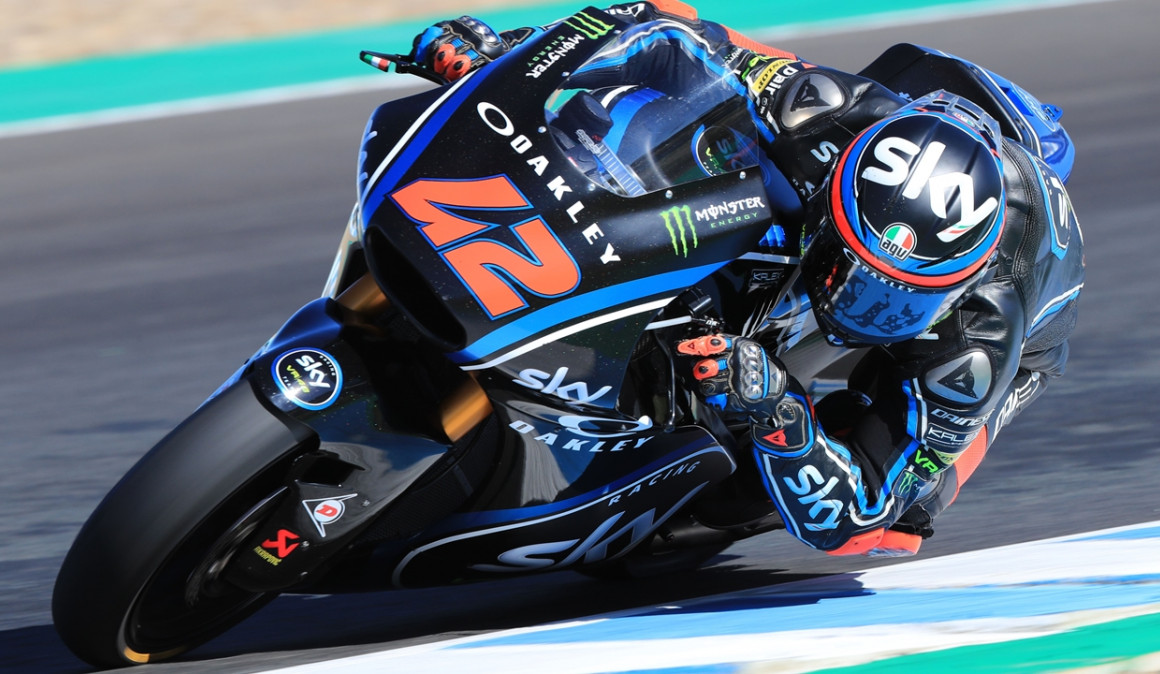
It was, however, not a completely straightforward beginning to the race for Bagnaia, as he had some small contact with Marcel Schrotter off the line. This came after some minor drama in the morning warm up, when Bagnaia was off the pace due to his leathers (new for this weekend for Sky VR46’s Sky Ocean Rescue one-off livery) being too tight. However, from turn one, Bagnaia was almost untouchable. He stretched the gap tenth-by-tenth for all of the twenty-five laps, also leading every single tour of the Misano World Circuit Marco Simoncelli.
Bar one mistake, Bagnaia’s ride was flawless, giving his competitors no opportunity to challenge him. Whilst the race was not as exciting as, say, Austria, Bagnaia admitted that this win was one of his favourites, primarily because he has never won at home before. Importantly, though, Bagnaia was once again able to extend his gap at the top of the World Championship to eight points over Miguel Oliveira, and with just six rounds to go, every point is going to count.
From lights to flag, Bagnaia (above) was faultless.
It was a good damage limitation from Oliveira, though, who once more regressed to his poor qualifying performances, managing only ninth on the grid, whilst teammate Brad Binder qualified in the middle of the second row. The Portuguese recovered well, though, climbing to fourth place by the end of lap two and third one lap later. Once Mattia Pasini’s pace started to drop, the #44 together with Marcel Schrotter closed up to the back of the home rider and quickly disposed of him.
Oliveira was not left alone by Schrotter, though, the German fighting all the way to the final lap. Marcel’s move in turn fourteen didn’t work, both of them went wide, but Oliveira was able to tighten the line sooner and seal his second place.
It was a valiant effort, though, from Schrotter, and whilst he missed out on second place, he did finally pick up his first ever Grand Prix podium after 105 attempts.
Mattia Pasini finally crossed the line in fourth place, two seconds off the podium. It was the Italian’s second consecutive fourth-place finish, which is important for the #54 as he looks to rediscover some consistency this season.
Fifth place went to Joan Mir, who looked capable of more in the early phases of the race. For a fifth place to be disappointing in a rookie Moto2 season, you have to be quite a talent. Furthermore, thanks to Alex Marquez’s DNF at the hands of Augusto Fernandez (for which the latter apologised and the former accepted), Mir is now ahead of his more experienced teammate in the championship by one point, and only five points of Brad Binder who currently sits third in the standings.
Lorenzo Baldassarri recovered from a poor qualifying to finish in sixth place, although he had quite a quiet race in the end, coming home 2.5 seconds ahead of Fabio Quartararo in seventh. Brad Binder finished eighth ahead of Jorge Navarro who suffered a position drop penalty for track limits and Xavi Vierge who had not completed more than four laps consecutively before the race due to his injury from Austria but impressively managed to take the final top ten spot.
Eleventh place went to Simone Corsi, ahead of Remy Gardner, Dominique Aegerter, Andrea Locatelli and Jesko Raffin who took the final point on his Grand Prix return (replacing Alejandro Medina, who was replacing Isaac Vinales in the Stop And Go team).
Joe Roberts took sixteenth place for NTS after it was announced earlier in the weekend that he would be joining the Swiss Innovative Investors KTM squad to replace Sam Lowes next year. Seven tenths further back was the second NTS chassis of Steven Odendaal, who was one tenth ahead of Alex Marquez (he got back on after the crash with Fernandez), who in turn was 0.9 ahead of Iker Lecuona. Bo Bendsneyder completed the top twenty.
Twenty-first across the line was Niki Tuuli, from Khairul Idham Pawi, Jules Danilo, Federico Fuligni and Xavi Cardelus.
Danny Kent was the first retirement on lap two, before Luca Marini stopped for a bike problem eight laps later. Sam Lowes crashed trying to pass Remy Gardner 14 laps from the flag, and Sheridan Morais went down two laps later. Two laps still further Tetsuta Nagashima bowed out, before the drama really started.
With eight laps to go, Stefano Manzi tried to pass Romano Fenati who ran wide on the entry to turn fourteen. The pair came together, and Fenati gestured his anger towards Manzi. Manzi then passed Fenati again in turn four on the next lap in a strange exchange, where Fenati appeared to let Manzi through, but the Forward Racing rider ran clean off the track and took the Marinelli Snipers Team rider with him. Fenati then got the red mist, and on the straight between turns six and eight, grabbed Manzi’s front brake with twenty bar of pressure (Misano’s average pressure is nine bar). Manzi then crashed at turn eight, Fenati turning to him to once more express his displeasure. That was Manzi out of his home Grand Prix, and Fenati soon followed as the FIM Race Stewards Panel decided to disqualify him.
Augusto Fernandez was the final retirement, four laps from the flag, as he pulled into pit lane following his crash with Marquez much earlier on.
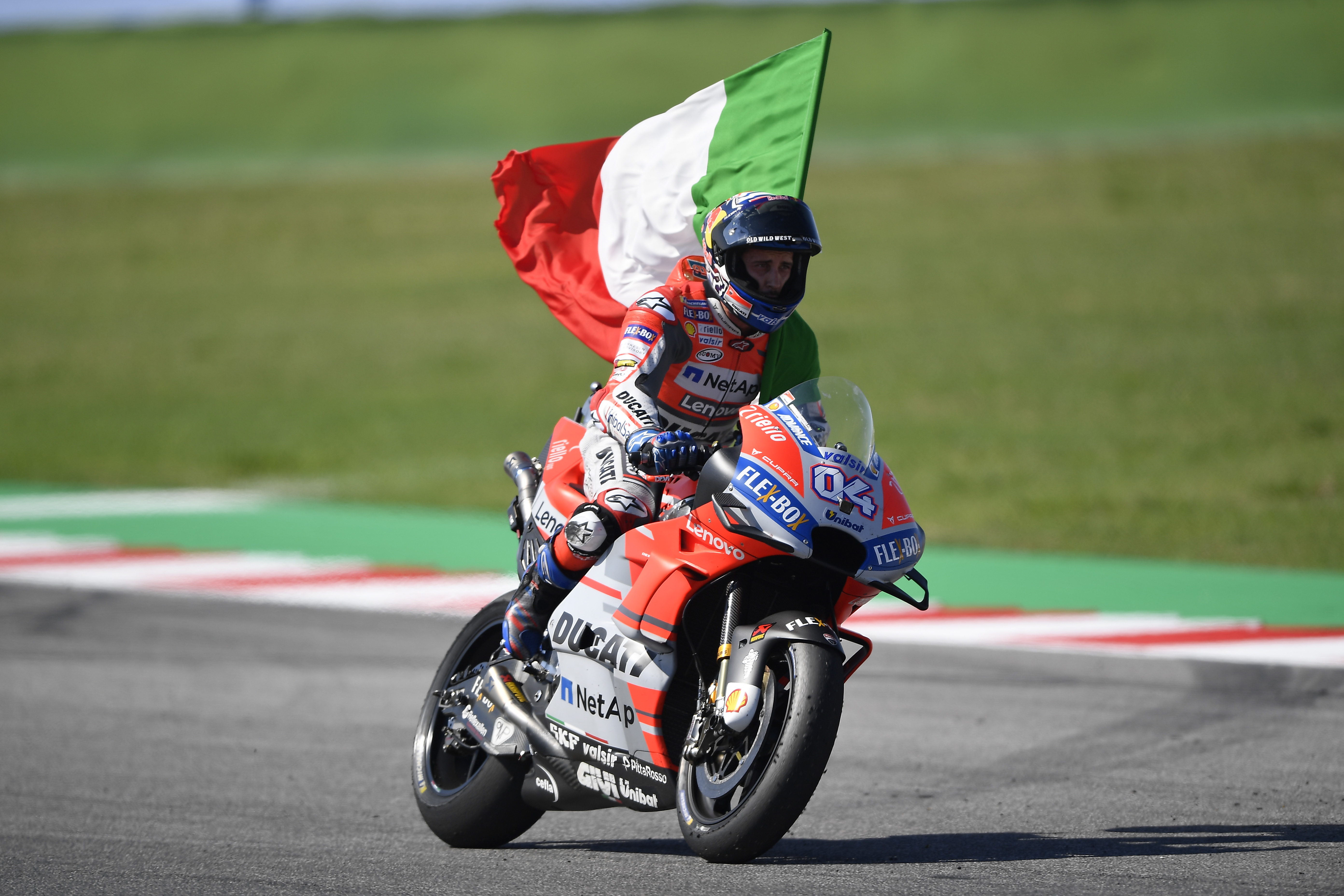
Andrea Dovizioso wins the San Marino Grand Prix. Image courtesy of Ducati
The MotoGP San Marino Rimini Riviera Grand Prix was set to get underway in blazing sunshine after a changeable weekend in regards to the weather, and after the washout that was the British Grand Prix race day two weeks previous, the glorious Italian sun was more than welcome (for most).
Jorge Lorenzo (Ducati) was starting from pole position for the second time this season, and looked strong heading into the 27-lap race (shortened by one lap compared to 2017). Meanwhile, Andrea Dovizioso (Ducati), Marc Marquez (Repsol Honda) and the two factory Movistar Yamaha riders – Valentino Rossi and Maverick Vinales – looked as though they could contend for the podium.
Sure enough, Lorenzo made the holeshot. Misano is in many ways the birthplace of Jorge Lorenzo’s lights-to-flag victories, after he made one of his best ever back in 2013, igniting that stunning championship fightback which led to the title being contested all the way down to the final race in Valencia.
Marquez also made a good start, moving up from fifth on the grid to be third after the opening corners with Jack Miller (Alma-Pramac Ducati) ahead of Dovizioso. Dovi dealt with Marquez almost immediately, on the first approach to turn eight, and then made quick work of Miller to take second place. Marquez also quickly dealt with the Australian, knowing he couldn’t afford to let his rivals escape if he wanted to have a chance at victory.
Dovizioso then studied Lorenzo, with a safe distance to Marquez behind, for the next four laps, finally making his move for the lead in turn eight on lap six, and this move would go without reply. A look at the lap time analysis from the race and you can see the control that Dovizioso had over the race. He passed Lorenzo on lap six, setting the race lap record (1’33.224) in the process. It was a masterfully controlled race from Dovizioso, managing the time gap to his pursuers. Although Lorenzo began to close the gap down late in the race, the Italian was not flustered and upped his pace to negate any serious inroads. Crucially, this result has elevated him back into contention for the championship.
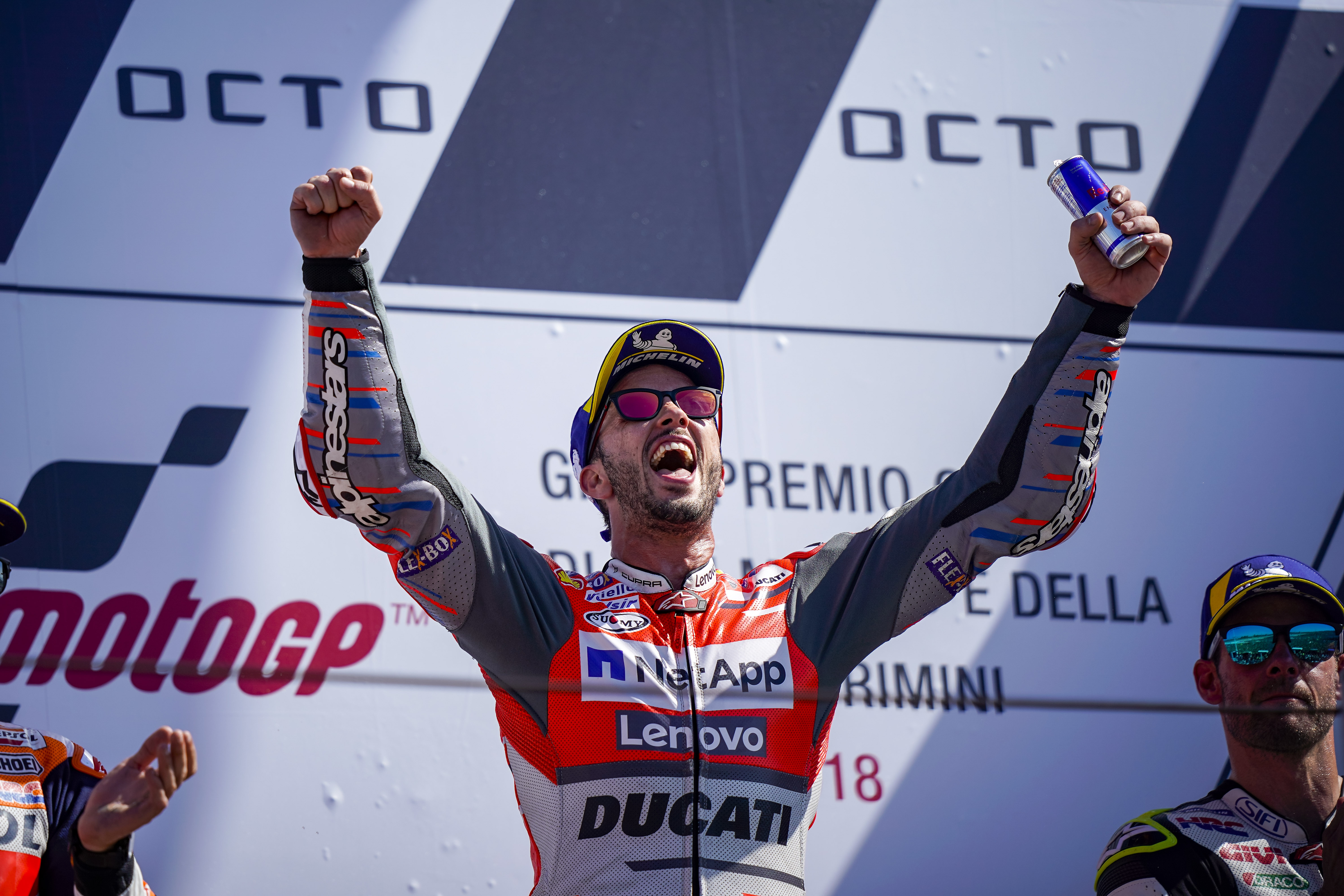
Andrea Dovizioso celebrates winning the San Marino Grand Prix. Image courtesy of Ducati
In total contrast to Dovizioso, championship leader Marquez was over the limit keeping up with even Lorenzo, let alone the eventual race winner. As has been commonplace throughout the season, the Spaniard elected to run the hard front tyre because the medium was too soft for the Honda riders. However, the left side of the hard front was not giving enough grip, making a race distance difficult to manage. However, if anyone is capable of riding over the limit for forty minutes, it is Marquez. Even though he could not pass Lorenzo outright, he was able to pressure his future teammate into a couple of mistakes.
The first error of Lorenzo came in turn fourteen on lap fourteen, and allowed Marquez through for second place. A decent fight between the pair then erupted, with Lorenzo making several attempts to pass Marquez, especially in turn eight. Finally, the Ducati rider made it stick, but whilst the pair were trying to close back down on Dovizioso, he pushed too hard in turn eight and folded the front. He wasn’t off line, he was simply in too hot, and trailing too much front brake. Lorenzo blamed the medium front tyre for his crash – the same compound which Dovizioso chose – and described it as “rock-like” after the race. Lorenzo would have preferred to use the soft front tyre, just like Marquez would have like to have used the medium, but quite simply the track temperature was too high, they made the only choice they could; for Marquez it cost him the win, for Lorenzo could well have cost him his hopes of being the 2018 world champion.
Lorenzo’s crash let Marquez ease off, knowing he had a safe second place. It also allowed Cal Crutchlow onto the podium for the second time this season, as he gave LCR Honda a trophy in their home race. It was another solid ride from the Briton. Knowing he did not have the pace to challenge for the lead, he consolidated fourth position and ensured he profited from Lorenzo’s misfortune. Crutchlow’s first podium at Misano, continuing his highly impressive season.
Alex Rins (Team Suzuki Ecstar) was first home of the chasing pack in P4. Early on in the race, the Spaniard was told to go to “Mapping 2”, and the lap after he lost his position to Crutchlow. Exactly what this setting is (a traction control setting, engine mapping, engine brake etc.) remains unclear, but Crutchlow commented on his surprise at the ease with which he was able to pass. It is possible that Rins let Crutchlow go, knowing he couldn’t match the Honda rider’s pace, and chose to ride the fastest race he could, with minimal interference. Whatever the tactics were, they worked extremely well, as he took his fourth top five finish of the season and heavily out-performed his out-going teammate, Andrea Iannone, finishing seven seconds ahead of the Italian.
Alex Rins behind Cal Crutchlow. Image courtesy of Hondanews.eu
1.4 seconds back of Rins was the first Yamaha, the factory bike of Maverick Vinales, who was 16.016 seconds from the leader after the 27 laps. After Saturday, things looked good for Yamaha, and especially Vinales. They had a strong test in Misano three weeks before the GP, and after a strong Silverstone weekend were hopeful of a good result in San Marino. However, from Saturday to Sunday, something changed for the M1, as both of the Movistar bikes went from being podium contenders to being slumped in the pack. Both Vinales and Rossi – who finished seventh, a further three seconds behind Vinales – were at a loss to explain the loss of pace. The fact that Yamaha do not know what the problem is, why they always seem to struggle more on a Sunday – even with minimal changes in track temperature – is alarming. They are now twenty-two races without a win, and as Rossi pointed out after the race, the Yamaha is likely to struggle more at Aragon next time out.
Sandwiched between the two Yamaha riders was Dani Pedrosa. The retiring Spaniard had seemed to find something over the course of this weekend, posting some decent results, especially in morning warm up. But his usual problems of corner speed and acceleration remained in the race. Spending the race around a pair of M1s is perhaps not the best way to allay fears of corner speed issues, but to feel like you’re missing out on acceleration when you are racing against a motorcycle which – according to its riders – has acceleration as its weakest point is rather alarming. There was positive news for Pedrosa this weekend, though, as he was confirmed to be riding the KTM from next year as a test rider.
Nearly three seconds back of Rossi was Andrea Iannone (Team Suzuki Ecstar), who appeared in Q1 for the first time in 2018 on Saturday, and also missed Q2. His race didn’t go much better, as he was unable to get the speed nor the life out of the soft rear tyre that Rins did on the sister Suzuki. A home weekend to forget for The Maniac.
Alvaro Bautista took yet another top ten in ninth place, further affirming the notion that what is MotoGP’s loss at the end of 2018 is most certainly WorldSBK’s gain.
The top ten was rounded out by Johann Zarco, who suffered similarly to the factory Yamaha riders on Sunday, being unable to get out of corners, nor hold onto the tyre.
Danilo Petrucci’s race was done before it started. His pace was nothing special throughout the weekend, but his race day got worse when mechanical problems on the grid forced him to fall behind he safety car on the warm up lap, and thus he had to start from last. He made a decent race, though, and climbed to eleventh where he finished. But his day became even worse when he got back to the garage and discovered his pushbike had been stolen. He and the team will be praying that the next round at Aragon is less stressful.
Bradley Smith took sixteenth place, but even still it was a positive weekend for the Brit, who announced he will be Aprilia’s test rider next year, in a deal that includes the potential for five wildcard rides throughout the season. On the subject of Aprilia. It was another difficult weekend for Scott Redding, on his RS-GP18. He said after the race that he was missing the line by “5 or 8 metres” due to the front tyre collapsing whilst under braking.
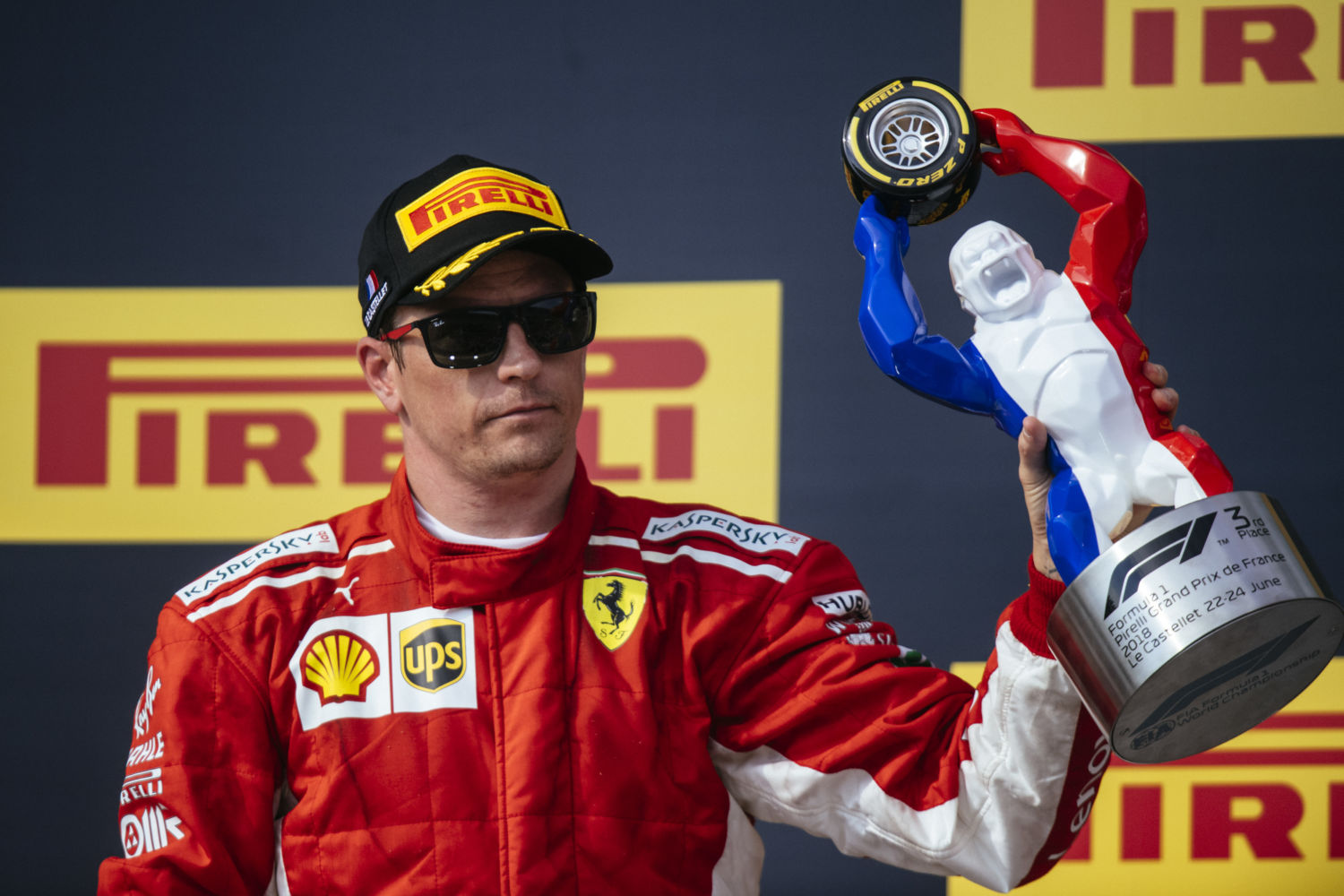
Kimi Raikkonen will finally leave Ferrari at the end of the season having spent the previous three years fielding questions about his future at Maranello.
And, while he now has a five-and-a-half year wait for a victory after spending a lot of that time as the rear gunner for Sebastian Vettel, Raikkonen has given us a lot of fun in his second stint with the Prancing Horse.
The 2007 World Champion’s career has gone full circle as he announced a return to Sauber, where he first burst on to the scene in 2001 while Ferrari’s protégé Charles Leclerc leaves Sauber for Ferrari.
Don’t think that this is just a farewell tour so that he can safely break the record for GP starts held by Rubens Barrichello at 323.
The Finn certainly has the speed and arguably now a point to prove. He is still level on victories with Mika Hakkinen with 20 apiece and he’s stood on the podium in seven of the last eight races and has 100 in total.
While many will be saddened that due to Vettel’s fight with Lewis Hamilton in the World championship Raikkonen won’t get the chance to break the Finnish F1 record, there are still more moments of magic, and indeed the odd blunt radio message left for us over the next two years.
Realistically, this is the right move for Ferrari. Had Leclerc had to spend more time at either of their affiliate teams (Sauber or Haas) then they ran the risk of the 20-year-old Monegasque being poached by another manufacturer.
Given the promise Leclerc has shown this year, where he has well beaten the experienced Marcus Ericsson, they couldn’t afford for that to happen.
Leclerc will do great things at Ferrari alongside Vettel, who will be motivated to avoid a repeat of the 2014 season at Red Bull where Daniel Ricciardo thrashed him after stepping up from Toro Rosso.
But for the rest of the season, Raikkonen deserves a proper farewell from Ferrari.
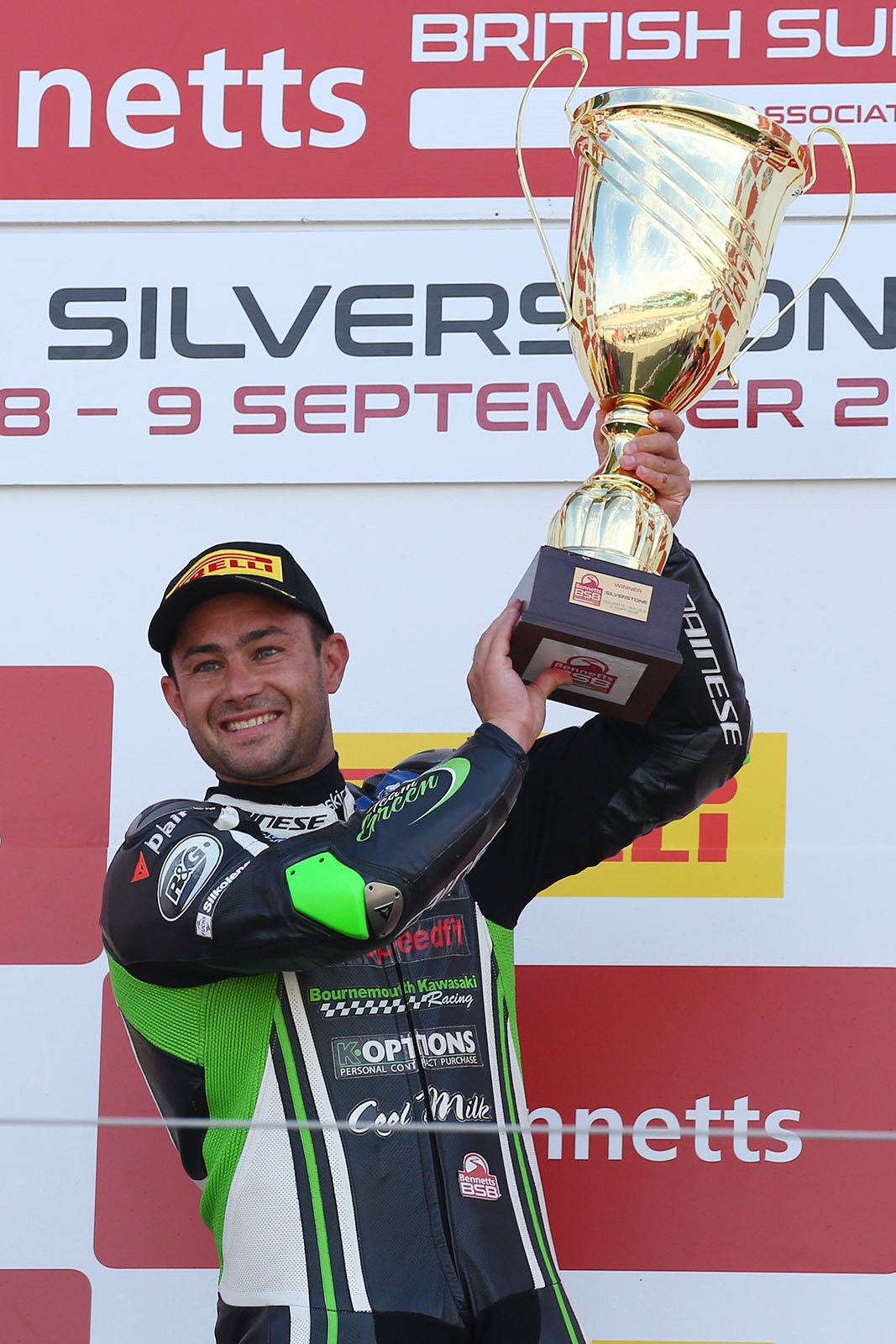
Leon Haslam (JG-Speedfit Kawasaki) completed a hat-trick of victories this weekend, after a real thriller of a duel with Tarran MacKenzie (McAms-Yamaha).
Race Three was red flagged after Luke Mossey (JG-Speedfit Kawasaki) crashed heavily at turn one and required medical attention. Fortunately, no serious injuries were reported.
After a short delay, the race was restarted and run over 26 laps.
For those of you of a certain age the memory of Barry Sheene and Kenny Roberts duking it out for glory around Silverstone, in 1979, is probably the best racing memory of Silverstone. There is no risk of exaggeration when I say that this afternoon’s battle between Haslam and MacKenzie is equally deserving of the status of a ‘classic’.
The two had been almost inseparable on the track, all weekend. Once more this weekend spectators and television viewers were treated to a truly thrilling on-track battle. This time, the echoes between the Sheene-Roberts duel are too loud to ignore. Having both fought their way to the front of the field, the pair (despite constantly challenging each other for the lead) pulled clear of the chasing pack. Knowing then that the victory would go to either the Kawasaki or the Yamaha rider, the gloves were cast off and the duo engaged in a no-holds barred battle royale. Every corner presenting an overtaking opportunity. Daredevil lines chosen by both men as the lead of the race changed hands countless times. It was true wheel-to-wheel, nose-to-tail racing, with neither rider giving an inch to the other – but not once did the riders make contact. Two racers at the top of their game absolutely going for it,
It was fierce, but also as clean as you like. On the penultimate lap, MacKenzie dived up the inside of his rival at Copse, running them both out to the edge of the track on the corner exit. With the youngster in front, he maneuvered to the inside of the track at Maggots and Becketts. If Haslam wanted a third win so badly, he’d have to brave it around the outside. Utilising every last millimetre of rubber still attached to his tyres, Haslam let his Kawasaki drift out almost to the edge of the track, before squaring off the corner and twisting hard on the throttle. Apex speed compromised, but the payoff was a straighter corner exit, giving him a crucial speed advantage down the Wellington straight. With the Yamaha no more than a front-wheel in the lead, Haslam braved it out under braking through Brooklands and squeezing out MacKenzie into Luffield. With no chance of making the apex first, the youngster was forced to yield on this occasion. A final drag race to the line was the perfect climax to the race – in the end, Haslam holding off his young challenger by just 0.075 seconds.
Whilst we were witnessing that incredible duel the small matter of the ‘Showdown Decider’ – which organisers had no doubt spent copious amounts of money hyping this up before the weekend – was being decided. Going into the final race the likes of Christian Iddon (Tyco-BMW), Peter Hickman (Smiths Racing BMW), Danny Buchan (FS-3 Kawasaki) and Jason O’Halloran (Honda Racing BSB) were all competing for the final place.
For O’Halloran and Iddon it was a heartbreaking case of ‘so near, yet so far’. The Honda rider has endured an injury troubled season, so the fact that he arrived at Silverstone with a chance of making the showdown was more than a small miracle. It was a tall order for the 31-year old Australian this weekend, arriving at the circuit needing to close a 53-point gap to his closest Showdown contender. By the time the chequered flag fell this afternoon, it was a mere 6 points.
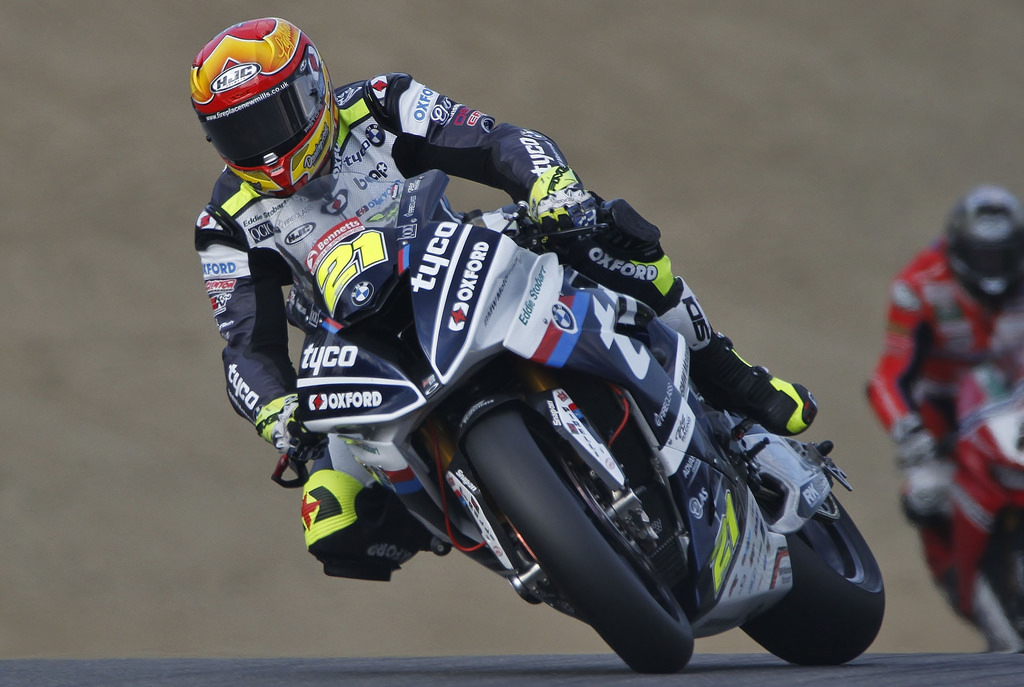
Christian Iddon (Tyco-BMW) racing through the pain barrier this weekend.
If there was a ‘Man of Steel’ award for this championship, then the recipient would undoubtedly be Christian Iddon. the Tyco-BMW rider would win it hands down. Following a big moment if qualifying yesterday – the bars of his machine wrenched themselves from his grip whilst under braking – he competed the three races with a broken collarbone. In the end, it was just 3 points which denied him a place in the showdown. However with BMW updating their S1000RR model later this year, there is reason to already be excited about the rider’s chances in 2019.
In the end, it was Peter Hickman who secured the sixth and final showdown place, and the sheer relief from both rider and team cannot be understated. Technical problems with the bike – including a broken gear lever – saw the Lincolnshireman plummet down the field late in the race. This followed a disastrous moment during the original warm up laps, when he crawled off track and into the pits. It transpired that there was no fuel in the bike. In the end, Hickman made it to the finish in P14. 2 points scored, and that was enough to qualify for the showdown.
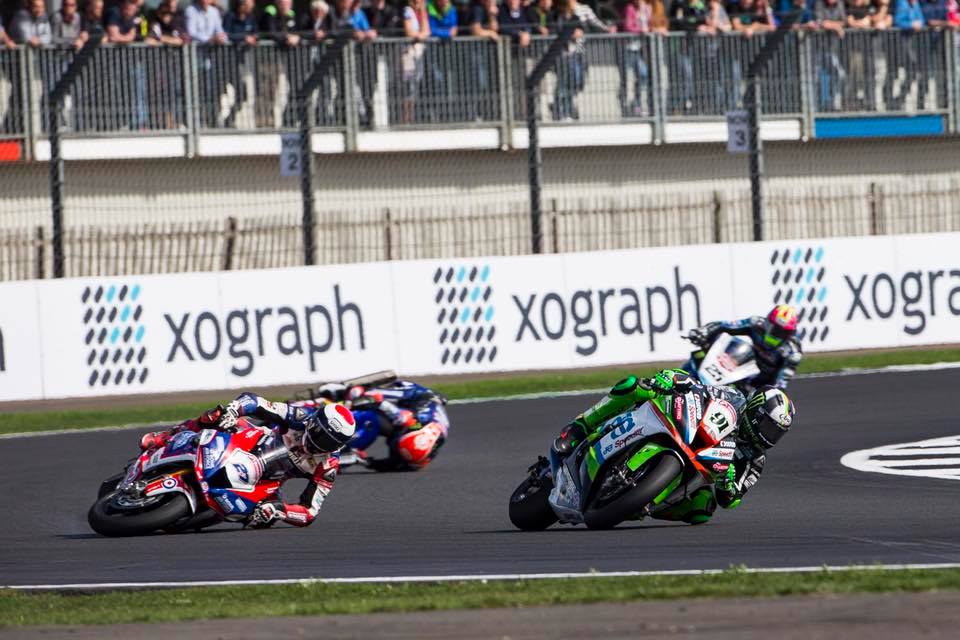
Disaster for Dixon and MacKenzie as they crashed out on the final lap. Photo credit: Jamie Morris Photography
Leon Haslam (JG-Speedfit Kawasaki) made it two wins in a row this weekend, as Bradley Ray (Buildbase Suzuki) secured his place in this year’s championship Showdown.
Following a small delay after a red flag in the Superstock1000 class, the middle instalment of the Silverstone triple-header began at 1.40pm.
It was the young Suzuki rider who seized the initiative. Hooking up the engine revs and killing the wheelspin as the clutch was released, he made the holeshot at Copse and for a time threatened to pull clear of the field. After crashing out of yesterday’s race, Ray promised to make amends today. Indeed, for 20 of the 30 laps, the 21-year old made good on that vow holding a solid position inside the top three.
Behind him, battle raged in almost identical fashion to yesterday. Jake Dixon (RAF Regular and Reserves Kawasaki), Haslam and Tarran MacKenzie (McAms-Yamaha) formed the main chasing pack to Ray. The quartet steadily distancing themselves from the rest of the competition. Having scored his first podium finish during Saturday’s race, the young MacKenzie was intent on tasting the winner’s champagne this afternoon. Once he’d established his rhythm on the bike, the Yamaha rider forced his way past the Suzuki on the tight switchback which links Becketts and the Wellington Straight. Despite regular attempts from his rivals at taking the lead from him, MacKenzie stood firm. At times, it is hard to believe this is his rookie year in the British Superbike championship. Composed under pressure, and able to lead from the front and absorb pressure – it is easy to see why he completely dominated the Supersport class back in 2016.
However it was not to last. On lap 13 Ray and Haslam finally found a way by at Copse. Just a few moments later Haslam attempted to force Ray out wide at Luffield, but mistimed his braking and the pair made heavy contact at the apex. Amazingly, neither rider hit the tarmac, though Ray was forced onto the grass. By the time he rejoined, he was swamped amongst the midfield runners.
Haslam, for his error, was ordered by race control to yield his track position to the rider behind. There then followed a brief period of chaos in the pitlane, as both race control and the JG-Speedfit Kawasaki team frantically tried to inform him of this – yet neither was able to get their message across. Unlike MotoGP, the superbikes do not have a dashboard message system. The confusion was understandable as there was no way Haslam (or any rider for that matter) could have seen the penalty board at its position on the pit wall, from where he was as he thundered through Woodcote. A solution was eventually found by hanging another penalty board at Brooklands corner.
Once the positions had been ceded, Haslam immediately fought back for the lead. Dixon and MacKenzie had been joined at the front by Josh Brookes (McAms-Yamaha). Such was the commitment of the pocket-rocket, none of the named three could offer any resistance when Haslam roared back through. Unfortunately, neither Dixon or MacKenzie made it to the chequered flag as on the final lap, both riders lost the front end of their machines becoming the latest riders to fall on the drop into Brooklands. Both riders will be extremely keen to make amends in the final race of the weekend, later this afternoon.
Brookes and Glenn Irwin (BeWiser Ducati) rounded out the podium places. It was a solid (if quiet) race for the Ulsterman, but its precious podium credits secured for the Showdown opener next week at Oulton Park. Behind them in P4 and P5 came Jason O’Halloran (Honda Racing BSB) and Christian Iddon (Tyco-BMW) respectively. The latter keeping his hopes of a place in the championship showdown alive, whilst competing with a broken collarbone. If there was a ‘Man of Steel’ award for this series, Iddon would be the hands-down winner.
Despite Ray only just finishing in the points (P14), it was enough to secure his place in the showdown. This means there is just one place left on the table, and any of Iddon, O’Halloran, Danny Buchan (FS-3 Kawasaki) and Peter Hickman (Smiths Racing BMW) can still qualify. Two races down, one to go – the would be showdown contenders will race off in ‘The Decider’.
Well, let’s get this out of the way at the start. What delights has Turkey got for us……? Sorry. Anyway, it’s the first WRC event in Turkey since 2010 and let’s take a look at the results from that event.
The top ten was dominated by Citroen and Ford, but you’ll recognise a few names. Kimi’s co-driver is part of the Toyota team now, whilst Craig Breen’s co-driver was guiding Matt Wilson back then.
Now, here’s the full stage info.
RALLY TURKEY SCHEDULE (GMT+3)
THURSDAY 13 SEPTEMBER
9.30am: Shakedown (4,70 km)
6.30pm: Ceremonial start (Marmaris)
8.08pm: SS 1 – Super Special Turkey Full Speed (2,00 km)
8.33pm: Parc fermé (Asparan)
FRIDAY 14 SEPTEMBER
7.00am: Service A (Asparan – 15 min)
7.58am: SS 2 – Çetibeli 1 (38,10 km)
9.21am: SS 3 – Ula 1 (21,75 km)
10.24am: SS 4 – Çiçekli 1 (12,57 km)
12.24pm: Service B (Asparan – 30 min)
1.37pm: SS 5 – Çetibeli 2 (38,10 km)
3.00pm: SS 6 – Ula 2 (21,75 km)
4.03pm: SS 7 – Çiçekli 2 (12,57 km)
5.48pm: Flexi service C (Asparan – 45 min)
SATURDAY 15 SEPTEMBER
7.42am: Service D (Asparan – 15 min)
8.35am: SS 8 – Yesilbelde 1 (34,24 km)
10.08am: SS 9 – Datça 1 (10,70 km)
11.11am: SS 10 – Içmeler 1 (20,37 km)
12.16pm: Service E (Asparan – 30 min)
1.24pm: SS 11 – Yesilbelde 2 (34,24 km)
3.08pm: SS 12 – Datça 2 (10,70 km)
4.11pm: SS 13 – Içmeler 2 (20,37 km)
5.01pm: Flexi service F (Asparan – 45 min)
SUNDAY 16 SEPTEMBER
9.25am: Service G (Asparan – 15 min)
10.08am: SS 14 – Marmaris 1 (7,14 km)
10.46am: SS 15 – Ovacik (8,05 km)
11.24am: SS 16 – Gökçe (12,65 km)
1.18pm: SS 17 – Marmaris 2 Power Stage (7,14 km)
2.15pm: Podium
This year’s event promises to be one of the open yet, with all new stages. Stage notes creation, therefore will be key and we may even see the crews making changes between the morning and afternoon running of each stage. There are 312.44km of competitive stages over the event, with the longest stages on Friday and Saturday, Çetibeli which is first thing on Friday and Yesilbelde on Saturday morning, 38.10km and 34.24km respectively.
Let’s hear then from the drivers –
Hyundai Motorsport
Thierry Neuville
“Rally Turkey will be a step into the unknown for everyone. We don’t know much about the stages, but we have had the chance to see some video footage. It seems like the roads will be very rough. From our position as first on the road, I am expecting a tricky weekend. I like new rallies and new challenges; it keeps the championship fresh and offers teams and crews something entirely new to tackle. My main target is to enjoy the rally and, of course, to do all we can to preserve our position at the head of the championship.”
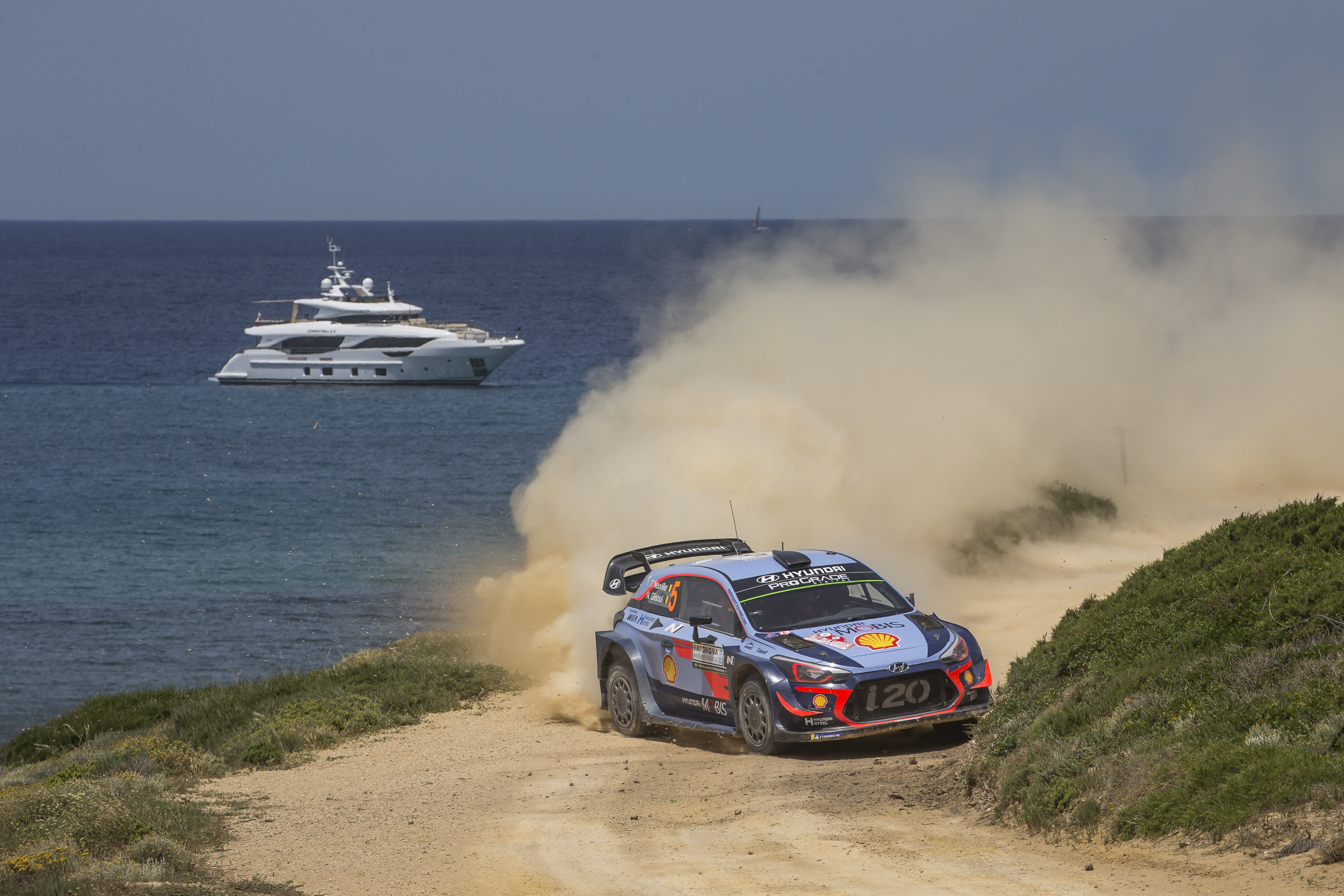
2018 FIA World Rally Championship Round 07, Rally Italia Sardegna 7-10 June 2018 Thierry Neuville, Nicolas Gilsoul, Hyundai i20 Coupe WRC Photographer: Austral Worldwide copyright: Hyundai Motorsport GmbH
Andreas Mikkelsen
“I took part in Rally Turkey back in 2008, which was held in a completely different part of the country to where we will be rallying next week. It’s going to be a totally new experience for all competitors and one that will undoubtedly spring some surprises. From what we have seen, it appears we will be competing on rough roads and in very hot conditions, which will be tough on the crews, cars, tyres and brakes. All in all, it will be a nice new challenge and one I am looking forward to.”
Hayden Paddon
“I can’t wait to get back into WRC action; it feels like a long time since Finland! Turkey promises to be an unpredictable rally for everyone. I competed there back in 2010 but in a different part of the country so that experience is not comparable to what we’ll encounter next week. It looks like the stages will be twisty, rough and very hot, resembling an old Cyprus rally. As with any new event there are lots of unknowns, but we’re as prepared as we can be. We’ll definitely give it a good crack.”
M-Sport Ford WRT
Sébastien Ogier
“Rally Turkey will be an interesting event for sure as no one really knows what to expect. This is the first completely new event for a long time and, even though I contested the rally in 2010, next week’s event will be completely different.
“There will be a lot of work to do on the recce, and Julien [Ingrassia, co-driver] will have to write brand-new notes for every single kilometre! It’ll be a lot of work, but I’m looking forward to the challenge and to discovering what these new stages will be like.
“Our goal is to deliver the best possible result, but the loose gravel will make it a challenge. We’ll be the second car on the road and there will be a lot of fast drivers benefiting from a cleaner and faster road behind. We’ll need to try and stay as close as we can on Friday morning and then see where we are after that.
“The most important thing is to score a strong haul of points for our championship defence, and that is what we will focus on.”
Seb and Julien – Photo credit M-Sport
Elfyn Evans
“We’ll be taking a step into the unknown with a brand-new rally next week. I’m sure it will be an interesting weekend and I’m looking forward to discovering what the Turkish stages have to offer.
“For sure it will be hot, and we’ll need to be prepared for that. It also looks as though it could be quite loose which would give us a good road position for the first day; but it also has the potential to be fairly rough and everyone will need to have their wits about them.
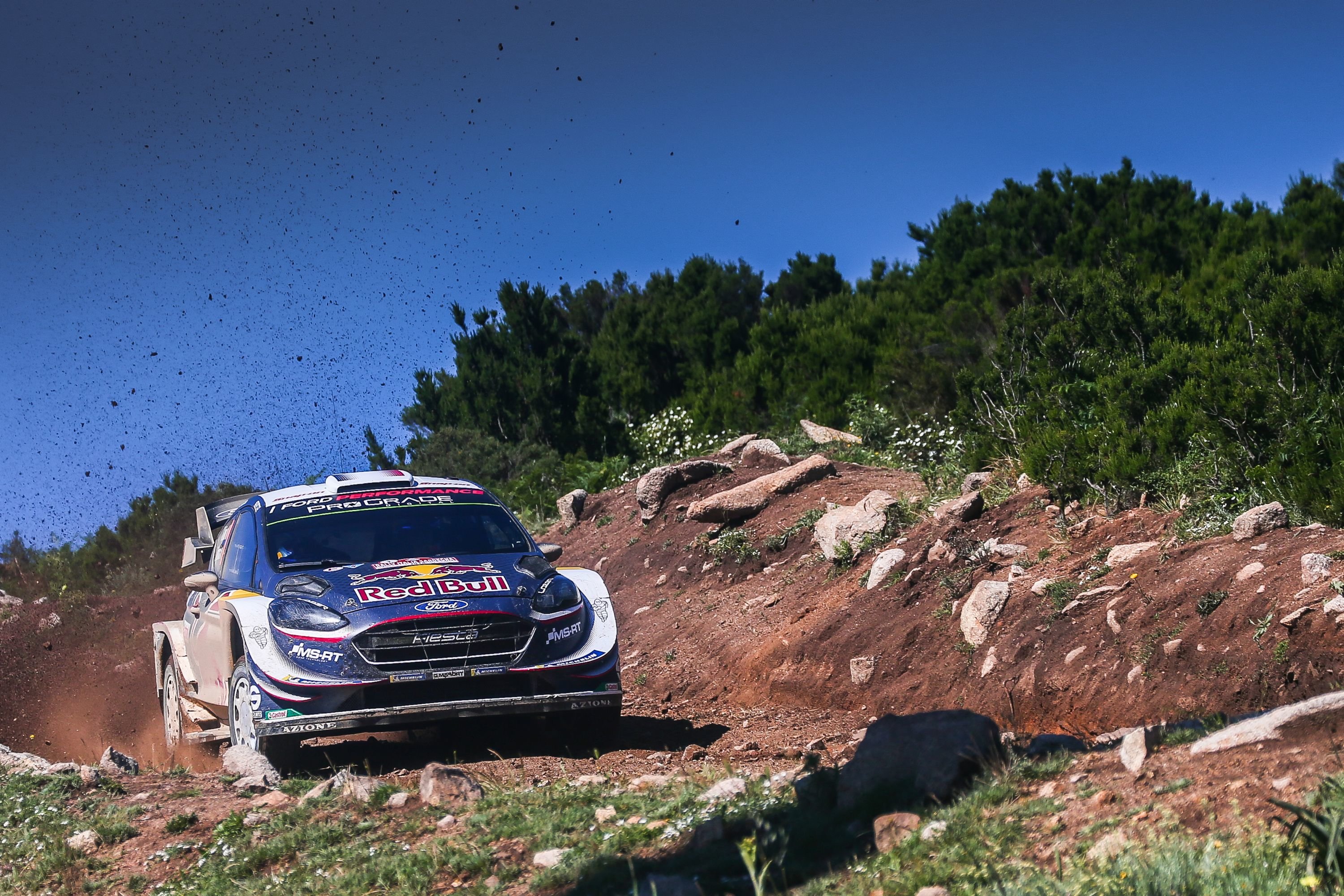
“We completed our pre-event test on some pretty rough roads in Greece and the Fiesta proved as strong as ever. We’ve had to do a lot of preparation to get ready for this one, and the hard work will only continue next week.
“We’re as prepared as we can be and I think we’re all looking forward to experiencing something completely new – where the aim is to be in the fight for the top positions.”
Teemu Suninen
“Whereas most of the rallies this year have been new only for me, this one will be new for everyone. That will make things really interesting and could bring me an opportunity as we will all be equal on experience before the first stage.
“No one is allowed is test in Turkey so we’ll all experience the roads for the first time during the recce and then the shakedown. Set-up wise, I’ll discuss with my team mates first to see what they have experienced and discovered. Otherwise, I will need to make my own conclusions and choices.
“As for what to expect, I have never been to Turkey before and will travel out a little earlier than usual to get a feel for everything. I’m expecting it to be a very hot rally and very demanding, but I hope to deliver a good result.”
Toyota Gazoo Racing WRT
Jari-Matti Latvala
“This is the first time for many years that I am preparing for a completely new WRC event. There are many unknowns: you have to do new pace-notes, you don’t know the characteristics of the roads and you don’t know how they will change for the second pass. I remember from when we went to Turkey in 2008, near Antalya, that it was very hot. The long stages were very demanding and very hard on the tyres. From what I have seen so far, I think there will be some similarities to that rally and also to the Acropolis Rally. The pre-event test was really good for me. I was very happy with the car and we made some good steps with the suspension.”
Ott Tanak
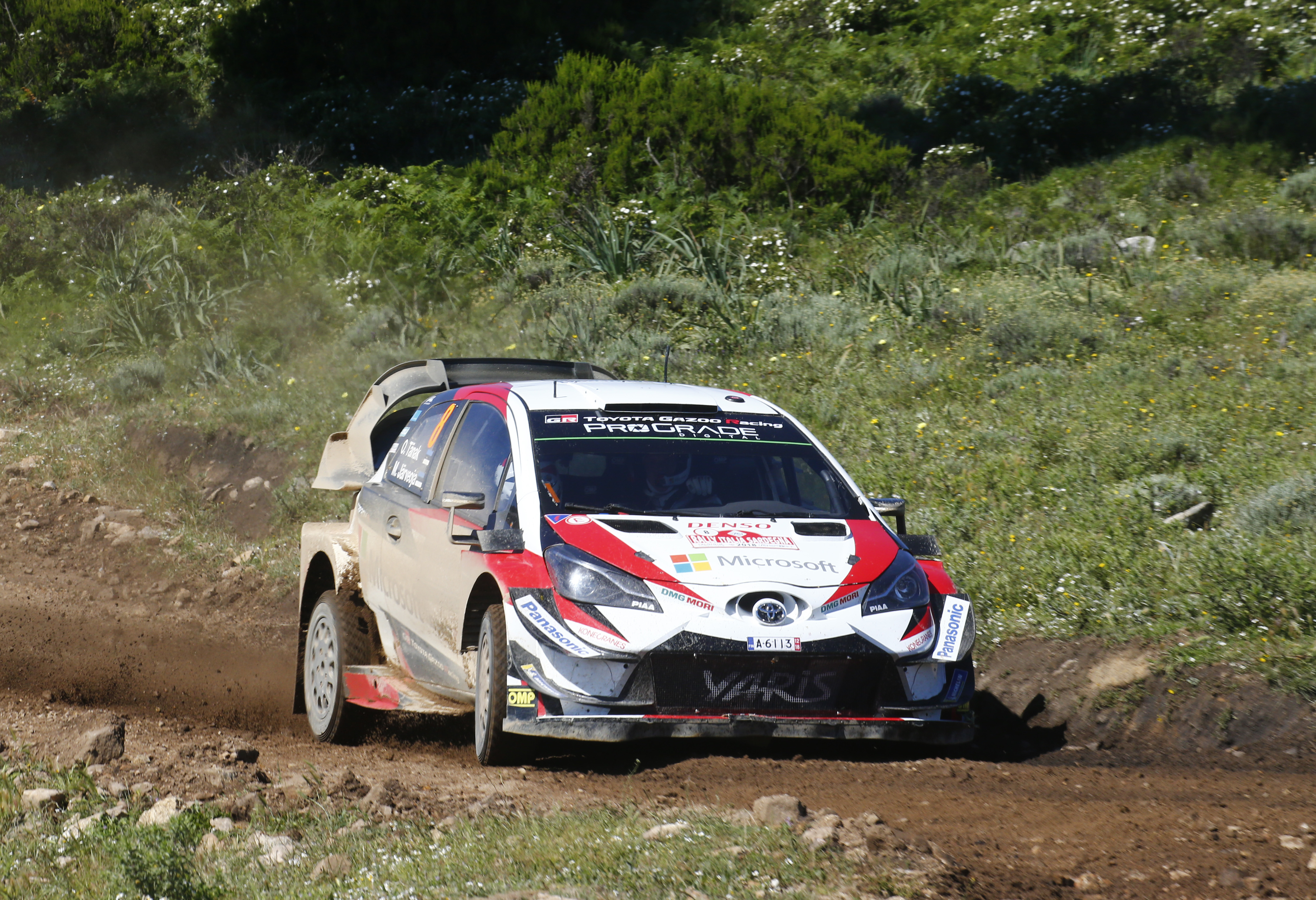
“Obviously we have had some very good results recently, but I am still taking it rally-by-rally. It is difficult to have any expectations for Turkey as we don’t have a lot of know-how about the rally. Everybody is talking about it being a rough event: we will have to wait and see how it is on the recce. We certainly know that it will be hot. I think that our pre-event test in the south of Portugal was good preparation for that and we are doing everything we can to be ready and be competitive. Now there is not too much more we can do until we get there and see the stages for ourselves.”
2018 FIA World Rally Championship / Round 07, Rally d’Italia, Sardegna / June 7-10, 2018 // Worldwide Copyright: Toyota Gazoo Racing WRC
Esapekka Lappi
“We should expect the unexpected in Turkey. The information we have is that it will be rough with a lot of loose gravel, and that tyre management will be key. For that reason, the long afternoon loops will be crucial, I think. We saw on our test that the tyre wear is quite high when you have rough roads and it’s 35 degrees outside. In general, the test went very well and I think we managed to find some nice settings with the car. I am looking forward to the challenge: it’s a chance to learn something new. So far, being early on the road on loose gravel has not been a strong point for me, so I will try to improve that.”
Citroen Abu Dhabi Racing WRT
Craig Breen
“The aim is really to get through the opening leg without any hiccups. If we manage to do that, we should be right up there, in the mix and well placed for the rest of the rally. It’s difficult to take any real information from the on-board footage recorded by the organiser in a production car. One thing is sure, however: the course looks very interesting, with a good variety of roads, some narrow, technical and rough, others much quicker.”
Mads Østberg
“We’re expecting it to be hot this weekend. It’s going to be a technically-difficult, demanding rally for the cars and that’s what we prepared for during our pre-event test in the Aude. I’m feeling pretty confident because I always produce decent performances on this kind of surface. And the C3 WRC is even more efficient and easier to drive than it was in Sardinia, which is the last event contested on similar types of road. We’re also going to be able to use some of the things we learned in Finland on this surface.”
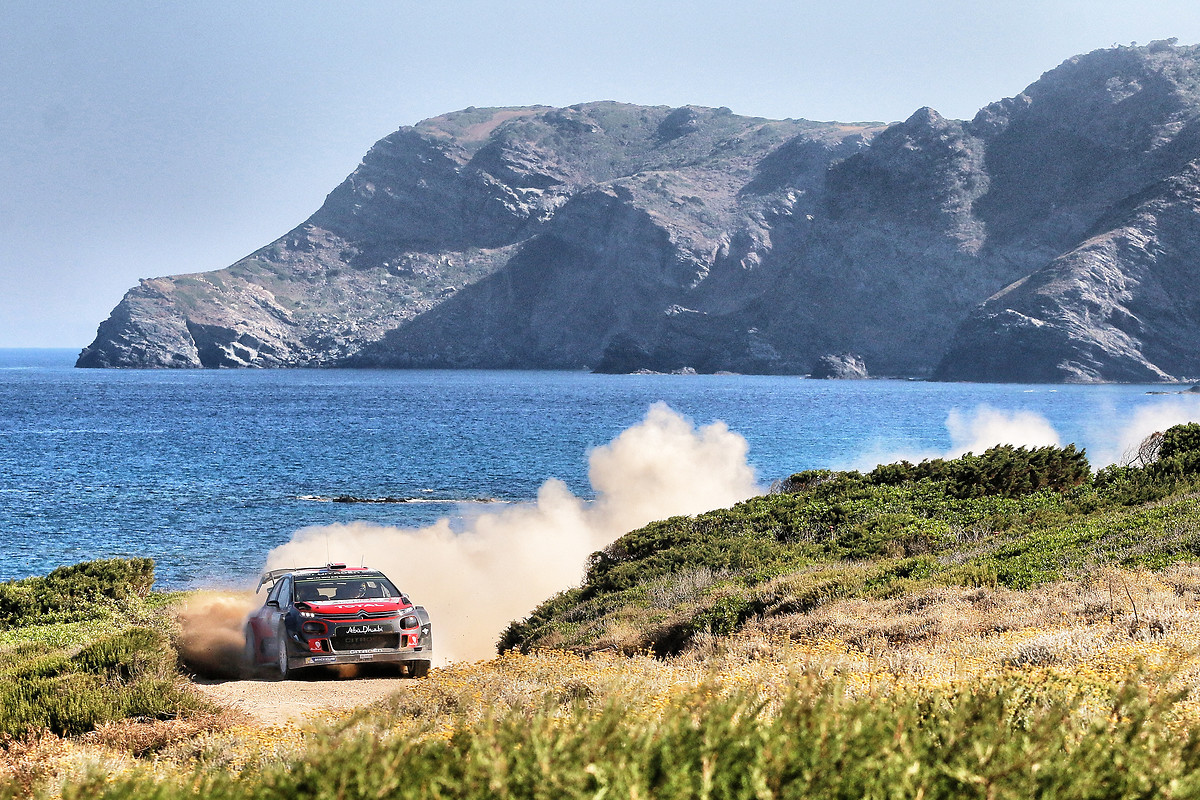
Mads and Torstein, Photo credit Citroen Racing
Khalid Al Qassimi
“I’m delighted to be back behind the wheel of my C3 WRC, especially at a new event. It’s always exciting to contest brand new stages for the first time, especially as we’re expecting fairly difficult conditions. I’ve always felt comfortable at events like this. I have some good memories of the Acropolis Rally, for example. It’s always a question of finding the right balance between pushing and looking after the car.”
I think we can expect the key players to be at the front once Friday is done, but those extra drivers to watch will be Hayden and Elfyn I believe. Can Ott Tanak continue his fine form and close the gap further to Thierry and Seb in the fight for the championship?