Tag: Formula 1

  • What are the Formula One Teams doing to Reduce their Environmental Impact?

    What are the Formula One Teams doing to Reduce their Environmental Impact?

    Climate change is undeniably one of the biggest issue facing our planet today, with every sector of society having a responsibility to help tackle greenhouse gas emissions. Motorsport is no different. For Formula One, being the pinnacle comes with huge pressure to stay up to date with modern technologies, and gives them a duty to lead the way in tackling climate change. So what are the F1 teams and the FIA doing to provide a shining example to other categories?

    Below is my assessment of each team and F1 as a whole based on emissions both at and away from the track, covering areas from transportation, to the impact of the food served in the factories.
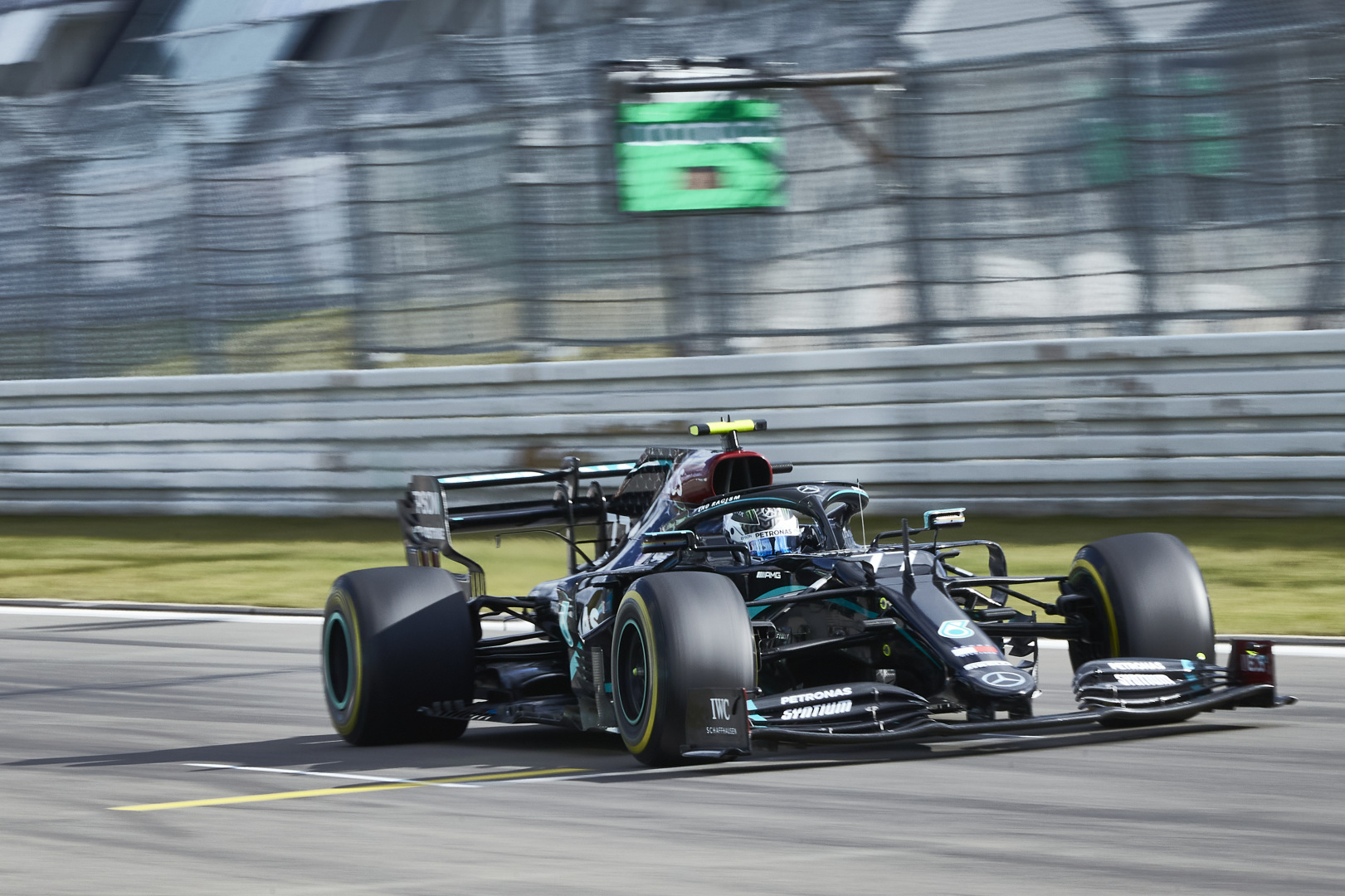
    Steve Etherington / Mercedes AMG

    Mercedes:

    In recent years Mercedes has been the figurehead of F1, achieving 6 (soon to be 7) constructors titles in a row. This on-track success and ambition refuses to be outdone by their sustainability ambitions. In 2018, Mercedes calculated that they released 20,000 tonnes of carbon into the atmosphere. By 2022, they aim to have halved this to 10,000 tonnes. Being an F1 team means that there are certain to be some emissions that simply can’t be avoided. Mercedes claim that they will use gold-standard offsetting to help eliminate the impact of these (carbon offsetting is investing or taking part in projects that have a positive impact on the environment).

    Mercedes’ high-tech Brackley factory already uses renewably sourced energy to power all its operations from the wind tunnel to the data simulation centre. However, the Brixworth Technology Centre (where they develop their engines) uses at least fifty percent renewable energy, using solar panels and an on site Combined Cooling, Heating and Power (CCHP) Plant (a plant that uses an efficient gas engine to generate electricity for cooling heating and power. This is renewable so long as the gas fuel is a renewable gas such as hydrogen, biogas, syngas, or biomethane. Mercedes provided no information as to the gas used although as they count this as a renewable source of energy, you would assume they do use one of the gasses mentioned above). For any outsourced energy, Mercedes have committed to switching to 100% renewably sourced energy over the course of 2020.

    The food industry is one of the leading causes of greenhouse gas emissions, from flatulent cattle to transporting spices across the globe. In Mercedes cafeterias, they claim that they will eliminate the use of all single-use plastics. However, what they fail to mention is how much red meat is consumed, which being one of the most polluting food sources on the planet, is important to try and reduce where possible.

    Nothing can seem to separate Mercedes from the top on track, but off track they are also leaders, aiming to be carbon neutral by the end of 2020.  On the whole, they have some very impressive ambitions and are already putting in place measures to achieve them.

    Grade: A

    Ferrari:

    Ferrari are often seen as the F1 traditionalists. However, this perception is not necessarily justified when it comes to sustainability. 87% of the energy used at Maranello is generated by their trigeneration (also known as CCHP, like Mercedes has) plant, with 95% of the remaining energy sourced from certified renewable sources. Ferrari’s team headquarters comply with the New Zero Energy Building Protocol (this means the energy they use is approximately equal to the renewable energy they create). Maranello, along with Mugello, also has the 2016 ISO 14001:2015 certificate, which is a certification that shows they abide by the ISO standards.

    Across their European fleet, Ferrari succeeded in reducing their CO2 emissions by 35% compared to 2007 levels, despite growing significantly as a business in that time. By the end of 2020, they hope to have reduced this by a further 15% compared to 2014 levels.

    Ferrari provided no information about catering operations.

    It appears that Ferrari are moving with the times, recognising the importance of being more sustainable, whilst also trying to continue growing as a company. At times, this leads to some concerning decisions, but largely, Ferrari are looking to move in the right direction.

    Grade: B

    Red Bull, Racing Point, Haas and Alpha Tauri:

    Disappointingly, a number of teams provided absolutely no information on their sustainability goals and failed to respond when questioned. As a result, Red Bull, Racing Point, Haas, and Alpha Tauri can’t be assessed and all receive the same grade.

    Grade: U
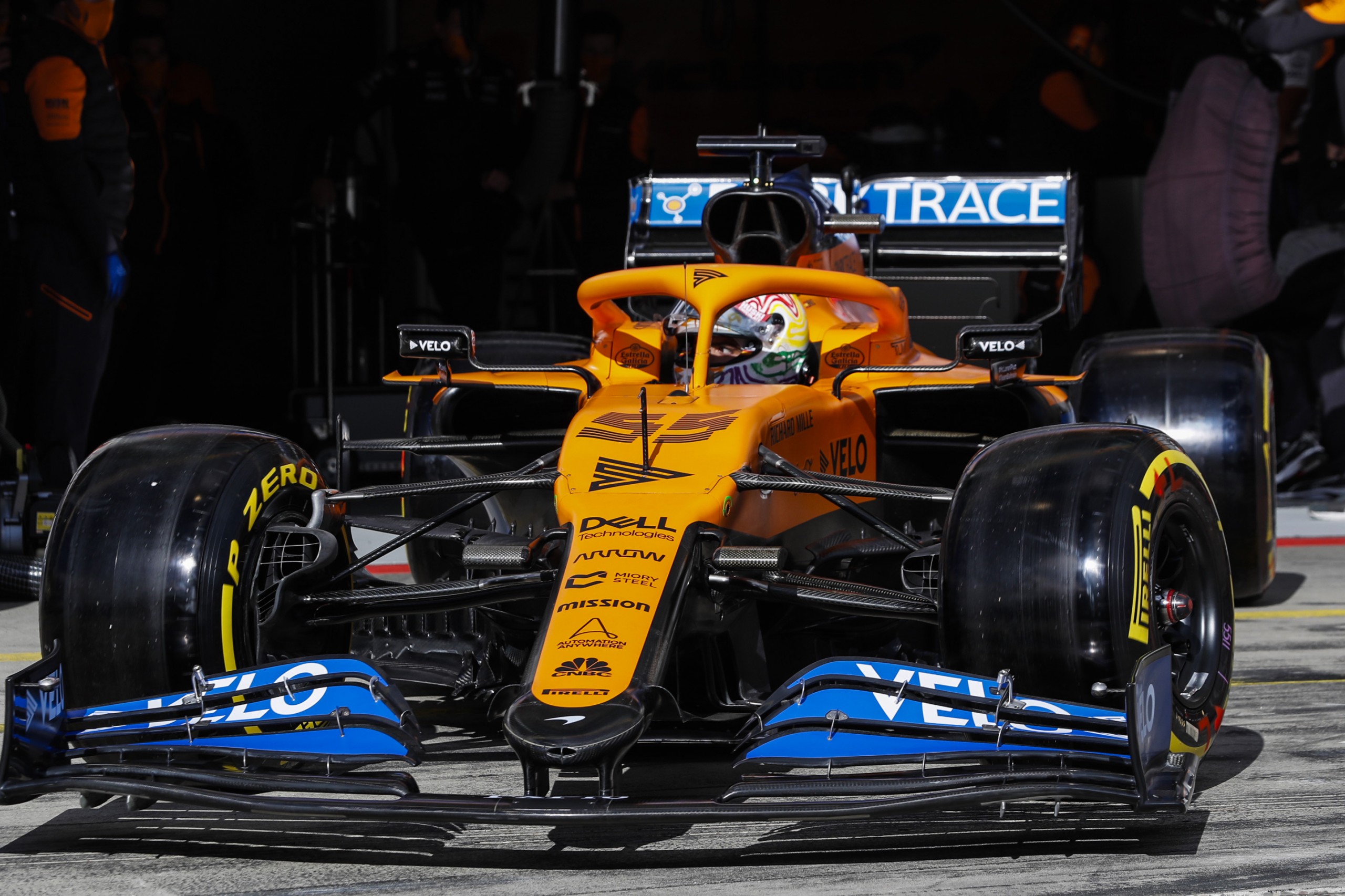
    Steven Tee, Motorsport Images / Courtesy of McLaren Media Centre

    McLaren:

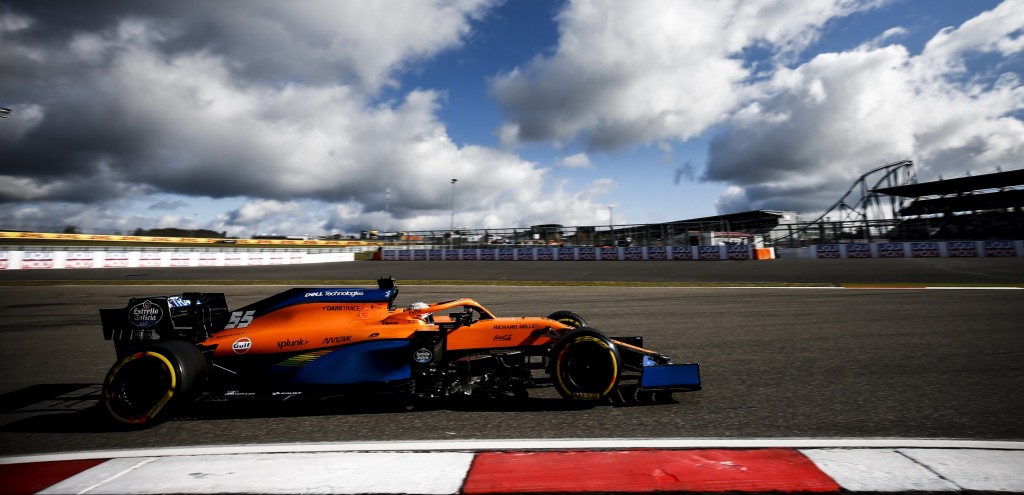
    On a more positive note, McLaren’s sustainability is one of the best in the sport. In 2011, it was announced that McLaren were the first ever Formula One team to go carbon neutral, receiving the FIA Sustainability Accreditation Award in 2013, with them being awarded the highest honours of the FIA Environmental Certification framework every two years since (most recently in February 2020).  McLaren also work with the Carbon Trust to make sure their facilities comply with the ISO 14001, which requires them to have an effective environmental management system.

    By changing all Halogen Bulbs to LEDs , McLaren save 13,000 KwH of electricity each year, greatly reducing the amount of energy they require. The team also utilise the lake outside the MTC to help control the temperature and reduce the need for cooling towers. 100,000 trees and shrubs have also been planted around the factory.

    McLaren have made sustainability an integral part of their company and have achieved some very impressive, and very pleasing environmental goals as a result.

    Grade: A*

    Renault:

    Renault are one of the most iconic teams within Formula One, mainly thanks to their success in 2005, and 2006 with Fernando Alonso. However, their sustainability goals certainly aren’t iconic.

    When it was announced in 2019, Renault welcomed Formula 1’s aim to be Carbon Neutral by 2030, whilst also announcing their own Social and Sustainable Impact Program. Since then, they have not expanded on what this program entails, nor do they have any more information on their own environmental impact available online. Accepting Formula 1’s Carbon Neutrality plans should be the bare minimum, but at least they have come out and made a statement regarding it.

    Grade: E
    Xavi Bonilla / Alfa Romeo Press

    Alfa Romeo:

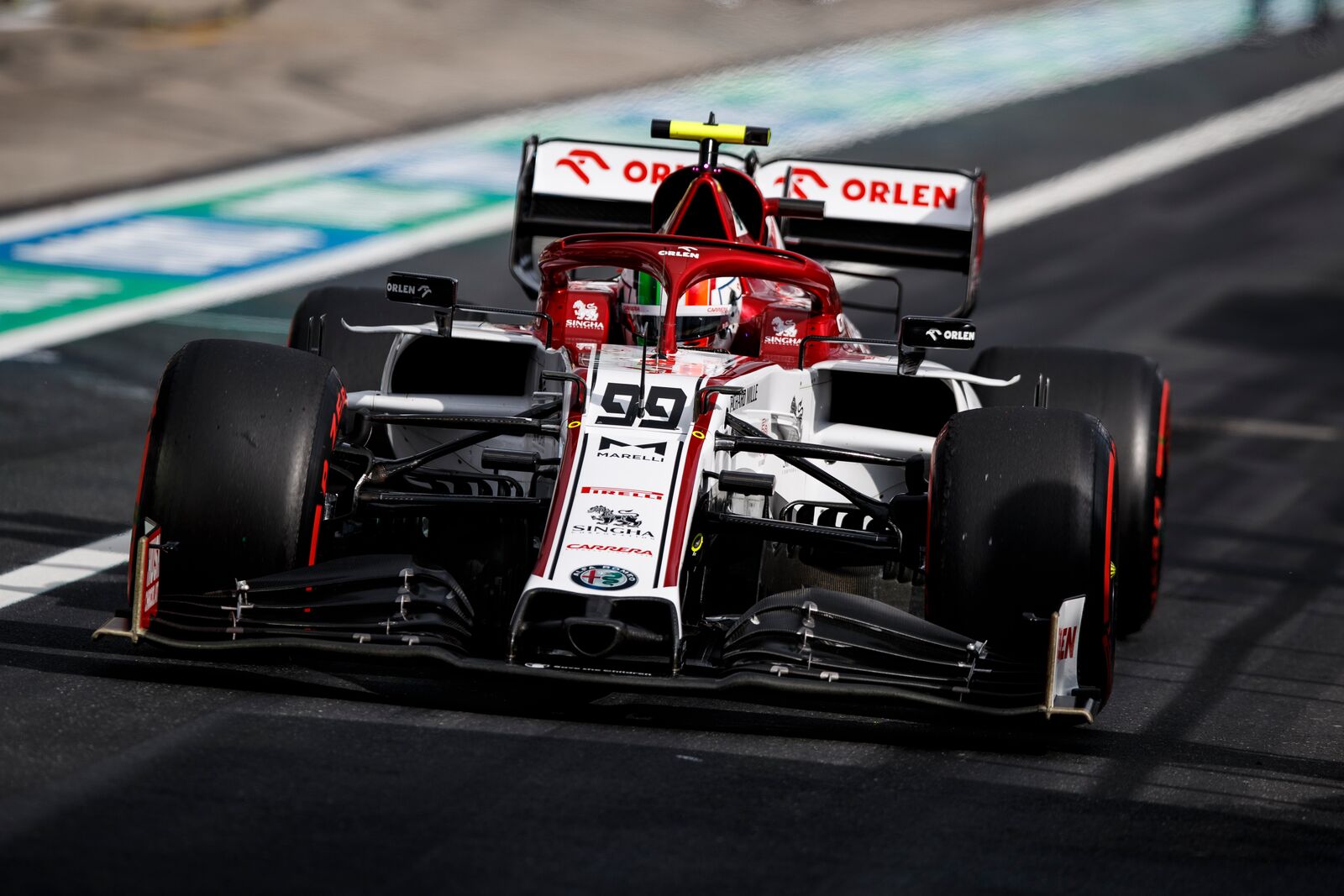
    Alfa Romeo has to be one of the biggest surprises of all the Formula One teams. Since 2011, the Sauber Group has known its entire carbon footprint and fully compensated for it! In 2014, they struck up a partnership with Carbon Connect AG that allows them to calculate its annual carbon emissions, whilst also supporting reforestation projects in South America.

    When broken down, over 80% of the teams’ overall emissions are caused by the transportation of equipment to and from the races, whilst fuel for tests and races account for just less than 1%. Energy and electricity make up 4.5% of all the teams carbon emissions. Alfa Romeo offsets all of this.

    At the company headquarters in Hinwil, the car park is roofed by 2200 square meters of solar system that provides enough electricity to power 44 homes cleanly. ABB will also install a state-of-the-art fast-charging system for the increasing number of electric car using employees. They intend to power this station with the solar power they already generate.

    Whilst Alfa Romeo make no mention of their catering facilities, you can’t overlook their amazing achievement of fully compensating for their annual carbon emissions since 2011.

    Grade: A*

    Williams:

    The last team to cover, Williams, are by no means the least. Recording and reporting their carbon footprint on a regular basis, Williams were the first sports and entertainment company in the world to join the Carbon Disclosure Project. This has allowed them to identify areas in which to improve, and set, and assess targets based on them. As a result, Williams’ Carbon Footprint has decreased by 18% in just two years.

    Clearly, Williams are showing some positive signs of progression and appear to be taking the issue of sustainability very seriously.

    Grade: C

    Formula One:

    Formula One has a responsibility to ensure that all the teams involved are on the path to a sustainable future. Collectively, F1 aims to ensure all events are sustainable by 2025. This will see the elimination of single use plastics and all waste being either reused, recycled, or composted. F1 will also provide fans incentives and opportunities to reach the races in a greener way.

    By 2030, F1 aims to have a net-zero carbon footprint. They plan to do this by: ensuring they use ultra-efficient logistics, having 100% renewably powered offices, facilities, and factories for all teams to have a net-zero footprint.

    In an entire race season, approximately 256,000 tonnes of CO2 is generated. 45% of this comes from logistics, whilst 27.7% is from business travel. A further 19.3% of this Carbon is from facilities and factories, whilst 0.7% comes from the power units themselves. The remaining 7.3% comes from event logistics which includes support races, broadcasting, Paddock Club operations etc. They aim to have reduced all of this to net-zero by 2030.

    Formula One itself has some ambitious, yet achievable targets that ensures that it, and all the teams involved, will be sustainable and have a minimal impact on our environment at a time where we all have a duty to look after our planet.

    Grade: A*

    In summary, McLaren and Alfa Romeo are leaders of minimising environmental impact, Formula One has some impressive and promising targets for all its teams, but there is a disappointing lack of information from certain other teams. Reducing our environmental impact is crucial to ensuring our planet survives for centuries after we’ve gone and it’s vital we act now whilst it is still in our control.
  • Eifel GP Qualifying: Bottas beats Hamilton to pole at Nurburgring as Hulkenberg makes a return

    Eifel GP Qualifying: Bottas beats Hamilton to pole at Nurburgring as Hulkenberg makes a return

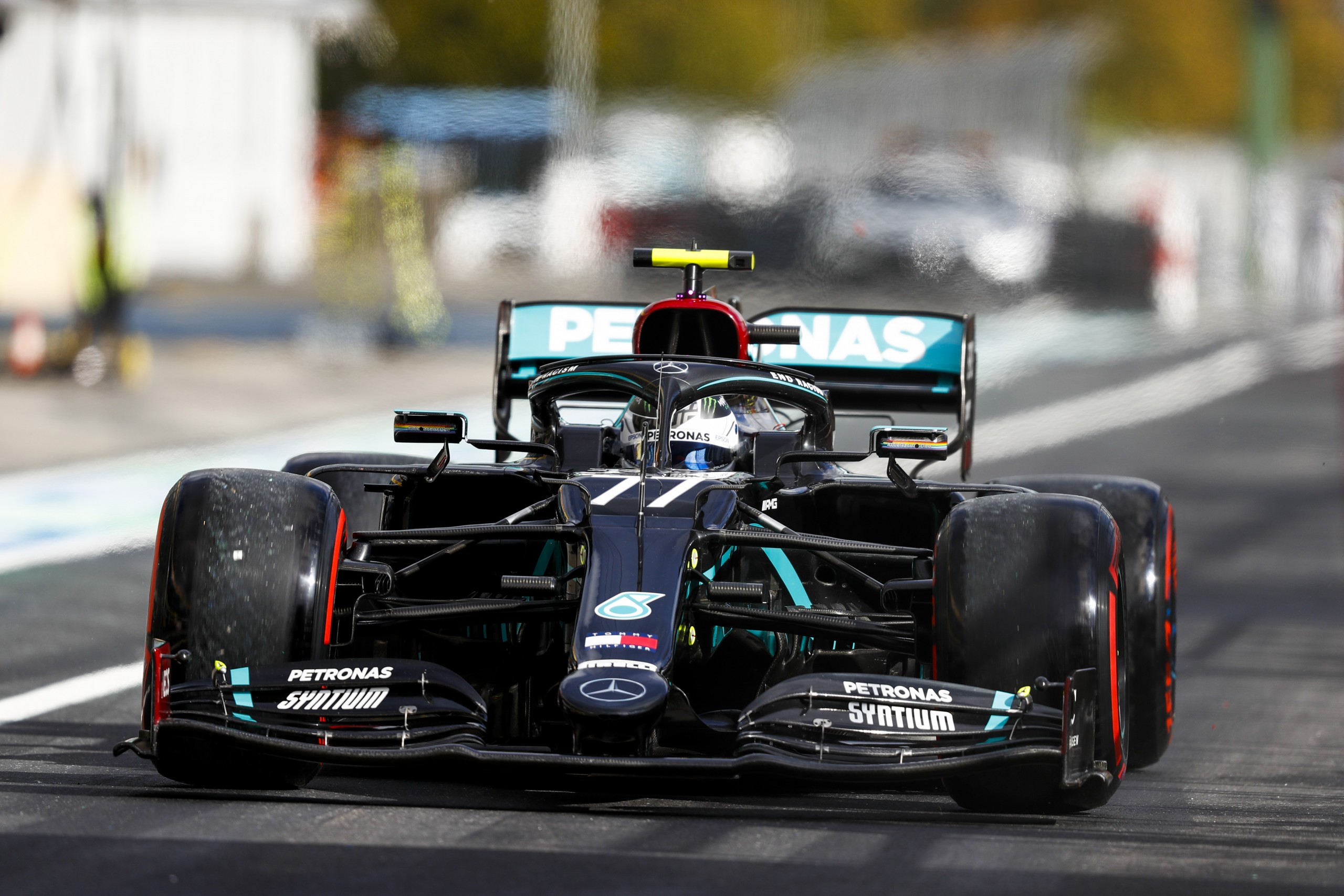
    Valtteri Bottas absolutely smashed the competition from his teammate Hamilton and Red Bull’s Max Verstappen to take pole at Nurburgring on a chilly Saturday afternoon. With yesterday’s practice sessions washed out, the little running that did happen in FP3 suggested that there would be a close fight for pole and things exactly unfolded that way.

    Mercedes’ 72nd front row lockout will certainly be a welcome result for them but missing out on pole here means Lewis Hamilton’s quest for the famous 91st win is still set to continue. Verstappen held provisional pole during the first run of Q3 but the Dutchman complained of lesser grip during the second run which ultimately saw him end up in P3.

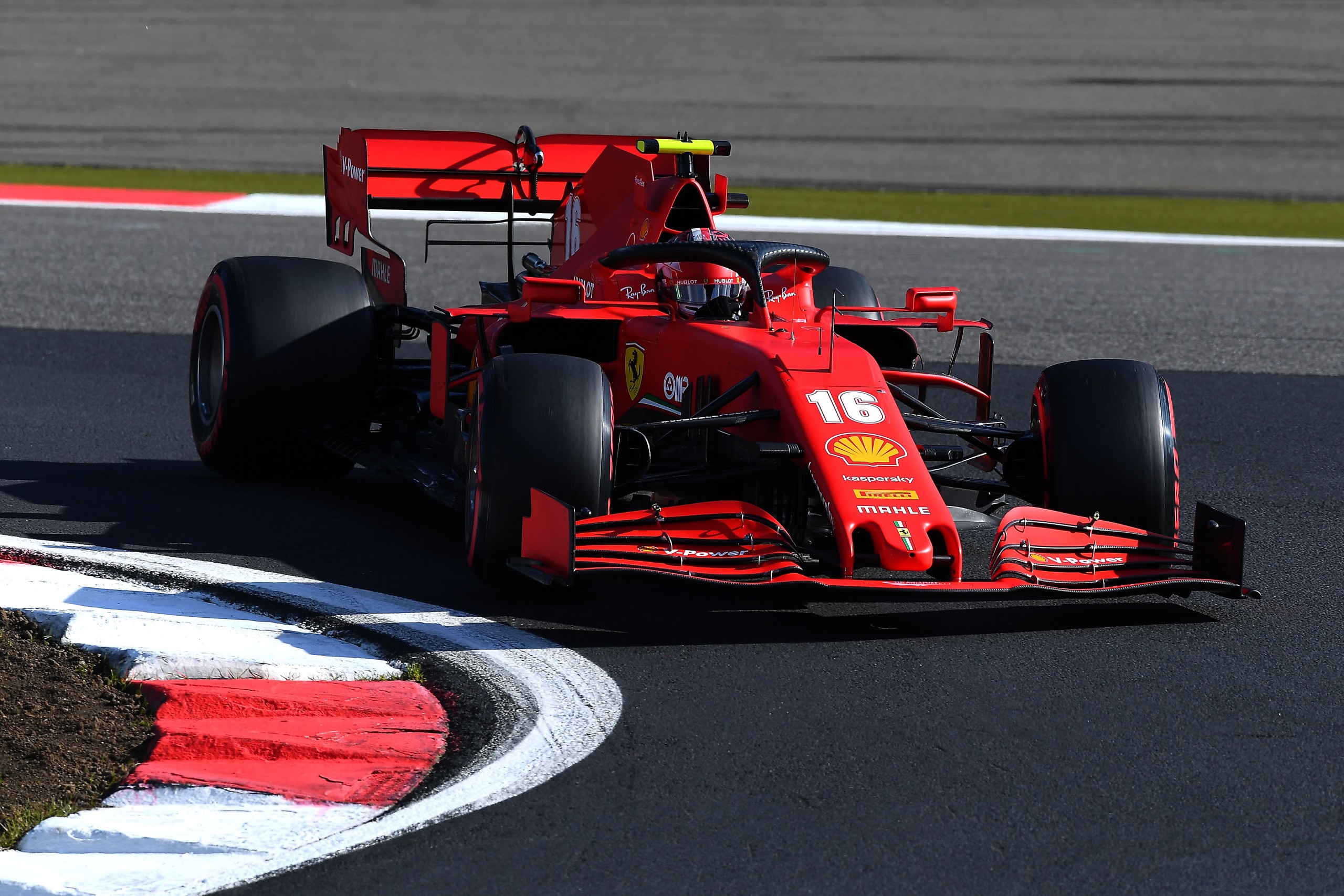
    It looked set to be an all-Red Bull second row after a decent qualifying run from Alex Albon but an amazing lap from Charles Leclerc saw the Monegasque driver finish P4, repeating a similar story from the previous races this season where he has been driving his red car to the limits, sometimes even over. Things were not that good for his teammate Vettel after his qualifying effort saw him finish only at P11 and miss out on Q3 by over three tenths of a second.

    GP GERMANIA F1/2020 – SABATO 10/10/2020
    credit: @Scuderia Ferrari Press Office

    It was another excellent qualifying session for Renault after Daniel Ricciardo overcame his bad first run in Q3 and managed to qualify at P6, just ahead of his teammate Ocon in P7.  This result in qualifying means that Renault will have a slight advantage going into the race, especially considering third place in the constructors championship seems to be anybody’s between McLaren, Racing Point and Renault.

    Racing Point found themselves in a similar situation to Silverstone earlier this year with the team needing to call up Hulkenberg again, this time for Lance Stroll who has been taken sick and missed out on FP3 earlier. The German driver was luckily in Cologne and was readily available as a replacement. The outing proved quite tough for him after he could only finish last but nevertheless, a commendable effort. Sergio Perez in the other Racing Point finished 9th, splitting the McLarens with Norris in P8 and Sainz in P9.

    Both the Alpha Tauri cars could not manage to get into Q3 which was slightly surprising given Gasly’s amazing form this year. They are set to start with Gasly in P12 and Kvyat in P13. A surprise entrant into the top 15 this year is Antonio Giovinazzi, who has finally managed to get into Q2 in his Alfa Romeo and will be starting in P14. His teammate Kimi Raikkonen will start his record-breaking 323rd Grand Prix , the most by any driver, in only P19.

    Kevin Magnussen and Romain Grosjean are set to line up 15th and 16th in their Ferrari-powered Haas cars after a flurry of deleted lap times for both drivers in their Q1 runs. Williams are set to line up with George Russell in P17 and Latifi in P18 with Russell, despite being unhappy with his lap, maintaining a 100% qualifying record versus his teammate.

    A three-way fight for pole ensured a tight Saturday in the very cold temperatures of the Nurburgring and with conditions set to become more cooler and damper compared to today, a similar fight could pan out for the race win. A slight possibility of rain is also set to be in the mix for the race which can only make things that much unpredictable. Hamilton would be very eager to make it 91 wins on Schumacher’s home soil but his party might be spoiled by either his teammate or by Max Verstappen in the Red Bull, all pointing towards the prospect of a classic German Grand Prix.

  • The race that was…the 2013 German Grand Prix

    The race that was…the 2013 German Grand Prix

    This weekend Formula One heads to the mighty Nurburgring for the 2020 Eifel Grand Prix. As it’s been seven years since F1 last raced at the Ring, we’re throwing things back to its most recent visit—the 2013 German Grand Prix.

    Taking a quick glance down the grid, 2013 doesn’t look too far removed from present-day F1. There are seven drivers from 2013 that are still racing in F1 today: Lewis Hamilton, Sebastian Vettel, Kimi Raikkonen, Valtteri Bottas, Daniel Ricciardo, Romain Grosjean and Sergio Perez (or eight, if you include Racing Point stand-in Nico Hulkenberg).

    Of those that aren’t, Fernando Alonso will be returning next year, and it wasn’t that long since we last saw the likes of Felipe Massa, Jenson Button and Nico Rosberg either.

    But of those seven drivers still in F1 today, only Hamilton at Mercedes is still with the same team as in 2013. Back then, Vettel was still the reigning champion at Red Bull-Renault, while his future Ferrari teammate Raikkonen was in the second year of his F1 comeback partnering Grosjean at Lotus.

    Meanwhile, Bottas was a rookie at Williams, Perez was enduring his ill-fated McLaren season, and Ricciardo was still cutting his teeth in a Ferrari-powered Toro Rosso before his Red Bull break a year later.

    As for F1’s current crop of drivers, the likes of Carlos Sainz, Esteban Ocon and Alex Albon were all racing in Formula Renault categories in 2013. As for Max Verstappen, Charles Leclerc, Lando Norris and George Russell, they were all still in karts.

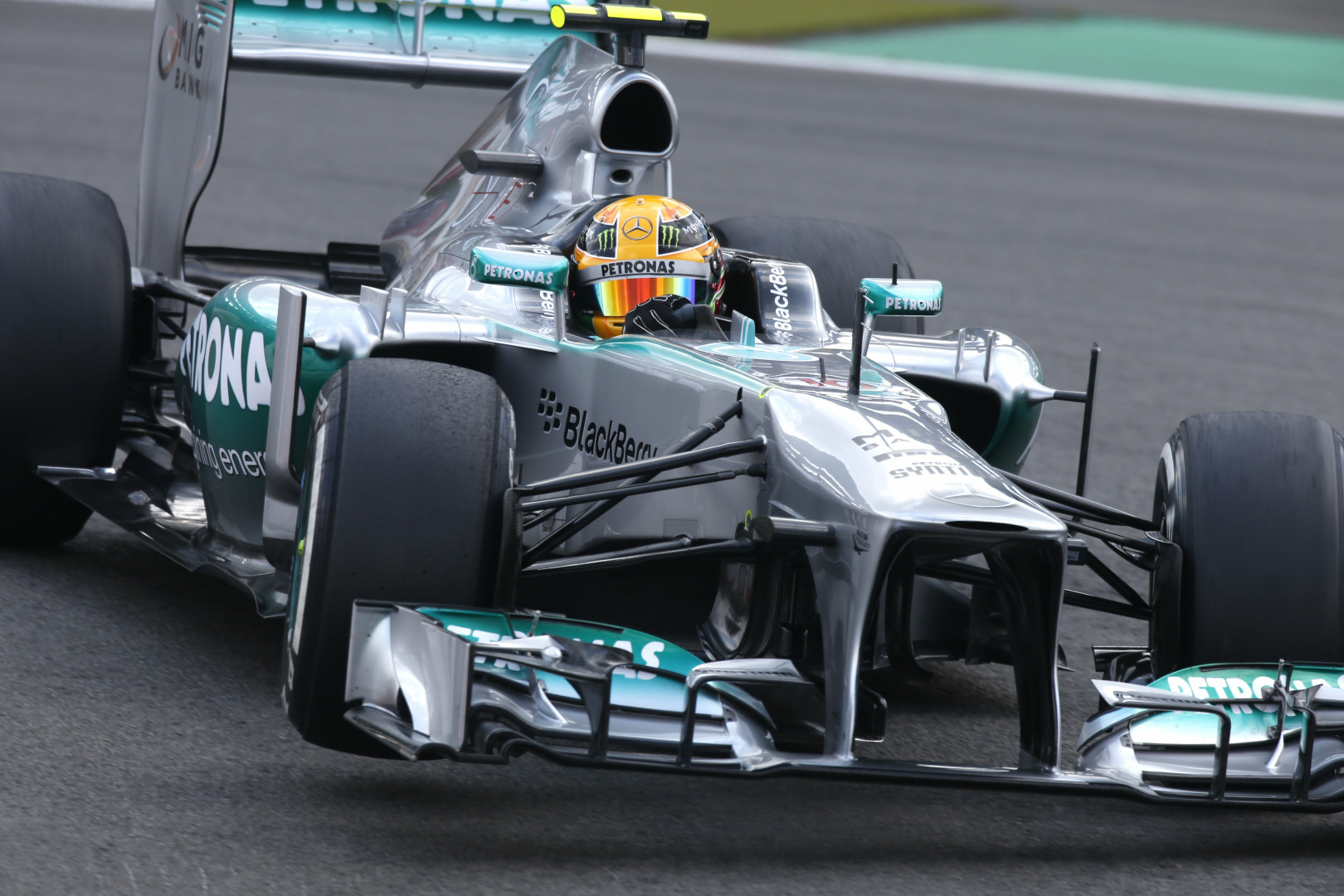
    Lewis Hamilton, Mercedes (Wolfgang Wilhelm / Mercedes AMG)

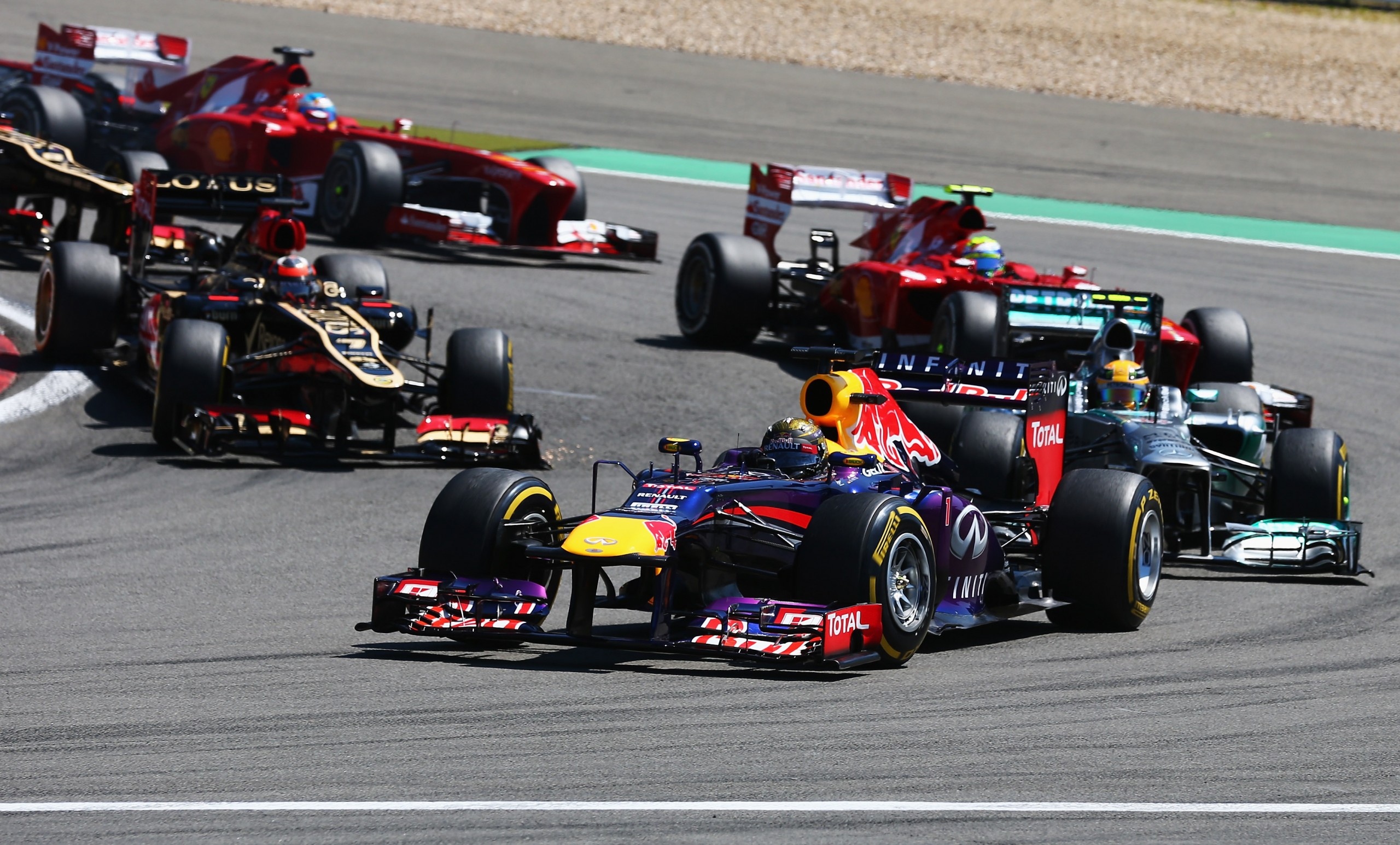
    One thing that will be familiar for today’s F1 viewers is that the 2013 German Grand Prix started with Hamilton on pole for Mercedes. However, the Mercedes W04 was a far cry from the juggernauts that its turbo-hybrid successors would be.

    The W04 was undoubtedly fast, and between Hamilton and Nico Rosberg had taken six of the season’s nine pole positions at that time. But a common theme of 2013 was Mercedes qualifying well only to struggle with tyre temperatures early on in the race and fall back through the field.

    And that’s exactly what happened at the Nurburgring, as Vettel and Mark Webber (starting from second and third respectively) both got the jump on Hamilton into Turn 1. Meanwhile, Hamilton dropped back behind Grosjean and Raikkonen, whose James Allison-designed Lotuses were famously very gentle on their Pirelli tyres compared to the Mercedes.

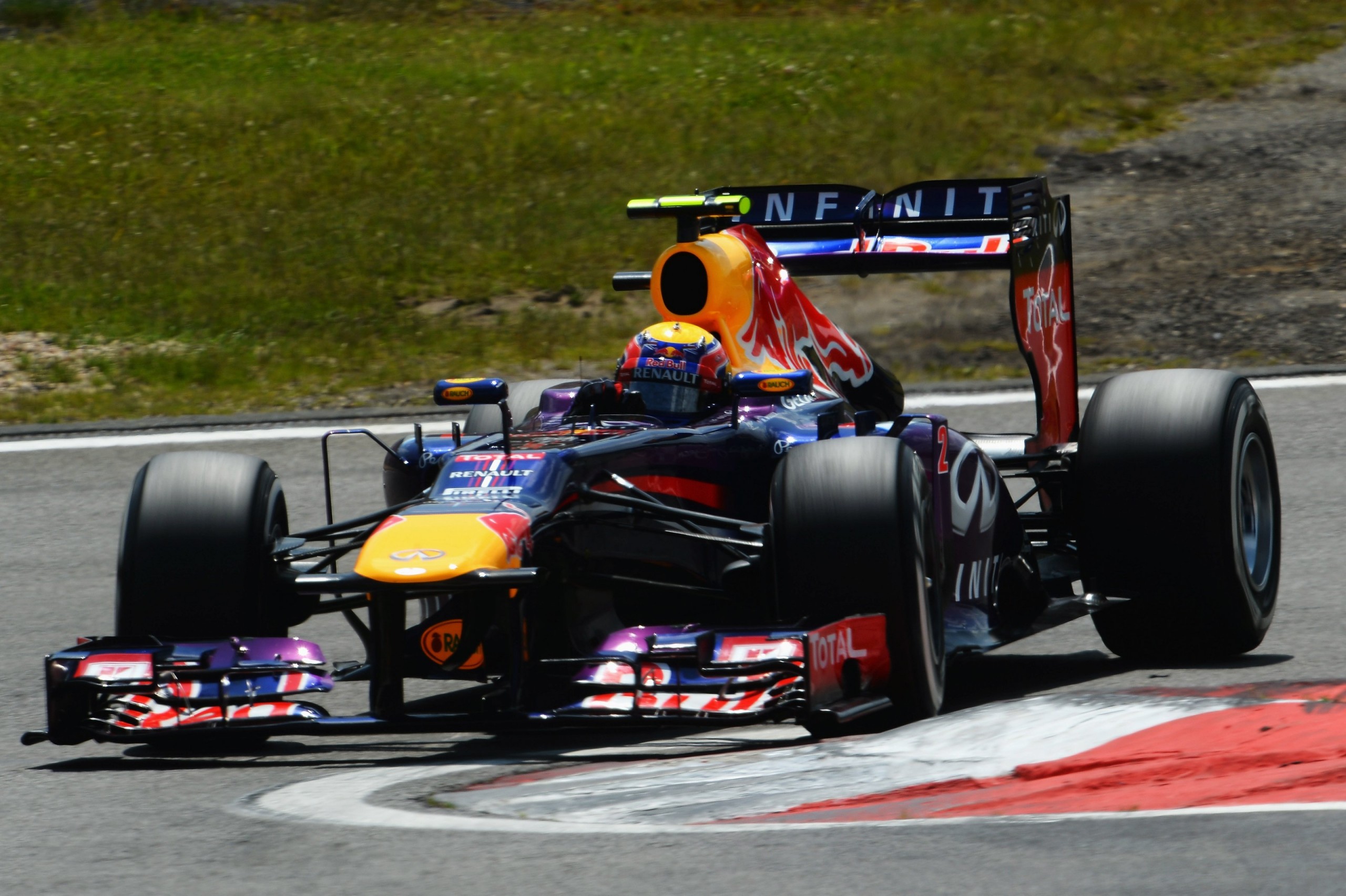
    With Vettel and Webber’s pace out front, Red Bull looked set for another 1–2 finish. But that fell apart when Webber came in to change tyres on lap 14 and left his pitbox with his right-rear not properly attached.

    As Webber got away, the wheel detached and bounced down the pitlane—it hit FOM cameraman Paul Allen, who suffered a broken shoulder and cracked ribs and was taken to nearby Koblenz hospital for treatment. Allen later recovered fully and Red Bull were given a €30,000 fine for the incident.

    Mark Webber, Red Bull (Lars Baron, Getty Images / Red Bull Content Pool)

    Webber was able to rejoin the race, as he stopped just outside his pitbox and was promptly wheeled back and fitted with new tyres. But when he returned to the track he was a lap down on Vettel, while Grosjean and Raikkonen were closing in after setting multiple fastest laps.

    On lap 23 the safety car was deployed when Jules Bianchi had to stop his Marussia with an engine fire. This allowed Webber to get back onto the lead lap. But after making initial progress when the race resumed, Webber then got stuck behind Sauber’s Esteban Gutierrez for ten laps, and was forced to make another stop after eating through his tyres trying to get by.

    Raikkonen took the lead of the race on lap 41 when Vettel and Grosjean both made their third stops, and Lotus extended his stint until lap 49. This left Raikkonen with much fresher soft tyres for the final laps of the race and gave him the best chance of hunting down Vettel for the win. With this and the championship in mind (Raikkonen was then third in the standings behind Vettel and Alonso), Lotus instructed Grosjean to let the quicker Raikkonen by for second.

    But despite his pace, Raikkonen was unable to stop Vettel taking his first home Grand Prix victory. The win was also the 30th of Vettel’s career, making him only the sixth driver in F1 history at the time to score more than 30 wins (the others being Michael Schumacher, Alain Prost, Ayrton Senna, Fernando Alonso and Nigel Mansell).

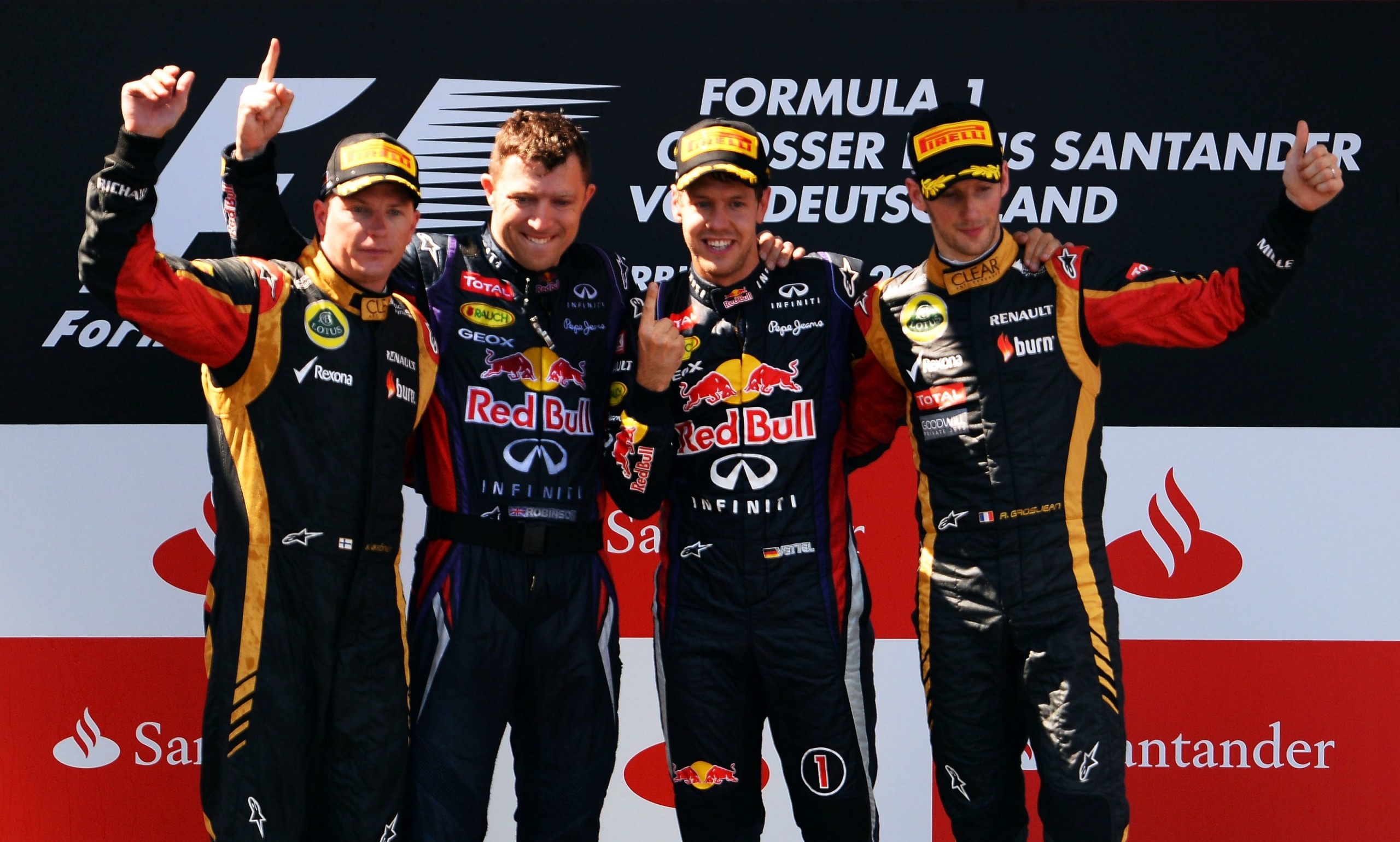
    Sebastian Vettel (Red Bull), Kimi Raikkonen and Romain Grosjean (Lotus) (Lars Baron, Getty Images / Red Bull Content Pool)

    Raikkonen finished second and Grosjean third ahead of Alonso. Hamilton’s race stabilised in fifth, while Webber recovered to seventh between the McLarens of Button and Perez. Rosberg and Hulkenberg rounded out the points for Mercedes and Sauber respectively. Williams had looked set to finish in the points in what was their 600th Grand Prix, only for wheel gun problems in the pit stops to drop Pastor Maldonado and Bottas down to 15th and 16th place respectively.

    The 2013 German Grand Prix was an enthralling race, but it was also a fascinating look back at F1’s recent history. It shows a Sebastian Vettel at his peak en route to a fourth consecutive World Championship. It shows the early signs of the Mercedes success to come, back when Lewis Hamilton only had one title and 21 wins to his name.

    But more importantly for F1 today, it shows that the Nurburgring can provide some excellent racing and drama throughout the field, which can only bode well for the Eifel Grand Prix on Sunday.

  • Honda to leave F1 at the end of 2021

    Honda to leave F1 at the end of 2021

    Honda has announced that it will be withdrawing from Formula 1 as a power unit supplier at the end of the 2021 season.

    The Japanese manufacturer stated its desire to realise “carbon neutrality by 2050” as its reason for withdrawing.

    “Honda needs to funnel its corporate resources in research and development into the areas of future power unit and energy technologies,” a statement read, “including fuel cell vehicle (FCV) and battery EV (BEV) technologies, which will be the core of carbon-free technologies.”

    Honda only returned to F1 back in 2015 as a supplier for McLaren. This relationship – which lasted until 2017 – was fraught with unreliability and performance issues.

    They have, however, since made improvements. They joined forces with Alpha Tauri (then named Toro Rosso) in 2018 and Red Bull in 2019 and have powered them to a combined five race victories, making them the only power unit supplier to win races with more than one team since the start of the hybrid era in 2014.

    Their withdrawal, though, now leaves both Red Bull and Alpha Tauri in something of a limbo and with not much time to find a new supplier.

    If they are unable to find an alternative, then Renault are bound by the regulations to supply them. This is because Renault currently supply the least number of teams, with Mercedes and Ferrari already at the maximum permissible number of three.

    However, Red Bull’s split from Renault in 2018 was acrimonious to say the least and it would no doubt be with great reluctance that both parties rekindle that relationship.

    Honda’s withdrawal might also have implications for Japanese F2 racer Yuki Tsunoda. Tsunoda is a Honda-backed driver and there were rumours that he was set to be promoted to Alpha Tauri in the near future. However, with Honda now out of the picture that promotion is uncertain.

    Red Bull have said that they “acknowledge” Honda’s decision, and have thanked the manufacturer for “its exceptional efforts as power unit supplier”.

  • Russian GP: Hamilton takes pole in an intense qualifying

    image courtesy of Pirelli Motorsports
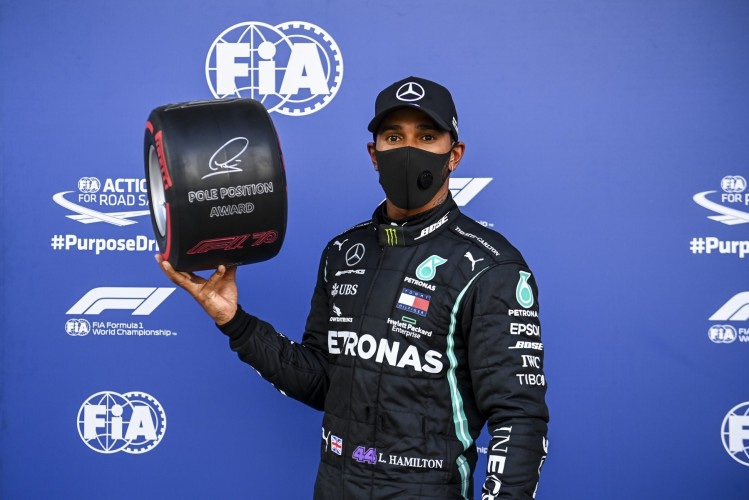
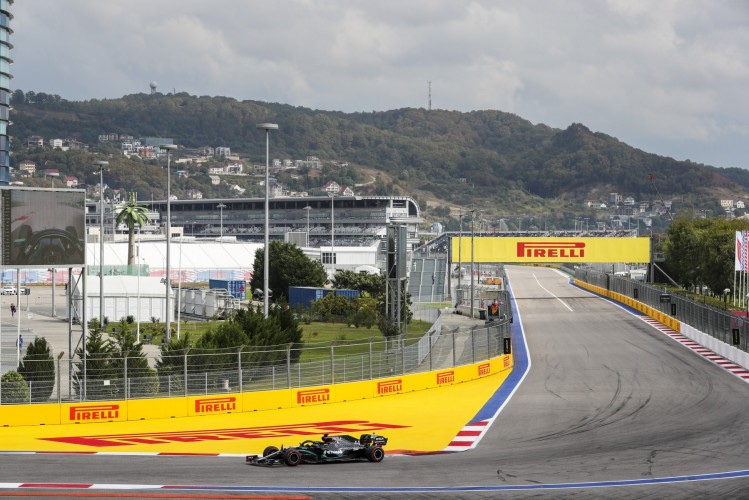
    Lewis Hamilton took his 5th straight pole of the season at Sochi on saturday afternoon to put himself in an excellent position in his bid to equal Schumacher’s record tomorrow (91 wins). The pole position looked set to evade him today after the fiasco in Q2 almost saw him miss out on Q3.

    Hamilton failed to register a time in Q2 as he crossed track limits during the first run of Q2 and this meant that the 6 time world champion had only one run under his belt to put a time on the charts. However, a Sebastian Vettel crash during the second run of Q2 brought out a red flag with exactly 2 minutes and 15 seconds to go and Hamilton barely made it to the finish line before the flag fell, setting a lap time good enough to go into Q3.

    It is not Valtteri Bottas, but Max Verstappen on the front row this time as the Dutchman put in an amazing lap in the second run of Q3 to go 2nd. Bottas who started the weekend well could not make it onto the front row after hitting the sausage kerb in turn 2 and losing momentum going into the rest of the lap.

    Sergio Perez put in a great effort despite not having upgrades on his Racing Point and qualified on the second row alongside Bottas while his teammate Stroll could not make it out of Q2 after getting his lap time deleted in the first run and suffering a temperature issue towards the end of Q2.

    Ricciardo’s fine form during the weekend continued after his efforts in qualifying will see him start at 5th on the 3rd row next to Carlos Sainz in the McLaren. The 4th row will be a repeat of the colours in the 3rd row but with Ocon in Renault at 7th and Norris in the McLaren at 8th.  Gasly in the Alpha Tauri is set to line up at 9th next to Albon in the RedVull who will be hoping for a much better race than the qualifying today.

    Both the Ferraris crashed out of Q2, one literally of Sebastian Vettel at turn 4 after hitting the kerb and one of Charles Leclerc narrowly missing out and all set to start at P11 as the advantage from the minor upgrades they have got this weekend also seems to be minor. Danil Kvyat is set to line up next to Leclerc at 12th and will look to score some good points in his home race, especially after his car seems to be showing a decent race pace.

    George Russell in the Williams made it into Q2 for the sixth time this season  and will line up at 14th after yet another good effort in Q3 but his teammate Latifi will have to be content with 19th. It is going to be a Ferrari powered bottom 6 except Latifi after both the Haas cars and the Alfa Romeos are all in the bottom 5.

    Kimi Raikkonen went spinning in the second run of Q1 which will mean that he is set to start 20th on the grid and his teammate Giovinazzi will start 17th. Grosjean and Magnussen in their respective Haas cars are set to start 16th and 18th with Grosjean surprisingly offering some positive feedback at the end of Q1.

    image courtesy of Pirelli Motorsports
    With Hamilton set to start on the soft tyres thanks to the Q2 drama and with Max Verstappen just next to him, it might not be a straightforward drive to win number 91 for the English driver. It is also worth remembering that Bottas’ last victory at Sochi came from 3rd on the grid, which is where he will line up tomorrow, with a tyre advantage. It is all set to play for, in the Russian Grand Prix.

  • Why Domenicali is the right man for F1’s future

    Why Domenicali is the right man for F1’s future

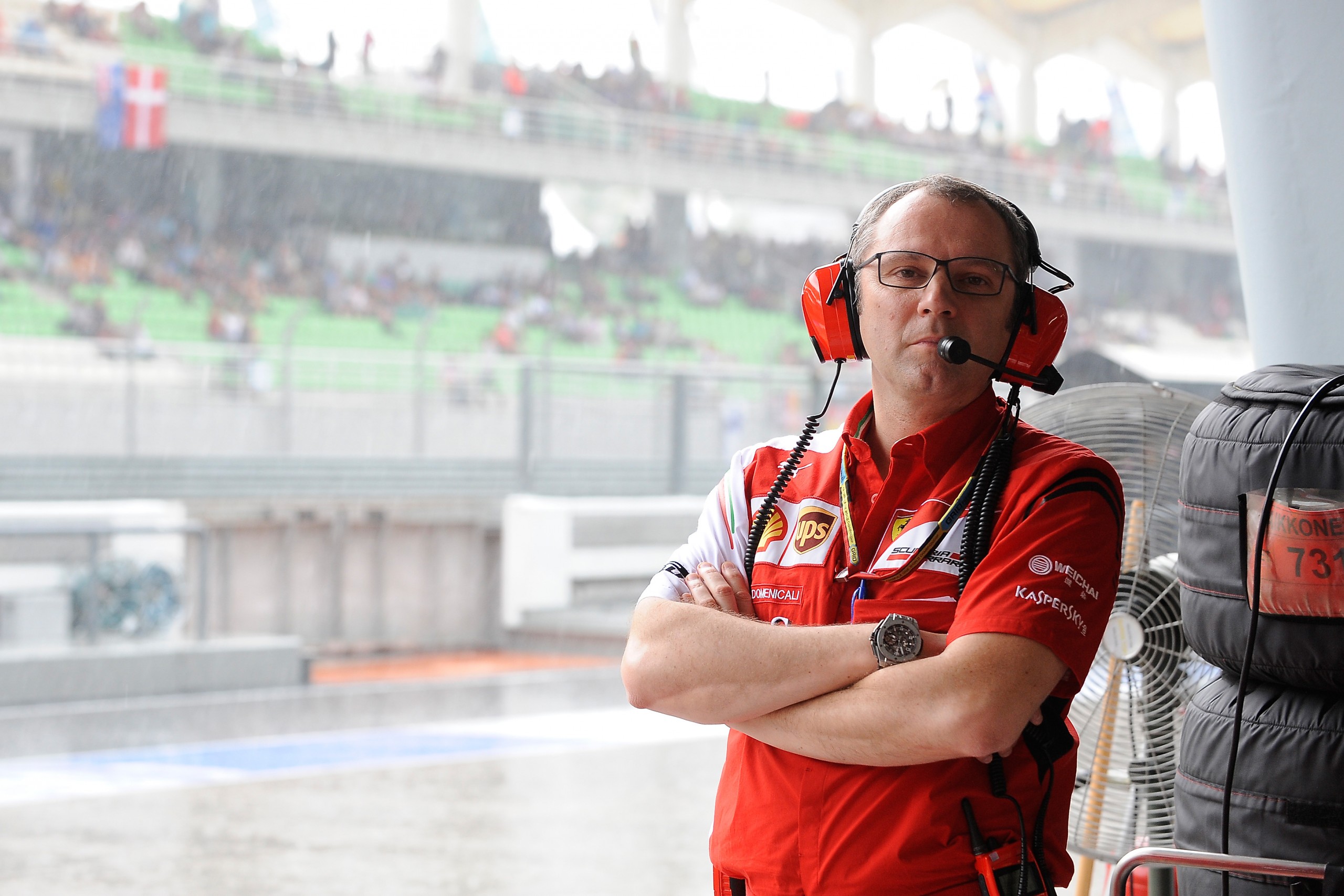
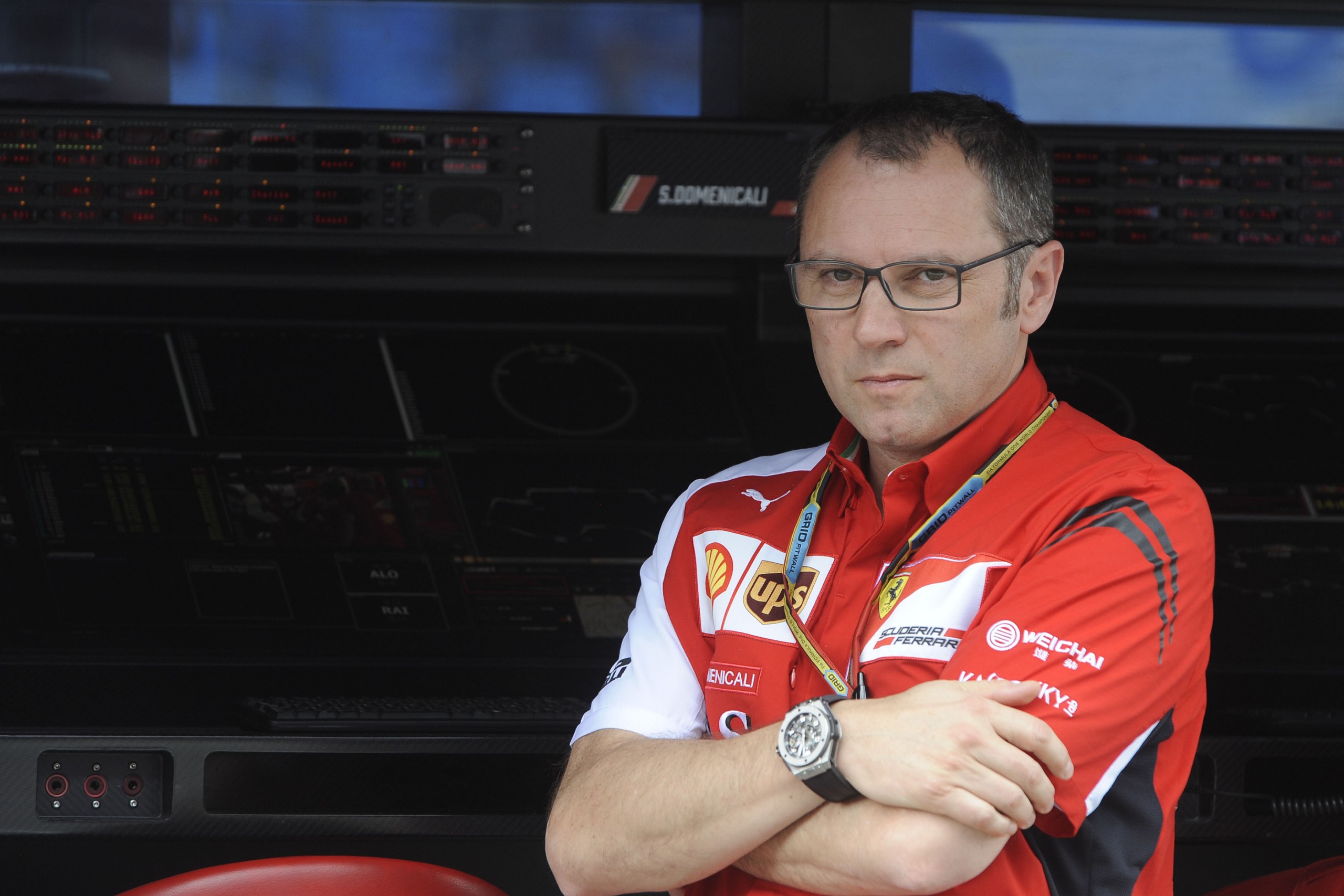
    Former Ferrari team principal Stefano Domenicali is set to take over from Chase Carey as Formula One’s new CEO later this year, according to reports published on Tuesday night.

    Inevitably the reports have drawn no small amount of criticism for the fact that between Domenicali, F1’s managing director for motorsport Ross Brawn and FIA president Jean Todt, F1 would effectively be in the control of three former Ferrari heavyweights.

    But despite spending more than 20 years at Maranello, Domenicali is more than just a Ferrari man. Indeed, his history with the Scuderia didn’t stop Domenicali resigning as team principal in 2014, in protest to then-Ferrari president Luca di Montezemolo’s calls for scapegoats to be fired for the team’s poor hybrid engine performance.

    That’s not the action of someone so beholden to the Prancing Horse that it would taint his ability to lead F1, nor of someone who would yield to any Ferrari bias from above (if that even existed).

    (Foto Studio Colombo / Scuderia Ferrari Media)

    In many ways, Domenicali is an excellent choice for F1’s top position. For starters, he’s an intelligent and capable businessman with the CV to prove it.

    After leaving Ferrari he joined Audi as vice-president of new business initiatives before moving across the VW Group to become Lamborghini’s CEO in 2016. In his time heading the brand Domenicali oversaw Lamborghini beat its own global sales records year on year, with the company’s 2019 sales figures more than double what they were when Domenicali joined.

    It’s also worth pointing out that Ferrari’s last drivers’ and constructors’ titles in 2007 and 2008 respectively came under Domenicali’s leadership.

    But perhaps more importantly, Domenicali is able to combine that business acumen with his racing pedigree. It’s become an F1 cliché to justify someone’s role in running the sport by describing them as a “real racer at heart”, but for Domenicali that saying is actually true.

    He joined Ferrari straight out of university in 1991 and stayed at the top of F1 right up until 2014. Even after leaving Ferrari, Domenicali remained a prominent motorsport leader as the president of the FIA’s single-seater commission, and was responsible for the revival of Formula 2 and the creation of the more streamlined FIA Formula 3 Championship.

    (Foto Studio Colombo / Scuderia Ferrari Media)

    Domenicali’s entire career has been in motorsport, and that’s something current F1 CEO Chase Carey just doesn’t have. When Liberty Media bought F1 in 2016, Carey’s commercial and media expertise was necessary for the sport to move on from the Bernie Ecclestone era. We have that to thank for Drive to Survive, F1’s long-overdue embracing of social media and the additions of Zandvoort and Hanoi to the calendar, all of which have helped to reinvigorate the sport’s global profile.

    But with those foundations in place, F1 now needs a leader who has an inside understanding of how to run the sport itself as well as the show. Someone who knows how to make the right changes to improve the racing and competition, and who has the principle to oppose kneejerk responses that just up the spectacle instead.

    And if that’s not Stefano Domenicali, F1 would be hard-pressed to find someone better.

  • Formula 1 is broken!

    Formula 1 is broken!

    Formula 1 is broken!

    It’s not the fault of Hamilton or Mercedes but instead the strict formula that teams have to work to. If there’s to be a constructors championship then we need looser regulations so designers and engineers can have more freedom, different engine types and different aero design. Then, lets go racing!

    If not, we might as well have a single construction championship like Formula 2 where the racing is much closer and more exciting, even if admittedly some of that is because young drivers make more mistakes.

    Formula 1 should be open. I bet that if it was, you’d have more than just hybrid engines! We’d have the possibility of an electric car racing a combustion engine in the not too distant future. I’m afraid that if huge changes aren’t made then F1 will be left behind. If we had those kind of regulations would Formula E even have got up and running? Look how exciting the races are. Guess what? They are all driving the same car!

    I’m not advocating that F1 should be a single constructors championship, but if they are to all build their own designs completely then they need to take the shackles off. Budgets have been cut now going forward which can only be a good thing, but all of the teams working towards a single design framework will lead to almost identical cars again.

    2020 Styrian Grand Prix, Sunday – LAT Images

    Somehow, like in football, the richer teams like Ferrari and Mercedes will find a way to attract the best people even on a restricted budget. We need to make room for initiative, give a chance to the next Adrian Newey or Colin Chapman, whose ideas revolutionised the sport. With tight regulations these kinds of ideas are harder to find.

    If they really want to save money then Friday free practice should go! Other than a cheap day out to watch Formula 1 cars I can see little need for it.

    Here’s my road map for the sport.

    You probably have your own ideas on how to fix F1. These are just me spit balling mine. We’d love to hear your ideas.

    A. Loosen the restrictions to allow for innovation in both engine and chassis design.

    B. Cut costs by cutting out Friday free practice sessions.

    C. Teams should be allowed to race three cars but the third driver must be a young driver or a guest with enough super license points. The team would lose the points of the third driver.

    D. Tyres should only be one small element of the teams strategy, so maybe another tyre manufacturer should come in.

    If the Formula 1 changes that are scheduled now for 2022 – when in all likelihood Lewis Hamilton will be an eight-time world champion – do not make the significant difference that they promise, F1 will not attract enough new young fans to make it viable and, in my opinion, Formula E will become the de-facto pinnacle of motorsports. 

  • Italy presents us with a strong, unexpected argument for a reverse grid as Pierre Gasly wins in Monza

    Italy presents us with a strong, unexpected argument for a reverse grid as Pierre Gasly wins in Monza

    Benvenuti a Monza! We’re here and we’ve settled in for two weeks of exciting racing in Italy, but should we have come? Mercedes, Red Bull and Ferrari might like to weigh in on that one.

    The Italian Grand Prix was the first weekend where the teams were no longer permitted to use their ‘party-mode’ engine modes, typically used in qualifying by certain teams to boost their chances of a better lap time.

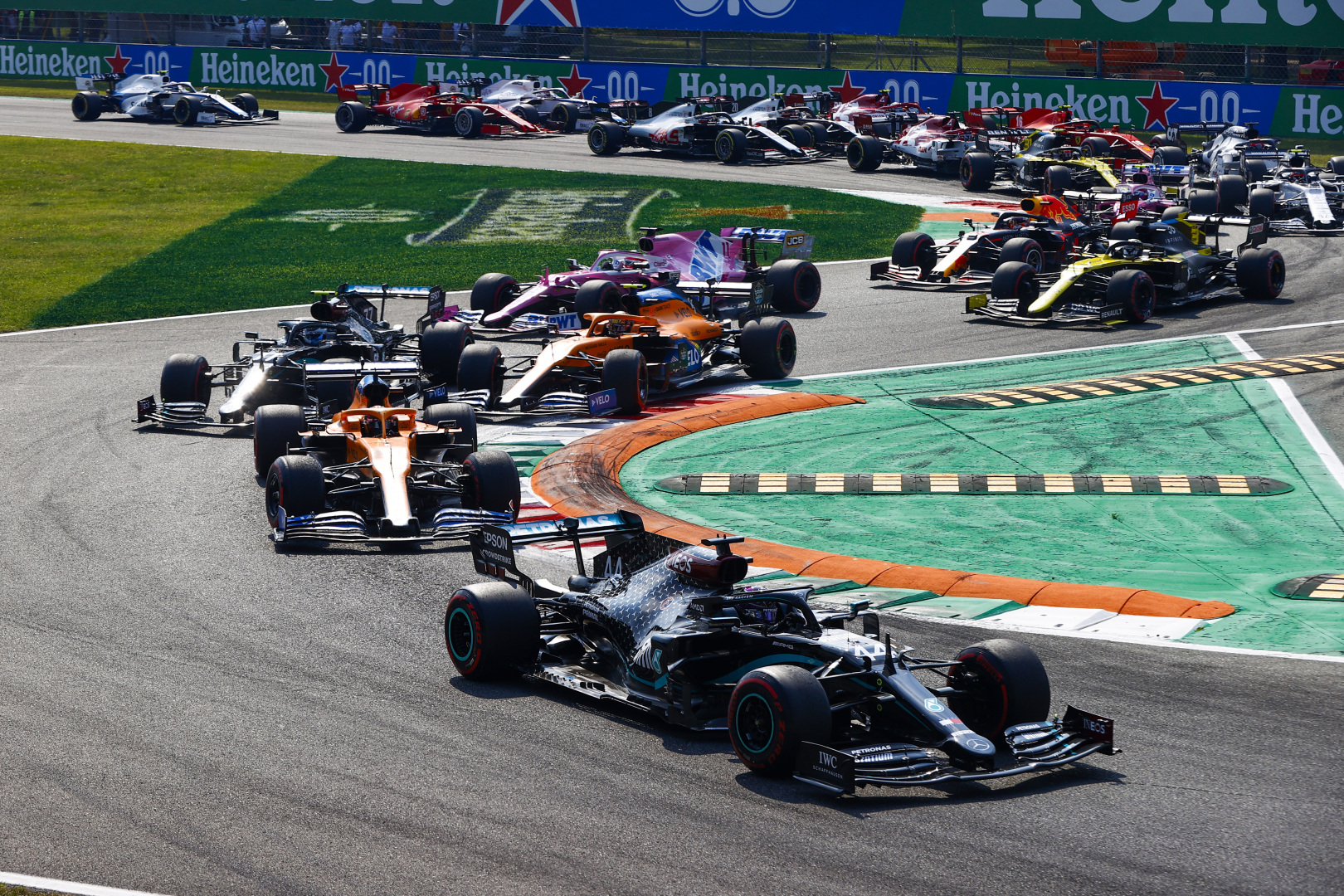
    At the start of the race it was a tale of two halves for the two Mercedes drivers, as Hamilton got yet another great start off the line, gliding into first place unchallenged as Bottas got swallowed up by the pack. McLaren had an excellent start with Sainz quickly taking 2nd position, and his team-mate Lando Norris overtaking a struggling Bottas going through the first and second Lesmos, which is testament to McLaren’s progress in recent years.

    2020 Italian Grand Prix, Sunday – LAT Images

    Bottas was quickly overtaken by Daniel Ricciardo, putting the Renault driver into 5th, and pushing Bottas down to 6th. Bottas was quick to report a possible puncture but chose not to pit. Bottas’ race engineer, Ricciardo Musconi, confirmed there were no issues with his tyres, but Bottas still looked to be struggling as he was overtaken by the Red Bull of Max Verstappen through the Parabolica.

    It was a sorry start for the home favourites Ferrari, who qualified in 13th and 17th. Just when they thought it couldn’t get any worse, Sebastian Vettel reported brake failure on lap four, smashing through the foam barriers at the end of the pit straight and limping his way back to the pits, where the car was retired for the second time this season.

    Ferrari’s hopes were then pinned on Leclerc, who didn’t appear to be having the same issue but didn’t really seem to be having a much better race. Hope was quickly abandoned after a a shocking crash going into the Parabolica, where the Ferrari ploughed into the tyre wall, bringing out the safety car for the second time and red flagging the session. Leclerc’s crash athough dramatic, proved exactly how valuable the halo truly was, as he was able to get out of the car and run from the scene unscathed. All this in the same weekend that Netflix were spending time with Ferrari.

    Shortly before the crash, Hamilton had made a quick decision to pit after the safety car came out for Kevin Magnussen, who was forced to stop on track just before the pit entrance with a suspected power unit issue.

    Mercedes took what they thought was a risk-free pit-stop, with Alfa Romeo’s Giovinazzi following suit shortly after. It wasn’t long until the race was stopped due to Leclerc’s incident, and both Hamilton and Giovinazzi were placed under investigation for entering the pits after it had been closed due to Magnussen’s stoppage.

    This visibly rattled Mercedes, who were looking pretty comfortable. Hamilton took it upon himself to grab his scooter and make his way to Race Control during the red flag in an attempt to justify his actions, arguing on the radio that “there was no light” going into the pit lane.

    This didn’t save him nor Giovinazzi, who were both given a 10-second stop and go penalty, serving F1 fans with the biggest game-changer in the hybrid era.

    Hamilton was noticeably annoyed by this decision and was talking about building up a lead once again before taking his penalty. He was dissuaded from doing this by his race engineers, who had decided to ‘take the hit’ on this occasion.

    2020 Italian Grand Prix, Sunday – LAT Images

    Mercedes’ loss meant some considerable gains to the likes of Alpha Tauri, Racing Point, Alfa Romeo and McLaren.

    The red flag wasn’t in place for too long and on lap 27 we were back on track heading for a dramatic restart.

    Gasly was lightning fast on the restart, overtaking Stroll to take what was essentially first place, as Hamilton made his way around and back into the pits to serve his penalty. He re-joined the race 23 seconds behind the rest of the pack, meaning he would have to have had the drive of his life to get back to a podium finish.

    Though it looked like a good opportunity for the Racing Point, Stroll seemed to have issues with the brakes, causing him to run off on the Della Roggia chicane and giving away two positions and putting him down into 5th. This was quickly taken from him by Sainz who had his eyes firmly set on the prize.

    The same ambition and determination weren’t felt in either of the Red Bull cars, who have struggled more than usual. Albon was the first to have issues, running wide on lap one after being squeezed by Stroll and Gasly down the main straight, and causing damage to the Haas of Romain Grosjean. Albon was given a 5-second penalty for the damage he caused.

    As usual, there was greater expectation of success with Verstappen, who was making some respectable overtakes, and scrapping with Bottas for 6th/7th position. Unfortunately, this was short lived as he was forced to retire the car on lap 31 due to a power unit issue.

    Come lap 34, Sainz was chasing Gasly for the win after he and Raikkonen gave fans an absolute masterclass in overtaking through Turn 1.

    Stroll bounced back from his earlier brake issue and overtook Raikkonen the following lap, moving him into third place.

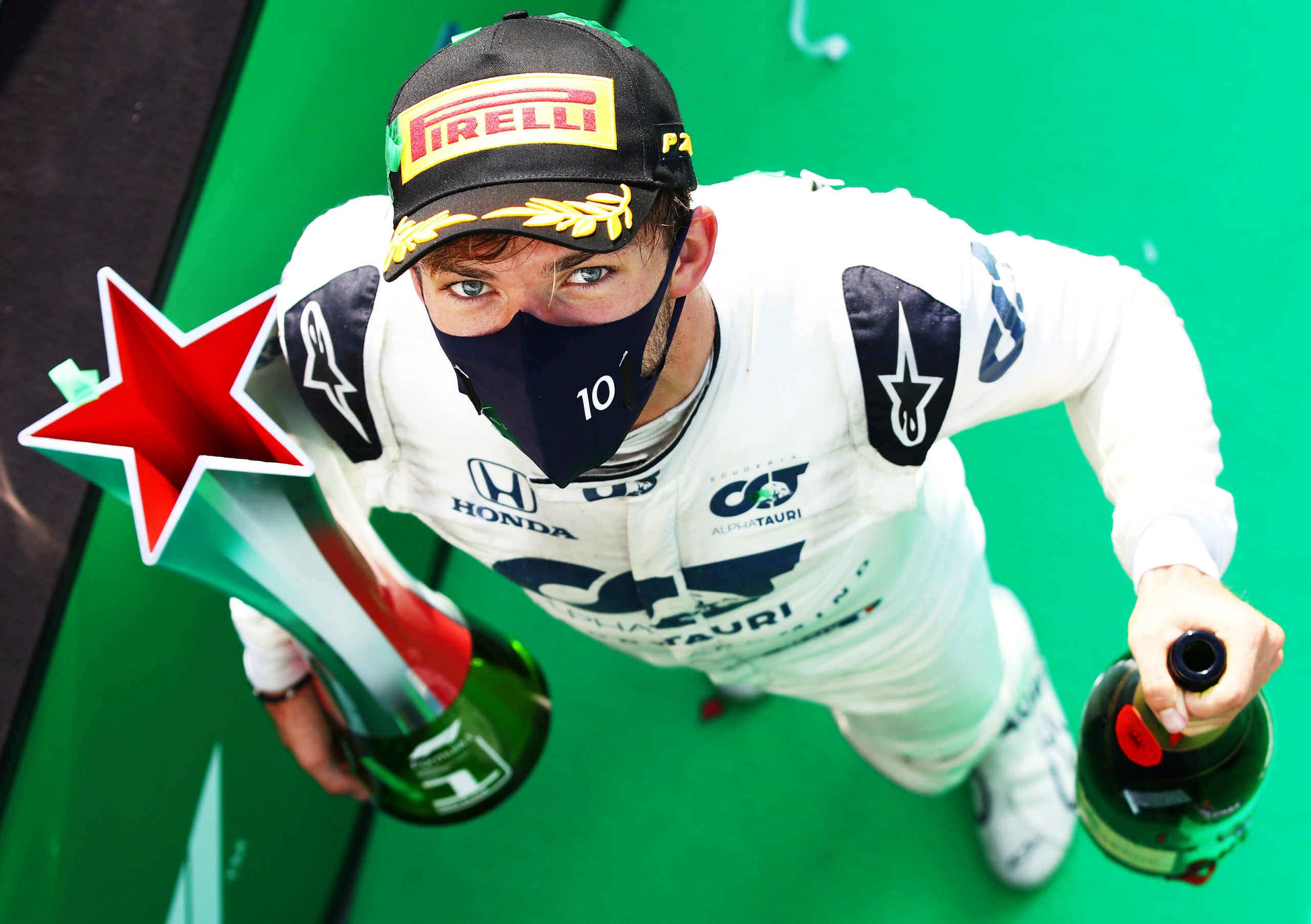
    Sainz continued to chase Gasly right down to the final lap of the race. Gasly just managed to stay ahead and out of DRS range of the determined McLaren driver and took his first ever F1 win, something absolutely none of us expected would happen going into this race weekend.

    MONZA, ITALY – SEPTEMBER 06: Race winner Pierre Gasly of France and Scuderia AlphaTauri celebrates on the podium during the F1 Grand Prix of Italy at Autodromo di Monza on September 06, 2020 in Monza, Italy. (Photo by Mark Thompson/Getty Images) // Getty Images / Red Bull Content Pool // SI202009060423 // Usage for editorial use only //

    After being essentially demoted from Red Bull in the middle of 2019, this win is exactly the boost Gasly and the wider Alpha Tauri team needed. You’d have to be a hard individual not to feel some emotion watching him sit on the podium, sipping champagne in sheer disbelief. It’s only a shame the Tifosi weren’t there to make his win even more special.

    We cannot end this race review however, without giving a special mention to Williams, who had its final race with their de-facto team principal, Claire Williams. It followed the announcement last Thursday that the family had decided to step away from Formula 1 after 43 years. It’s a real shame for us to see both she and the family say goodbye to the F1 family.

    We owe Williams so much after having been an enormous part in F1’s development, bringing iconic moments for us all to appreciate and look back on with fondness. Though they will continue to race under the same name, something tells me it just won’t quite be the same anymore, so thank you Frank, thank you Claire, and thank you Williams for the great memories. We hope to see you back on top soon.

  • Racing Point Appeal Withdrawn as “Reverse Engineering” Banned

    image courtesy of Racing Point

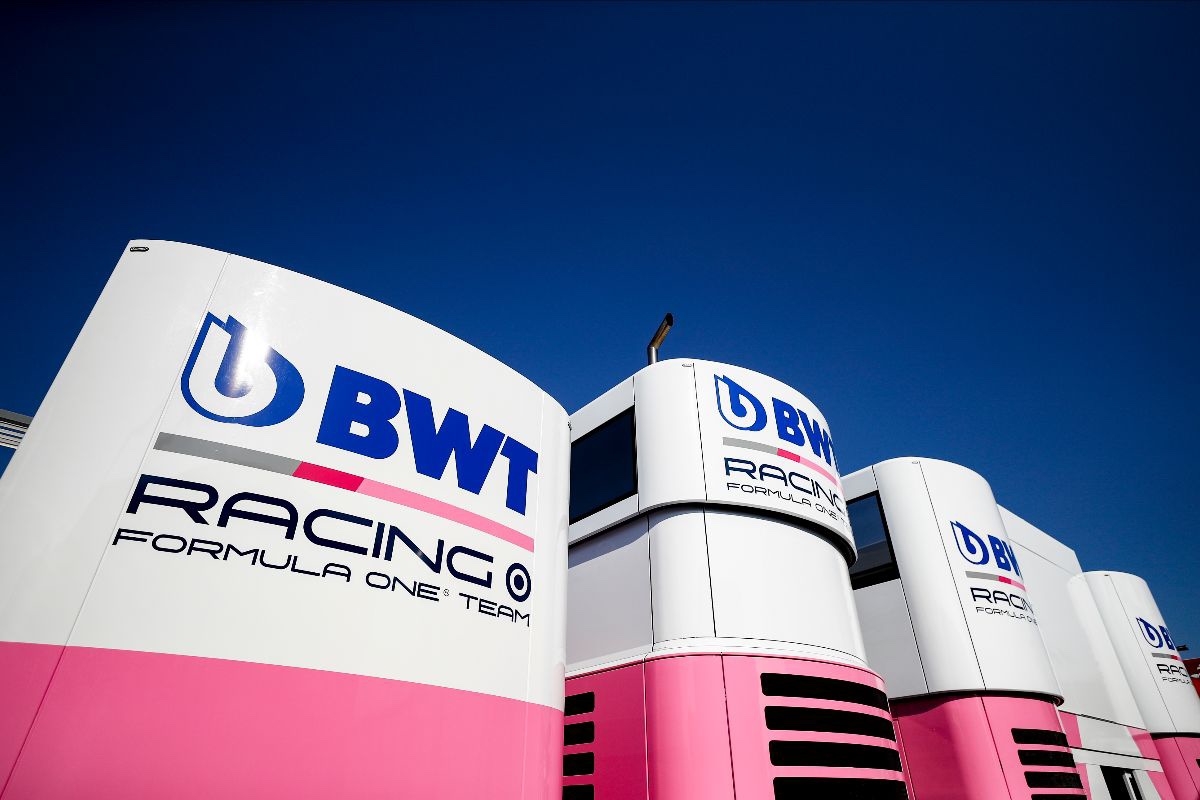
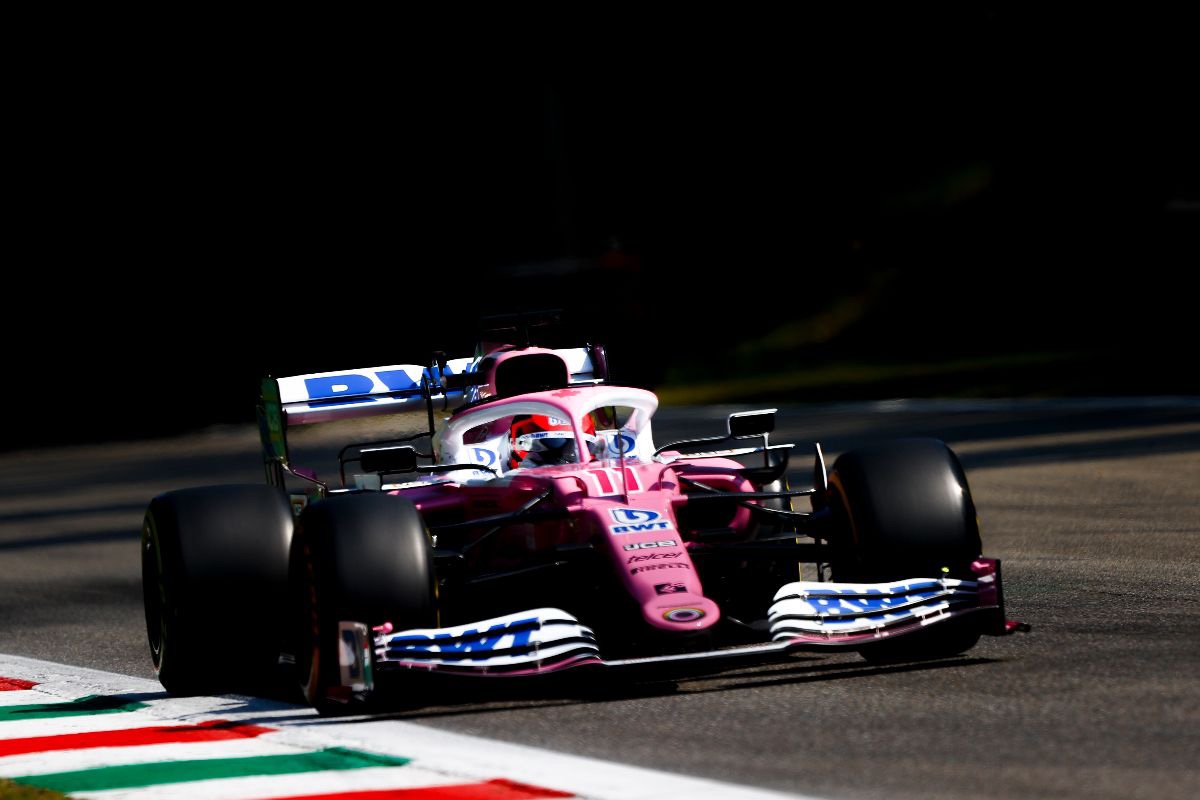
    Racing Point have decided to withdraw their appeal against their fifteen point reduction today after the teams agreed to a new regulation. The soon to be rebranded team incurred a fifteen point deduction earlier on in the season as a result of their break ducts being too similar to that of last year’s Mercedes.

    Racing Point had caused a lot of controversy at the beginning of the season as they arrived at testing with a car that looked to be a carbon copy of the W10. A lot of teams questioned the legality of the pink team’s car with Renault lodging an official protest. The FIA deemed that whilst Racing Point hadn’t broken any technical regulations, they had broken some ambiguous sporting ones and were docked points as a result.

    image courtesy of Racing Point

    Team Co-Owner Lawrence Stroll fiercely defended the team and they lodged an appeal to the FIA which they have now withdrawn following clarification banning such cars from 2021 onwards. In a statement, Racing Point said “We welcome the resolution… and we’re pleased the FIA has provided much-needed clarification.” Later adding “we have decided to withdraw our appeal in the wider interests of the sport….This issue has been a distraction for us and the other teams”.

    As a result of the withdrawal, Racing Point will keep their fifteen point deduction which has had little effect, with the team sitting just 2 points off of third placed McLaren in the constructors championship. However, with Ferrari currently maintaining they intend to appeal for a harsher penalty, this issue seems far from settled and could go on for some time.

  • Toto Wolff reflects on his future at Mercedes

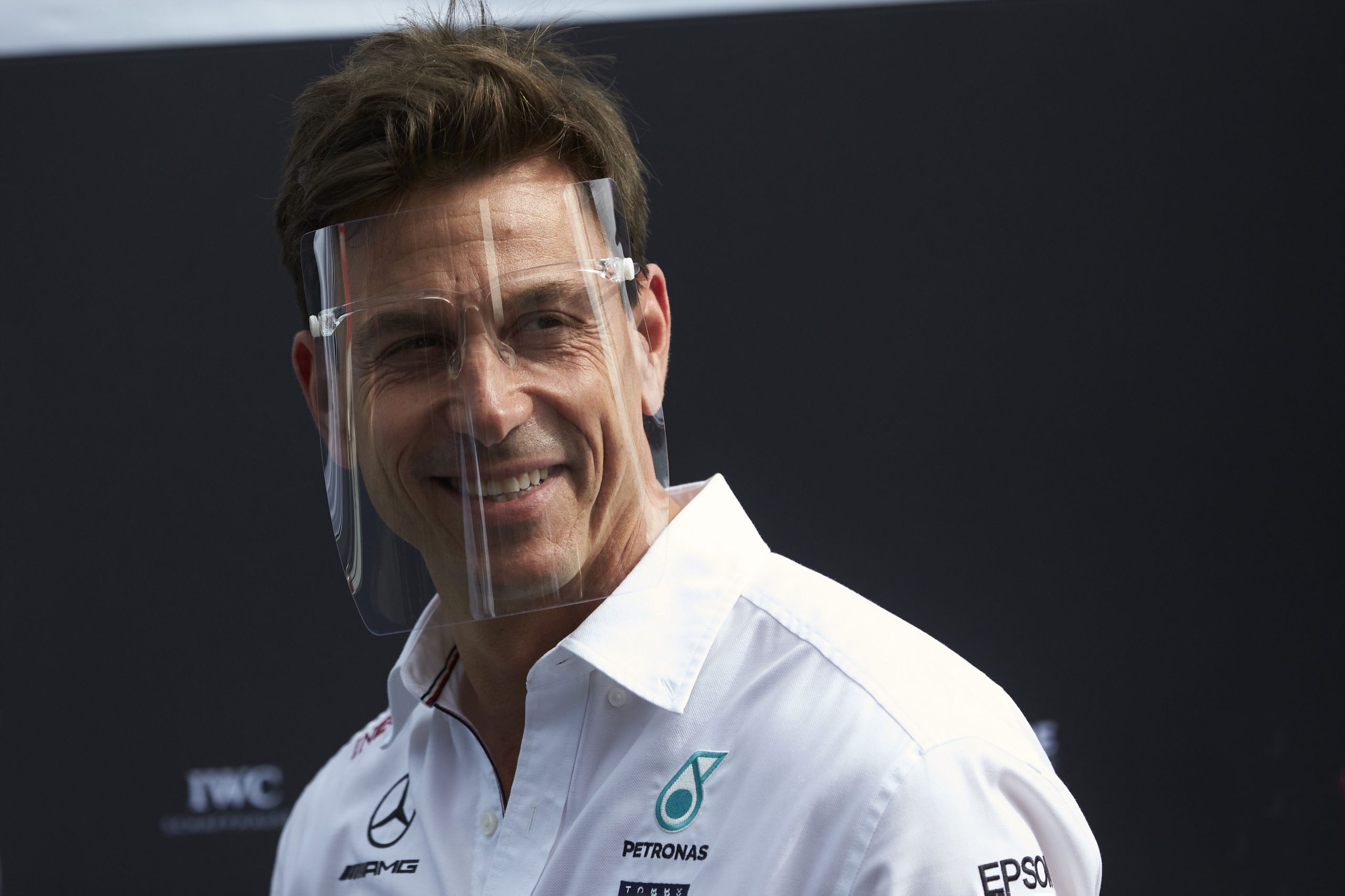
    Image courtesy of Mercedes AMG F1 Team Steve Etherington.

    There has been, and continues to be much speculation over the future of Mercedes-AMG F1 team principle Toto Wolff, who is perhaps infamously out of contract at the end of the 2020 season.

    Toto has confirmed that he is in talks with Mercedes’ parent company, Daimler, however it doesn’t appear that any formal decision has been made as yet.

    Unfortunately, the fact that the decision hasn’t been made so quickly, given Mercedes’ sheer domination with Wolff at the helm has, inevitably, set tongues waggling through the paddock and the wider F1 community.

    But is this speculation valid?

    There’s absolutely no denying that, under Wolff’s management, Mercedes have gone from being a team filling up the middle/back positions on the grid (circa 2011/2012, while Schumacher still had a drive), to hoovering up championship after championship for 6 years running. Other teams’ inability to match Mercedes’ pace has inspired regulation changes, and has even endangered viewing figures as fans protest the sport has become too ‘predictable’ as a result.

    For Toto, it seems the team’s success is one of the reasons behind him carefully considering his future at Mercedes. Speaking before the Spanish Grand Prix in Barcelona, he admitted he was ‘in a moment of reflection where F1 is heading to’. Wolff continued, ‘I really enjoy the role and my plan is to continue but I never want to be in a situation where you are becoming from very good to good.’

    It’s an interesting approach from Toto who, you would imagine given the vast success, would be quite happy to sign up for another few years. It is also interesting that Wolff’s decision to take time and reflect comes as we turn our attention to the Renault garage, who have famously signed Fernando Alonso for two more championship seasons.

    You’re probably wondering how Alonso could have anything to do with Wolff’s decision to stay at Mercedes. The truth is it doesn’t, however, as there has been speculation about Toto’s future, there has been far more (for far longer) about whether Alonso should return to F1 or concentrate on other projects.

    One could argue that it shows considerable level-headedness (essential for the role of team-principle, you’d imagine), and an absence of narcissism, to be aware that your track record doesn’t necessarily guarantee the same success going forward, and that it might even be a hindrance to those waiting in the wings to be given their opportunity to progress.

    Depending on which side of the argument you’re on, it seems like Wolff is removing pride from the equation, something that doesn’t seem to have happened when Alonso signed with Renault. (Poor Hülkenberg!)

    This is, of course, the first opportunity for Wolff to really consider his future in the team after the sad loss of his fellow team boss, Niki Lauda, whose absence is felt not just in the Mercedes garage, but in F1 as a whole.

    Like Niki, Toto is quite the entrepreneur, with a keen eye for driver talent (he famously manages Esteban Ocon, who some of us expected would be filling Bottas’s seat last year), as well as having small stakes in Aston Martin and as of June this year, Williams F1. Perhaps he could give Dr Helmut Marko a run for his money, and turn his attention to making further investments, and manage new drivers coming up through the formulas.

    Personally, I find this unlikely, however I would like to see Wolff move to another team, or even another formula that needs a little bit of development. An advisor for Williams F1 maybe? Or, working with the Mercedes-Benz EQ Formula E team, and boosting its profile even further.

    Whatever he decides, I’m certain the Wolff name will remain an enormous part of F1, and if all else fails, I’m sure Sky Sports F1 will be waiting in the wings with a decent contract for him, just in case.