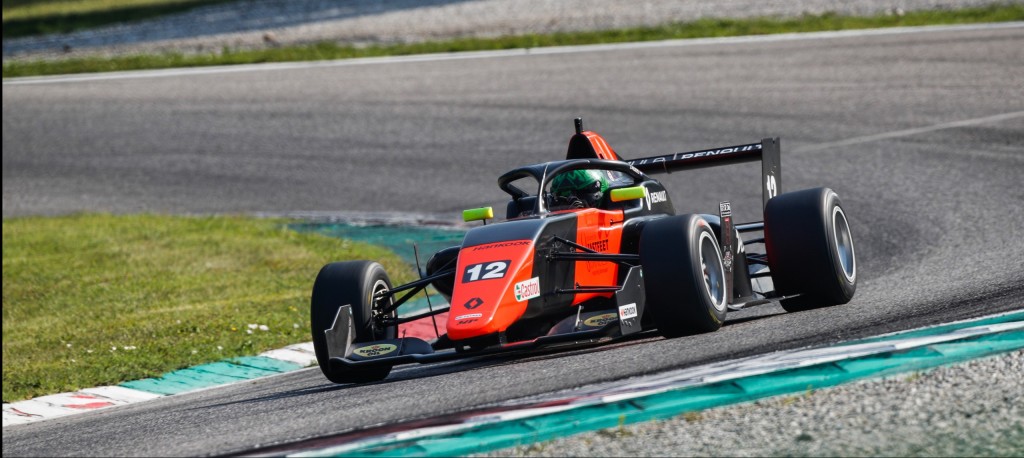
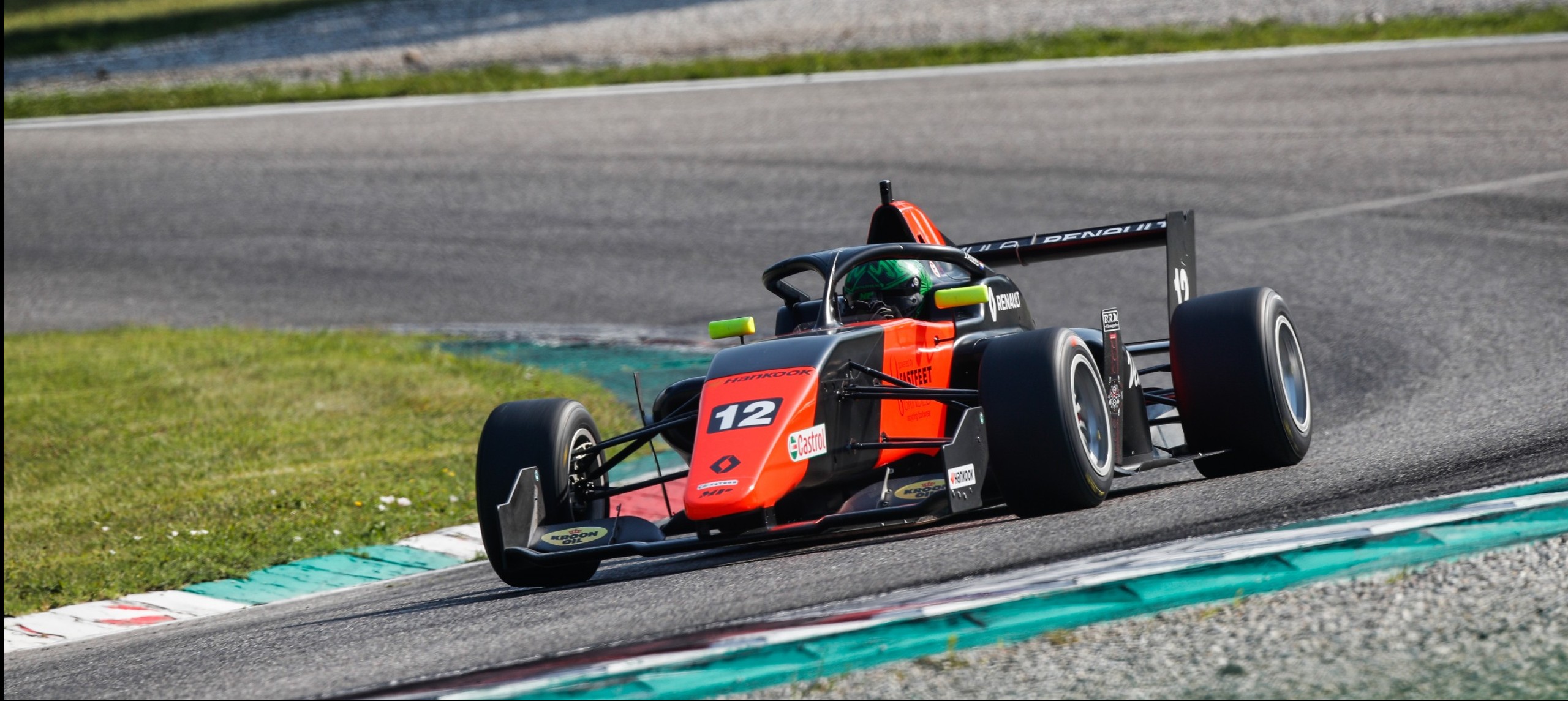
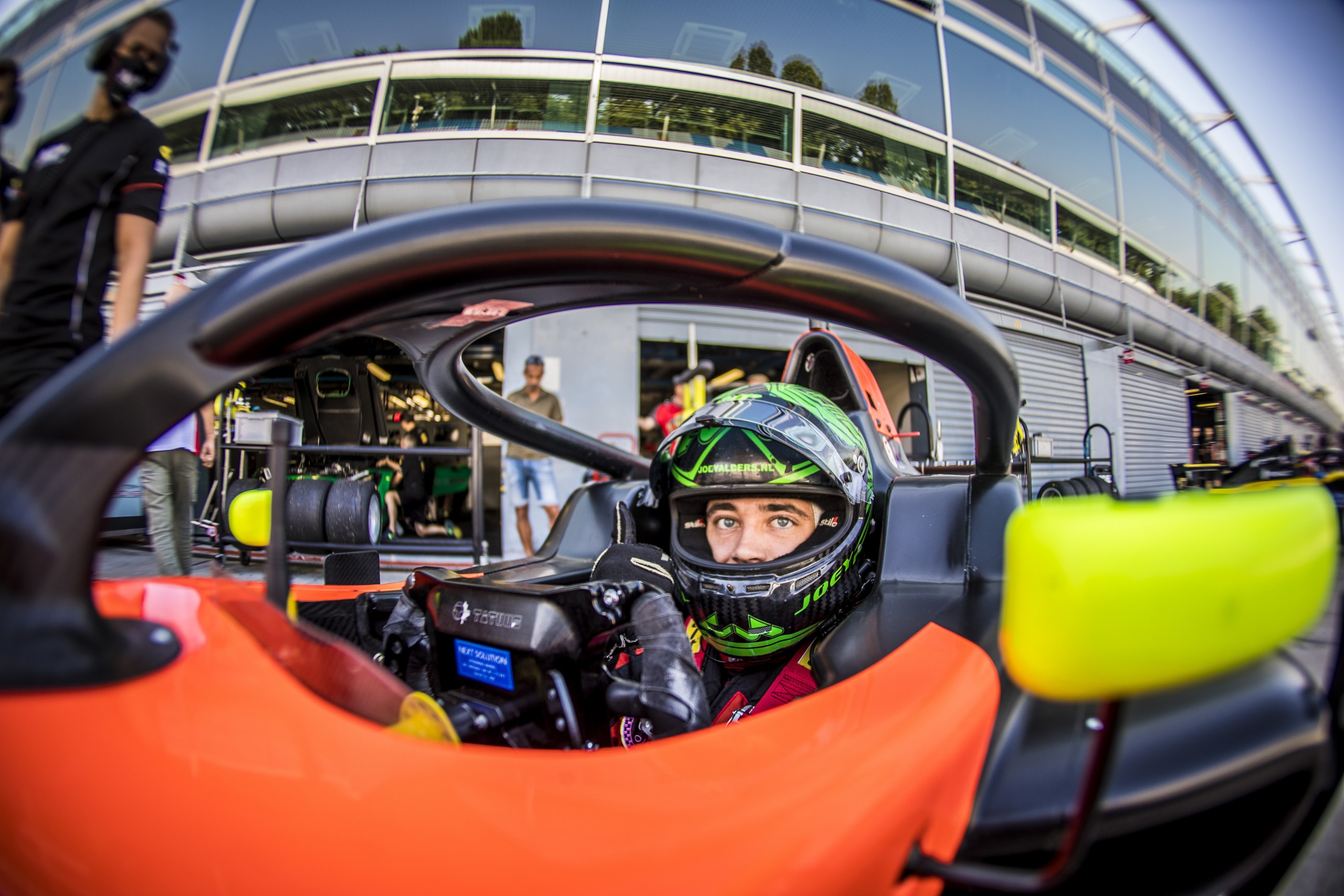
Joey Alders has been one of the standout feeder series drivers since starting his single seater racing career in 2018.
After a strong debut in ADAC Formula 4, Joey swept the 2019 Asian Formula Renault Series. Driving for BlackArts Racing, he took eight wins, two second places and eleven poles from the championship’s twelve races, and won the title with 314 points.
Joey then moved onto the 2019–20 F3 Asian Championship, which he also dominated with BlackArts Racing, before making his Formula Renault Eurocup debut with MP Motorsport in the summer.
We spoke to Joey about his championship successes, his 2020 season, and his plans for the future.
Joey Alders, MP Motorsport (Gregory Lenormand, DPPI / Renault Sport Media)
1. First of all, you had a great start to the year by winning the F3 Asian Championship, after winning the Asian Formula Renault Series title in 2019. Can you describe what it means to win both titles and with such dominant campaigns as well?
Well, I have learned so much in a short period. With my team BlackArts Racing there was a chemistry, dedication, passion and a lot of fun. Even if we won, we worked harder to do better.
I can not describe how much this means to me. I can say it sucks that achievements in Asia are not highly regarded in general by people within the racing community in Europe.
2. Your move to Formula Renault Eurocup this year didn’t quite work out. What were some of the difficulties you had adapting to the Eurocup series and its car, and also what did you enjoy about it?
We had some very good testing days at Paul Ricard. I had never been there and I did enjoy it very much. I was within the top 5, and fastest in the rain most of the time. We did good and I was very grateful to Renault for this opportunity.
The budget is always a struggle for us, we were looking from race to race for support and sponsorship. In the end we went for a team [MP Motorsport] where we had the most chance for Dutch support. But I had never tested with this team.
When we look back, it was a gamble and unfortunately it turned out to be the biggest mistake we could make. It’s hard seeing the team we did test with battling for the podium.
3. You’ve said that your Formula Renault Eurocup season ended early because of budget. This year we’ve seen a lot of young drivers speak out about the rising costs of the feeder series’. Do you think more needs to be done to control the cost of single seater racing?
Well the costs are extreme. With this it’s more important having the budget than driving and getting good results. I don’t think that’s what we want.
4. You said earlier this year that you were targeting a move to Formula 2 for 2021. Can you give us any update on how that’s going? And are you looking at other options, like FIA F3 or Formula Regional?
Getting the budget is a race on its own. We’re still trying hard and I do have a unique concept with a cooperation with TrackSide Legends and Druktemaker. A sponsor gets these marketing companies with all opportunities with us.
I got the support of my team sponsor last year, Oloi, but I am a long way from the total budget. I have to keep my eyes open for other opportunities in single seaters because I am not done and I hope I still get the chance to show myself in Europe.
5. With your racing season having finished in July, how have you been keeping yourself ready and race fit for 2021 since then? Has the pandemic impacted how you would normally train this year?
The pandemic of course didn’t help at all. Finding support just got harder. I haven’t raced since July but the focus was on being physically fit and I did also E-Racing like everybody else.
It’s not ideal but also not a problem. I learn fast and after a few laps I know I will be there. It’s one of the strongest things of me as I have always have been the one with the least track time.
When talking about legends of grand prix racing, the name of Casey Stoner is never far from anyone’s lips.
Stoner’s early career is somewhat unremarkable in terms of results. From dirt-track racing in the Australian outback, to honing his short circuit skills in the junior ranks of BSB and then through the 125cc and 250cc grand prix classes. His natural speed on a bike and his skill to ride any machine was undoubted, but throughout his junior years there was concern by many over his consistency.
His debut season in MotoGP, in 2006, seemed only to emphasise this. A regular front-row starter with LCR Honda, Stoner struggled for consistency over longer races – sending himself and bike barrelling through gravel traps as he tried to chase down those on superior machinery. A pole position and a podium finish towards the end of the season provided a glimpse as to what was to come.
With Honda’s eggs at the time all devoted to Nicky Hayden and Dani Pedrosa, Stoner had to jump ship if he was to become a serious championship contender.
2007 – Ducati’s Golden Year
Credit: Ducati Corse
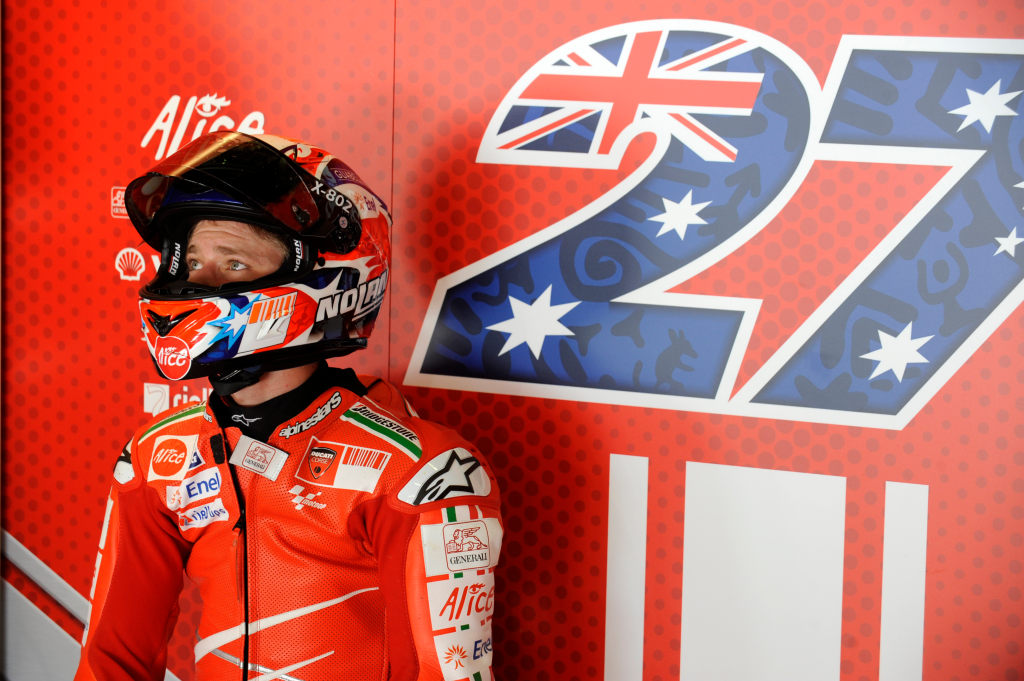
Stoner’s arrival at Ducati was met with more than a few questioning murmurs from many quarters, after a difficult debut season with LCR Honda. The discontent was particularly vocal back in his home country. Despite having claimed a maiden win for the factory outfit, Troy Bayliss was shown the door to make way for his younger compatriot.
Stoner would be paired with Loris Capirossi, with the expectation that the Italian stalwart would initially set the standard, and the young Australian would gradually build to an even footing by the end of the season.
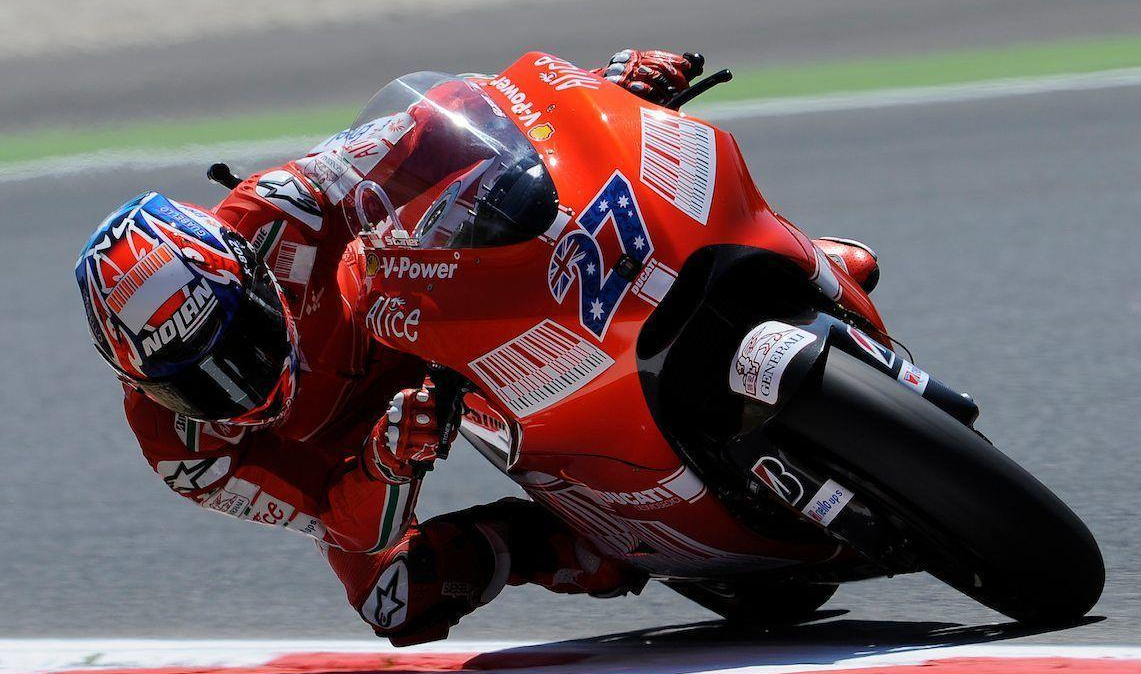
Whether it was the plan, or a cryptic challenge from the team, Stoner’s response on track was something else. 10 wins across the season, including an emotionally charged victory at Ducati’s home race at Misano to wrap up his first world championship crown.
Such was his relentless charge to the title, it’s impossible not to draw similarities with Valentino Rossi. Was this a changing of the guard? The media couldn’t help but stir that particular pot. It irked Rossi, and as the season drew on there was a growing sense of rivalry between them. Things came to a head at Laguna Seca when Rossi accused Stoner of breaking the track limits to force an overtake at the corkscrew. Rossi would famously ‘repay the favour’ the following season. Whilst the two would joust each other more often than not for top honours in the years to come, Stoner was too fast and too consistent to be stopped in 2007.
The Desmosedici machine was undeniably fast – especially on low-fuel qualifying runs and in a straight line (the traditional strength of any Ducati). However, those doubting Stoner’s racecraft were silenced as he hauled and wrestled a fully fuel laden Ducati around the circuits with relentless precision. When forced to cut through the field after a less than clean start, Stoner relied on the skills honed way back on the dirt tracks in Australia, as he dived, carved and – occasionally – bullied his way through the pack.
The final standings for the season said it all – Stoner finished the season winning the championship by an astonishing 125 point margin. Capirossi, for the record, finished 7th and over 200 points behind.
Stoner remains to this day Ducati’s only MotoGP world champion.
2009 – Battle with Chronic Fatigue
Credit: Getty Images
After securing another routine victory at the opening round in Qatar, the Australian’s form fell off the proverbial cliff. Nobody could fathom why. In qualifying he’d still have the beating of everyone – often by the best part of half a second. After the Catalan grand prix fell apart so spectacularly, Stoner took the unprecedented decision of taking a mid-season hiatus.
At first it was just suspected burnout. Sit out the next round or two and be back. The reality was far more complex. After numerous tests and consultations back in Australia, Stoner was eventually diagnosed with Chronic Fatigue – a condition he is still managing to this day. The condition has many symptoms – among them most prevalent are a complete lack of energy / total exhaustion with an acute state of depression and quite often acute muscle and joint pains. Heavy exercise or over-exercising increases the symptoms.
With this in mind one can see how racing an 800cc prototype, particularly such a demanding bike like the Ducati, resulted in such a sudden blowout for Stoner. Critics were quick to question his mentality – and even state he no longer had the desire to race as hard as his rivals. The truth is, he physically and mentally couldn’t race and needed to recuperate away from the inferno that is grand prix racing. For more information about Chronic fatigue: https://www.nhs.uk/conditions/chronic-fatigue-syndrome-cfs/ is a very useful starting point.
Stoner’s decision to take a hiatus was vindicated immediately upon his return. He followed Lorenzo home to a comfortable second place at the Portuguese grand prix in Estoril, then demolished the field at Phillip Island to secure a hat-trick of victories on home-turf.
Stoner was back.
2011 – The Dream Come True
Credit: HRC Images
After relations soured with Ducati in 2010, Stoner signed for the Repsol Honda team. Emulating his boyhood hero, Mick Doohan. Once more he faced critics – this time aimed more at the team than the rider. The bike, whilst a competent competitor, had fallen clearly behind Yamaha in recent years. There was also the controversy of Honda employing three riders in their Repsol-backed factory team.
With a competitive bike underneath him again, and a team actively supporting his direction, Stoner was once more given an opportunity to fight for the championship. The season couldn’t have started better. Fast throughout testing, Stoner delivered at the opening round under the floodlights in Qatar, leaving the defending champion Jorge Lorenzo in a distant second place.
The rivalry between Stoner and Rossi briefly resurfaced at the following round when the Italian – now at Ducati – lost the front wheel into turn one and took himself and Stoner out of the race. In the aftermath, Stoner uttered to Rossi the now famous line in racing folklore: “Your ambition outweighed your talent”.
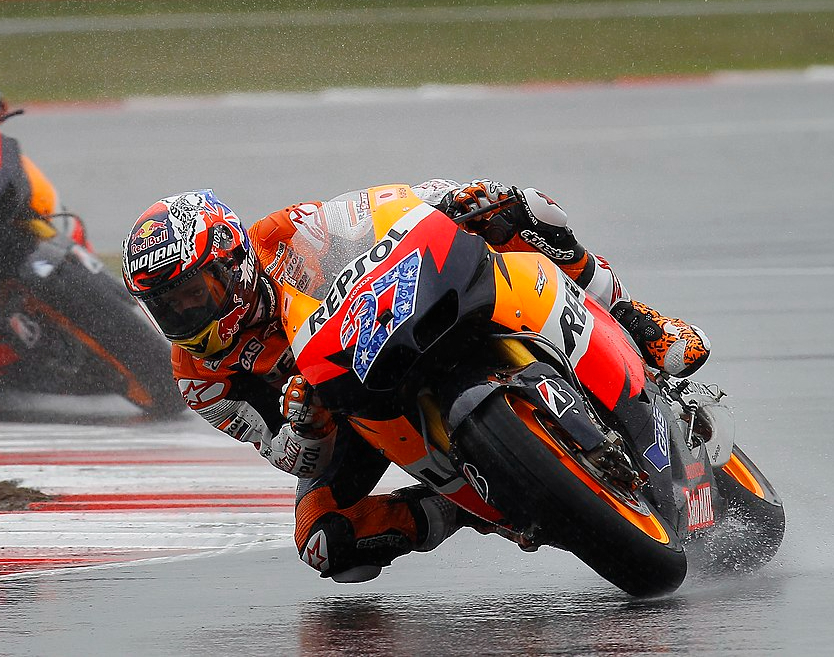
Arguably, Stoner’s finest hour of the season came at a drenched Silverstone. The start was delayed due to the continuous downpour, but the decision was finally made to get underway. Whilst chaos reigned behind him with riders constantly tripping up on the treacherous surface, Stoner executed a wet-weather masterclass, negotiating every corner and braking point – almost drifting through every apex – with an elegance previously unseen by him. His teammate Andrea Dovizioso was the best of the rest, finishing 15 seconds adrift. The race effectively ended any hope Lorenzo had of retaining the title, crashing out halfway through the race, unable to stick to the Australian.
From then on, Stoner ensured he had it all his own way for the rest of the season. At Aragon he showcased another imperious lights-to-flag victory ahead of his other team-mate Dani Pedrosa. The result ensured victory in the constructors’ championship for Honda for the first time since 2006 with the late and much missed Nicky Hayden. Stoner’s personal triumph would be confirmed once again at Phillip Island.
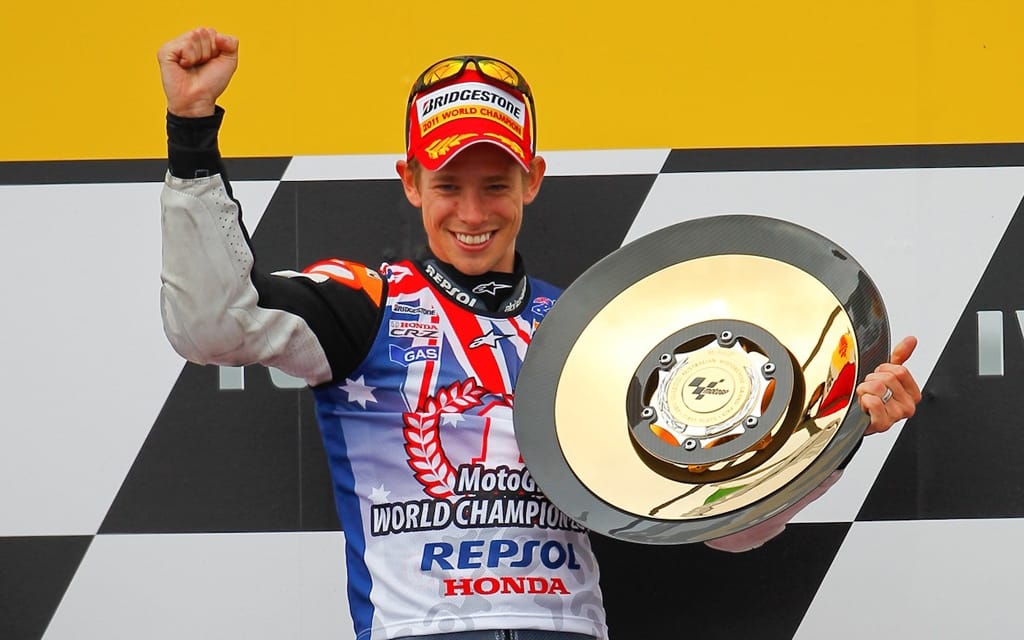
The weekend had been drummed up as a tribute to Mick Doohan – officially badged to mark 20 years since he joined HRC. Essentially, it was a grand gesture from Honda to mark Stoner realising his dream of following in his hero’s footsteps. Though before he could don the champions t-shirt again, he first had to fend off a spirited challenge from Marco Simoncelli, pushed all the way to the final lap before the Italian was forced into a mistake.
Battle won, and cue the euphoric celebrations from rider, team and fans alike. A premier class world champion with multiple teams. Only a select few have managed to claim such an accolade.
Credit: Getty Images
2012 – The Curtain Falls
The Australian may have had a much shorter grand prix career than his contemporaries – he called time on his career just 7 seasons since making his bow in the premier class.
His decision to retire stunned the racing world, in much the same vein as his signing for Ducati and his decision to take time out did. Very fitting – above all else, Casey Stoner did it his own way throughout his career. His ability and sheer tenacity on the bike ensured that he succeeded wherever he went.
Any controversy that followed him was ultimately silenced by his results.
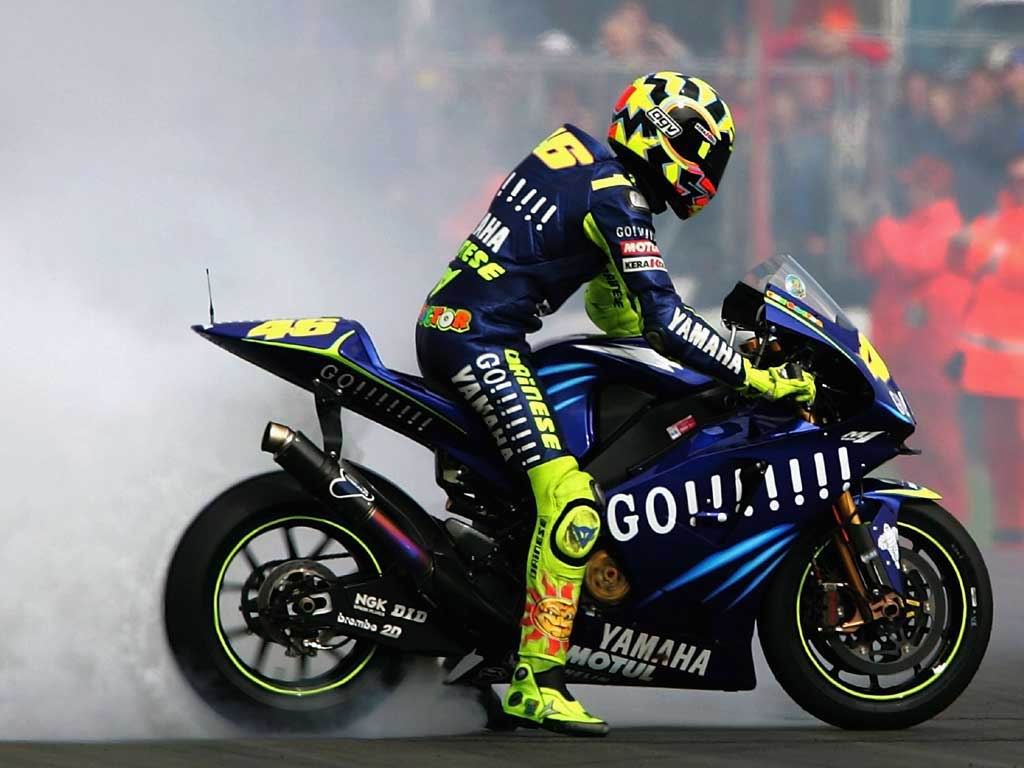
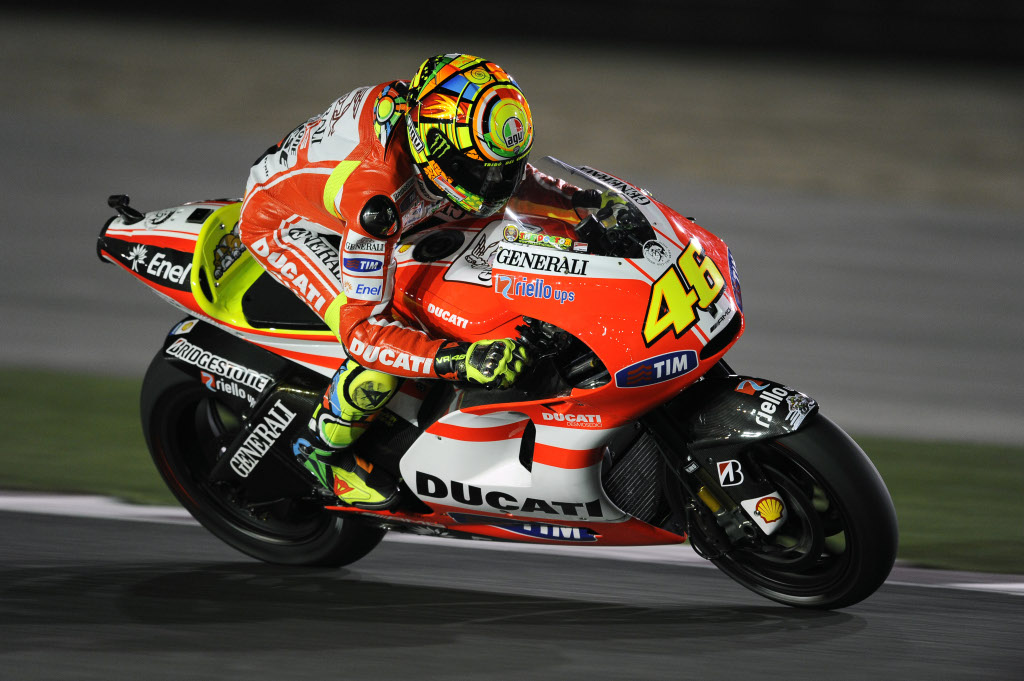
Whether it’s his infectious exuberance, his elaborate celebrations, his illustrious career, or his undeniable talent, it’s safe to say everyone has a reason to like Valentino Rossi aka. The G.O.A.T.
The Junior Years
It is amazing to think however, that his debut year in the 125cc class wasn’t magical. His talent though was clear. He pushed himself to new limits and in typical Rossi fashion, only took the one year to learn and the next year to win.
1997 was that year on the Aprilia, interrupting his Japanese rivals who were dominating the event, winning by 80 points over fellow racer Noboru Ueda.
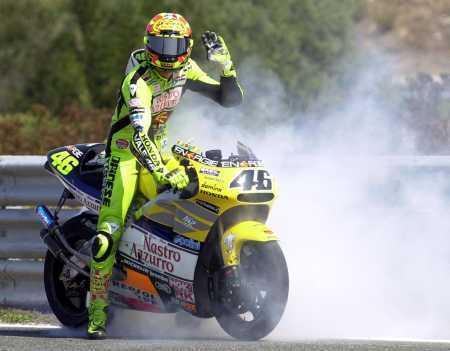
It is also at this early start of his career that audiences first saw the iconic sun and moon design that has become Rossi’s signature motifs, albeit slight design changes throughout the years and where we first saw his showman side too, celebrating his victories. These celebrations would carry through as he progressed up the ranks, getting more elaborate and memorable.
The number 46 was now racing with the likes of Loris Capirossi and Tetsuya Harada. In 1998, Rossi moved up to the 250cc class and won five of fourteen races. Still with Aprilia and finishing an incredible second in the championship, only 23 points behind Capirossi.
True to form, he managed to turn second into first in 1999, winning both the race and the title at the Nelson Piquet Circuit at 20 years old, 48 points above Ukawa.
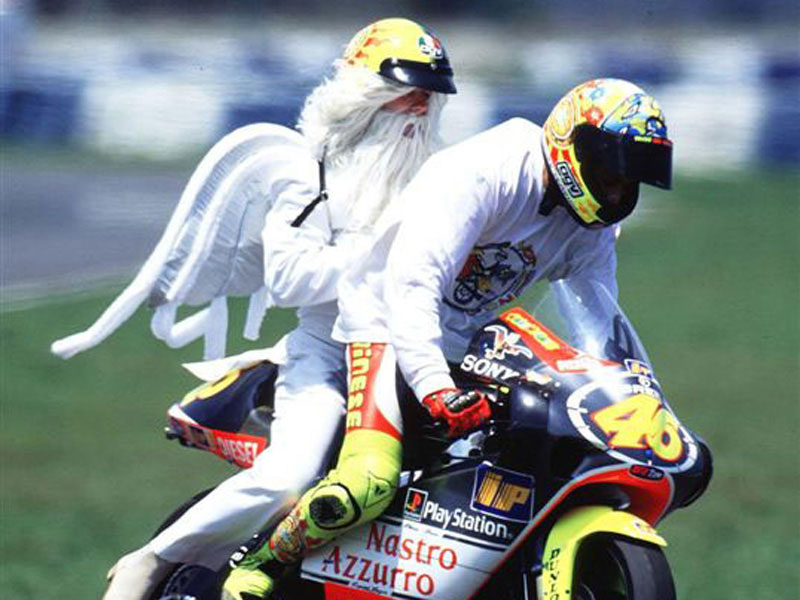
His celebrations that year included ones like the chicken, the angel riding pillion and of course the classic porta loo at the side of the track.
During this season he also managed to clinch Aprilia’s 100th GP win.
Credit: Getty Images
500’s
Moving to Honda in 2000 with renowned crew chief Jeremy Burgess, as a one-man team, Rossi again took one year to learn and one year to win. Rossi was now competing against names like: Kenny Roberts Jnr, Max Biaggi and Carlos Checa.
Although finding the transition hard from 250cc to 500cc racing bikes, it didn’t take the 21 year old long to win his first race at Donnington, in the top-class.
It was this year that the infamous feud between Rossi and Biaggi started to become apparent.
In only his first season, Rossi lost the title by only 49 points, behind Roberts.
Still riding the Honda, Valentino entered into his second year in the 500cc class in 2001, it was then that the iconic name The Doctor was founded. Overhearing at an airport the name ‘Doctor Rossi’ being announced, he thought the name sounded good, so adopted his own version. Previous names included: RossiFumi and Valentinik, but these understandably weren’t as catchy.
The Doctor secured his first pole in Welkom, became the first rider to win in all three classes at Brno and in the same year he won Honda’s 500th GP win. Rossi started to quickly rack up new records and had became a brand in his own right.
Credit: HRC Images
During this season the feud between The Doctor and The Roman Emperor (Biaggi) overflowed, making it highly entertaining for audiences around the world. While a scuffle happened off camera (at Catalunya – 2001), making all the wrong headlines and an official hand-shake took place to say sorry, their rivalry gained more momentum on the track.
At Suzuka 2001, Biaggi pushed out his elbow and nudged Rossi off track, this lead to Rossi passing him a lap later and putting his middle finger up to him. The rest of 2001 became a Honda / Yamaha dog-fight. This concluded with Rossi winning the last ever 500cc World Championship over Biaggi by a huge 106 points.
Then came a massive change to the premier class, as the two-stroke 500cc bikes were replaced with 990cc four-stroke machines.
MotoGP
After winning eleven races in 2002, including the first race of the season, Rossi had certainly become a household name and was furthering his conquest to earn the name G.O.A.T.
That year he raced among the usual faces: Barros, Biaggi, Gibernau and the late Daijiro Kato. Rossi won the title with four races left at Rio, leading once again, Max Biaggi. This time by a whopping 140 points.
Honda’s joy with Valentino was tempered in 2003 by the shock and sudden loss of fellow racer Kato, during the Suzuka race.
This year was also very strained for both the Honda team and Rossi, as Honda claimed it was mainly the bike that won the races and the rider was just the pilot. Even during those hard-times, Vale still managed to celebrate in the only way that he knew how. Memorably poking fun at Honda with the chain-gang gag.
Once again Rossi won this season over Gibernau by 80 points.
Credit: Getty Images
Then in 2004 came the biggest move. Rossi left his winning Repsol Honda team, risking everything, for the Yamaha M1, taking his crew chief with him.
Doubters said that Rossi couldn’t go ahead and win even one race on the Yamaha. They were proved severely wrong. Not only did he win races, he won the entire Championship again.
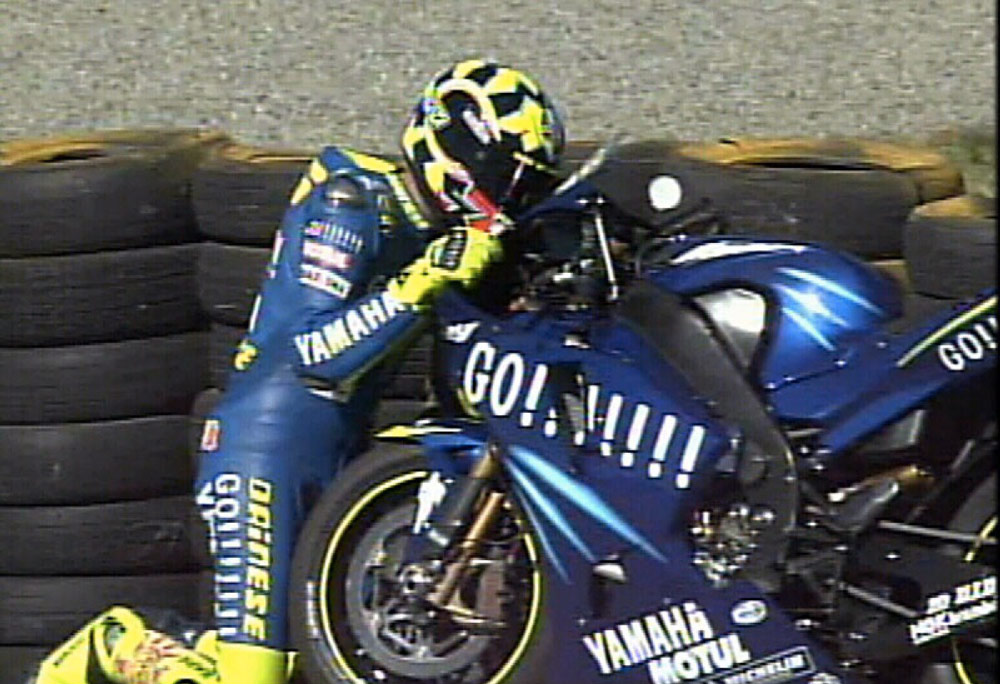
Welkom was welcome once more for The Doctor, after he won the opening race of the season against the likes of Hayden, Edwards and his main rival for the title Gibernau. The celebration that followed was clearly emotional for Rossi. He pulled over to the side of the track and after regaining his emotions embraced his M1.
There was plenty of on-the-track fights between the Italian and the Spaniard (Gibernau), which made for fantastic viewing.
To everyone’s surprise Rossi won the year 47 points clear of Gibernau. Collecting his fourth world title and sixth across all classes.
Jerez started off the 2005 championship, with a great battle between 15 and 46 after they collided on the last lap. However, during the race at Qatar, Rossi made a rare mistake and crashed. He blamed the Spaniard and ‘cursed’ him saying “he will never win another race”, this statement became oddly true.
Again with four races spare The Doctor secured his fifth title 147 points above Marco Melandri. Celebrating with ‘snow white and the seven dwarfs’.
Bad luck troubled Rossi throughout 2006, after a tyre failure, engine blow-ups and being knocked from his bike by Elias. Rossi heroically fought back during this season and going into the last race at Valencia he was eight points in front of the late American, Nicky Hayden. However, more bad luck plagued him and he fell, re-mounted and finished thirteenth. Hayden won his only title by five points.
2007 saw Rossi finish third in the championship, behind winner Casey Stoner and Dani Pedrosa, in second.
Many people were saying, is that the end of Rossi?
Motegi – 2008 saw Rossi silence the critics and he won his eighth career title, across all classes, finishing on the GP rostrum for the 150th time overtaking Agostini’s record total of wins in the top class.
Bitter complications with Yamaha made 2009 a hard year for Rossi and his team. Even though it was tough in the garage he still took victory, finishing third in Malaysia, for his ninth World Championship, 45 points above his team-mate Lorenzo.
2010 was much of the same, Rossi’s love story with his M1 Yamaha came to an end, finishing the championship in third he made another massive decision.
Credit: Ducati Corse
Hoping to emulate his success in 2004, Valentino joined Ducati. The dream of an all-Italian team in 2011 ended awfully however. It seemed the only person who could tame the Ducati was Casey Stoner. The Australian memorably said to Rossi “did you run out of talent?”, which led many people to think, perhaps he was right.
Finishing sixth in the championship in 2012 two years in a row, the Ducati dream was not to be for Valentino and he returned to Yamaha.
2013 – Present
Rossi sacked his Crew Chief Jeremy Burgess in order to find fresh motivation. Burgess admitted they “had been chasing rainbows”. Still winning plenty of races and narrowly missing out on a tenth championship in 2015 by 5 points, Valentino is still be able to break records and be at the sharp-end of the pack. Having not won a title in eleven years, Rossi fully admits that he races for the love of the sport and the passion to have fun.
Will that illusive tenth championship be granted in his new adventure with Petronas Yamaha in 2021? And will he secure his 200th podium finish?
Whatever the outcome, the yellow army still flock to watch and support their hero at every race.
The 2020 season has come to a close – at 161 days, it was the shortest since 1966, condensing 17 races into that window which has in previous seasons taken nearer 300. The final race took place on the 13th December. The time has now come to reflect on some of the extraordinary achievements that were made and exceeded in times that happen in every hundred years. Most of these decisions were made by the public using @PitCrewOnline and Twitter Poll.
We start with our first award, Qualifying Lap of Year, where you get to see the cars at the fastest! Our four options, place they qualified and resulting race are:
Hulkenberg P3 – 70th GP
Gasly P4 – Emilia Romagna GP
Stroll P1 – Turkish GP
Leclerc P4 – Sakhir GP
Winner: Hulkenberg – 62% of Public vote
This was his second consecutive race filling in for Sergio Perez after he tested positive for covid-19, although he couldn’t start the British Grand Prix due to a last minute problem with the car. Unlike the latter Bahrain rounds where the track changed to shortened Sakhir track, the 70th Anniversary Grand Prix at Silverstone had no changes from the British event. He qualified a fantastic P3, going faster than Verstappen; he was only beaten by the fastest car ahead of him in Mercedes. He ended Sunday in P7 so managed to score points, but the podium continues to elude him.
Nico Hulkenberg brilliantly deputised for Sergio Perez and Lance Stroll at various points of the season – Courtesy of Racing Point Media
The next award is: Best Start of the Year. the nominees are:
Max Verstappen – P7 to P3 – Hungarian GP
Kimi Raikonnen – P16 to P7 – Portuguese GP
Carlos Sainz – P7 to P2 – Portuguese GP
Sebastian Vettel – P11 to P3 – Turkish GP
Winner: Kimi Raikkonen – 44% of Public vote
Kimi had a great start at Portimao, gaining 9 places on the opening lap; he even continued to rise to sixth place in the race for a further few laps before others tyres began to get temperature on the unique surface the track had. It narrowly beat Vettel’s start which received 33% of the vote at Turkey.
2020 was Kimi Raikkonen’s second year with Alfa Romeo – Courtesy of Alfa Romeo Media
The Third award is: Overtake of the Year. We love wheel to wheel action – even better when DRS isn’t involved! Our options are:
Charles Leclerc on Lando Norris – outside of turn 4 – Austrian GP
Alex Albon on Lance Stroll – Outside of Copse – 70th Anniversary GP
Sergio Perez on Charles Leclerc – lap long battle – Eifel GP
George Russell on Valtteri Bottas – Sakhir GP
Winner: George Russell – 77% of Public vote
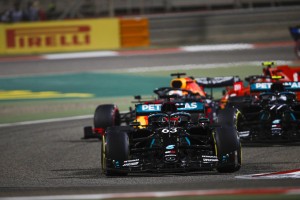
George Russell took his chance at the Sakhir Grand Prix with both hands but things out of his control prevented a maiden victory. He showed his skills and the pass on his team mate at the beginning of the final stint of the race after a calamitous safety car period for the team was one of these.
George Russell’s excellent performance at the Sakhir Grand Prix was undone by Mercedes’ blunders – Courtesy of Mercedes Media
Next is an award for Pit Crew of the Year, which didn’t need a poll; a much more statistical thought!
Red Bull
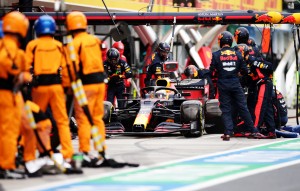
9 times this year they have broken the 2 second barrier, with their fastest time being 1.86 on two occasions – close to the world record 1.82 time. Another remarkable feat was replacing Verstappen’s front left suspension in record time after his error en route to the grid at Budapest which led to his fantastic start. They won the DHL Fastest pit stops with 555 points with Williams next to 264. They only failed to achieve the fastest pit stop at Spa and Monza.
Red Bull’s remarkable work on the grid helped Max Verstappen onto the podium after his crash before the race – Courtesy of Red Bull Content Pool
A bit of a hysterical award next! The Dyson Hoover Award
(Other hoover brands are available)
Valterri Bottas – For picking up bargeboards, and getting them stuck in his airflow which ruined his car’s downforce. He has also a habit of getting punctures of running over debris – Baku 2018 springs to mind.
Rookie of the Year!
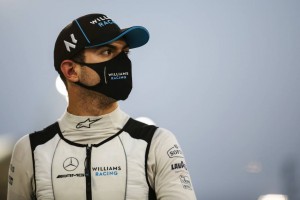
Nicholas Lati… There was only one full time rookie this year? Nicholas Latifi! Solid job on his debut year. He nearly scored points in the inferior Williams at Imola where the unfortunate Russell made his one of his very few mistakes of the season in P11. Next season will be about cutting that deficit at the tracks we visited this year and spending time on the simulator; points in 2021 will be the target! Especially with Montreal looking likely to be one of our venues, Latifi will want better understanding and a better car for that event!
Nicholas Latifi’s first season was solid, but he will be hoping for a slightly stronger performance next year – Courtesy of Williams Media
Race of the Year!
Max Verstappen’s win – 70th Anniversary GP
Lewis Hamilton’s 92nd win – Portuguese GP
Lewis Hamilton secures 7th Title – Turkish GP
Sergio Perez wins after Mercedes fail – Sakhir GP
Winner: Sakhir GP – 38%
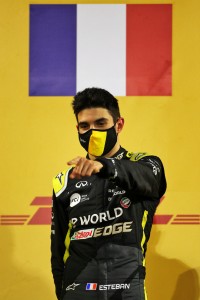
The Sakhir GP took it by just 3% over the title securing Turkish event. Sakhir had the action! The lap one drama took out the touted Verstappen and putting the unlikely victor Perez last! Mercedes were the creators of their own downfall, and what if Jack Aitken, technically driving Russell’s car, didn’t put it in the wall? People questioned the shortened Sakhir layout, but it was great. if anything, another DRS zone before the final corner would have been great.
A crazy Sakhir race saw Esteban Ocon earn his first ever podium – Courtesy of Renault Media
Driver of the Year!
The drivers to the left of the quarter final option were seeded in Championship order and then drawn at random against the other four randomly who had fantastic seasons in other cars. These were the agreed top 8 by Pit Crew census then each went to a 3 hour poll except for the final. That went for a 24 hour poll during Abu Dhabi weekend.
Quarter Finals
Sergio Perez (67%) – Pierre Gasly (33%)
Max Verstappen (52%) – Carlos Sainz (48%)
Lewis Hamilton (57%) – Charles Leclerc (43%)
Daniel Ricciardo (44%) – George Russell (56%)
Semi Finals
Sergio Perez (59%) – Max Verstappen (41%)
Lewis Hamilton (59%) – George Russell (41%)
Final
Sergio Perez (56%) – Lewis Hamilton (44%)
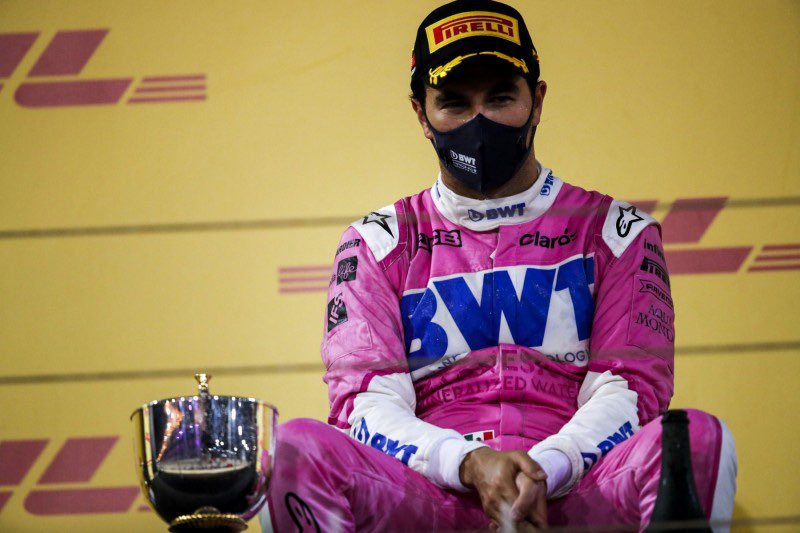
The public decided that Sergio Perez is the 2020 driver of the season! Congratulations to Checo! The season has come to a close, and some drivers are yet to be confirmed. Will our driver of the year get a call from the Red Bull hierarchy placing Albon on the sidelines for 2021?
Sergio Perez has inexplicably been left without a seat for next year… so far – Courtesy of Racing Point Media
That is the Awards for 2020, with the calendar being arranged on short notice and bubbles being kept to with only a few positive cases it looks like F1 can call 2020 a success. Old friends of Imola and Turkey came to assist whilst Portugal and Mugello came to show what they could do. Vaccines look to be starting to be distributed to assist with the pandemic, so fingers crossed some normality resumes to the world of Motorsport and beyond.
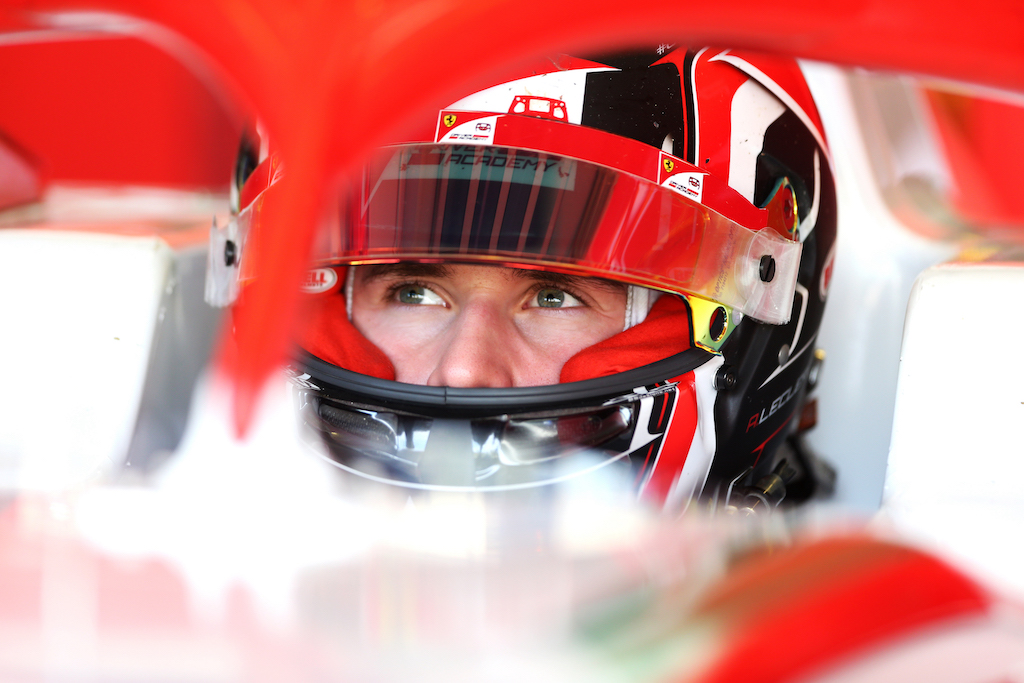
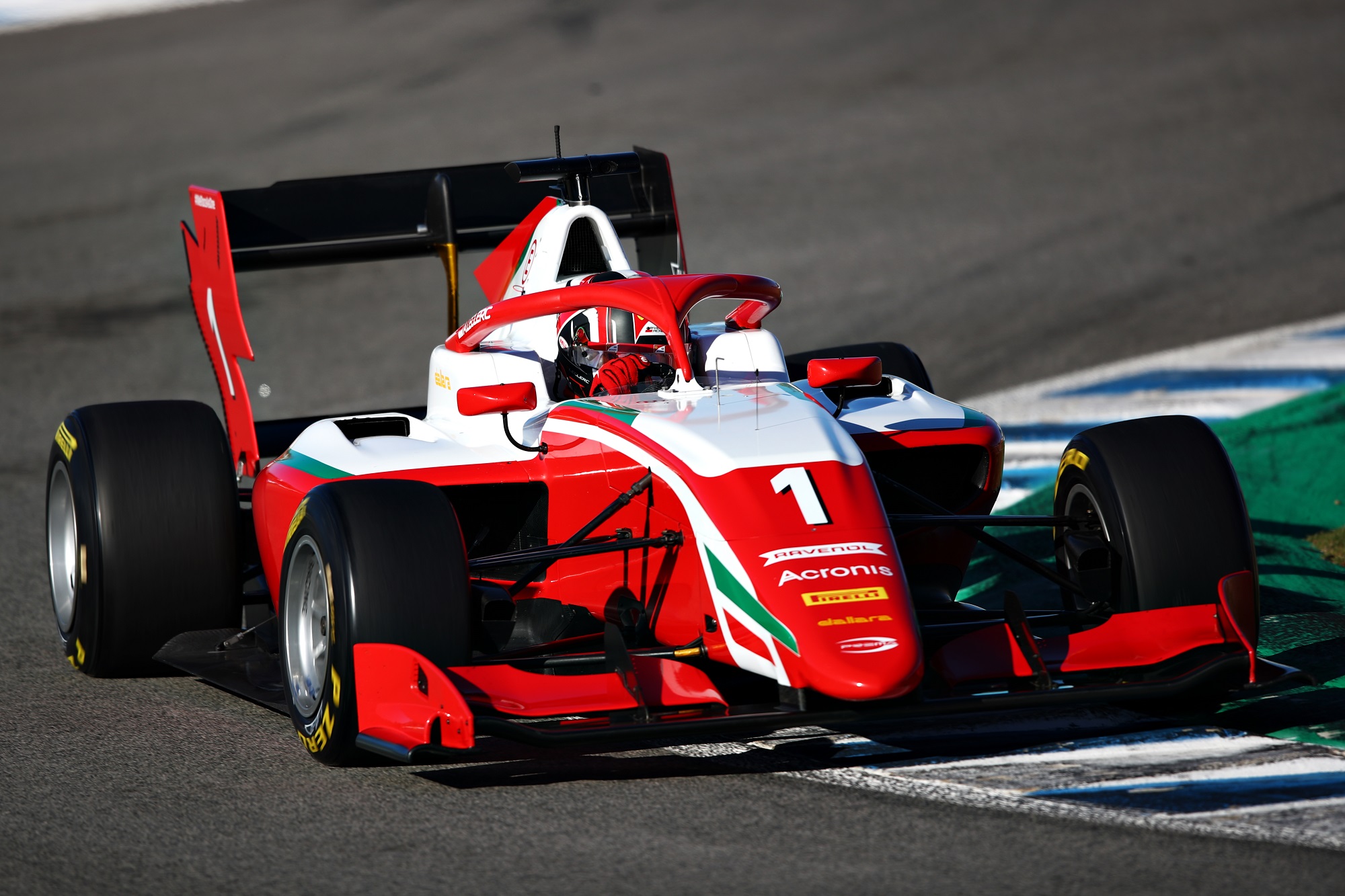
Prema has announced that Arthur Leclerc will join their FIA Formula 3 team for the 2021 season.
Leclerc, a member of the Ferrari Driver Academy and young brother to Ferrari Formula 1 driver Charles, enters F3 after finishing runner-up in this year’s Formula Regional European Championship, also with Prema. Leclerc took six wins and eight poles to contend for the title, but a retirement in the final round left him unable to challenge eventual champion Gianluca Petecof.
In preparation for his move to F3, Leclerc has also driven for Prema in both of the post-season F3 tests at Barcelona and Jerez.
Arthur Leclerc, Prema (Joe Portlock / Formula 1 via Getty Images)
“I am really happy to announce that I will step up to FIA F3 with Prema Racing next year,” Leclerc said. “It will be a completely new challenge for me, a lot more drivers on the grid and a weekend format that looks really exciting! I can’t wait to start the season.”
Prema team principal René Rosin said: “I am delighted to welcome Arthur to our FIA Formula 3 operation. He experienced a high quality season in 2020, ending up with more wins than anybody else in the Regional championship.
“His skills come with a dedicated approach to the hard work behind the scenes, which is clearly what we are looking for at this level.”
Leclerc is set to be joined by Red Bull junior and F3 sophomore Dennis Hauger, who also ran with Prema throughout post-season testing. Prema also rotated David Schumacher, Roman Stanek, Caio Collet and Oliver Rasmussen between its third car.
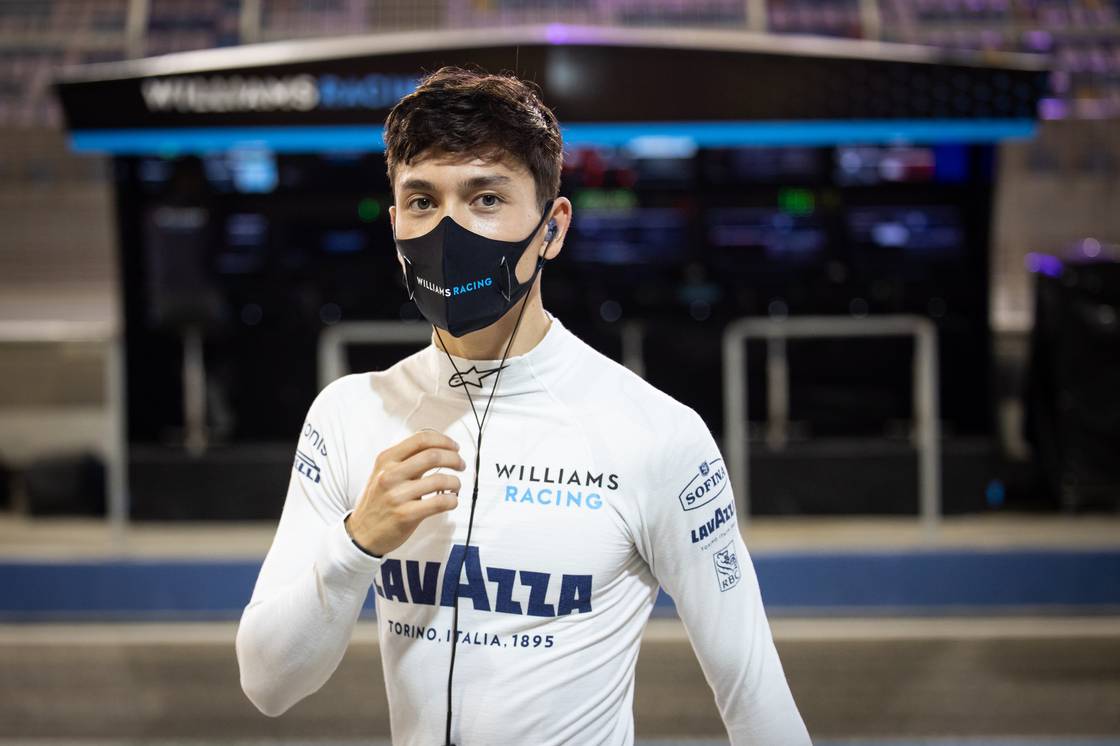
With Pietro Fittipaldi filling in for Romain Grosjean in the Sakhir Grand Prix, nobody was expecting another change to the grid. However it was Lewis Hamilton’s positive COVID-19 result which meant his Mercedes seat was taken by Williams driver George Russell, whose own seat went to Jack Aitken.
So for those of you who were not aware of Aitken before last weekend, here is all you need to know about the latest British driver to reach F1.
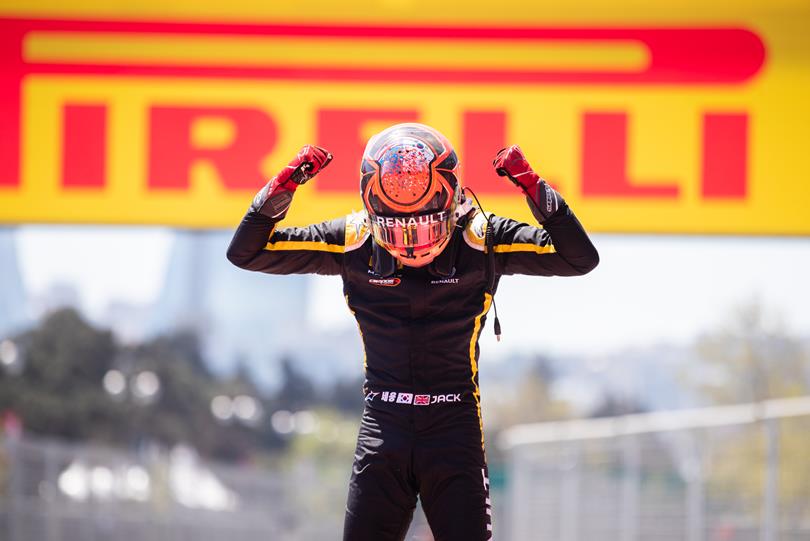
First thing you should know, he’s actually British-Korean. Born to a Scottish father and Korean mother, he began karting in 2006 at Buckmore Park where he won the Summer Challenge club series aged 14 before moving into national and international karting championships.
Aitken made his first move into car racing in 2012. In the BARC Formula Renault winter series he took one win and just missed out on the championship by one point to future British GT champion Seb Morris. His main campaign was the InterSteps Championship, where he would finish third overall having taken 13 podiums across 23 races, two of those being wins.
In 2013 Aitken moved to the Northern European Formula Renault championship and was second to Matt Parry, the previous year’s InterSteps champion. That was followed by a move to the Formula Renault EuroCup for the following year in which he finished seventh in the championship, but it was all building up to what would be Aitken’s best year.
For 2015 Aitken would double up his Formula Renault campaign with assaults on the EuroCup and Alps championships, but to prepare for the season he went over to the States to compete in the Pro Mazda Winterfest. He battled for the championship with Malaysian driver Weiron Tan and pipped him to the title by a single point, which boded well for his dual Formula Renault campaign.
So it did! Moving to the Koiranen GP team that took Nyck de Vries to both the EuroCup and Alps championships the year before, Aitken racked up five wins in the EuroCup and four wins in the Alps series. He capped off his successful season by becoming a member of Renault’s F1 driver academy, and by sealing a drive in the F1-supporting GP3 Series with Arden.
While the 2016 GP3 championship was between now-F1 drivers Charles Leclerc and Alexander Albon in the leading ART team, Aitken did very well with a win and fifth in the standings. 2017 looked to be an even better year for Aitken as he took one of the ART seats. However, a new kid arrived who plays a big part in Aitken’s story.
That new kid was George Russell, who moved up from European F3 to take one of the other ART seats. The season was hard fought and ART occupied the first four places in the driver’s championship with Russell, Aitken and their teammates Nirei Fukuzumi and Anthoine Hubert.
However, Russell annihilated Aitken, taking four wins to Aitken’s one and finishing nearly 80 points clear. They both moved up to F2 the following season remaining with ART, but Russell dominated the championship there as well, over the likes of Lando Norris and Albon. Aitken did win the sprint race at Barcelona, but finishing only 11th in the championship coupled with Russell’s success did not do his reputation any good unfortunately.
For 2019, Aitken made the move to the unfancied Campos team. He began to repair some of the damage that had been done, taking the feature race win at Baku, a glorious victory on the Sunday morning of the British Grand Prix at Silverstone and a further sprint win at Monza to finish the season fifth.
Jack Aitken, Campos. Image courtesy of FIA Formula 2.
He remained with Campos for 2020 but left the Renault academy, joining Williams as a reserve driver. He was thought to be one of the favourites for the F2 title this year, but the results have not been there for Jack.
However with Russell’s immediate call-up to Mercedes in Sakhir, Aitken’s F1 dream came true. It may have been short-lived, but he immediately made an impression by qualifying less than a tenth from Williams’ other full season driver Nicholas Latifi and outqualifying an F1 world champion in Kimi Räikkönen.
It may be unusual circumstances but Aitken can be pretty pleased with how he did. While it was Russell who starred in his Mercedes debut and nearly came away with a victory, Aitken has certainly done himself a lot of favours with how he performed over the Sakhir Grand Prix weekend.
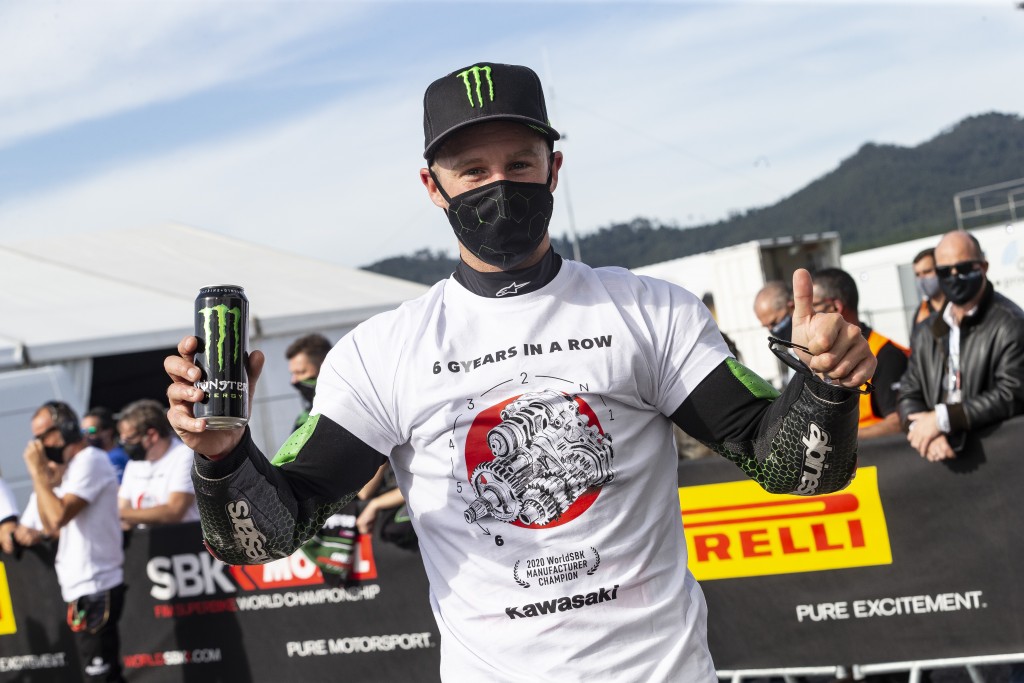
As we know Jonathan Rea has won six consecutive World Titles in World Superbikes and must wait until the 2021 season to achieve his 100th career World Superbike race win after crashing in the final event of the 2020 season.
Jonathan Rea Estoril WSBK. Picture courtesy of Kawasaki Racing Team WorldSBK
That is a pretty impressive achievement in any sport but in order to achieve this any driver or rider cannot achieve this on their own, they need to be part of a team that that works together as one with the drive and ambition that they will win races and they will win driver’s and constructor’s championships and of course you have to have a combination of the right team and the right bike in order to achieve any of this.
Did you know that not only has Jonathan Rea won six consecutive rider’s World Titles in World Superbikes but that Kawasaki have won six consecutive constructors World Titles in World Superbikes too?
To me, this says that both Jonathan Rea and Kawasaki have worked together and together they have achieved these amazing achievements but what is Kawasaki’s history in bike racing?
Kawasaki have a long history of motorbike racing which goes back to 1961 when they entered an All Japan Motocross race on a racing bike based on the Kawasaki B7, they started competing the following year and at the first race meeting of the MFJ Hyogo Prefectural Motocross Race in 1963, the top six positions were filled by Kawasaki B8 riders.
Jonathan Rea the Estoril 2020 Press conference Picture courtesy of Kawasaki Racing Team WorldSBK
The famous Kawasaki racing colour of lime green was developed in 1968, previous to this Kawasaki race bikes had been painted red. At the Daytona 200 in 1969 all the A7RS and A1RAS factory race bikes were in the official lime green colour and have been to this day.
In 1973 the KX was born. The KX was the result of the formation of a new development department set up in 1972 charged with creating a motocross racer. Sales started in 1973 and the development of the KX series continues to this day.
1973 also saw Gary Nixon take the AMA Superbike title in the AMA Road Racing Championship having won three races on a H2R which was a two-stroke three-cylinder bike which was given the nickname “Green Meanie” by it’s racing rivals.
From 1978 to 1982 GP250 and GP350 World Grand Prix racing was pretty much dominated by Kawasaki on KR250’s and KR350’s which were ridden by Kork Ballington and Anton Mang. Between the two classes the riders took an impressive eight world championships and Kawasaki won the manufacturers title in the GP250 class four years in a row. A truly impressive achievement.
Success continued in the AMA Superbike championship when back to back titles were won in 1981 and 1982 with Eddie Lawson on the KZ1000J and KZ1000S1 respectively and the following year on the new GPZ750 after a change in the regulations, which was ridden by Wayne Rainey. The Kawasaki was the dominant bike and earned Kawasaki it’s third consecutive title.
During the same period Kawasaki also dominated the Endurance World Championship with their KR1000 endurance racer with the French endurance team, Kawasaki France Performance. In 1981 and 1982 the Kawasaki riders took all the top positions and 1983 saw Kawasaki sweep the podium at the Le Mans 24 hours. Kawasaki had won the manufacturers title for three years running and were beginning to make a habit of winning consecutive titles!
Jeff Ward, former AMA Motocross 125 and AMA Motocross and Supercross 250 champion, took back to back class titles on a KX500 thus becoming the first rider in AMA history to win four different crowns.
Kawasaki stopped participating in works entries from 1983 to 1988 but they entered the Endurance World Championship in 1988 and came back with a bang dominating the field for three consecutive years winning the title on the ZXR-7 which was the new TT-F1 racing machine in 1991, 1992 and 1993. Kawasaki also entered the Suzuka 8 Hours race in 1993 with Scott Russell and Aaron Slight giving Kawasaki their first win in this race.
The AMA Superbike Championship was won again in 1992 by Kawasaki with Scott Russell riding a ZXR750 which had been prepped by Rob Muzzy and the following year saw the pair take the Superbike World Championship by storm on a ZXR750R and take their first World Superbike victory when they won the title in their first year of competing.
Kawasaki were certainly taking the bike racing world by storm showing that when they entered whichever realm of championship, they were the team to beat.
Kawasaki Motocross picture courtesy of Kawasaki Racing Team
The first World Motocross title came for Kawasaki in 1995 when Stefan Everts on a KX250 dominated the championship with five victories. The following year saw Sebastien Tortelli, on a KX125, win the class championship stepping up the following year to the 250 class and taking the world title on the KX250.
In 2001 Kawasaki took it’s first world title in the AMA Supersport Championship with Andrew Pitt riding the green machine. In the same year Kawasaki cleaned up in Motocross with James Stewart on a KX450F taking the Supercross title; Ryan Villopoto took the Supercross Lites West title and Ben Townsley the Supercross Lites East title on the KX250F. WoW!
Ryan Villopoto, a multi-time Supercross Lites and Motocross Lites champion on KX250F’s, stepped up to the 450 class in 2009. After a couple of seasons perfecting the bike, success came in 2011 with the first of four back-to-back Supercross titles. Ryan Villopoto truly was in a class of his own in the motocross world aboard the green Kawasaki.
After a 20 year absence from the World Grand Prix road racing scene, Kawasaki returned in 2002 on Ninja ZX-RR machines competing in the MotoGP class and started to make steady progress in it’s classes over the next few years.
In the Superbike World Championship series upon a Ninja ZX-10R in 2012, Tom Sykes just missed out on the title by a small margin but completely made up for it the following year when he took the World Superbike title with 9 race victories and 18 podium finishes giving Kawasaki it’s first world championship in Superbikes in 20 years.
The 2012 Supersport World Championship was won by Kenan Sofuoglu on a Ninja ZX-6R and in 2015 he took five wins this season to take the title again followed by a successive title in 2016 with six wins. The world was taking notice of Kawasaki and the true potential the ZX-6R machines held.
Ana Carrasco (DS Kawasaki Junior Team) Is on the verge of creating history
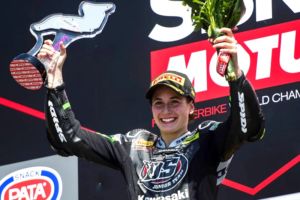
In 2017 the Supersport 300 World Championship was established. In the 2018 season history was again made when Ana Carrasco became the first female rider to win a race on a Ninja 400 and then made history again later in the season when she took the title and became the first female rider to win a title in the history of the FIM world championship racing.
A truly outstanding achievement by both Ana and Kawasaki with Kawasaki once again paving the way forward in the motorbike racing world.
2019 saw Kawasaki claim it’s second consecutive title in this class with Manuel Gonzales at the helm when he became the youngest ever FIM Road Racing Champion. A fabulous achievement in what is considered an ultra-competitive class.
For the first time since 1993, Kawasaki Racing Team won the Suzuka 8 Hours Endurance Road Race in 2019 on Ninja ZX-10RR’s in what was a closely fought battle with the top three teams all completing 216 laps. Alongside, Team SRC Kawasaki France finished in 12th place taking the title in the 2018-2019 Endurance World Championship. Kawasaki was showing the world their bikes were not only made for road racing but for long distance racing too.
Back in the Motocross scene, Eli Tomac took back to back titles in the 2017 and 2018 AMA Motocross Championships on a KX450F and the following year upon the new KX450 he took the title again with 11 wins and 19 podium finishes. Another third successive title for Kawasaki.
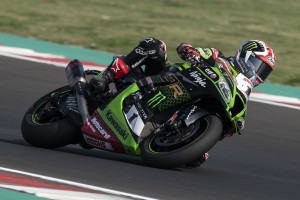
Jonathan Rea at Portamao 2020. Picture courtesy of Kawasaki Racing Team WorldSBK
We then come to the Jonathan Rea era of motorbike racing. Jonathan joined the Kawasaki Racing Team in 2015 competing in the World Superbike Championship and took the motorbike racing world by storm by winning the title in his first year with Kawasaki with 14 race wins and 23 podiums.
In 2016 Jonathan took his and Kawasaki’s successive World Title with 9 wins and 23 podiums; the triple world title was claimed in 2017 with 16 wins and 24 podiums and then in 2018 a fourth consecutive title was claimed by Jonathan and Kawasaki with 17 wins and 22 podiums.
Jonathan Rea Estoril WSBK 2020. Picture courtesy of Kawasaki Racing Team WorldSBK
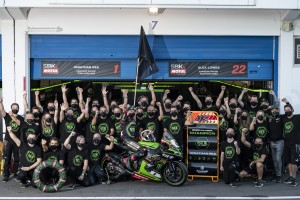
Kawasaki and Jonathan had not finished re-writing history when in 2019 they had a record five consecutive rider’s and manufacturer’s titles and in 2020 history was re-written once again when an incredible sixth consecutive rider’s and manufacturer’s title was claimed by Kawasaki and Jonathan. Jonathan has continued to re-write history with most wins in a season, most points in a season and most podiums in a season.
A truly impressive achievement by both Kawasaki and Jonathan Rea.
As the great Julian Ryder once said about racing at the highest level: “Talent will get you onto the stage, but winning is a matter between the ears”.
Jonathan Rea at Aragon 2020. Picture courtesy of Kawasaki Racing Team WorldSBK
It is quite possible that Jonathan Rea has modelled his WorldSBK career on that line, and then some.
In 2020, given all the uncertainty that has gone with it, this attribute was overlooked by TV broadcasters (and in the interests of outright entertainment of the viewers, perhaps rightly so). However, as the dust has now settled on the season, it is high time to salute this remarkable, and ruthless attribute in Jonathan Rea’s arsenal:
The ability to read and control the championship.
Whilst Rea’s detractors will often highlight his supposed lack of charisma, however they cannot criticise or belittle his ability to know exactly what is needed to be done on track in any given scenario.
Few have the ability and it is the preserve of only the greatest champions: think Mick Doohan, Valentino Rossi or Carl Fogarty in the motorbike world – Michael Schumacher and Alain Prost from Formula 1. Jonathan Rea is the same.
They do not “see red” when a rival overtakes them. They do not panic and adopt a “win it or bin it” attitude. They can even accept that some days they will not be spraying the champagne on the podium.
That last one may come as a surprise to some, but it is true.
Michael van der Mark, Jonathan Rea and Alex Lowes at Magny-Cours WSBK 2019. Image courtesy of Yamaha Racing
Immediate glory on the track, these few know, pales in comparison to lifting the championship trophy at the end of the season. Their place in the standings is the only thing that matters. It consoles them, when a race weekend heads south. You can see it in their eyes and hear it in their voices when they give answers either on the grid or in the interviews in the build up to race day. They are fixated on it. It’s the obsession which pushes them further than the others.
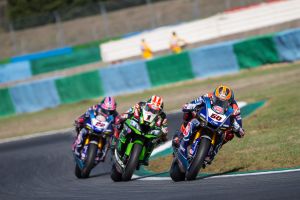
This ability has been showcased on multiple occasions throughout Rea’s career. Perhaps the most clear example came in 2019. Whilst all and sundry had written off his title chances, after Alvaro Bautista’s incredible run of 13 wins from the opening 16 races, Rea’s head never dropped. By ensuring that he constantly mopped up the next best places, he had put himself in prime position to catch Bautista as an when the Spaniard’s incredible run came to an end.
The patience and discipline shown in sticking to what needed to be done ensured that, despite Bautista’s early-season dominance, Rea was never more than a couple of victories away from taking the lead in the championship. Once that happened, Rea hit the racers’ zenith. Such was the confidence in himself and his team, it was inevitable he’d hit his own ‘purple patch’
As has been the case for the past three seasons – Chaz Davies(left) is the only rider who can challenge Jonathan Rea (right) for the title.
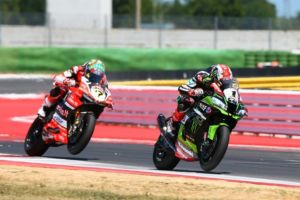
In 2020, the championship battle required a different tactic. With the Kawasaki being more competitive at the start of the season, Rea was able to trade early-season victories with Scott Redding. Once his rival faltered and a gap in the standings had been established, Rea defaulted to prioritising scoring only as many points as he needed to keep Redding behind. He was content enough to let other riders go up the road, safe in the knowledge that his rival could not score sufficient points to make any meaningful inroads (if any at all) to his lead.
Described like that, it is a brutal suffocation of his rivals. Yet there is a fine art to it – and is very difficult to spot on track. Certainly to a casual observer. Rea has to always ensure that his rival (Redding in 2020, Tom Sykes in 2015) finished behind him.
You cannot afford to ride slow with this tactic, let’s make that clear.
If someone puts together a string of qualifying-style laps in an attempt to break away from the field, Rea uses his judgement to let them go. He has a target pace to ride to, with a small margin to increase pace should he need to recover places later in the race.
Many riders attempt to employ this tactic. Few succeed. Even fewer succeed year after year. As racing goes, this is psychological warfare: Grind down your opponent until he believes you are always that little bit better or faster than him. When a rival cracks – as Sykes and Redding did respectively – it looks sudden and spectacular as the defeated challenger loses heart and finds himself falling back through the field – or worse crashing out.
This kind of moment ensures that race result which ultimately seals the championship, but it has taken weeks, sometimes months to grind the opponent down to such a state.
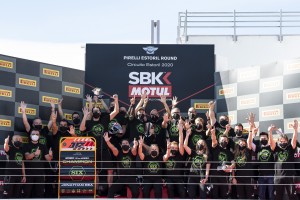
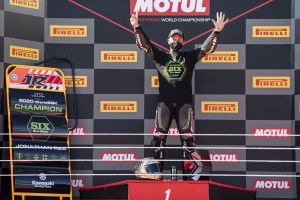
Jonathan Rea Celebrating his six WSBK titles. Picture courtesy of Kawasaki Racing Team WorldSBK
You cannot pull that off overnight. Neither can you be taught it. A state of mind. You have to be utterly ruthless with your opponent – yet at the same time make it so subtle very few can spot what you’re doing until its too late.
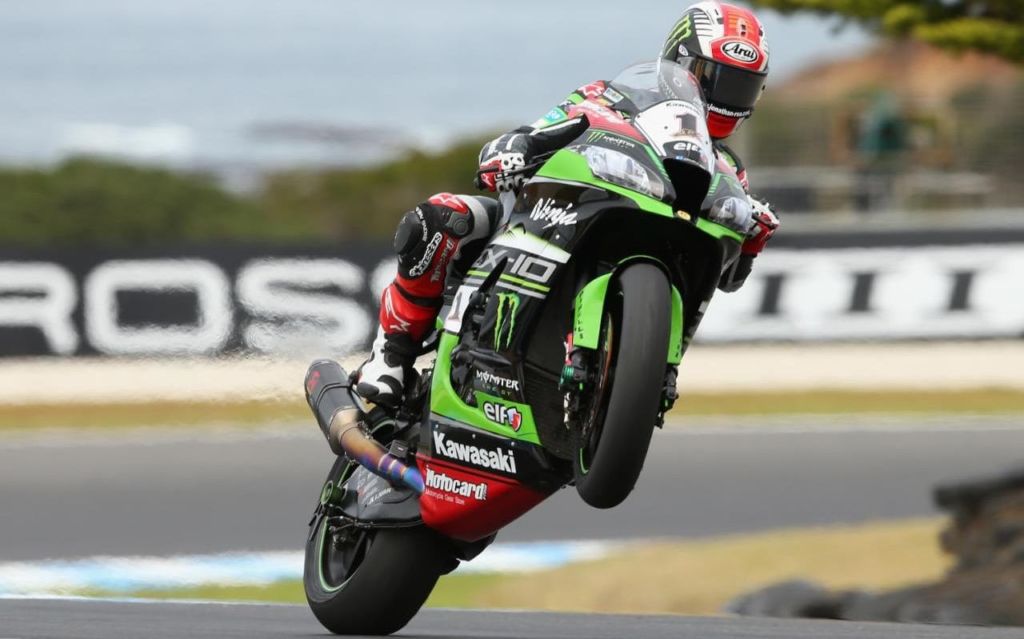
Jonathan Rea at Portamao 2020. Picture courtesy of Kawasaki Racing Team WorldSBK
Having been born with racing in his blood with his father, Johnny a former Road Racing Champion and Isle of Man Junior TT winner, his grandfather sponsoring Joey Dunlop and his great-grandfather being a regular competitor on the Ulster Grand Prix circuit, it was little wonder that Jonathan Rea went on to be one of the greatest road racers that we have seen. An amazing achievement from someone who wasn’t even sure if he wanted to go into road racing!!!
Having been riding for his entire road racing career for Honda Racing and for six of those years in World Superbikes, Jonathan Rea made the switch to Kawasaki Racing Team in 2015 and took the racing world by storm.
In the 2015 World Superbikes Championship season there were 26 races of which Jonathan won the first race at Philip Island and there started an incredible run for the Irishman of 23 podiums, 14 of them of which were on the top step and 7 on the 2nd step. Jonathan amassed an incredible 548 points this season, just a few short of the all time record and he bagged his first World Superbike Championship three rounds early at Jerez in Spain. A very impressive start with the Kawasaki team.
Jonathan Rea Misano WSBK. Picture courtesy of Kawasaki Racing Team WorldSBK
In 2016 there were 26 races of which Jonathan won 9 of them with 9 second place finishes and 5 third places, a total of 23 podiums and at the end of the season which went down to the wire and was decided in the last race of the season at Qata, he was crowned World Champion again and now joined a select group of double World Champions: Carl Fogarty, Troy Baylis, Max Biaggi, James Toseland, Troy Corser, Colin Edwards, Doug Polen and Fred Merkel.
Jonathan is now one of only four World Champions who have had back to back championships, he joins this illustrious group of riders alongside Fred Merkel, Doug Polen and Carl Fogarty.
Again in 2017 there were 26 races of which Jonathan won an impressive 16 of them with an incredible 24 podiums in total. During this year Jonathan had the largest points finish in the history of the championship breaking Colin Edwards 2002 record and was crowned triple world champion. Jonathan was now in a very select group of triple World Champions alongside Carl Fogarty and Troy Baylis. Jonathan being the only rider to have had three consecutive world titles.
Jonathan Rea celebrating at the Estoril GP WSBK 2020. Picture courtesy of Kawasaki Racing Team WorldSBK
2018 sees the World Superbikes series hold 25 races, an incredible 17 of which were won by Jonathan equalling the most number of wins in a season previously set by Doug Pollen in 1992. Having been on the podium 22 times this season, Jonathan earned his fourth world title. The only other person in World Superbike history to have won four titles is Carl Fogarty. A truly incredible achievement for both riders. Jonathan, again, being the only rider to have had four consecutive world titles.
Jonathan wasn’t finished yet. In 2019 there was a record 37 races that season. Having got off to a slow season points wise due to the arrival of Ducati’s new rider, Alvaro Bautista, who dominated the first four rounds of the season, Jonathan went on to win 17 races this season and was on the podium an incredible 34 times with 16 second place finishes and one third place. A truly outstanding achievement and one which earned him his fifth World Championship by the time they got to Magny Cours.
Jonathan is the only rider in the history of the Championship to have achieved five world titles and indeed five consecutive world titles, and he was now truly in a class of his own.
Jonathan Rea Estoril WSBK. Picture courtesy of Kawasaki Racing Team WorldSBK
During this year, Jonathan also took part in the Suzuka 8 Hour event for Kawasaki with teammates Leon Haslam and Toprak Razgatlioglu.
In a dramatic ending to the race, Jonathan, who was riding the final leg of the race, slid off after another bike had deposited fluid on the track with just two minutes of time left in the event and the race was red flagged. As the Kawasaki team did not make it back to the paddock within the stipulated five minute window, it lead to Yamaha’s team of Alex Lowes, Michael van der Mark and Katsuyuki Nakasuga being declared winners.
Kawasaki appealed the decision as official data showed Jonathan’s team were leading by 18.720 seconds from Yamaha. The appeal was upheld and the trio were finally declared the winners.
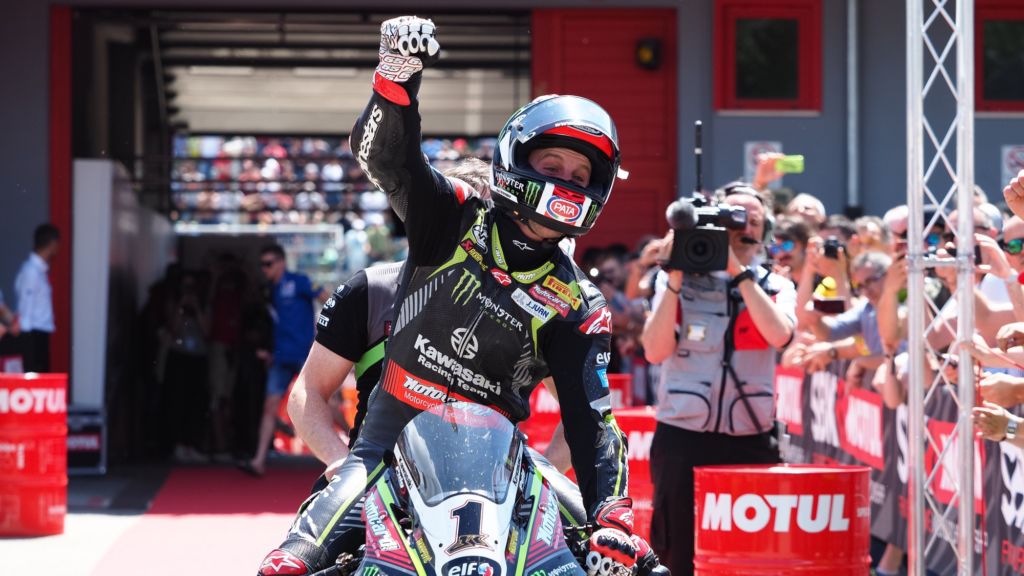
Jonathan Rea Estoril WSBK 2020. Picture courtesy of Kawasaki Racing Team WorldSBK
Yet still there was more to come from the Northern Irish rider. Although 2020 has been a somewhat unprecedented year for all motorsport, having started the season at Philip Island at the beginning of March where we saw Jonathan crash out of Race 1 and win Race 2, there was then a long break before racing finally got underway again in Spain at the end of July/beginning of August.
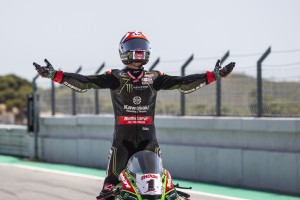
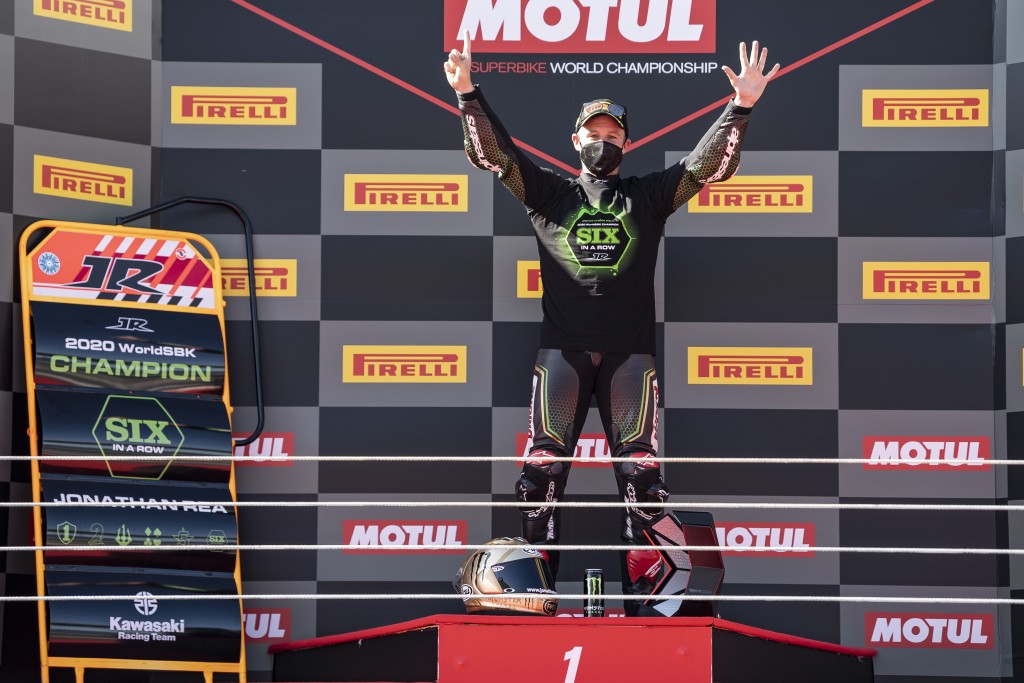
In the remaining 23 races of the season, Jonathan won 10 of those with a total of 17 podiums and rode straight into the record books with his sixth consecutive World Championship at the season ending Estoril with two races to spare. Again the only rider in the history of the Championship to have achieved this. A truly awe inspiring achievement.
Jonathan has also set all time records for race wins, points, podiums and fastest laps. In 2018 Jonathan took his 60th career win at Brno surpassing the record of Carl Fogarty.
Jonathan Rea Celebrating his six WSBK titles. Picture courtesy of Kawasaki Racing Team WorldSBK
Having crashed in the final race of the 2020 season, Jonathan will have to wait until the 2021 season to achieve his 100th career World Superbike win.
Jonathan is arguably one of the most talented young racers in any class of competition today.
When Jonathan Rea took the 2020 World Superbike Championship for the sixth time it made him the most successful World Superbike Rider in the history of the series. He is also credited with the highest number of race wins in the Championship.
Before moving to Superbikes, Rea was runner up in World Supersport in 2008 on the Ten Kate Honda and previously took the HM Plant Honda to be runner up in the 2007 BSB Championship.
In 2012, Rea made two MotoGP appearances replacing the injured Casey Stoner. He finished both inside the top ten – 8th in Misano and 7th at Aragon before making his return to World Superbikes.
So what is it that has helped the 33 year old from just outside Larne to be so successful? We asked our social media followers their thoughts, and there were clear themes – dedication, commitment, riding style and race craft as well as a supportive team and family.
@Simon46storm called out dedication, commitment and being surrounded by a supportive team.
@vickster1984 also suggested the support of a team who understand you as a person and are willing to learn and grow with you, has played a part.
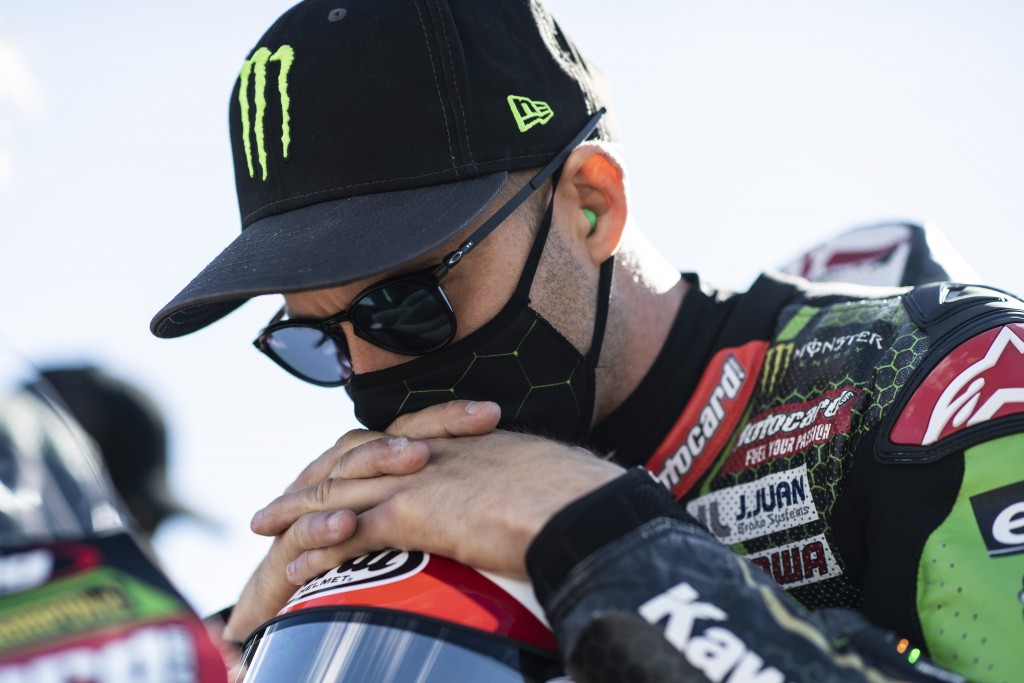
Earlier this year, Rea said himself ‘I’m really happy at Kawasaki, it suits the way I work. I have a great support network around me, and my mechanics are incredible. When things aren’t going well, instead of feeling the pressure of why we aren’t winning, they are really pushing me up and helping me. That helps you in the tough times”
Jonathan Rea is set to break all the records in WorldSBK history.
As well as the team, @LJHammond1 attributed Rea’s success to being fast and smooth, and conserving his tyres. He tweeted: ‘Fast, smooth, conserves his tyres (Sykes often out-qualified him and remained in contention until the closing laps when his tyres went off but Rea’s didn’t), wins most of his races and usually finishes when he can’t win (unlike Davies who often crashed from a winning position)’.
It is true – Rea can set a pace that affords him a comfortable lead yet crucially conserves the tyres, and undoubtedly this has been a strong contributor to his consistency. That said he is not averse to baring his teeth and showing aggression, the second race at Aragon in September this year (2020) was a case in point.
As well as the team, we cannot overlook the role family plays. @FifiSimbaBSD says “I think having children grounds you…..children don’t care how many races you have won when they want to play…” Family truly is important to Rea – two years ago, after clinching his fourth WSBK title he dedicated the win to them and said “My family sacrifice a lot to be here, trailing after me, supporting my dream, but I’m really proud to have them with me. They ground me in such a great way. It means a lot.”
With her tweet, @RSnugglebutt talks about his love for what he does, and how at the end of 2019 he said he would enjoy winning for as long as it lasts – he certainly has a great attitude, and it’s really apparent he has the love for the job as much as ever.
@MarkLawrence77 says it is down to hard work and along with @DoubleMRacing, reckons Rea should have gone to MotoGP (the latter also said he could still have been winning and adds ‘might as well set your World Championships in stone, keep winning so you are unbeatable with World Champs’).
Jonathan Rea 2020. Picture courtesy of Kawasaki Racing Team WorldSBK
So what is next for the man who grew up in Ballyclare? Well, in June he renewed his contract on a multi season deal, so surely achieving a century of career victories must be in his sights (he’s currently on 99), and a seventh title in 2021 would bring him to the same number of consecutive titles achieved by Giacomo Agostini between 1966 and 1972. We are eagerly anticipating the start of the 2021 season to see how he does.
Thank you to everyone who responded to our question, but my favourite response to the question of what makes Jonathan Rea so successful has to be the one from @Paulmur22095740 who quite simply said… “Him!”