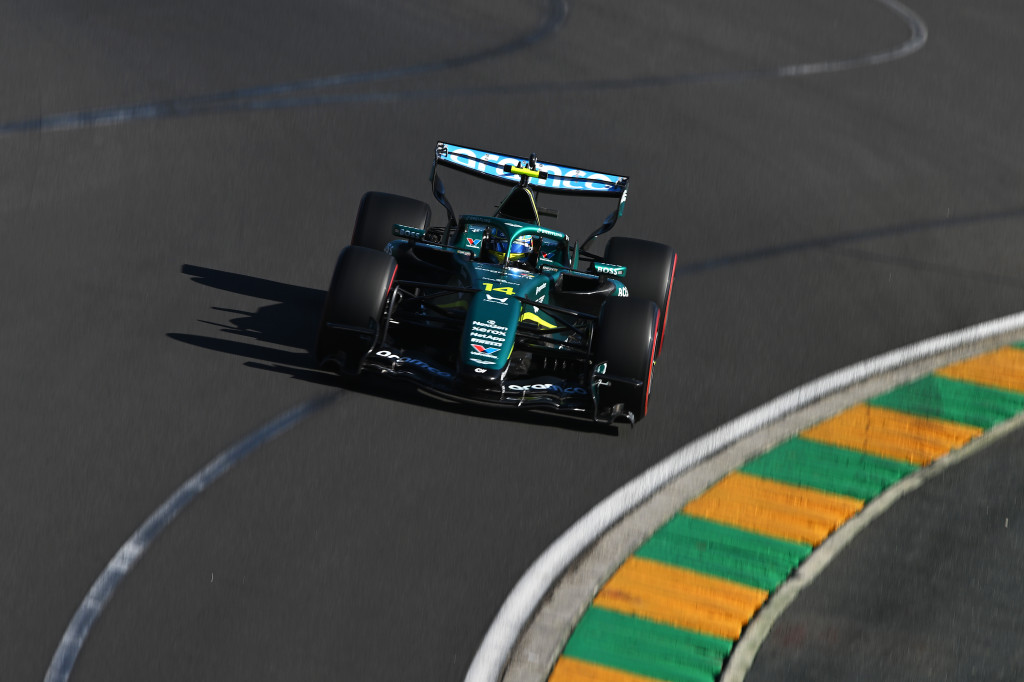
The 2026 Formula One season is now underway, and while Mercedes confirmed themselves to have the best chassis and engine, it was another engine supplier whose performance was the biggest talking point in Melbourne.
Honda sounded warning signs about the performance of its engine from pretty early on in pre-season, but nothing could have prepared both it and F1 team partner Aston Martin for the pain that it would endure during the two official test sessions and the Australian Grand Prix.
Lance Stroll failed to run at all on Saturday and both he and Fernando Alonso were unclassified on Sunday due to the need to save engine components as Honda tries to work out what’s causing all of its reliability problems.
Regulations mandate this season that the power is split almost 50/50 from the Internal Combustion Engine (ICE) and the electrical element from the battery, with 350kw (469 bhp) supplied from the retained MGU-K (Motor Generator Unit – Kinetic) – which harvests energy from braking, coasting and on throttle.
Expectations set very low on Thursday
The writing was on the wall as early as the Thursday media day when Design Technical Partner and Team Principal Adrian Newey and Honda Racing Company’s F1 boss Koji Watanabe called a press conference, after being unable to run on the final day of testing two weeks prior in Bahrain due to battery issues and a lack of stock.
That session drew enough headlines to last an entire weekend, where Newey revealed that excessive vibrations from the ICE was causing the battery to fail (this would eventually leave the team with two working batteries going into Saturday) but more strikingly was a possible risk to the drivers’ long term health.
“That vibration into the chassis is causing a few reliability problems. Mirrors falling off, tail lights falling off – all that sort of thing, which we are having to address. But the much more significant problem is that the vibration is transmitted ultimately into the driver’s fingers,” Newey began.
“So Fernando is of the feeling that he can’t do more than 25 laps consecutively before he will risk permanent nerve damage to his hands. Lance is of the opinion that he can’t do more than 15 laps before that threshold.”
Honda introduced countermeasures aimed at reducing the effects of those vibrations but even after two weeks of testing on the dyno at their factory in Japan, they still have not been able to identify the root cause of those vibrations. While that remains the case, Honda will not be able to solve that problem and extract any more performance from an engine widely thought to be the weakest in terms of power output, behind newcomers Audi and Red Bull/Ford.
And when they got to the track?
Friday and Saturday went broadly as Newey warned it would.
Alonso failed to run in the first Friday Practice while Stroll completed three laps, while in FP2 Stroll ran 13 laps and Alonso 18.
Stroll may as well have stayed at his hotel on Saturday as he failed to run in either the third practice or in qualifying. Alonso did complete 20 laps in FP3 but was unsurprisingly out of qualifying in the first session, outqualifying only the Cadillac duo of Valtteri Bottas and Sergio Perez while Carlos Sainz of Williams, Stroll and Max Verstappen failed to set a time.
A crash for the McLaren of Oscar Piastri on his way to the grid, and a DNS for Audi’s Nico Hulkenberg promoted both men up the grid by two spots. Alonso ended up 10th on the opening lap before a lack of power and reliability curtailed his afternoon as he completed 21 laps. Stroll, fresh from his enforced Saturday hiatus, saw the chequered flag – albeit 15 laps down.
This was broadly in line with what was briefed, with Newey explaining that “we will need to be very restricted on how many laps we do in the race until we get on top of the source of the vibration and improve the vibration at source.”
Hasn’t Honda been here before?
On the face of it, yes.
Honda announced that they would return to Formula One in 2015 with McLaren towards the end of 2013, with the hope being that they could rekindle the glory days of the late 1980s and the early 1990s.
To say that failed to materialise would be a catastrophic understatement as the three year partnership ended with McLaren breaking its contract at the end of 2017 to conclude a partnership that failed to even yield a podium and became synonymous with endless engine failures and a lack of performance.
The reality is that there is more nuance to this, more reasons to be positive and more questions about how Honda found itself in this position yet again.
In 2015 McLaren demanded that Honda fit its Power Unit within the team’s bold “size zero packaging” requirements that Honda simply couldn’t, and the upshot was that McLaren would almost relentlessly brief the media that the car and chassis was up to standard and being let down by the engine.
McLaren did not compromise throughout those three years, and would ultimately find out the hard way that was not the case, only returning to true competitiveness in 2023.
Honda and Red Bull linked up in 2019 and built a good working relationship with Newey in his previous role at the head of the Red Bull design department, and Newey referenced that with his comments on Thursday about Honda “having a track record” of recovering from a bad start to engine regulations.
Honda announced it would leave Red Bull and F1 at the end of 2021 in early 2020, but gave Red Bull and sister team Alpha Tauri (Now Racing Bulls) technical support over the next two years.
Honda will now be operating under an engine budget cap of $130m and so cannot just throw money and resource at the problem, and will be limited by upgrade windows to a maximum of two upgrades this season, in the name of reliability.
Did Aston Martin know about these issues before the season started?
Another telling quote from Newey revealed that Honda’s engine department had been gutted in that time away, and he estimates that 30% of the original engine department remain now.
“Honda pulled out at the end of 2021. They then re-entered the sport kind of at the end of 2022, so roughly a year and a bit out of the competition. When they reformed a lot of the original group had, it now transpires, disbanded, gone to work on solar panels or whatever. So a lot of the group that reformed are actually fresh to Formula 1, they didn’t bring the experience that they had had previously.
“Plus, when they came back in 2023 that was the first year of the budget cap introduction for engines so all their rivals had been developing away through ’21 and ’22 with continuity the existing team and free of budget cap.”
He then went on to reveal Aston Martin were not aware of that when the deal was agreed to link up in 2024 ready for 2026, and that Aston Martin were not aware of any performance deficit until a meeting in Tokyo in November last year to discuss rumours of Honda missing its targets back in November.
Those unusually candid comments point to a frustration felt by the higher ups at Aston Martin, alongside comments made on the chassis (sound familiar?!) that it was the fifth best with scope to be the most competitive.
That is not to absolve the team of any blame for this, as while they were not in charge of the Honda engine department and didn’t oversee any of the reassignments, quitting and re-entering F1, the fact they did not know about all of this points to a lack of due diligence done ahead of signing off on the deal to leave a now all-conquering Mercedes to partner with Honda.
Time will tell on whether Honda can recover again, should they not this crisis could end up costing them their future in Formula One.
Image credit: Pirelli F1 Media
Leave a Reply