This article is the latest in a series looking back at the Super Touring era of the BTCC.
The Super Touring era was in full swing, and manufacturers from around the globe were staring to take notice. There were already representatives from the UK, France, Germany and Japan, but a certain Italian marque would make their mark in 1994; and in controversial fashion too.
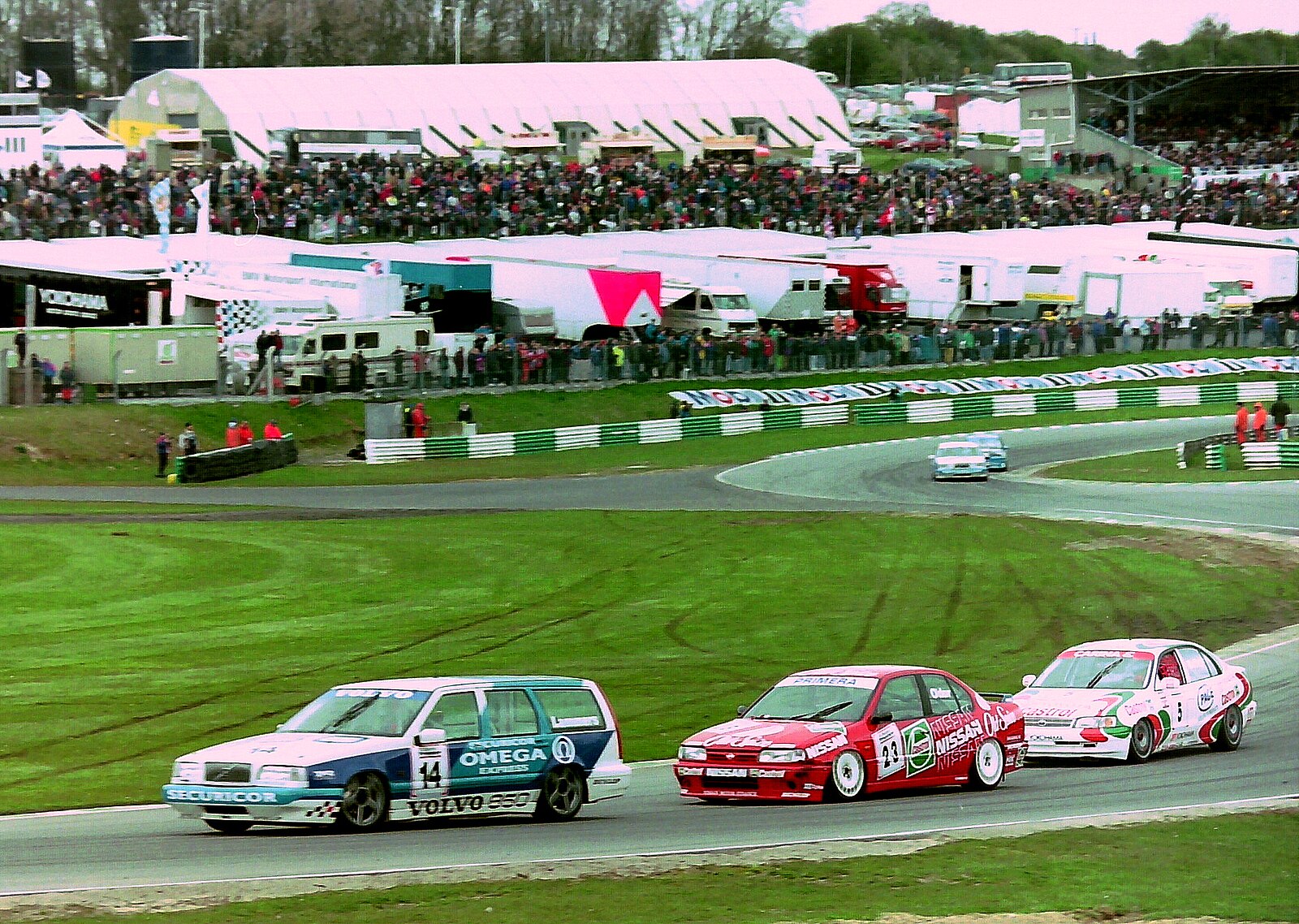
Alfa Romeo entered the fray with their 155, bringing along Formula One driver Gabriele Tarquini with them. Volvo also joined the growing list of factory backed teams with their some would say kooky, this author would say excellent, 850 estate. Other drivers were in a sense of disbelief seeing the boxy entry on media day but the car is now a modern cult icon.
Alfa, and in particular Tarquini, hit the ground running. He won the first five races at a canter, with the likes of Paul Radisich and John Cleland chasing him down. But all was not what it seemed…
Their advantage was attributed to the aerodynamic wing package, a myth since debunked by Tarquini himself, who states the engineering in the car was what made it better than the rest.
The ToCA rules stated teams had to build their cars based off their road-going counterparts. So many of these had to be produced in order for the car to be legal to race. Alfa exploited this rule by creating a ‘homologation special’ of the 155 – named the Silverstone (I would’ve thought an Italian team would choose the Monza but there we go…). This was purely to receive the aero advantage, much to the chagrin of other teams on the grid.
Many teams complained, rumour has it Ford’s Andy Rouse actually bought a 155 Silverstone, just to see how it was engineered. At Oulton Park, Alfa famously withdrew from the meeting in protest, having been told to run without the aero package on their car. For the next round at Donington, Alfa returned with the wings lowered. While not as fast, Tarquini was consistent enough to maintain his gap at the top of the leaderboard, with wins at Brands Hatch and Silverstone and a bunch of second placed finishes sealing the title.
For 1995, the competition was only getting stronger, with Formula One teams now getting involved. Renault were being backed by Williams, and Volvo by Tom Walkinshaw of Benetton and Arrows fame. With reigning champion Tarquini departing (though he would return midway through the season), Alfa signed up ex-F1 racer Derek Warwick. Aero was now also legal to avoid any issues like the season before.
At Vauxhall, John Cleland was so confident after pre-season testing, he told his team: ‘Clean it, put it back in the truck, and bring it to Donington, don’t change a thing.’ Confidence? The charismatic Scot had the ability to back it up too. The ageing Cavalier had one last dance before the Vectra would be introduced for 1996 – and it saved the best for last.
He didn’t have it all his own way though, Rickard Rydell, now in the Volvo 850 saloon, and Alain Menu in the Williams Renault Laguna were at times faster and staked their own claims to the title.
Menu was arguably the fastest over the course of the season, but the 1994 runner up suffered with teething problems between Williams and his Laguna. If he wasn’t winning he was out of the points. He took seven wins to Cleland’s six, including three of the last five races to help Renault to the manufacturers crown. Will Hoy, Menu’s Renault teammate, won the other two.
Rydell started the season strongly but a poor end to the season stunted his title hopes. He took just 13 points from the last six races of the season with a high speed spin into retirement at Snetterton being the nail in the coffin for the charismatic Swede.
Cleland was consistent and smooth in his Cavalier, giving the car the perfect swansong. A streak of seven podiums, including four wins, in mid-season helped his title bid. From 25 rounds, Cleland scored 18 podiums, and taking his second title in the process.
This one will have meant more to John, as his 1989 title always comes with the caveat of being won under the old class rules system where he was fastest in his class and secured the most points, but he rarely took the chequered flag. 1995 was different, he was the class of the field and earned it the right way.
For the majority of the season it was a three horse race, and with no less than eight different winners, 1995 was one of the closest seasons in a long time and a marker of things to come.
Leave a Reply