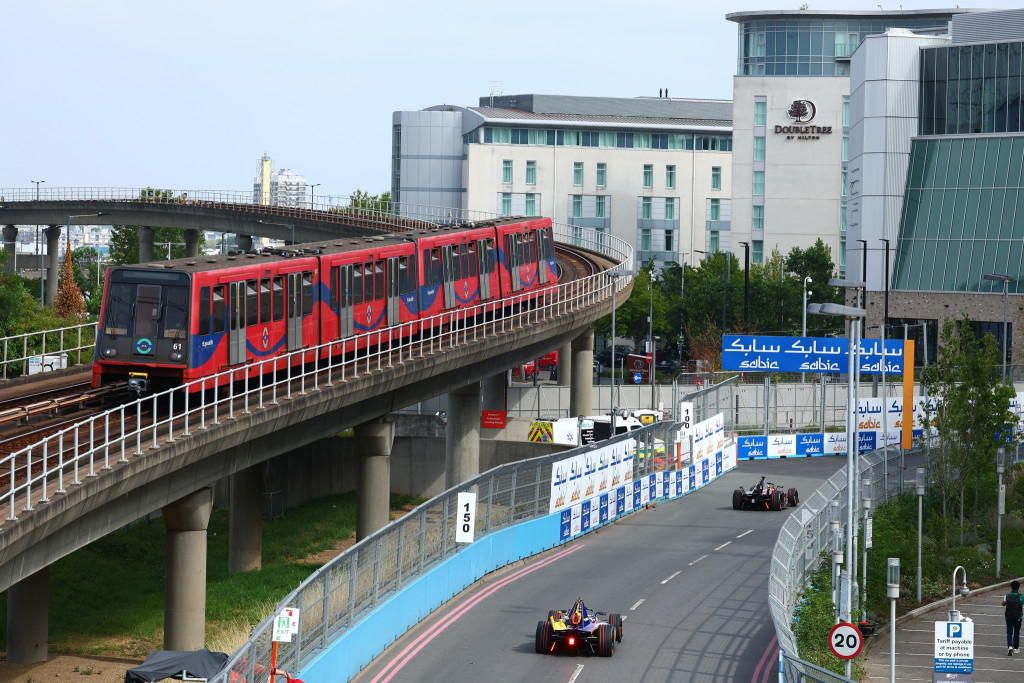
The famous dating app, Tinder, has been revealed to be the official “Sparking Connections” partner of the Hankook London E=Prix, taking place in August 2026 and marks a landmark first for the electric championship.
It is a significant moment for the dating app with this partnership highlighting key positioning across the modern dating world; joyful, unpredictable and built on the courage to make the first move.
This partnership is seen as a foundational principle where Formula E has key initiates such as FIA Girls on Track and the women’s test which are opportunities for women to showcase their talent, Tinder has the same principles for millions of people to show up across backgrounds and identities and creating opportunities, conections and participate in openness rather than outdated traditions.
Paolo Lorenzoni, VP Marketing EMEA at Tinder, said:
“What drew us to Formula E is that they reflect what we stand for as a brand. This is a sport that believes women belong at the front of the grid, not as a gesture, but as a conviction. At Tinder the best connections happen when everyone feels equally empowered to show up and go for it. We are proud to bring that energy to London.”
Ellie Norman, Chief Marketing Officer at Formula E, said:
“Tinder is a brand that understands the importance of creating genuine human connections, making it a natural fit for Formula E. We’re both focused on engaging a new generation through experiences that are inclusive, progressive and culturally relevant. The Hankook London E-Prix is where sport, entertainment and innovation come together, and we’re excited to welcome Tinder as our Official Sparking Connections Partner to create memorable moments for fans on and off the track.”
The Hankook London E-Prix takes place during the 15th and 16th August.
Blog
-
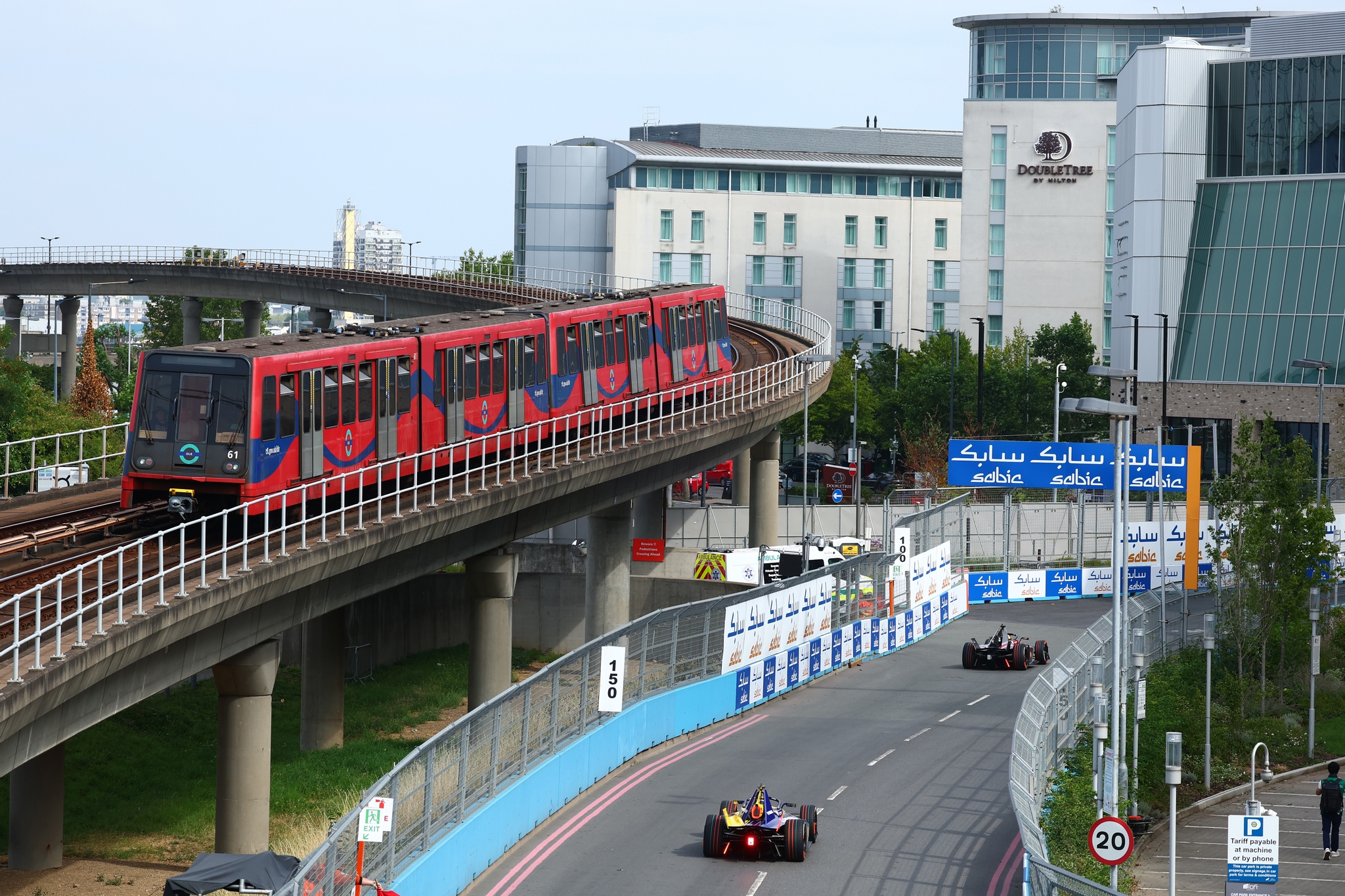
Tinder becomes the first dating app partner of Formula E ahead of the 2026 Hankook London E-Prix
-
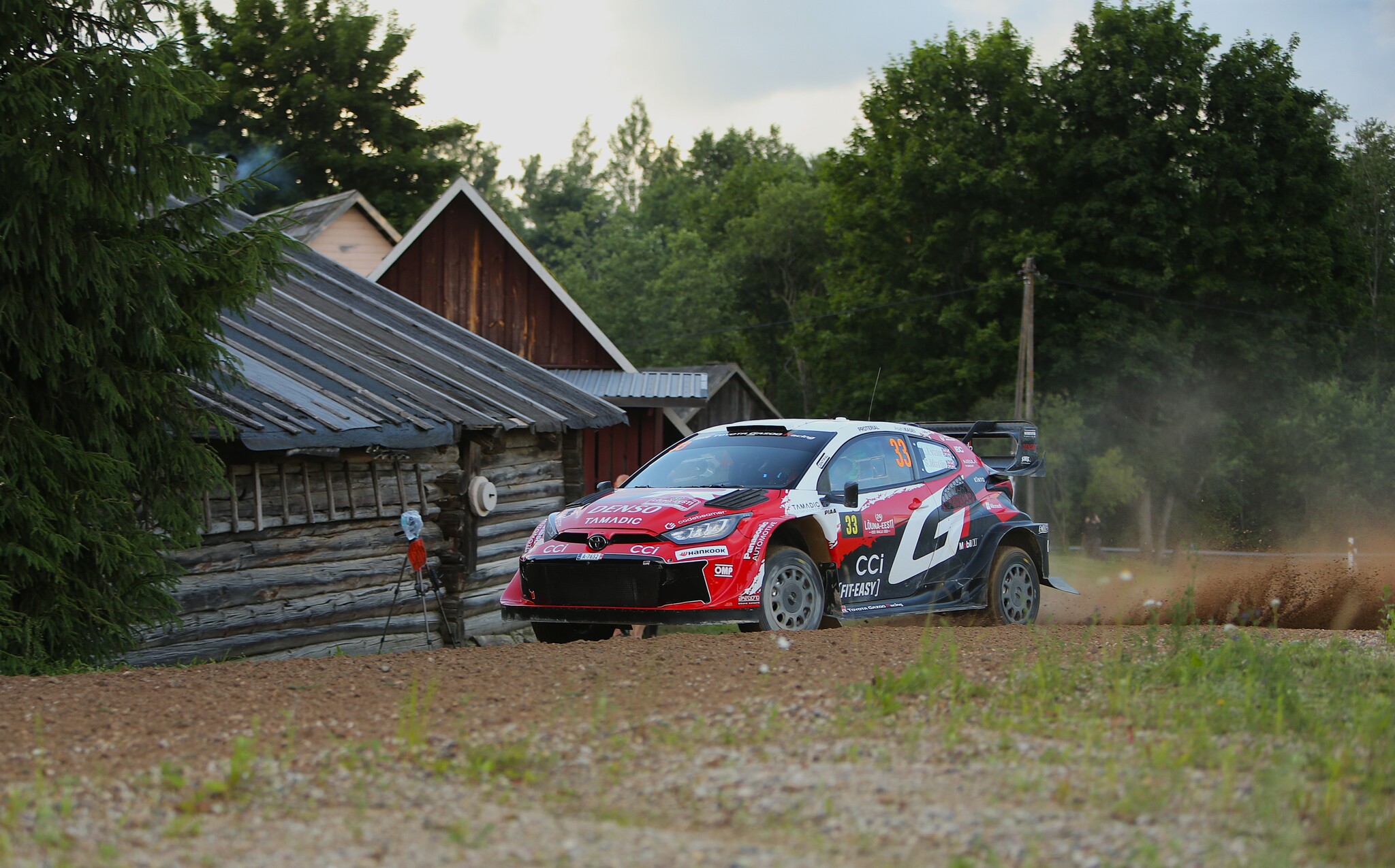
Rally Estonia 2026 Preview
The championship returns to the fast roads of Ott and Martins homeland. Now the crews will have eighteen stages over almost 302 kilometres. Last year, Oliver and Elliott stepped from their Yaris Rally2 into the top spec Yaris and promptly took stage win after stage win, ultimately taking their first overall championship win.
They would love to do this again this weekend, but they will have some serious competition from their teammates and also those at Hyundai and M-Sport Ford.
Let’s hear from the crews and take a proper look at the stages.
Toyota Gazoo Racing WRT
Elfyn Evans
“Greece was a challenging event for us, but we can look forward to something completely different on much faster roads in Estonia and Finland. It’s important to find a good feeling and prepare the car as well as possible for these events, and it was helpful to drive a national rally in Estonia last week to get used to the highest speeds once again. If it’s very dry in Estonia then there can still be some cleaning for us to do, but we just need to focus on doing our best whatever conditions we face.”
Sébastien Ogier
“To win in Greece was very important for us. Moving from there to Estonia will be a big contrast, and especially for me as I haven’t driven this rally for five years. I’m looking forward to being back, though. It’s one of the most spectacular rallies of the season, and a well-organised event with a great atmosphere. I enjoyed my test last week, getting back the feeling for high speed, and hopefully we can be competitive. I’m sure that it will not be easy, but I always enjoy a challenge like this and will give it my best shot.”
Oliver Solberg
“I’m really looking forward to going back to Rally Estonia. It’s a very special place to me after we took our first win there last year. It’s a really cool rally that I’ve always enjoyed: with the high speeds, massive jumps and excited rally fans, it’s a lot of fun. We haven’t had the easiest run of rallies recently, but now I’m going back to a rally where I have experience with this car, and I just want to try my best and see what we can do.”
Takamoto Katsuta
“After a good rally for us in Greece, I’ve got a good feeling to move onto very high-speed stages in Estonia and Finland, which are some of my favourite rallies. You have to be very committed in Estonia, especially on the second pass when the road gets rutted, but the margins are also very small at those speeds. All of my team-mates can also be very strong in these rallies, but I will try my best to achieve good results and take as many points as possible.”
Sami Pajari
“I’m really looking forward to these next two rallies in Estonia and Finland: they are my favourite ones on the calendar. I’m pretty happy with how we finished the last rally in Greece after a difficult start, we’re still in a good position in the championship, and at the same time our starting position should not be too bad for the next rallies and should allow us to be in the fight, so let’s see what we can do.”
Hyundai Motorsport
Thierry Neuville
“We’re heading into Estonia with confidence after two gravel rallies where we have consistently shown strong pace and fought for victory. Taking a win and a second place is encouraging, and our pre-event test also felt very positive. We’ve been competitive in Estonia in recent years, and if the conditions stay dry, they should suit us well. The key to this rally is finding the right balance between traction, precision and protection over the huge jumps, while having complete trust in the car. Our goal is clear: to fight for victory and score a lot of points to fight back in the championship.”
Adrien Fourmaux
“Estonia is a completely different challenge to Acropolis, instead of rough, slow and technical roads, you’re straight into some of the fastest stages on the calendar, so confidence is everything. I really enjoy this type of rally and we’ve completed a good test to prepare for it. We didn’t get the result we wanted in Greece, but that’s behind us now we are focused on the challenges ahead. Estonia gives us a fresh opportunity and if we can put together a clean and consistent weekend, I’m confident we have the potential to be competitive.”
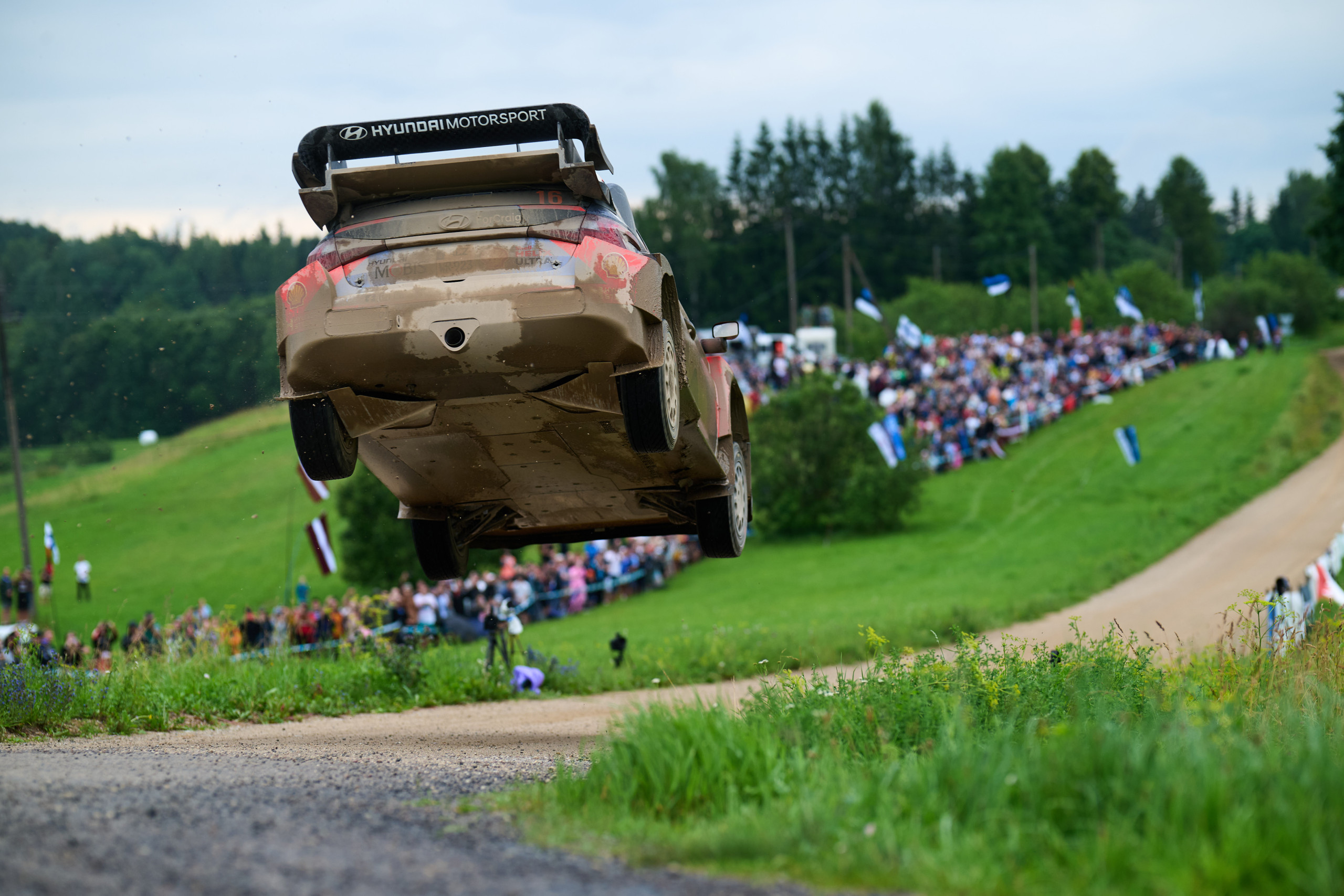
2025 FIA World Rally Championship
Rally Estonia 2025, 17-20 July 2025
Photographer: Romain Thuillier
Worldwide copyright: Hyundai Motorsport GmbHEsapekka Lappi
“I am very much looking forward to being back in the Hyundai i20 N Rally1 again, especially as it will be the last outing of this car at these super-fast events, which is cool to be part of. We used the pre-event test to find the correct balance with differentials, suspension, and downforce. If we nail our pace notes, the rest should be easy. It is hard to know exactly where we are on fast gravel, although the recent results have shown the car has performed well on this surface. My hope is to be fighting higher than the top five.”
M-Sport Ford WRT
Josh McErlean
“Estonia is always one of the fastest and most enjoyable rallies of the season, so I’m really looking forward to getting back out there. Greece gave us a solid platform to build from, and the aim now is to carry that momentum into Estonia. I really enjoy these types of events, so hopefully we can keep improving and come away with another strong result.”
Jon Armstrong
“I’m looking forward to going back to Estonia, I’ve been there twice in JWRC and also once in ERC with the Fiesta Rally2. The stages are completely flat out and the style of the surface is generally nicer for me as it’s a bit more sandy. It’s a good way to kick off the summer of speed in a Rally1 car!”
Mārtiņš Sesks
“This is the time of the year when we are as close as possible to our home country, and happy to call Rally Estonia our home rally this year. We’re hoping to see a lot of Latvian fans to feel as at home as possible! I’m looking forward to a great result here; I think we have a lot of positives to take from last year and we’re looking at having a competitive weekend in Estonia.”
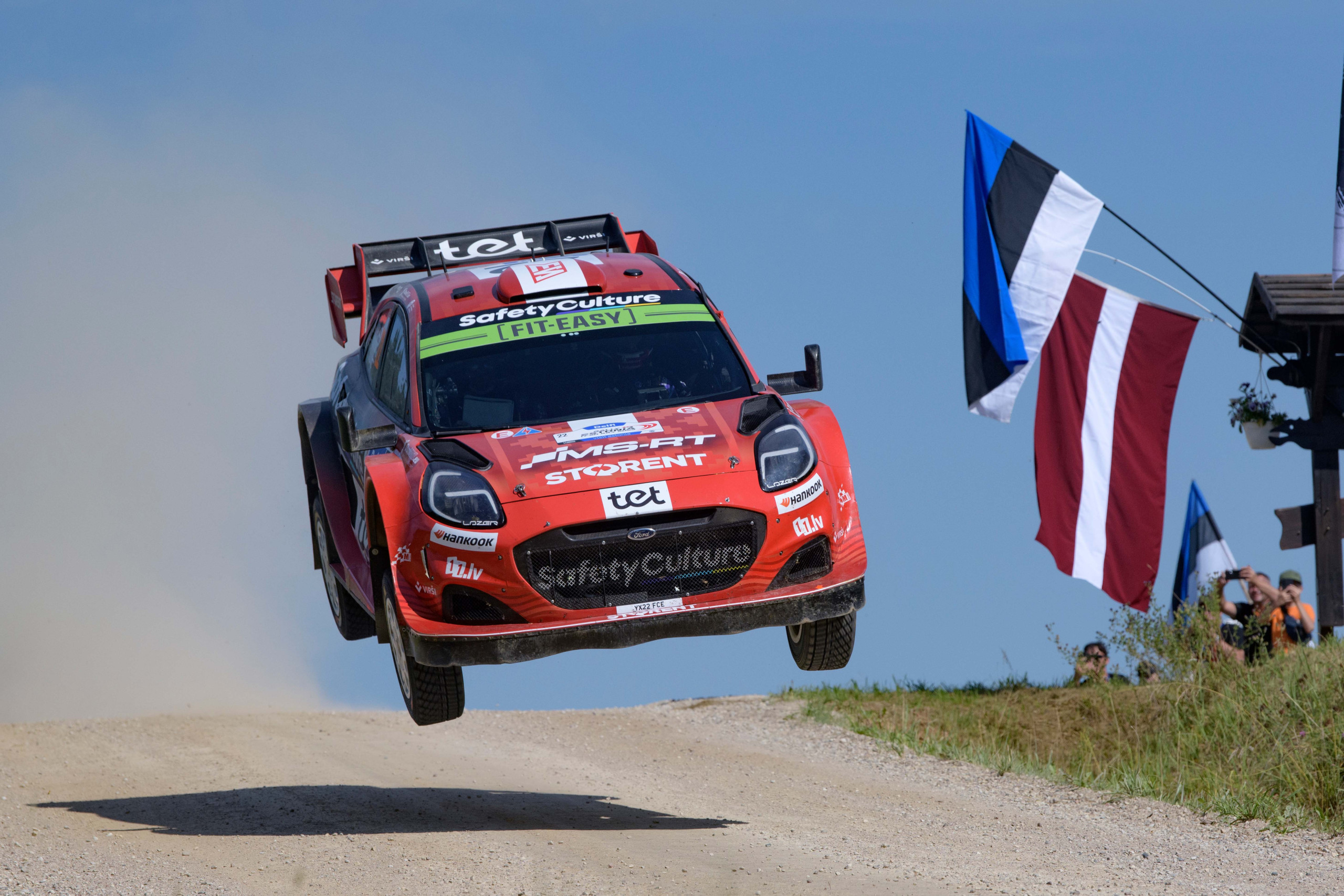
Romet Jürgenson
“Obviously, our home event in Estonia is one of the highlights of the season for us. There is a bit more pressure as well, but we have a lot of local support from our fans which definitely gives us this extra push to get the maximum out of ourselves and the car.
“Looking at last year’s pace, I think the goal will be to be up there fighting with the top guys. The route itself has stayed the same over the last few years, so the advantage for the Estonians is decreasing as a lot of drivers have knowledge of these stages; it’ll be a very even fight with small margins. I’m looking forward to it.”
In terms of the stages this is how the days look over the event.
Friday has seven stages over just under 104 kilometres, then Saturday has nine stages over almost 150 kilometres and then Sunday has just two stages and a total of just under 50 kilometres.
Summary
Road position is going to be hugely relevant this weekend and in particular Friday’s stages. Elfyn and Scott, plus Takamoto and Aaron will have the most tricky road position as the first two crews into the stage, they will be sweeping the road clear of the loose gravel and making the road cleaner and ultimately faster for those further back.
Oliver and Elliott were eighth on the road during the first day last year which gave them a good advantage to set the pace and build a lead. This year they will be third on the road which will make things harder, whilst Seb and Vincent, Adrien and Alex, Thierry and Martijn and finally Esapekka and Enni fill the lower positions in the top ten and will give them the best road conditions.
The action begins with shakedown on Friday morning and then the first stage starts at just after one o’clock local time.
-
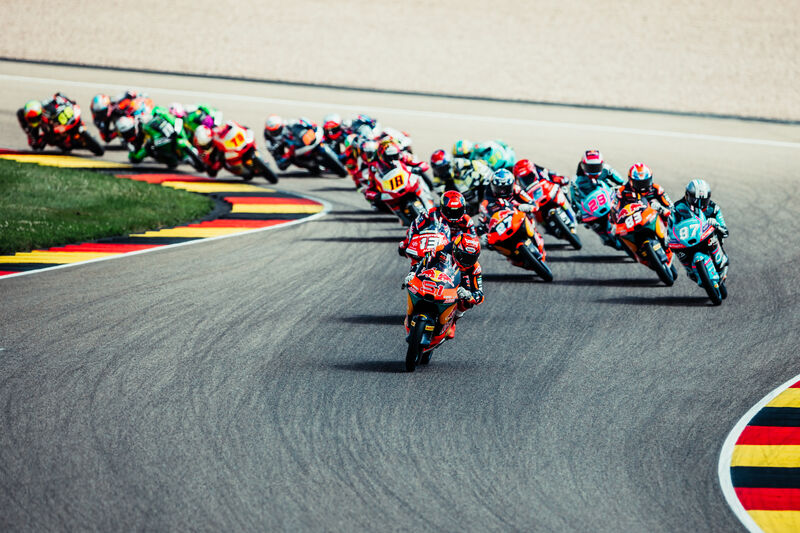
Uriarte Holds His Nerve to Win Sachsenring Showdown
If there was any doubt that Moto3 would deliver another thriller before the summer break, Sachsenring quickly put that to bed. Brian Uriarte (Red Bull KTM Ajo) turned pole position into his second Grand Prix victory of the season after fending off Championship leader Maximo Quiles (CFMOTO Gaviota Aspar Team) in a tense final-lap duel. Behind them, Matteo Bertelle (LEVEL UP – MTA) left his move until the very end to snatch another podium finish.
The weekend had already been eventful before Sunday arrived. Quiles escaped a heavy crash at Turn 7 during practice, while Guido Pini (Leopard Racing) suffered a violent highside at the same corner that left Adrian Cruces (CIP Green Power) with nowhere to go. Thankfully, both riders walked away.
David Almansa’s (Liqui Moly Dynavolt Intact GP) weekend never really got going. The Spaniard missed Friday’s running after developing a fever, briefly returned for Free Practice 2, but was later forced to withdraw from the remainder of the Grand Prix weekend.
Qualifying belonged to the rookies. Uriarte secured his first Moto3 pole position ahead of Marco Morelli (CFMOTO Gaviota Aspar Team) and Hakim Danish (AEON Credit – MT Helmets – MSI), creating an all-rookie front row. Five rookies filled the top eight on the grid, while Kiwi Cormac Buchanan (CODE Motorsports) celebrated his best qualifying result of the season with 11th.
When the lights went out, Uriarte wasted no time converting pole into the race lead. Danish initially tucked into second before Morelli muscled his way through at Turn 7, but the opening laps soon produced the first slice of Moto3 chaos.
At the start of Lap 2, contact between Valentin Perrone (Red Bull KTM Tech3) and Marcos Uriarte (Liqui Moly Dynavolt Intact GP) sent Perrone crashing out. Joel Kelso (GRYD Racing) and Nicola Carraro (Rivacold Snipers Team) were also forced into the gravel while trying to avoid the incident. Perrone looked sore after the crash but was later seen back in his garage, while Kelso, Carraro and Marcos Uriarte all managed to continue.
At the front, five riders began to edge away from the rest of the field. Uriarte led the train from Quiles, Alvaro Carpe (Red Bull KTM Ajo), Rico Salmela (Red Bull KTM Tech3) and Morelli, with nobody prepared to give an inch.
Further back, Casey O’Gorman’s (SIC58 Squadra Corse) race ended with a crash before Scott Ogden (CIP Green Power) also hit the ground a lap later. Ogden managed to restart and continue, Cruces crashed heavily, leaving Joel Esteban (LEVEL UP – MTA) with nowhere to escape. Esteban collided with the fallen machine and both riders slid into the gravel, bringing another heart-in-mouth moment to an already hectic race.
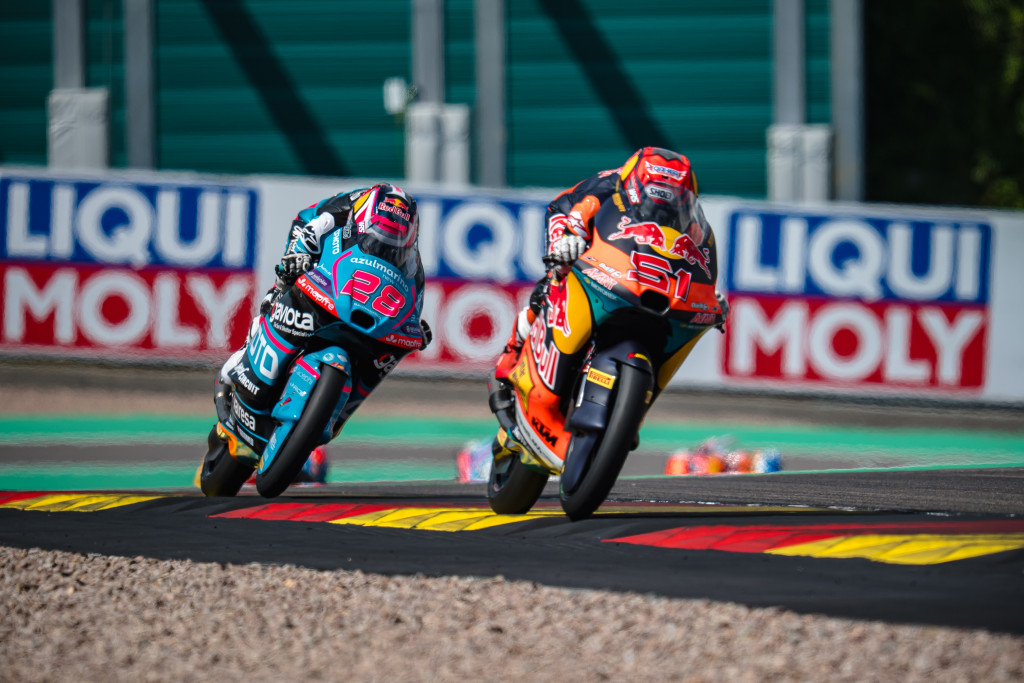
Pirelli Press Office The fight at the front continued to intensify. Carpe looked set to challenge for another podium until one of the biggest saves of the season. A huge moment at Turn 7 almost launched the Red Bull KTM Ajo rider into the air, but somehow he wrestled the KTM back under control. The spectacular save cost him valuable time and dropped him out of podium contention.
A few laps later it was Uriarte’s turn to make a mistake. Running wide at Turn 2 briefly handed the lead to Quiles, although the Championship leader couldn’t make it stick for long as Uriarte reclaimed first place just a handful of corners later.While all eyes were fixed on the battle for victory, Bertelle quietly worked his way into podium contention. The Italian reeled in Morelli and Salmela before moving into fourth with just a handful of laps remaining, putting himself firmly in the fight for the final podium position.
With four laps to go, Quiles attacked again to reclaim the lead, setting up a fascinating head-to-head between the two title contenders. Every lap they traded fastest sectors, every corner they searched for an opening, but neither rider could break the other.
As expected, it all came down to the final lap.
Quiles led across the line to start the last tour but a small front-end moment at Turn 3 proved costly. Uriarte needed no second invitation, diving through into the lead before immediately defending every inch of the Sachsenring circuit.
Behind them, Bertelle, Morelli and Salmela were locked in their own battle. As the trio powered towards the chequered flag, Bertelle timed the slipstream perfectly to steal third place by just seven thousandths of a second, denying Morelli a maiden Moto3 podium.
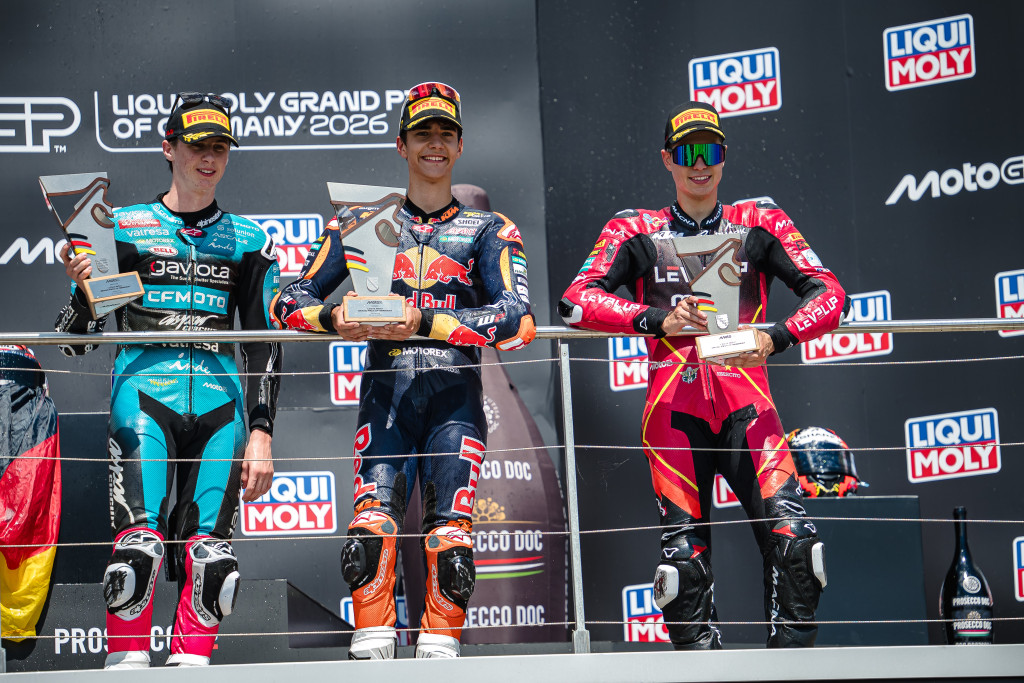
Pirelli Press Office Uriarte crossed the line to secure his second Grand Prix victory of the year, while Quiles settled for second. Despite missing out on the win, the Championship leader extended his advantage once again and heads into the summer break firmly in control of the title race. Bertelle completed the podium after another intelligent race, while Morelli narrowly missed out in fourth. Salmela continued his impressive rookie campaign with fifth, matching his career-best Moto3 result.
Adrian Fernandez (Leopard Racing) was the highest-finishing Honda rider in sixth ahead of Jesus Rios (Rivacold Snipers Team). Veda Pratama (Honda Team Asia) collected more valuable championship points in eighth, Ryusei Yamanaka (AEON Credit – MT Helmets – MSI) celebrated his first top-ten finish of the season in ninth, and Eddie O’Shea (GRYD Racing) rounded out the top ten.
Just outside the top ten, Carpe recovered to salvage 11th after his spectacular near-highside. Danish crossed the line 12th ahead of Buchanan, Kelso and Pini, who completed the points-paying positions.
-
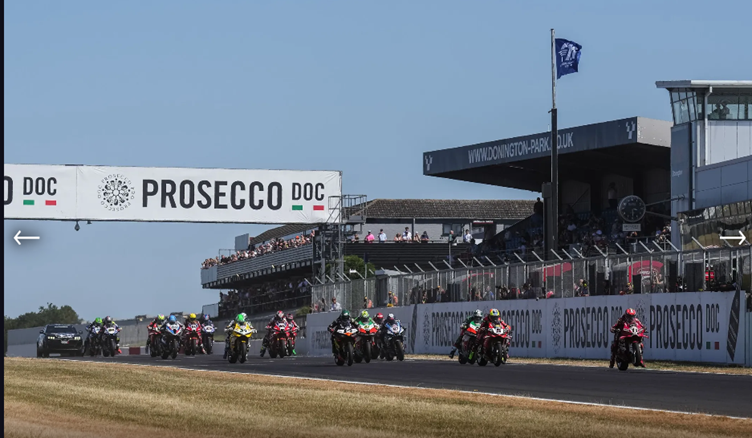
WorldSBK: Ducati dominate Donington as Bulega winning run finally ends
Iker Lecuona finally broke through to win his first WorldSBK race at Donington Park, but Nicolo Bulega was soon back to his dominant winning ways as Ducati wrapped up two titles only two thirds of the way through the season at the Prosecco DOC UK Round.
Race 1
When Iker Lecuona sliced into the lead at the start of Race 1, so began a titanic battle that saw the aruba.it Ducati pair spend the virtually the entire race separated by a less than a quarter of a second. A failed early move at the Melbourne hairpin a handful of laps into the race proved to Bulega he would need to try harder than ever before this year to extend his unbeaten run.
The next flashpoint came in the closing stages where with three laps to go Bulega got ahead at the turn nine chicane. Lecuona however was straight back past at Melbourne. The battle resumed on the next lap where Bulega this time attempted a block pass at the same section of track but Lecuona was wise to it.
Onto the final lap, it once came down to the penultimate corner at Melbourne hairpin. Lecuona just had enough traction to fend off Bulega by less than two tenths of a second to win his first WorldSBK race, end Bulega’s run of 25 straight wins stretching back to last October.
Despite their squabbling on track the rest of the field was very far behind. Yari Montella (recently renewed with Barni for next season) secured a comfortable podium once he passed Sam Lowes, who ended up battling an impressive Tommy Bridewell for fourth. Lorenzo Baldassari just held off Alex Lowes for sixth while the other Brits of Jonathan Rea failed to finish and Tarran Mackenzie failed to start the race respectively.
Montella’s teammate Alvaro Bautista was stuck battling the BMW and Yamaha riders for the lower points places while Jake Dixon ended his first home race in WorldSBK in a lowly 18th, with Rea clearly the fastest Honda rider of the day.
Race 1 Results
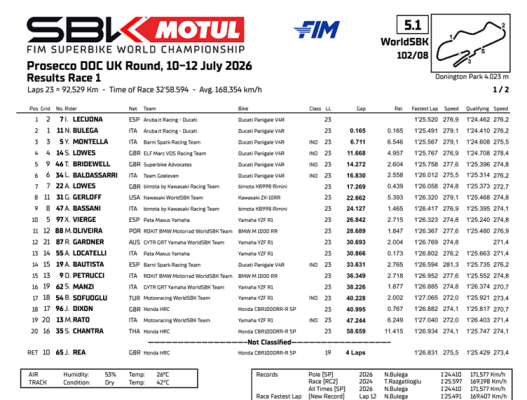
Image Credit: WorldSBK Tissot Superpole Race
From second place it was again Lecuona who got the holeshot into Redgate. But coming through Goddards on the second lap, the Spaniard crashed out and later retired with three laps to go.
This left Bulega to see off Montella who had also jumped ahead of him at the start. On lap five of the ten lap affair, Bulega scythed past at the Melbourne hairpin to get back to winning ways while also retaining pole for Race Two.
After the passing of their team founder, Sam Lowes was able to secure a poignant podium finish. His brother only just managed to come behind home after his charging teammate Axel Bassani nearly sealed the deal for fourth at Melbourne on the final lap.
Baldassari was just clear of a sparring Bridewell and Xavi Vierge while Garrett Gerloff denied Rea a point and better grid spot for Race Two in ninth. Meanwhile, Lecuona would start tenth for the afternoon race but at least he and Bulega had now secured the 2026 Teams’ Championship despite it only being July!
Tissot Superpole Race Results
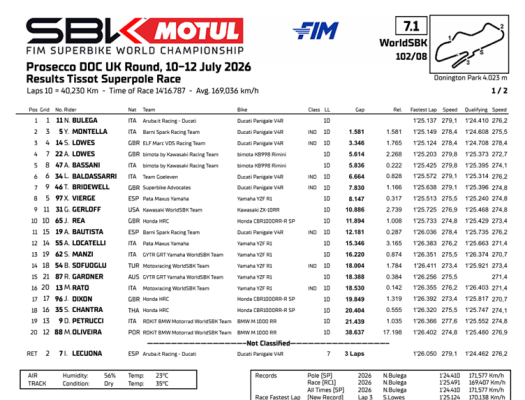
Image Credit: WorldSBK Race 2
Montella came oh so close to getting around Bulega at Redgate but instead the factory Ducati rider held on and rode off into the distance. Without Lecuona on the front row to challenge him, it was back to usual for Bulega while his teammate had little difficulty charging through the field from 10th.
That is until Lecuona encountered Montella. It took Lecuona barely any laps to get to the final podium position but it would take until the final third of the race before he could pass Montella for second at Goddards with eight laps to go.
Bridewell’s Ducati engine tragically blew up early on when he was looking at another strong finish. The battle for fourth therefore was between the Lowes’ brothers before Bassani again went on a charge. Sam fell to seventh behind an impressive Gerloff while Baldassari and Vierge saw off Bautista for the lower top 10 positions.
Rea came home 14th and admitted that unlike other rounds this year he had enjoyed himself this weekend on his wildcard outing for Honda. The BMW’s and Yamaha’s had nothing to shout about nor did the other Honda’s as Ducati romped to the Manufacturers’ Title after just eight of 12 rounds had been completed in 2026.
Race 2 Results
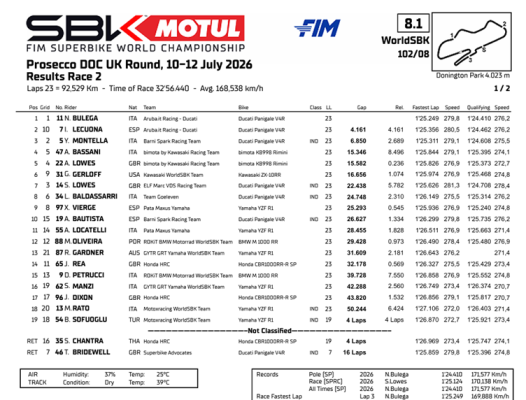
Image Credit: WorldSBK Feature Image Credit: WorldSBK
-
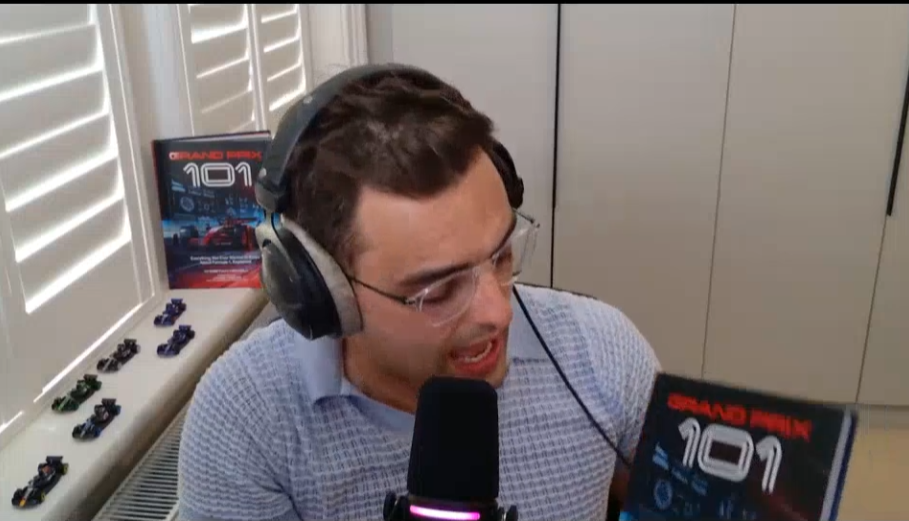
“A piece of Formula 1 that will teach generations to come”-Grand Prix 101 Review
Grand Prix 101-A piece of Formula 1 that will teach generations to come-Book Review
When I first saw Grand Prix 101, the first thing that grasped my attention was the cover. the striking aspect of the text, Formula 1 car and colours are striking for anyone. The cover does not do the book justice for the amount of insightful information contained within this book.
Having a chance to interview the author, Christian Hewgill, a month prior to the launch, my excitement for the book sky rocketed. The amount of detail Christian went into about not only the book but also inside the book blew my mind.
I’ve been following F1 since 2020 and while I will never know everything about the large and ever expanding sport as the history books gain new chapters every race, Grand Prix 101 has allowed my limited capacity to gain more information of this sport that we all love.
The Chapters Assist with the learning:
Grand Prix 101 has been divided up into 7 chapters with subchapters to answer the core questions about F1. These questions delve deep into the core fundamentals and DNA of Formula One.The Chapters are divided as the following:
– The Rules
– The Teams
– The Drivers
– The Cars
– The Circuits
– The Races
– The TechnologyCollectively, the 7 chapters answer 50 questions, each scaling on length, information and funny humour to take away from certain serious points of the book as well as help the reader understand the point even more which is something that many books potentially should lean into.
The Information:
Grand Prix 101 dives deep into both technical and sporting side of the sport to make it understanding to everyone, from someone who has never watched a Formula 1 race to someone who has watched every session of the season.As mentioned, there are jokes at points of the book which fit quite well, others which don’t hit as well as others which is bound to happen when so many jokes happen at once.
The Visuals :
For me, I am a visual learner, so having so many pictures which assist the user to understand so many aspects of Formula 1 is grately appreciated. Spanning across all eras of Formula 1, the visuals of the cars, drivers and tracks all fit the schema very well and really add to the book’s performance.The Conclusion:
Overall, Grand Prix 101 captures the essence of the Pinnacle of Motorsport while not only answering all 50 questions raised, but stapling itself as a book that will teach generations. Everyone involved in the book has done an amazing job and it will be one I will be recommending to everyone I know if they want to learn more about Formula One.
-
Rally Of the Gods, The Acropolis Rally – Sunday’s Report
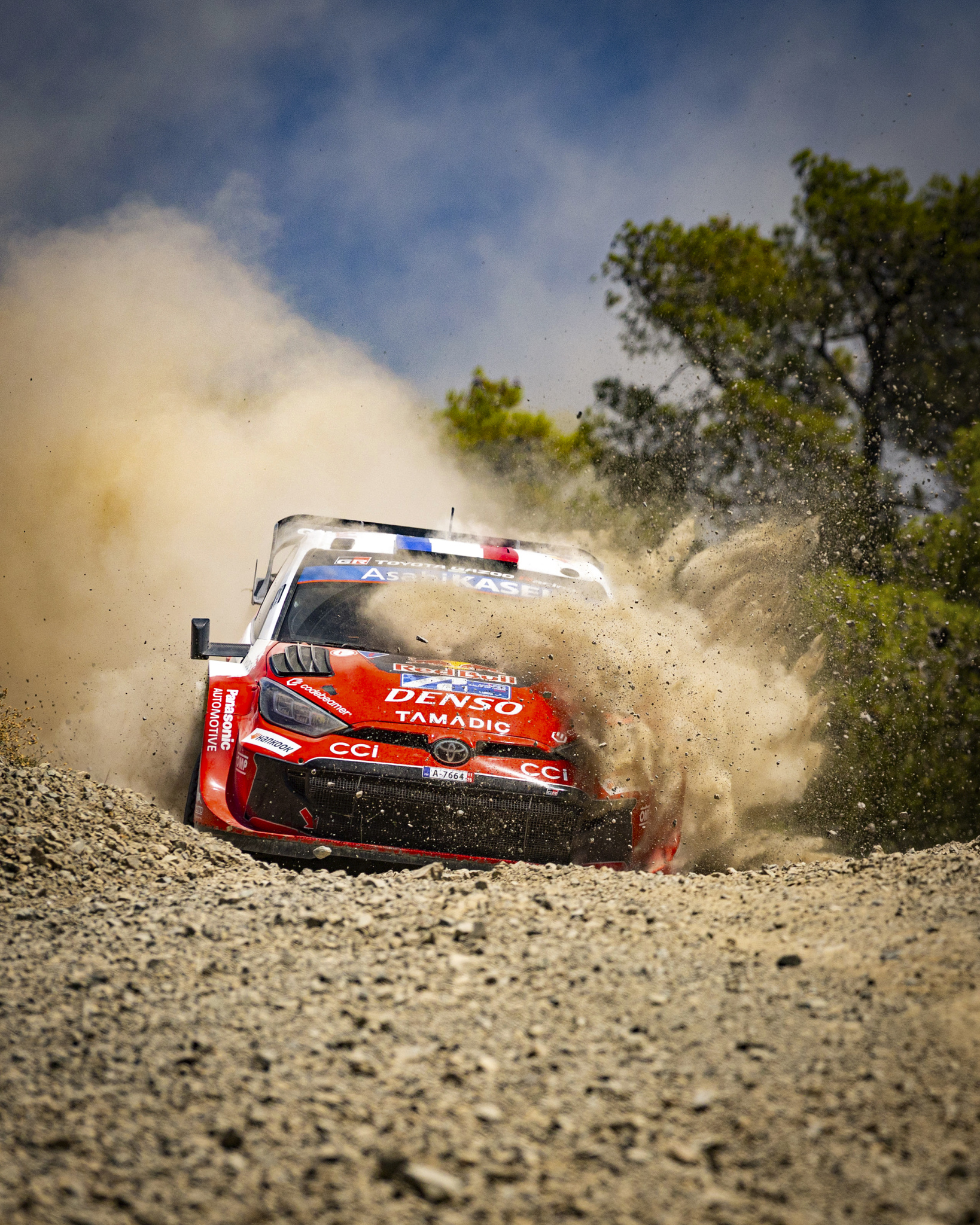
Onto the final day then of this very tricky rally and the crews had four stages and 84 kilometres ahead of them to tackle the challenge was not over by any degree. Jourdain would open the road throughout the day, whilst Jon would follow him into the stage and would still be cleaning the road for the rest of the crews coming behind.
First up then was SS14 Aghii Theodori 1, a 25-kilometre stage to start the day. Adrien would set the pace from Seb and Thierry. There was a lead change as Seb passed Thierry, the gap between them just 1.3 seconds! After Elfyn’s problems at the end of Saturday, it was crazy to see him and Scott get another puncture on the first stage of the day, particularly given that they were looking to move up the standings. At least they didn’t have to stop to change the wheel during the stage.
Onto SS15 Loutraki 1 the 16-kilometre stage and what would be the rally ending powerstage. Seb was again fastest from Thierry and this time Takamoto. Adrien who had been running and holding third overall suffered a puncture and lost two positions and was now behind Sami and Elfyn and in seventh overall.
After a quick service break came SS16 Aghii Theodori 2 and Seb was fastest from Sami and Adrien. There was drama though for Thierry who suffered right-rear and left-rear punctures and lost 53 seconds to Seb, and this meant that it looked likely now Seb and Vincent would take victory. Sami was also moving up as he passed Josh for fourth position after the Puma crew got beached for thirty seconds or so on the edge of the road before getting going again.
We came then to the final stage, SS17 Loutraki 2 and it was a stage win for Seb from Sami and Thierry, Takamoto fourth fastest, whilst Elfyn took the final power stage point. This gave Seb and Vincent victory, with Thierry and Martijn second. Takamoto and Aaron finished third as well giving them good points for the championship.
Later the same day there were some penalties of a whole minute given to Josh and Adrien for seatbelt infringements. Adrien’s was from stage twelve on Saturday, whilst Josh’s came on Sunday’s penultimate stage. All of this meant that Sami moved into fourth and Elfyn up to sixth.
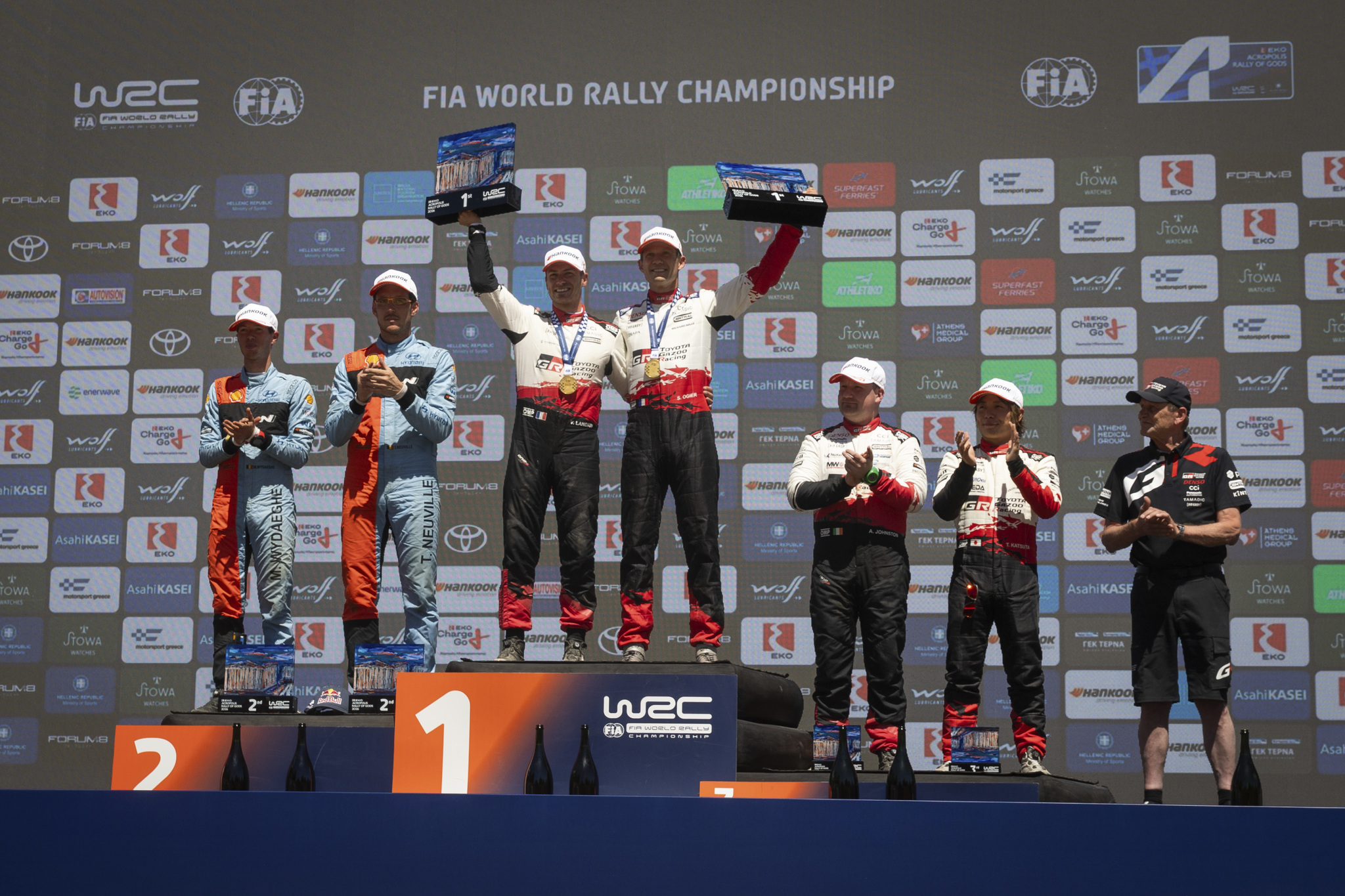
Here’s the final standings and we’ll hear from the drivers as well.
Final Overall Classification – Acropolis Rally
1 S. Ogier V. Landais Toyota GR Yaris Rally1 3:36:40.7 2 T. Neuville M. Wydaeghe Hyundai i20 N Rally1 +58.3 3 T. Katsuta A. Johnston Toyota GR Yaris Rally1 +3:04.8 4 S. Pajari M. Salminen Toyota GR Yaris Rally1 +5:02.2 5 J. McErlean E. Treacy Ford Puma Rally1 +5:55.5 6 E. Evans S. Martin Toyota GR Yaris Rally1 +5:54.9 7 A. Fourmaux A. Coria Hyundai i20 N Rally1 +6:08.7 8 M. Sesks R. Francis Ford Puma Rally1 +8:05.8 9 R. Virves J. Viilo Skoda Fabia RS +9:50.1 10 A. Mikkelsen J. Listerud Skoda Fabia RS +10:52.5 Toyota Gazoo Racing WRT
Sébastien Ogier
“It feels good to win the Acropolis Rally again after many years. It seems like the Greek gods were with me once more! Like often here, it’s been a very tough rally, particularly for the tyres, so I’m glad that we were able to stay out of trouble this time. It was very close with Thierry and there was no chance to relax, even in the Power Stage because it was very rough. I tried to drive as gently as I could, so I was surprised by the time, but I’m very happy to take the maximum points, which is exactly what we needed.”
Takamoto Katsuta
“It’s very good to finish on the podium after such a tough rally. It was difficult for us in the beginning running second on the road, but we were expecting this, and we had a clear plan to try and avoid problems and mistakes and just manage the situation. It worked out very well, so thank you to Aaron and to the team; we had no issues with the car at all. It’s been a good weekend and I’m looking forward to the high-speed rallies coming up.”
Sami Pajari
“It was a proper Super Sunday for us today and I think we need to be really happy about that. The beginning of the rally was very difficult for us, and it was tricky to recover from that, but I think that we got the most out of it that we could. We managed to make up quite a lot of positions and also take eight extra points from Sunday, so it’s really not been too bad an event in the end and we’re still in a good position in the championship with some nice rallies to come for us.”
Elfyn Evans
“It’s been a tough weekend, in line with what we were expecting beforehand. After a difficult start on Friday, things were actually moving in the right direction and not looking too bad by Saturday afternoon, but then we got the puncture in the last stage. We tried to give it a good go today, but I touched a bank in the first stage which pushed the tyre off the rim. I’m disappointed with how it’s turned out but that’s the way it goes sometimes, and we just have to move on to the next one.”
Oliver Solberg
“I think we did the best that we could today. We at least managed to keep Elfyn behind us in the Super Sunday standings to take one point, but I don’t think it was possible to do more from our starting position. It’s been another blow this weekend and I’m very disappointed; it’s been tough lately with these little mistakes. I just need to keep believing and try to reset and find a better way forward, going into some rallies that I know well and am looking forward to.”
Hyundai Motorsport
Thierry Neuville
“All in all, I have mixed feelings at the end of this rally. I’m obviously very disappointed not to be able to fight for the victory until the very end, but on the other hand I am very happy about our pace and the improvements we demonstrated this weekend. There are a lot of positives to take from Acropolis Rally, and we’ve also scored a solid haul of points. This gives us a good opportunity to get back into the championship fight, which was looking quite difficult for us. The fact that the championship leaders did not score many points is also good for us. With more gravel rallies to come, I hope we can carry this momentum forward.”
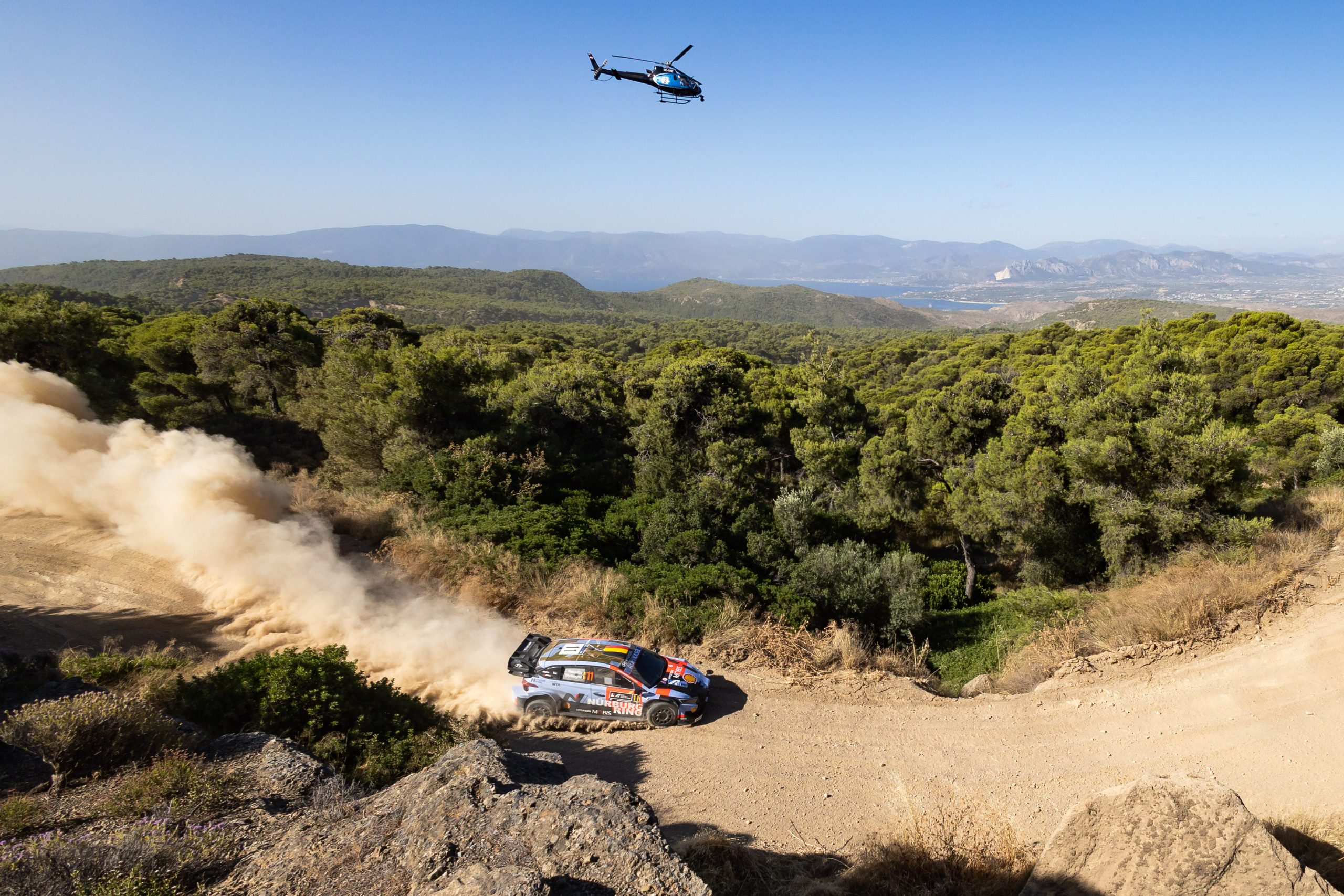
2026 FIA World Rally Championship
08 Round, Acropolis Rally
25-28 July 2026
Photographer: Dufour Fabien
Wordwide copyright: Hyundai Motorsport GmbHAdrien Fourmaux
“I think we deserved much more from Acropolis Rally. While I know it is a lottery, it felt like whenever I pushed I avoided punctures, but whenever I tried to be careful, I would get one. It’s almost unbelievable. In the end, it’s a huge shame, but overall, it has been a positive rally. We had the pace and were fighting for the win at the beginning before our issues. It’s frustrating for the championship, as I had high hopes of closing the gap in the points, and it hasn’t gone to plan. However, there is plenty for us to take into Estonia and beyond.”
Dani Sordo
“It has been a difficult rally for us. It started well, but the puncture on Friday took us out of the fight. We lost even more time with our second puncture on Saturday, and after that we were not confident with the tyres or the grip. In the end, we decided to retire the car before the Power Stage to give the team as much flexibility as possible for the two fast gravel events.”
M-Sport Ford WRT
Josh McErlean
“It’s been really important, I think, to get a result like this – for me and Eoin, and for the team. It’s been a while since everyone’s had a result, and it was obviously a very challenging weekend with the rocks, the puncture risk and everything that comes with that. We made it a little difficult for ourselves going into the last stage, sliding into the ditch on the previous one, then having to push to protect the position for the final stage. But we’re very happy; it’s the best result we’ve had so far.” (These comments were made before they were given the minute penalty taking them down to sixth).
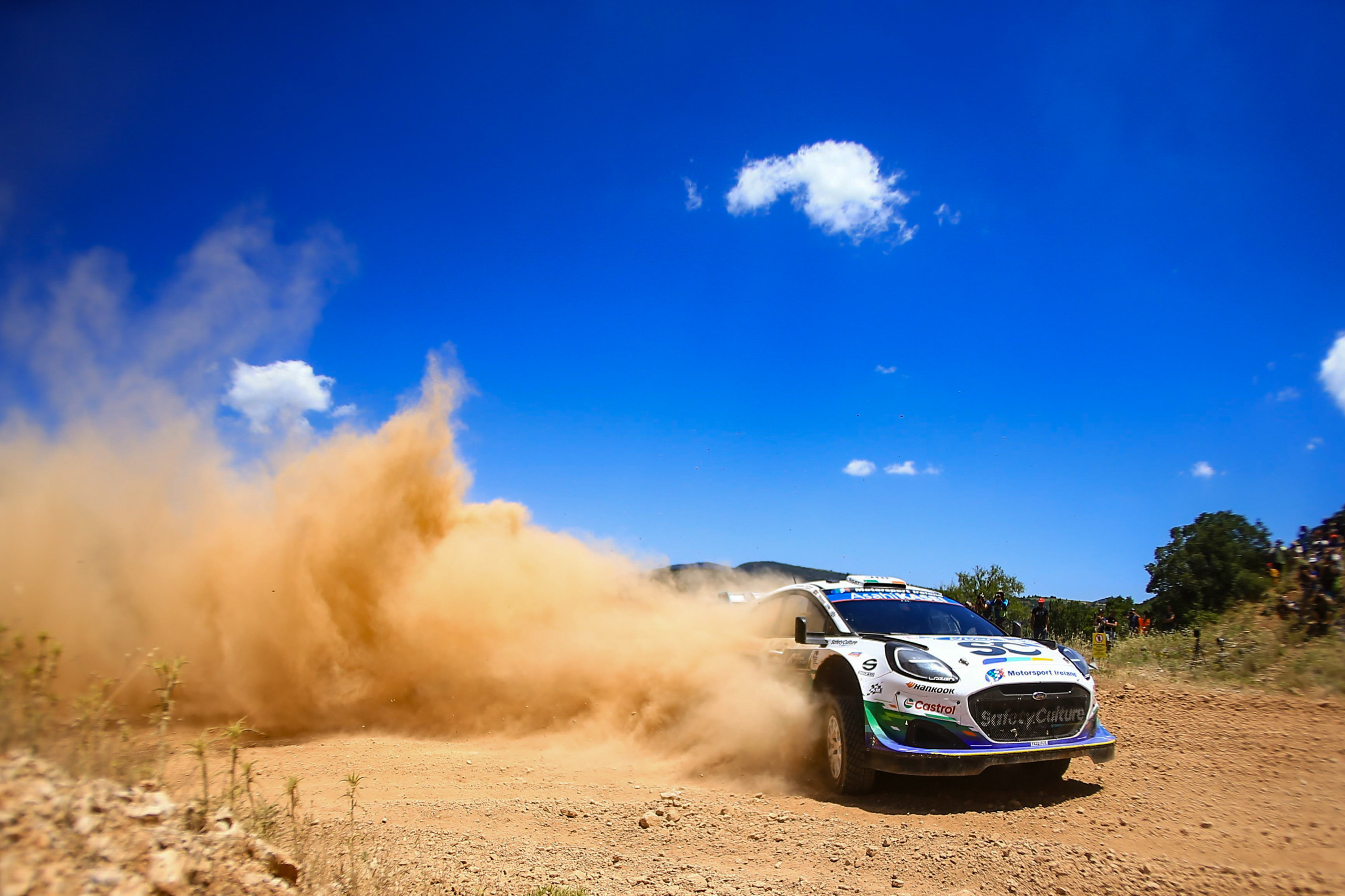
Jon Armstrong
“So that’s the Acropolis Rally finished. The first day went quite well to begin with – we made the most of our road position and got up to third overall with our first stage win. But then we had a technical issue and a couple of punctures, so we had to retire for the day. We spent the rest of the weekend road-sweeping, which was good learning, if a bit difficult after being on such a high the day before.
“There are still plenty of positives to take away, though – the pace we showed from that road position was really encouraging. We’re looking forward to the fast gravel rallies now and seeing what we can do there. It was a tricky one, a case of what might have been, but that’s how the Acropolis can be.”
Mārtiņš Sesks
“Overall, I think the rally was okay, in the sense that we didn’t make any big mistakes – maybe we were lacking a little pace on Saturday morning, but otherwise we did a decent job from our side. It was a shame about the issue in service, which cost us time, but the team made a great effort to keep us on track. Now I’m looking forward to the next rallies.”
Jourdan Serderidis
“We had a fun rally, with a wonderful itinerary and some super nice stages. Unfortunately, the mechanical issues we had prevented us from getting the result we’d hoped for. But we still had a very good run, a very good drive, and made good progress with our driving, so on that side we’re quite happy. It’s amazing to drive in front of all the Greek supporters. All in all, still a nice weekend.”
Romet Jürgenson
“Obviously the mistake happened quite early on – that’s squarely on me and it’s unfortunate. But after that, on Saturday, we showed some decent pace and could improve on a few things. On the positive side, the pace was good on the first pass of the new stages, which is driven purely by pace notes, and I think that shows that side is decent. And today, second on the Power Stage as well – so there are these little positives to take. But overall, I’m sorry for the team that I made the mistake. Next time we’re in Estonia, so we’ll go flat out there.”
Summary – The Podium
It was a great win for the French crew in their Yaris and it’s brought them into the title fight. It’s fair to say they benefitted from a good road position on Friday and once they got ahead of Thierry and Martijn and then the Belgian’s suffered their double puncture the win was in their hands of Seb and Vincent.
For Thierry and Martijn it was a case of what might have been as they battled their old foe again for victory which was then ended early with the double puncture. It was good though to see Hyundai on the pace with their two permanent crews and perhaps in the coming rallies they will make their way to the top step again.
Finally, for Takamoto and Aaron, considering they were second on the road through Friday it was a very good drive to third overall, keeping themselves out of trouble. This delivered them a well-deserved podium and great points for their championship challenge.
-
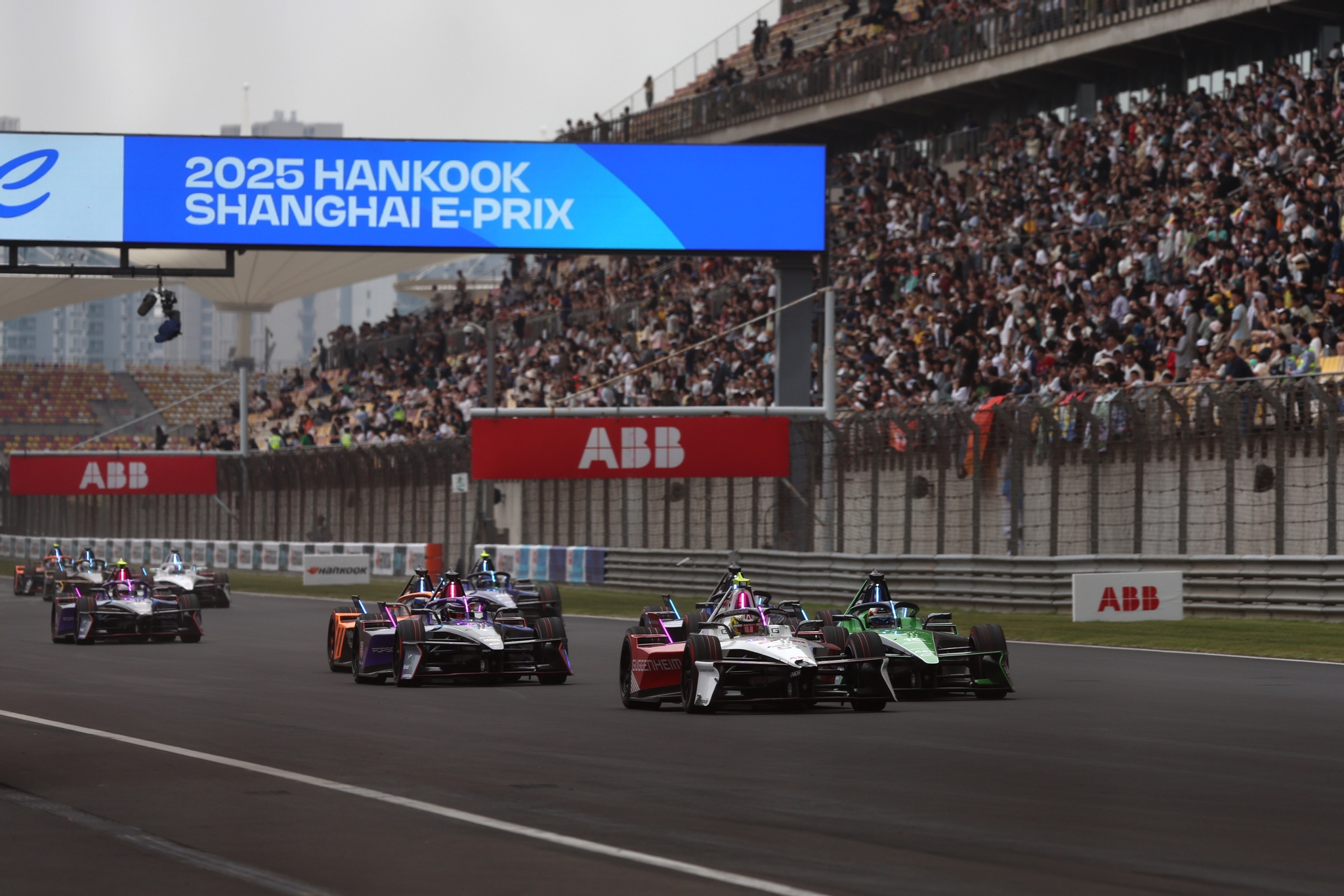
Formula E Season 12 Rounds 12 and 13: Shanghai E-Prix Preview and Predictions
Formula E Season 12 and the Gen3 Evo era is drawing to a close, but we still have 3 more weekends of double headers coming up! First up is Shanghai!
This circuit is an alternate version of the Grand Prix layout F1 fans will be aware of. With a shorter version, the one 1km long straight eradicated and replaced with a smaller run and a chicane for energy management, this circuit delivered chaotic races last year and this year is set to be the same.
The first race will see pit boost return where drivers have to stop for their mandatory pitstop of energy when they are between 40 and 60% of energy remaining.
The second race will see a return to 2 attack modes with no pit boosts.
Predictions
Round 12:
Pole: Antonio Felix Da Costa
Da Costa was on a good run in Sanya until a penalty ruined his chances of a podium finish. Bouncing back is something DAC can do and something I think will happen in Shanghai
Winner: Mitch Evans
Evans needs strong results in these final rounds in Season 12 if he wants to fullfil his and Jaguar’s vision if a maiden drivers championship before he departs the team. Could Shanghai be the start? I think so!
Podium: One Porsche and one Andretti
The Porsche and Andretti teammates have all had highs and lows throughout Season 12 and finishing with at least 1 more podium will surely be the target for these drivers. As Andretti departs the Porsche family, they will want to secure at least 1 more podium with their factory manufacturers.
Round 13:
Pole Position: Felipe Drugovich
The young Andretti driver has shown good pace throughout Season 12 and, despite a few mistakes, has really picked up his maturity and race craft since his debut for the American outfit in season 12.
Race winner: Felipe Drugovich
Shanghai race 2-Where a rookie wins? I think it’s likely! Following the footsteps of his world champion teammate Jake Dennis in Sanya.
Podium: 2 Stallentis
From Porsche power to Stallantis power. The DS Penskes powered their way to a 1-2 finish last year in Shanghai and I think their power train can do it again this year! As a powertain that is…not as a team….
-
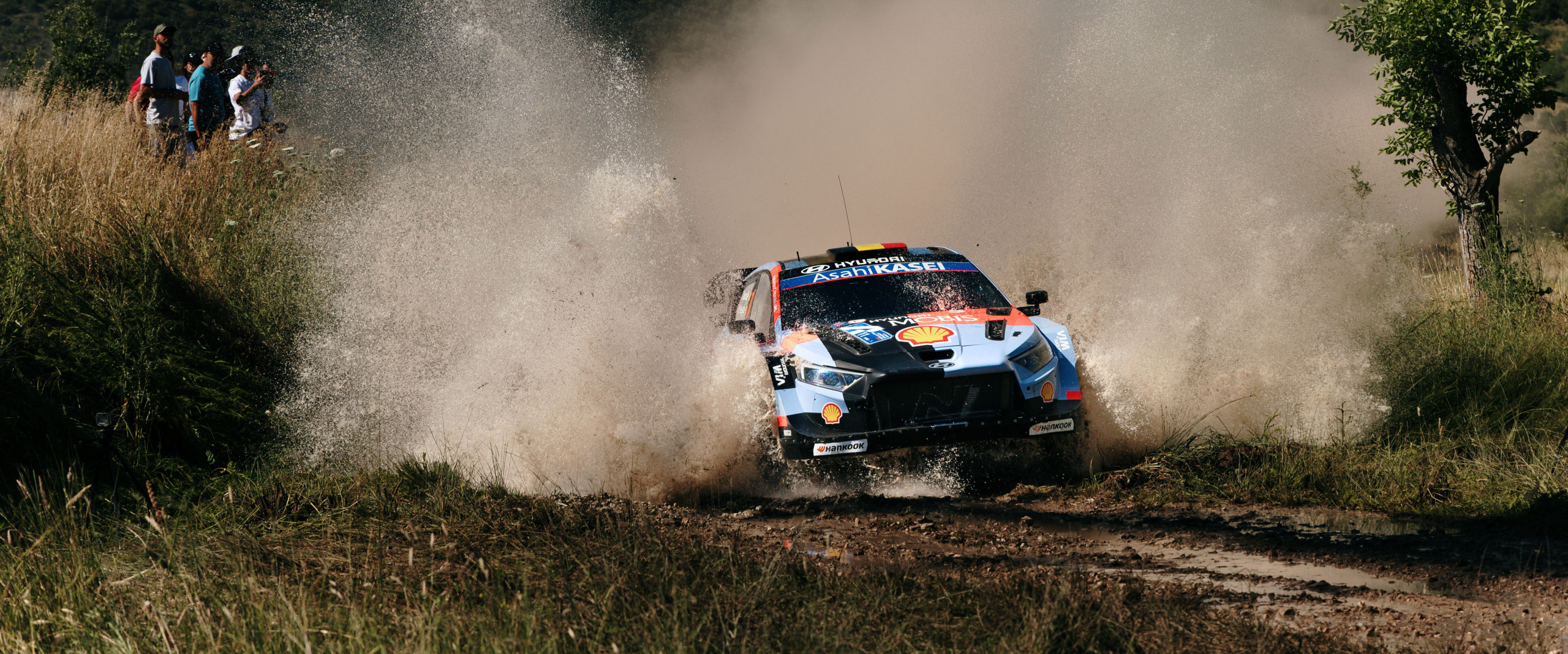
Rally Of the Gods, The Acropolis Rally – Saturday’s Report
Onto the second day then of action and the crews faced six stages over 108 kilometres, with four run in the morning, including two stages which would only be run once, then the service break before the final two stages in the afternoon. The Puma duo of Jourdain and Jon would open the road throughout the day as the first and second crews respectively into the stages.
First up then was SS8 Ghymno 1 a 19.6-kilometre stage and it was a good start from Seb who set the pace from Thierry and Adrien. Behind the top three, Elfyn was the best of the rest and looking ahead to the crews in front of him, Martins, Takamoto and Josh and in fact the Japanese driver had already moved ahead of the Latvian crew and into fifth place.
Into the single run of SS9 Kolines and Adrien was fastest from Seb and Thierry as the trio made the most of their advantages road positions as the last crews to finish the stage. Seb closed the gap to Thierry for the overall lead as well, bringing the gap down to less than five seconds. There was a change in positions as Takamoto passed Josh for fourth in the overall standings after the Irishman was twenty-five seconds slower. Elfyn was edging closer to Martins as well, the gap just under fourteen seconds now.
It was back to the top of the time sheets for Thierry in SS10 Menalo Mt 1 a 15-kilometre stage as he set the pace from Seb and Adrien. Meanwhile, Elfyn was on the move after setting the fifth fastest time and he passed Martins for fifth place overall. The Welshman was going well as he’d not just passed Martins, he was also faster than Josh and closed the gap to him in a battle for fifth place overall.
The final morning stage then with the single run through SS11 Kefalari before the service break and Seb was fastest from Thierry and Elfyn this time as he beat Adrien by just one tenth of a second. It was a good time from the Frenchman to set the pace as he’d damaged the rear wing on his car somewhere in the stage, just as well there was a service break really!
Just two stages remained then as the crews went first to SS12 Ghymno 2 and the first thing to report on was the stage was shortened by 4.5 kilometres to 15.1. This was due to the road near the original start position having deteriorated badly. Thierry was fastest by over seven seconds from Seb with Takamoto third in this one. Elfyn gained one position as Adrien suffered a puncture with the Welshman moving into fifth now and even closer to Josh who now held fourth by just four seconds. There would be drama though which was just plain ridiculous as later crews came through in the WRC2 category. Some spectators were being quite stupid with their behaviour, standing in the wrong places and the stage was red flagged. Frankly, they know who they are and should hang their heads in shame.
Now to the final stage of the day, SS13 Menalo Mt 2 and Seb was fastest from Adrien and Thierry. Sadly, there were two crews who suffered punctures in this one, the first being Dani, whose front right tyre failed after hitting a rock in the line at five kilometres into the stage. They decided to carry on and lost a minute. The other crew to have the same problem was Elfyn and it appears to have been in the same part of the stage as well. He and Scott stopped to change the wheel, and in the process lost almost two minutes and they fell to seventh overall. All their good work through the day was undone, but this is the nature of rally. From all of this Adrien was now back into fourth, with Josh now fifth and Sami gained two positions after the punctures for Elfyn and Dani.
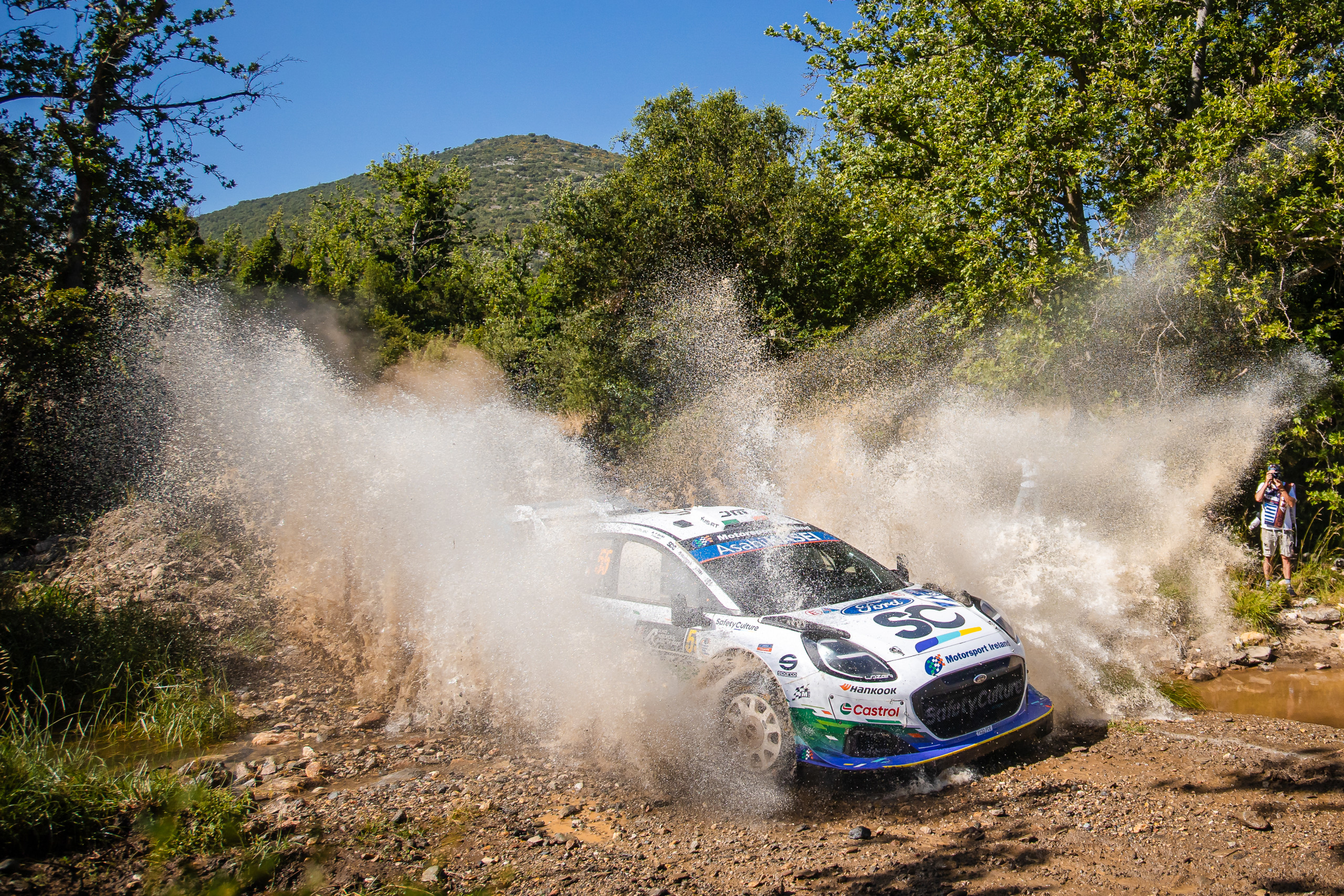
Let’s take a look at the top ten and hear from the drivers.
Classification after Day Two
1 T. Neuville M. Wydaeghe Hyundai i20 N Rally1 2:40:18.7 2 S. Ogier V. Landais Toyota GR Yaris Rally1 +4.1 3 T. Katsuta A. Johnston Toyota GR Yaris Rally1 +2:17.0 4 A. Fourmaux A. Coria Hyundai i20 N Rally1 +3:00.6 5 J. McErlean E. Treacy Ford Puma Rally1 +3:01.6 6 S. Pajari M. Salminen Toyota GR Yaris Rally1 +4:38.3 7 E. Evans S. Martin Toyota GR Yaris Rally1 +4:43.1 8 D. Sordo C. Carrera Hyundai i20 N Rally1 +5:17.8 9 A. Mikkelsen J. Listerud Skoda Fabia RS +5:54.6 10 R. Virves J. Viilo Skoda Fabia RS +6:08.5 Hyundai Motorsport
Thierry Neuville
“I’m really happy with my day. Much like yesterday, I was feeling really comfortable in the car and managing both my speed and the roughness of the terrain. We’re getting closer to the end of the rally; our plan is to continue pushing to stay in first place. We know it isn’t over until you cross the final finish line, and tomorrow is going to be pretty rough – especially in the Power Stage. We have to cross our fingers and continue the job we’ve been doing so far this rally.”
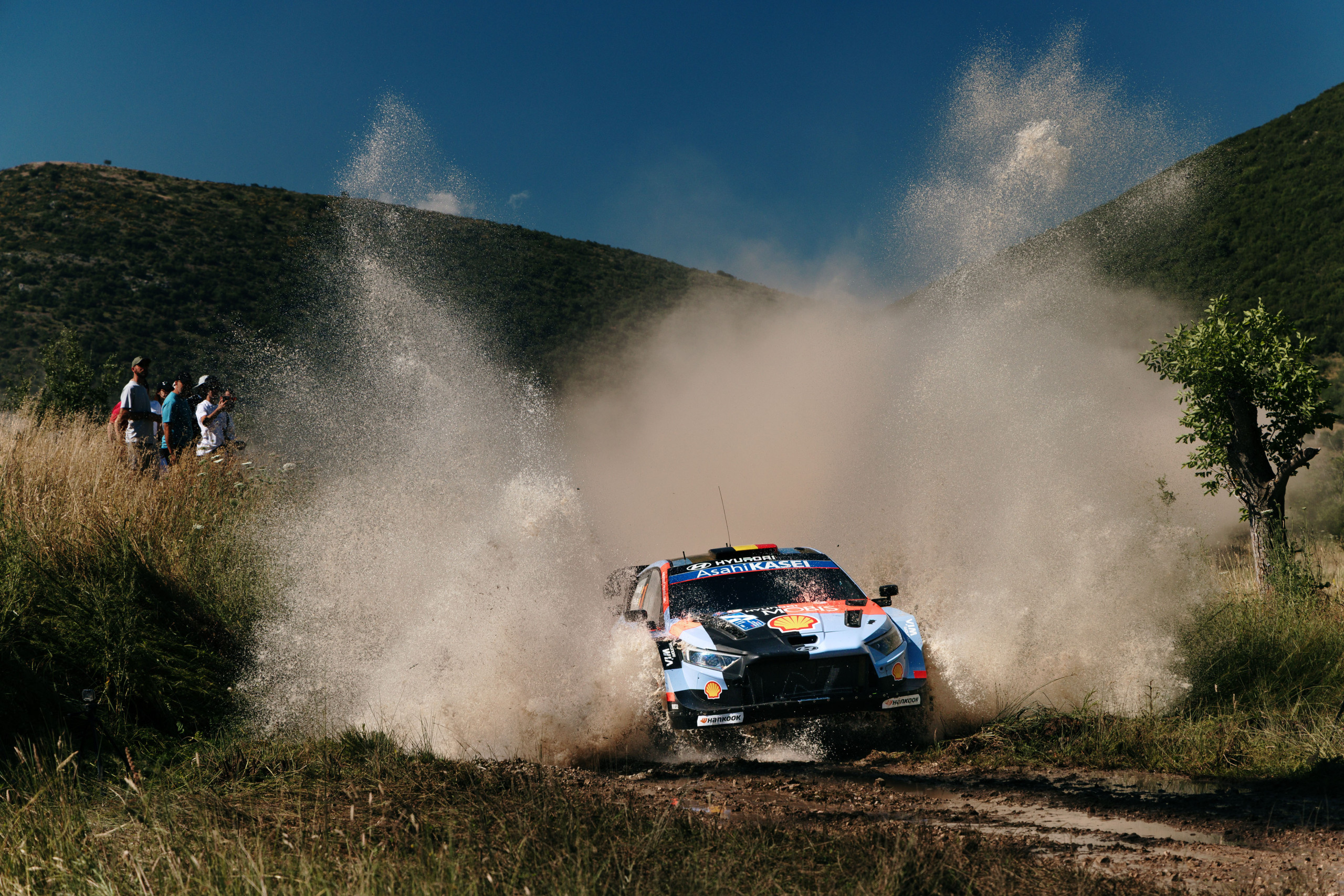
2026 FIA World Rally Championship
Round 8, EKO Acropolis Rally Greece
25-28 June 2026
Photographer: Helena El Mokni
Wordwide copyright: Hyundai Motorsport GmbHAdrien Fourmaux
“Saturday was quite a challenging day. We were trying to manage the risk of punctures as much as we could, but unfortunately on the second pass of Menalo Mt we suffered one early on. We decided to stop and change, knowing we would lose the podium place. However, although we were sixth, we knew we were only 14 seconds away from fourth, so we pushed hard in the last stage. We managed to gain two positions, one on pace and the other as a result of Elfyn’s puncture. It’s a good road position for tomorrow, when everything is still possible. We are going to try and catch Taka, so my target is to go flat out and finish on the podium.”
Dani Sordo
“It is a shame our day ended in the way it did. We had a good stage time on SS12, finishing fourth fastest for the third time here in Greece. On SS13, we encountered rocks in the middle of the road, and we picked up our second puncture of the weekend. Now we focus on Sunday; while there are only four stages, it’s still going to be a long day, and we’re expecting the Power Stage to have a lot of stones. We’ll need to find the balance between pushing for points, and avoiding punctures that could punish us.”
Toyota Gazoo Racing WRT
Sébastien Ogier
“I think it’s been a good day for us. In places these roads were nice to drive, and in others it was just about trying to survive the roughness. In this last stage I was planning to push, and then seeing how many others were having trouble in there made me more unsure, but we managed to have a decent rhythm and keep the fight open until tomorrow. I’m happy with what we’ve done so far but the most important day is coming, where we need to secure the best result and extra points are also available. I will keep the same approach and we’ll see what happens.”
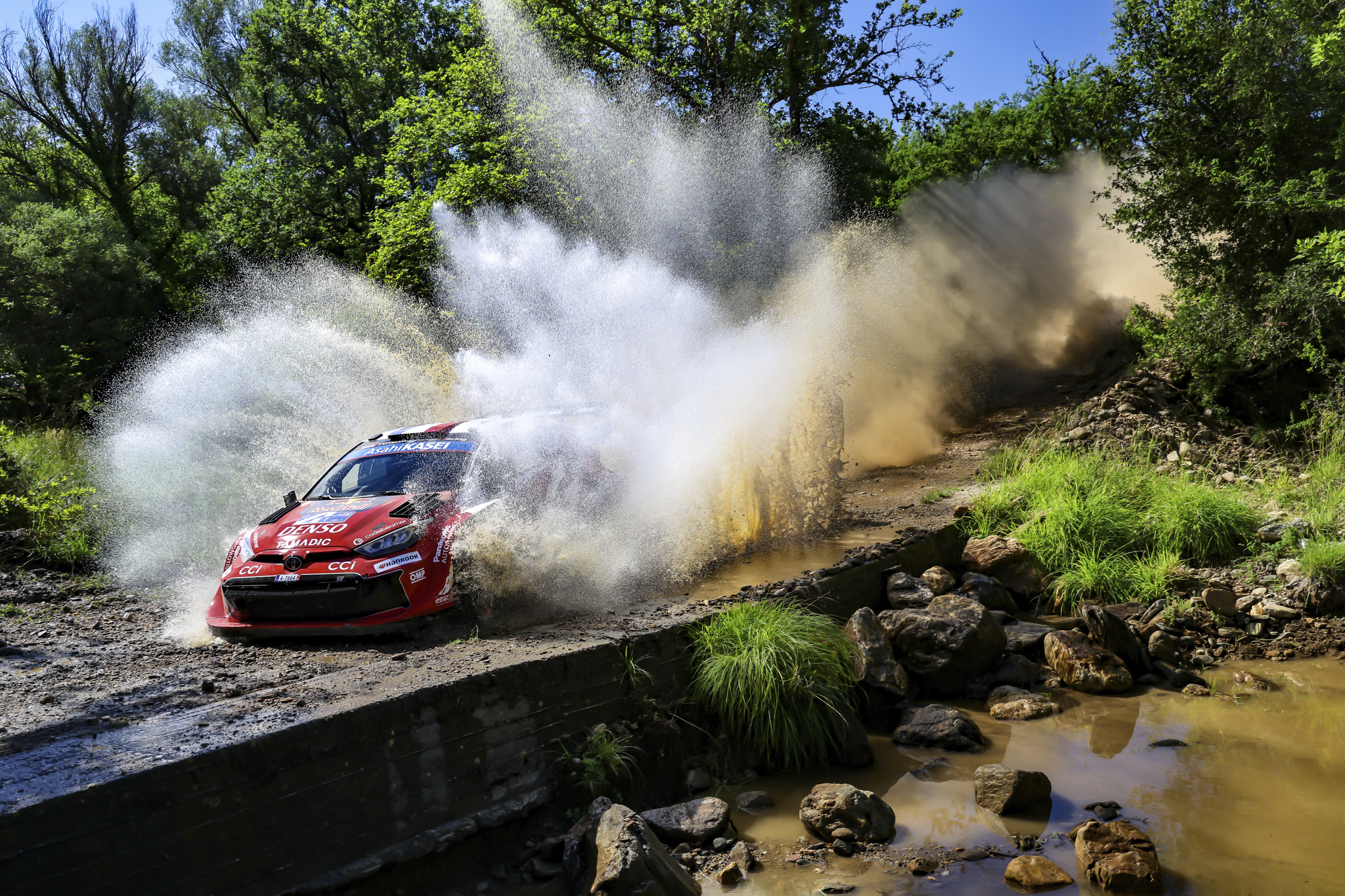
Takamoto Katsuta
“This morning the first target was to catch the two cars in front of us and we did that in two stages. After that it was just about managing the high risk of punctures, and I think we did quite a good job to get through the day without any problems. It’s nice to be in third overall tonight but tomorrow’s stages are maybe even rougher than today, so anything can still happen, and the main focus will be to finish without problems.”
Sami Pajari
“I think there was not so much more that we could have done today. On some stages we had quite solid pace, on others maybe not, but I think this was mainly down to the conditions because our road position was not great after yesterday’s troubles. We were able to gain a few places after issues for other drivers, and that also makes our road position better, so I think that gives us a chance to try and take a few more points tomorrow.”
Elfyn Evans
“The day was going pretty well; we were enjoying the cleaner roads; we had a good rhythm, and we were climbing up the leaderboard. Unfortunately, in the last stage we picked up a puncture. It came quite suddenly after an impact, and we had to stop and change it. It’s dropped us right back to where we started the day so we’ve got it all to do again tomorrow, and of course the road position will not be any easier either, but we’ll fight for what we can.”
Summary
Onto the final day then and although there are what appears to be not many stages, with four making up the total, with over 84 kilometres to go including two runs of Aghii Theodori at over 25 kilometres, the challenge remains big!
-
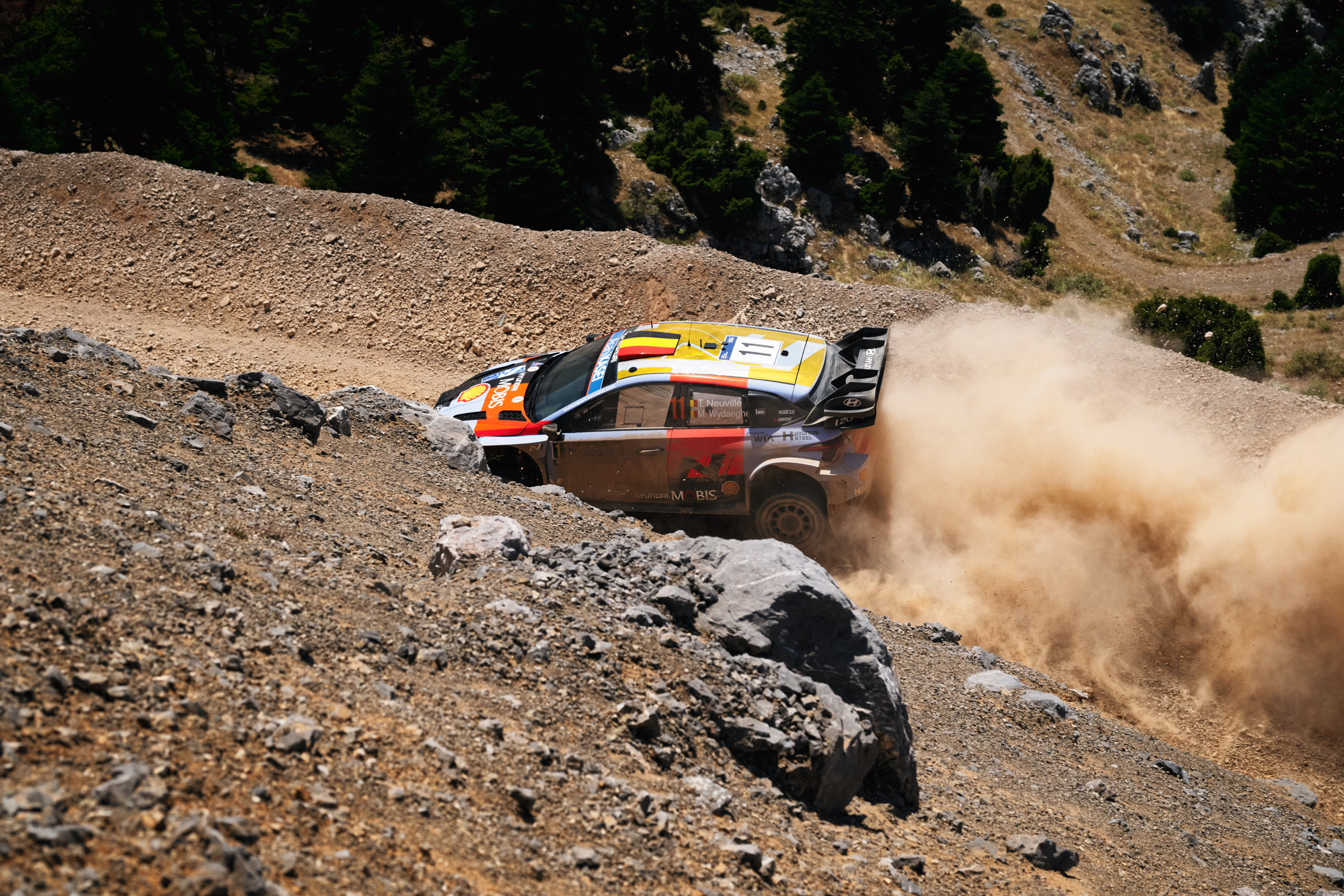
Rally Of the Gods, The Acropolis Rally – Friday’s Report
The first full day of action followed Thursday’s action which had shakedown in the morning and a super special stage in the evening which was won by Seb from Takamoto and Thierry. Elfyn was sixth in the stage. Onto the six stages then for the crews on Friday and of course Elfyn and Scott would open the road throughout the day.
First up then was SS2 Bauxites and at 22.97 kilometres it was a real challenge for them all. Adrien set the pace from his teammate Thierry, whilst Seb was third. The pace of the Belgians took them into the lead from their teammates Adrien and Alex pushing Seb and Vincent down to third overall. With such tricky road conditions whilst opening the road, Elfyn and Scott were tenth fastest and fell four positions to tenth overall. It was not a good start for Oliver who suffered a puncture losing almost a minute and a half and twenty-five positions as well.
Into SS3 Parnassos Mt another 22.28 kilometres stage and Adrien made it two in a row beating Thierry and Jon! It was a good stage for the M-Sport crews as Josh and Martins we also fourth and fifth fastest. There were some good changes in the overall leaderboard as Adrien now led from Thierry and Seb, Sami moved into fourth, Jon’s pace brought him up three positions into fifth overall.
Before the remote service came SS4 Stiri 1, yet another long stage at 24.18 kilometres and Seb set the pace this time from Thierry and Jon again. Adrien was only eleventh quickest after getting a puncture on the front right-hand side corner. The Frenchman fell to fourth position from the lead. All of this meant that Jon was now holding third position.
After the remote service it was to SS5 Elikon Mt that the crews headed to next and this stage will go down in history as the place where Jon and Shane took their first ever overall stage victory, beating Seb and Thierry. A simply brilliant drive! There was a stop for Finnish crew Sami and Marko who had a puncture to change and fell eight positions to fifteenth place.
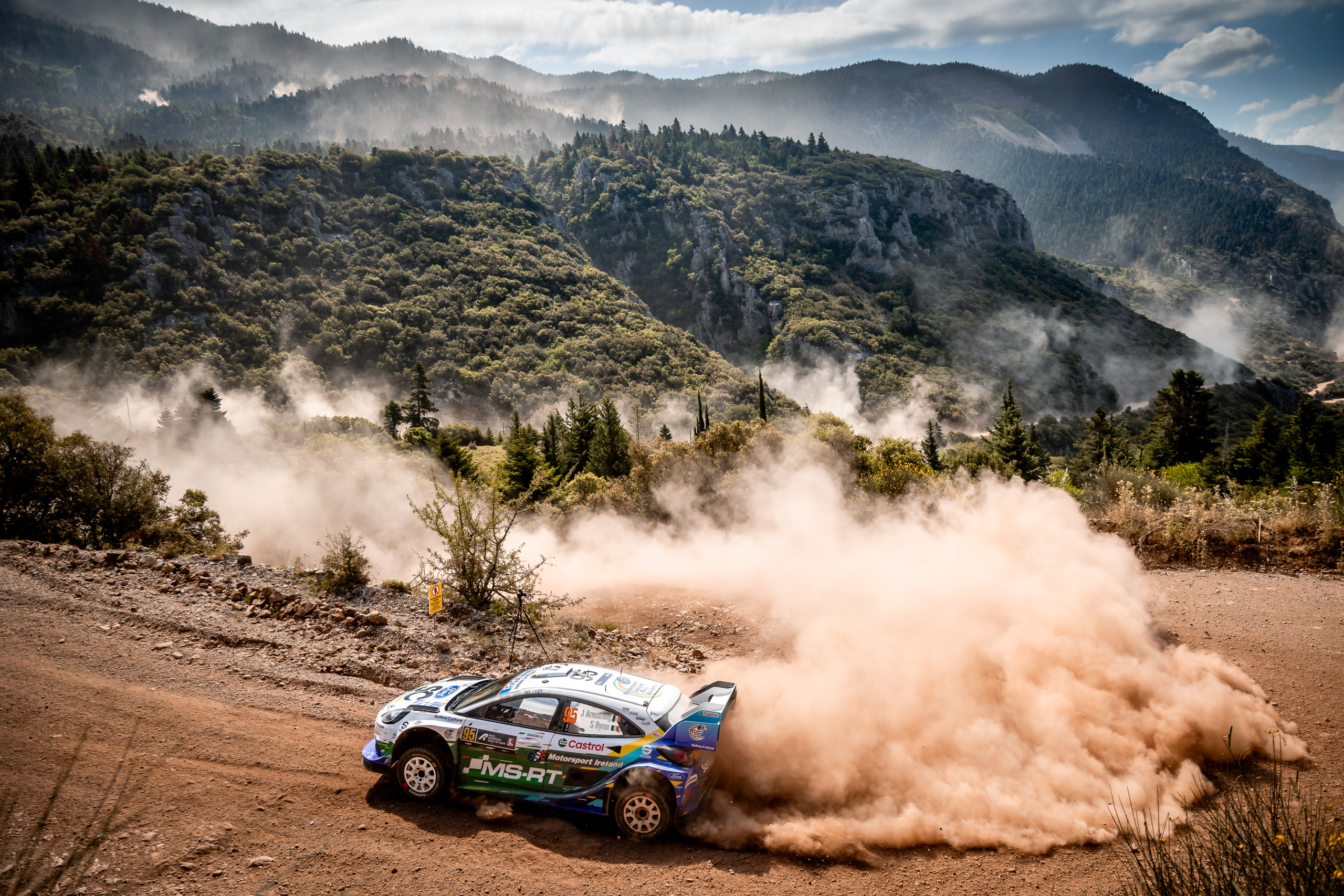
It was back to SS6 Stiri 2 next and Thierry was fastest from Seb and Takamoto. Adrien was fourth and passed Jon for third overall as the Irishman suffered first a puncture and then a loss of power as well. After the highs of the previous stage, they fell down the leaderboard.
Onto the final stage of the day then with SS7 Thiva, yet another single run stage. Adrien set the pace from Seb and Thierry, and they filled the top three positions overall. We lost Oliver and Elliott as they spun off and their car was beached at the edge of the road. Championship leaders Elfyn and Scott ended the day in seventh overall after opening the road.
Let’s take a look at the top ten and hear from the drivers.
Classification after Day One
1 T. Neuville M. Wydaeghe Hyundai i20 N Rally1 1:26:48.2 2 S. Ogier V. Landais Toyota GR Yaris Rally1 +9.7 3 A. Fourmaux A. Coria Hyundai i20 N Rally1 +42.4 4 J. McErlean E. Treacy Ford Puma Rally1 +1:10.1 5 M. Sesks R. Francis Ford Puma Rally1 +1:16.9 6 T. Katsuta A. Johnston Toyota GR Yaris Rally1 +1:33.2 7 E. Evans S. Martin Toyota GR Yaris Rally1 +2:08.4 8 D. Sordo C. Carrera Hyundai i20 N Rally1 +2:49.5 9 A. Mikkelsen J. Listerud Skoda Fabia RS +3:10.6 10 S. Pajari M. Salminen Toyota GR Yaris Rally1 +3:13.1 Hyundai Motorsport
Thierry Neuville
“Today was a great day. The car was working very well, and I felt very confident on the stages. I tried to manage the rhythm and adapt to the conditions, pushing when it was clean and being smooth where it was rough. We did what we needed to today – obviously, you always need a bit of luck to get through without any trouble, and the rally is still long. We’re happy to be in the lead tonight, but we know that the rally is not over, and we need to try to repeat this performance tomorrow.”
2026 FIA World Rally Championship
Acropolis Rally Greece 2026, 25-28 June 2026
Photographer: Romain Thuillier
Worldwide copyright: Hyundai Motorsport GmbHAdrien Fourmaux
“It’s been a very competitive day for us, with three of the six fastest times. We’re in a great place with the car, which was performing really well back on gravel, and it’s nice to see the results of the team’s hard work. It’s a shame we lost 30 seconds with a delamination that led to a puncture, but I want to focus on the positives. It’s a long game, and we’re still in the fight for the win.”
Dani Sordo
“It was not my best day today; it was disappointing to pick up a puncture on the second stage and lose some time. After that, I struggled for confidence, but we managed to regain a few positions and avoid being first on the road tomorrow. If this had happened on Saturday, it would have been much more difficult for us to recover a good result, and we’re in a position to have a much better day tomorrow.”
Toyota Gazoo Racing
Sébastien Ogier
“It was clear that today would be difficult as a team with the amount of loose gravel on the road. At least I had the best start position within the team, and I tried to use that as much as I could. In some sections we still saw the guys starting behind us could be quite a bit quicker, but overall, I think we can be happy. We had a good rhythm and stayed out of trouble on stages that were very abrasive for the tyres. So far it’s going to plan, but we need to keep it going the same way.”
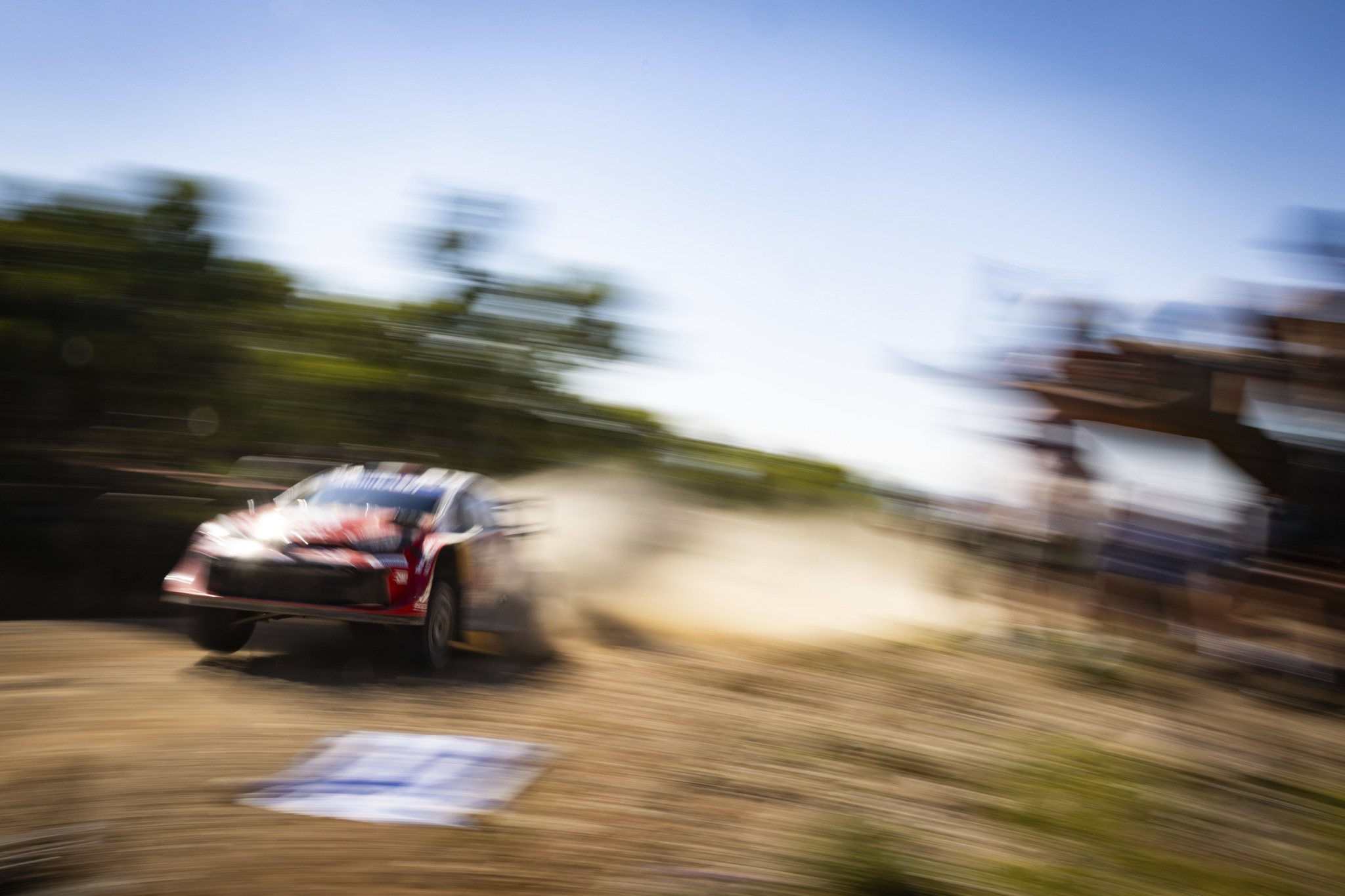
Takamoto Katsuta
“It’s been quite a clean day overall for us. We tried our best to manage the tyres, and unfortunately we did pick up some damage a couple of times, but we know that this can happen in this kind of very extreme conditions. To be P6 overall tonight is quite good considering that we were second on the road. Of course, it could be better, but it could also be worse. Realistically I think we can still aim to catch the two cars in front of us tomorrow and otherwise try to stay away from problems, because anything can still happen in a rough rally like this.”
Elfyn Evans
“We knew that today was going to be tough in our position opening the road, but it turned out to be even tougher than we had expected. The cleaning effect on some of the stages today was really extreme. It’s very dry this year and we’ve started the rally with some rockier and more abrasive stages compared to last year, and the impact of that for us has been clear. We just have to keep trying tomorrow, which I’m sure will be another tough day to challenge everyone.”
Sami Pajari
“We had some nice stages during the morning loop, and I think that our pace was quite decent considering our road position. I felt that we were doing quite an OK job while trying to avoid any issues, but unfortunately the issues still came our way and in total we lost around two minutes. It means we are realistically out of the fight for the win, but there’s still two long days to go. Anything can happen and we just need to keep going.”
Oliver Solberg
“Today has been tougher than expected. To have the puncture in the first stage this morning was unfortunate, and after that we were just trying to stay out of trouble really. Then in the last stage of the day I got too wide in a right-hander and just got beached on the edge of the road, and when I tried to reverse I damaged the gearbox and ended up being stuck. It’s very frustrating, especially as we had not been pushing after what happened earlier. It’s been a tough run lately and we need to understand it and improve and keep our heads up.”
Saturday
The stages on the second day of the rally will see the crews five stages, two of which are only run once. It will be a challenging day indeed!
-
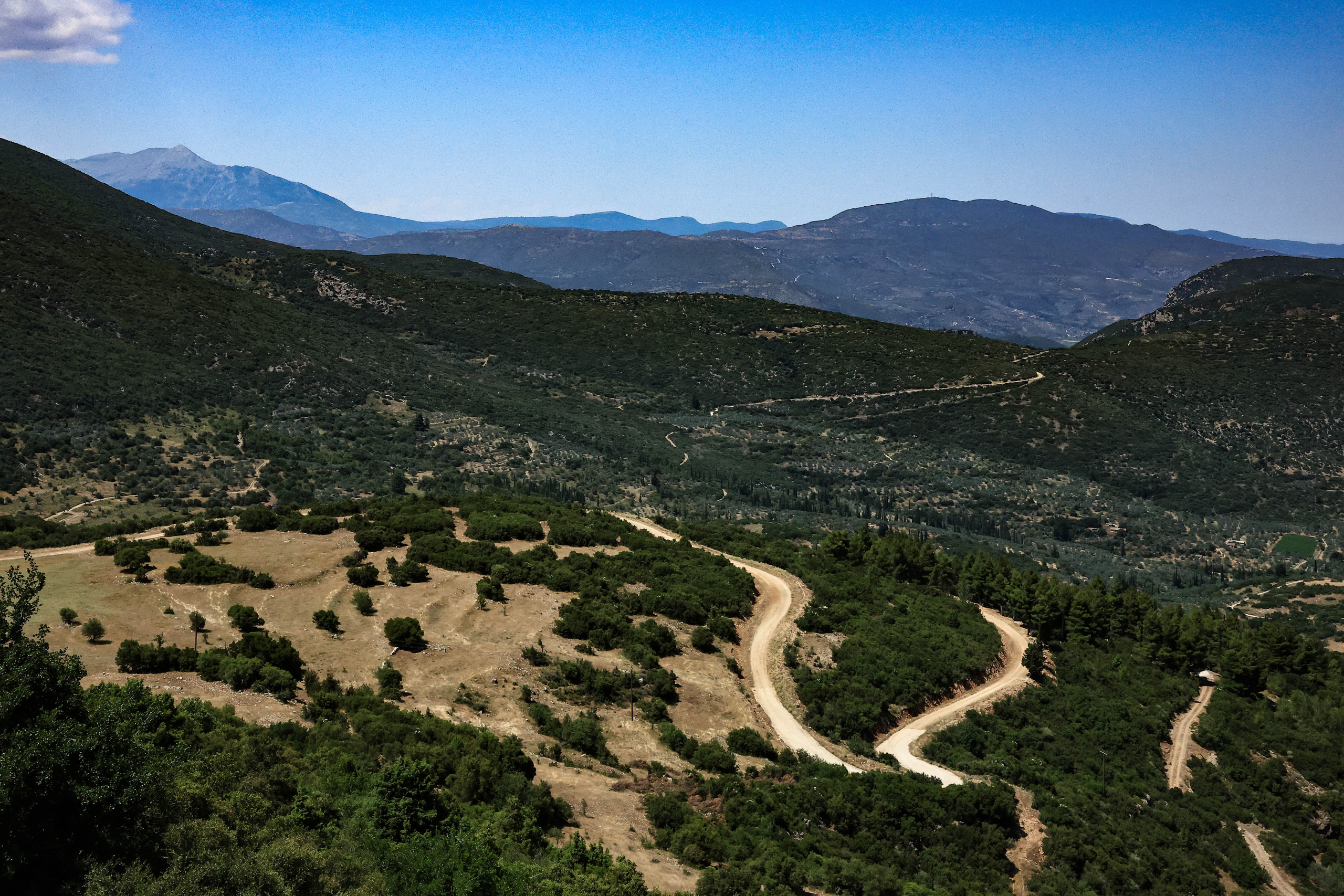
Rally Of the Gods, The Acropolis Rally Preview
After a good break since Rally Japan at the end of May, the teams come together for the first of many gravel rounds from now to the end of the year. Elfyn and Scott come to this event as the championship leaders with a twenty-point lead over Takamoto and Aaron, whilst the most likely championship challengers, Oliver and Elliott, plus Seb and Vincent are a further fifty-five and sixty-one points further back respectively.
In terms of the best placed Hyundai crews is the French duo of Adrien and Alex who have eighty-nine points and lie in sixth position. They might have the best road position as well throughout Friday’s stages and the Hyundai teams car has shown pace on gravel.
In terms of the stages, this years rally has 323 kilometres over seventeen stages. The longest day in regard of the number of competitive kilometres is Friday with 130 kilometres over six stages. Then Saturday has six stages over 109 kilometres with two of the stages only run once. Finally, Sunday has four stages over 84 kilometres, which includes the longest stage of the whole weekend.
Let’s hear from the drivers.
Toyota Gazoo Racing WRT
Elfyn Evans
“To win Rally Japan again was amazing and it rounded off what’s been quite a good first half of the year for us, but we know that the second half can be tough with every rally being on gravel, so everything is still very open in the championship. Greece can be one of the more difficult rallies to open the road, particularly with most of the Friday stages being run only once. But we’ve got some good experience now of being in this position, and we’ve been working hard together with the team to try and improve the feeling and the pace for those conditions. We already made a step forward in Portugal, and we’ll be trying to make the best of the situation again in Greece.”
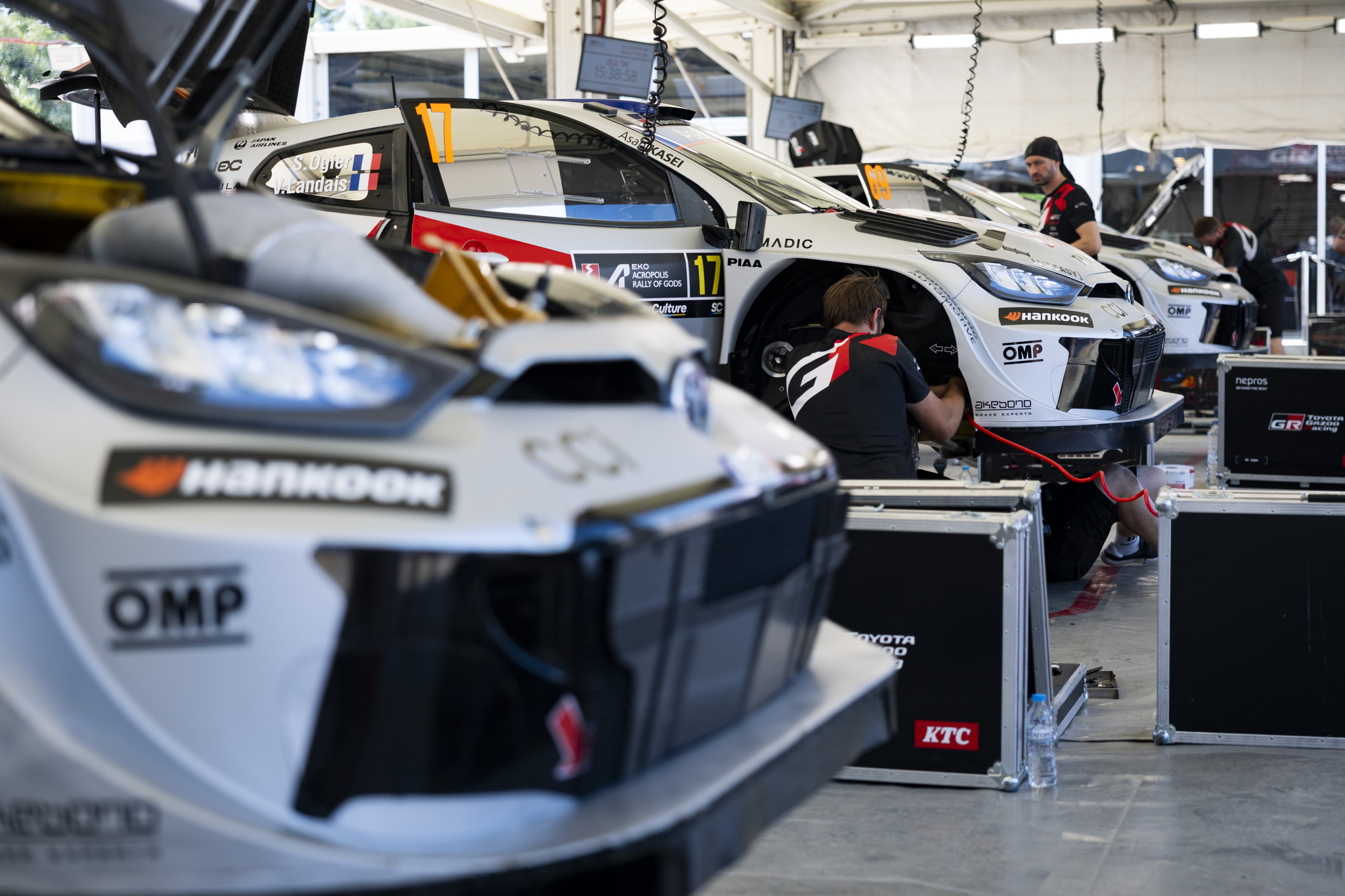
Takamoto Katsuta
“The Acropolis Rally is a really rough and tough rally for the cars, the tyres and us as crews. Last year, when the rally moved back to the summer, was especially demanding for everyone with the heat. This year the conditions could be similar, so being as fit and prepared as possible is one of the main priorities in the lead up to this rally. It has not been the easiest event for me in the past but working together with the team I have started to find better feeling and pace on these rougher rallies, and I will try my best like always to get a good result.”
Oliver Solberg
“We’ve had some tough results on asphalt recently, but I’m looking forward to putting that behind me and focusing on gravel for the rest of the season, with an exciting mix of rallies coming up. We had a good result in Portugal, finishing second, and hopefully we can build on that in Greece. The Acropolis is a very demanding rally; it’s usually very hot and very rough. It’s another rally we won last year in the Rally2 car, but I’ve never driven it with a Rally1 car before. So, there will be some adapting to do once again, but I will be giving it my best shot like always.”
Sami Pajari
“We have been on a really strong run recently and hopefully we can continue this now that we are going back onto gravel, which is perhaps a more natural surface for me than asphalt anyway. Our performance on gravel in Portugal was really good – one of our best so far – even though we didn’t get a reward for it. The Acropolis is a tough rally, but I’ve done quite well there before – I finished P4 with the Rally2 car two years ago and started with good pace last year until we had to stop with a problem. If we can have a clean run this time, I think we can do well.”
Hyundai Motorsport
Adrien Fourmaux
“I’m really looking forward to Acropolis Rally and the return to gravel. At this event, we’re really trying to avoid any punctures, but also reading the grip and the compressions, with bumps and crests threatening to kick the car off in a different direction. Starting later in the running order will help you with cleaner lines when it’s dry, which is a clear advantage compared to the cars in front cleaning the road and improving the conditions, however there is also more tyre wear and the risk of loose rocks. Our target for the second half of the season is to get some victories to be back on track for the championship fight. Last year we finished third here, which was good, but we can do better. It’s been quite a tough first half of the season due to the amount of tarmac events, where we struggled a bit more, but we are in a good position to be very competitive for the rest of the season.”
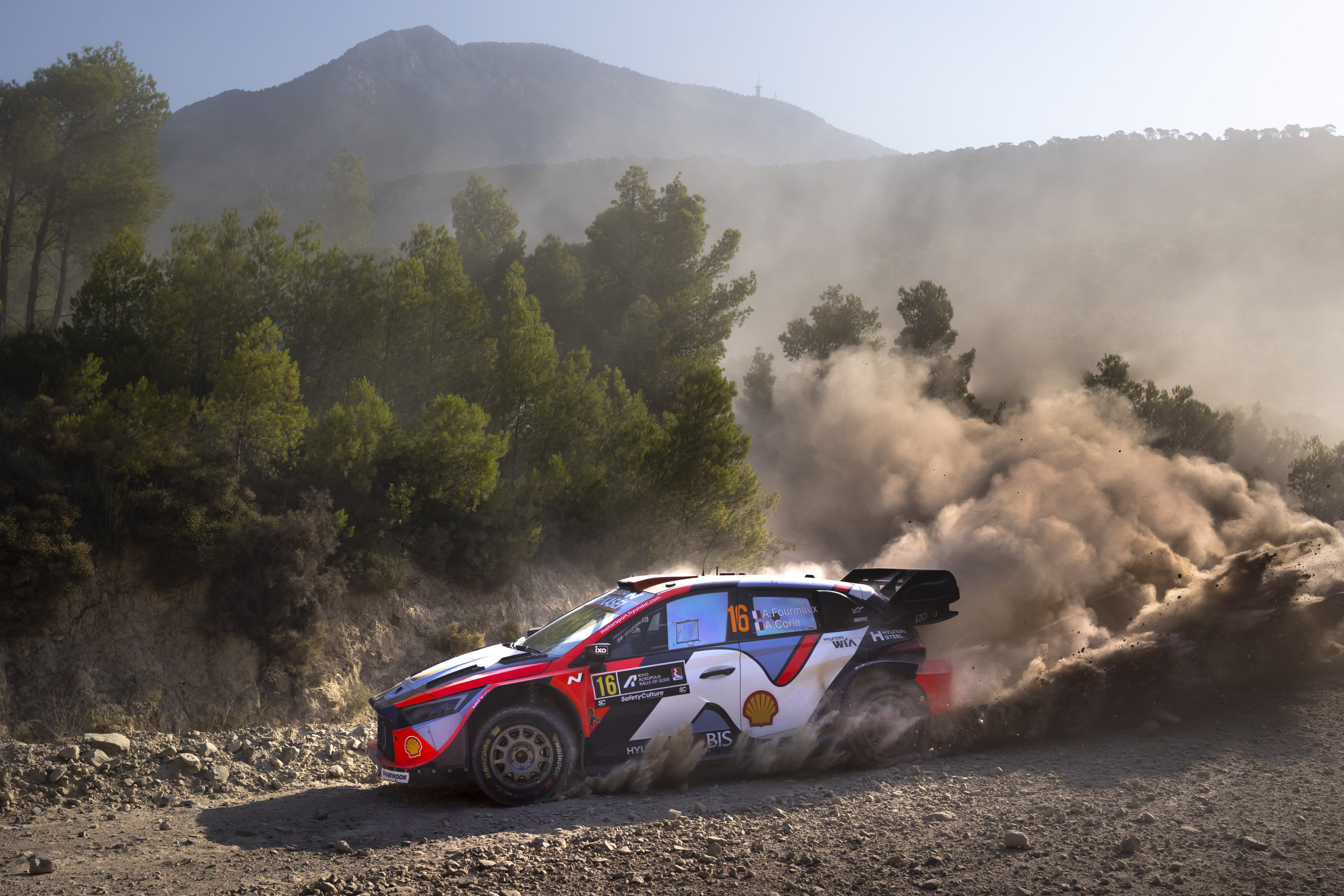
Thierry Neuville
“We have a good starting order heading into a run of gravel events, where we know we can be competitive – we proved that last year and in the past. That gives me a real boost of motivation, knowing we’re heading into a rally where we should perform well. There are other factors at play too, like tyre choice and so on, but generally this should be a much more competitive weekend for us. We know what to expect from this event, though these are new roads. Temperature and weather can be tricky here, so while you can build on what you know, you still need to stay sharp. We’re driving in a slightly different area and region, so you can hit stages with sharper stones, looser or more abrasive surfaces, and everything can change quickly. Our goal is clear — we’re going for victory. With our starting order, a competitive car, and a rally where we have always performed well, that is absolutely our target.
Dani Sordo
“Greece is a rally that I love. The stages are brutal with the heat, the rocks and uneven surfaces, but this sort of challenge suits our car and approach as a team. You have to be patient and manage your tyres, because one mistake can cost you everything. We’ve had some great results at Acropolis in the past, particularly in 2022 and 2024, so I come here with a lot of confidence. Now I want to go one better. The target is always the same: bring the car home, help the team in the manufacturers’ fight, and if we can fight for the win, we will. Portugal did not end the way we hoped, so we are looking to put that right next weekend.”
M-Sport Ford WRT
Josh McErlean
“Acropolis is always a tough event. We have a decent road position, so there could be opportunities if we stay out of trouble. It’s nice to turn to gravel again for the remainder of the WRC season!
“It will be a quick turnaround from Donegal, and with plenty of new stages the focus is on a good recce and being well prepared. Hopefully we can put everything together and have a solid weekend for the team.”
Jon Armstrong
“We’re really looking forward to Greece. It’s going to be a significant challenge with the temperatures we’re expecting, and there are a lot of single-pass stages, so having a strong recce will be important. It’s definitely one of the toughest events in rallying.
“If we can take a steady approach, focus on ourselves, and do a good job, then it should be a positive event for us. The boat journey on Thursday night should be good fun as well, so we’re looking forward to something a little different and to getting back onto the gravel after Japan.”
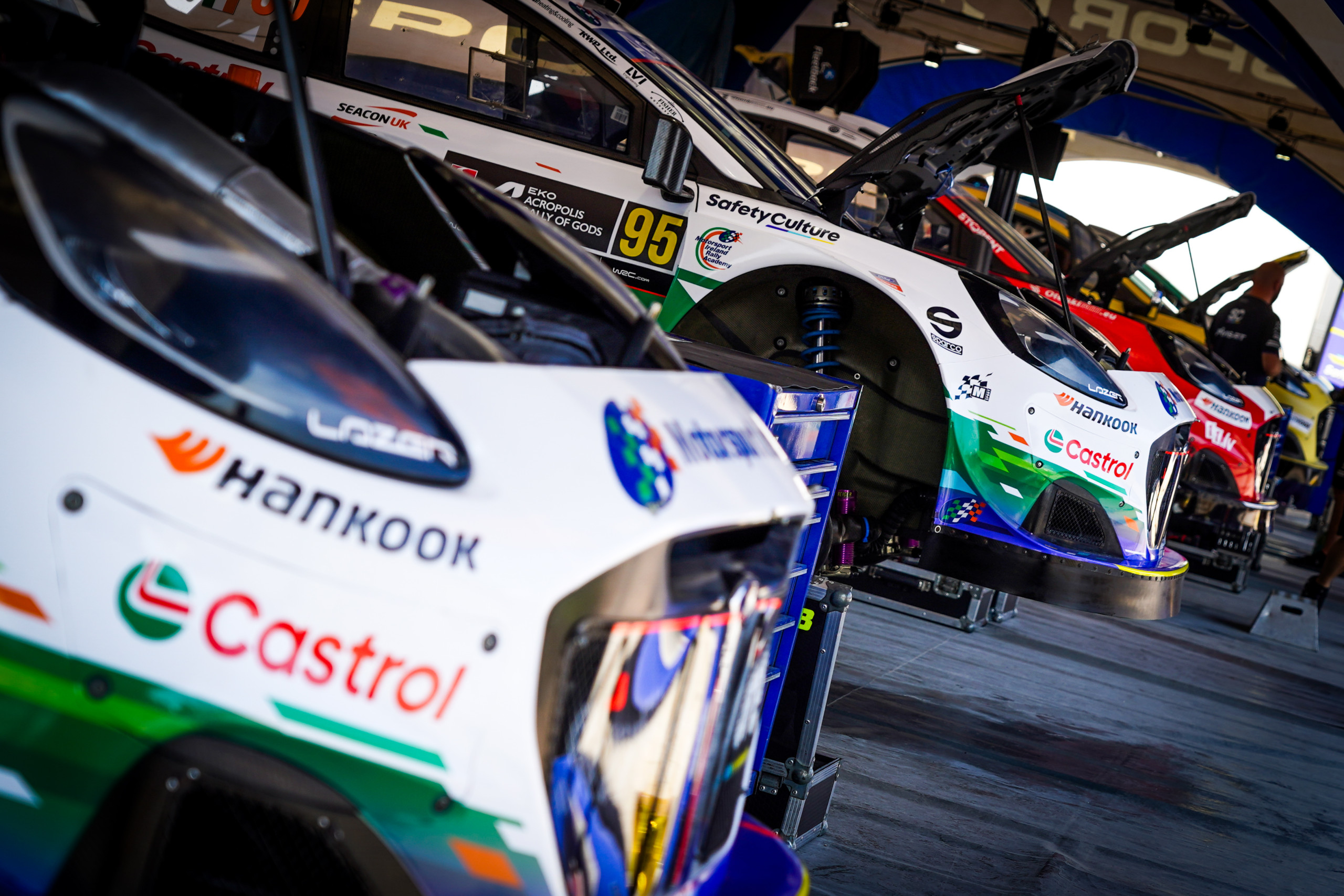
Mārtiņš Sesks
“I’m really excited to take on the Acropolis Rally again. Last year was my first time competing there, and there were a lot of things that were completely new to us. We had to learn the rally as we went, and unfortunately a few things didn’t go our way.
“This year will be interesting as the rally features some new stages and takes us to a different part of Greece. It will be great to explore the country again while tackling another demanding event. I’m really looking forward to it.”
Jourdan Serderidis
“Greece, our homeland, is at the heart of our 2026 programme. We are currently leading the national championship after two rallies, but now our focus turns to the Acropolis Rally, one of the highlights of the WRC season.
“We are back with our M-Sport Ford Puma Rally1 car, ready to compete against the world’s best gravel rally drivers. Our goal is to enjoy this demanding event, achieve the best possible result, and continue our fight for the Greek Cup awarded to the highest-placed national driver.
“This year’s event features several new stages, adding an extra level of difficulty. But we enjoy a challenge!”
Romet Jürgenson
“I’m looking forward to heading back to Greece, where we secured the Junior title in 2024. It’s one of those very demanding rallies where you have to think about a lot of factors that maybe aren’t such a big focus at other events.
“Hydration is really important, and you need to keep yourself in good condition to get through three tough days. The same applies to the car and the tyres – you have to manage them carefully and can’t always push at 100 per cent on every stage, otherwise problems can quickly arise.
“Overall, I’m really looking forward to it. It’s always a very enjoyable rally.”
Summary
This is going to be a very challenging three days for the crews and with very likely dry conditions throughout the weekend, it will make the challenge greatest for the championship leaders, Elfyn and Scott. It’s fair to say that the top three into the stages on the first day will likely have the worst of the road conditions as the top level of gravel gets swept from the road and creating the lines for the crews further back.
There will be crews who don’t complete every stage and therefore those who do will likely have that consistent run on everyday meaning they could take a really good result.
The action gets underway with shakedown on Thursday morning (25 June 2026) at one minute past nine UK time and then the first stage, a short super special later in the day at a little after five pm.